
A lemon squeezer seems like a solved problem. You cut the fruit in half, press it, and the juice comes out. The catch is how much juice comes out and how much stays behind, and a standard press leaves a surprising amount trapped in the pulp, especially with firm fruit. The Zulay Kitchen metal 2-in-1 lemon squeezer takes a different approach by putting two tools in one body: a classic press bowl for halved fruit and a ridged reamer cone for wedges. I spent a month squeezing lemons, limes, and oranges with it to find out whether the second side is a gimmick or a real yield boost. It is real, and it is the reason this squeezer stands out.
Before the details, the standard note. This article contains affiliate links, and if you buy through one of them the site earns a small commission at no extra cost to you. That commission does not change what I test or what I recommend.
Design and Build
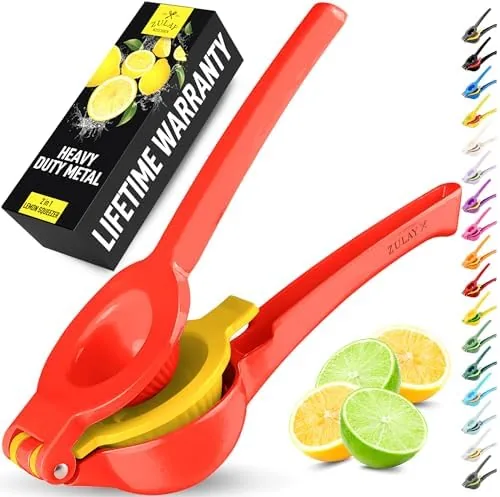
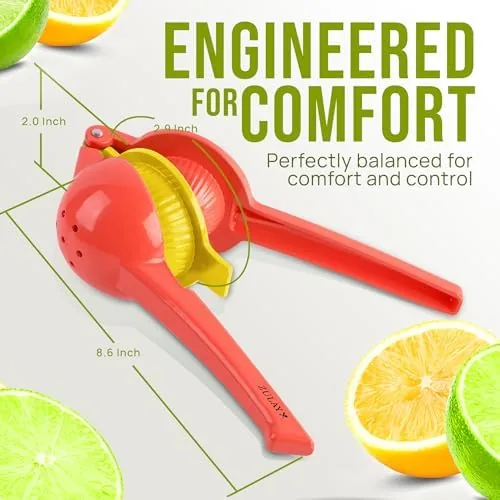
The squeezer is a solid piece of powder coated metal with two working ends joined at a hinge. One end is a bowl shaped press with a straining lip, built for halved fruit, and the other is a ridged reamer cone with its own straining spout, built for wedges. The handles are long enough to give good leverage, and the red and yellow finish is cheerful without being childish.

The build quality is the first thing you notice. The metal is thick and heavy, with none of the thin stamped feel of cheap squeezers, and the hinge is sturdy with no wobble. The powder coating resists scratches and makes the surface Easy to wipe down, and the whole tool is a single piece with no springs or removable parts, which makes it both durable and effortless to clean. For a hand juicer, this is about as well made as the category gets.
Key Features
The defining feature is the two in one design. The press side works the classic way, you place a halved lemon face down in the bowl, close the handles, and the juice runs out through the straining lip, which catches the seeds. The reamer side is where the cleverness lives, you push a lemon wedge onto the ridged cone, twist, and the ridges shred the flesh while the wedge's shape lets you extract juice that a flat press cannot reach.

The max extraction claim is the second headline feature. The idea is that combining both methods gets more juice out of each fruit than either alone, and the reamer side is the key, because shredding a wedge opens up pulp that a press compresses and leaves behind. The tool also gives you a choice of technique for different jobs, a quick squeeze for a splash of lemon or a full ream when you need every drop. If you want to see the current price, the Zulay 2-in-1 lemon squeezer listing on Amazon has the up to date details.
Real-World Performance
The month of testing started with the question the whole product is built around: how much more juice does the reamer side actually get? I ran the test with fresh lemons, squeezing one half with the press side and then reaming the remaining wedges with the cone, weighing the juice from each method. The reamer side consistently pulled roughly a quarter more juice from the same fruit, because the ridges shredded the pulp and released juice the press left trapped. That is a real difference, not a marketing number, and it showed up on limes and small oranges too.

In daily use the squeezer handled everything I threw at it. A whole lemon for a recipe took less than a minute, and the straining lip caught the seeds cleanly on both sides. The long handles gave enough leverage that even firm, cold fruit needed little effort, and the sturdy metal body felt stable in hand with no flexing or creaking. The juice came out clear enough that I did not need a separate strainer for most cooking and drinks.
Cleanup was the quiet highlight. Because the whole tool is one piece of coated metal, a rinse under warm water and a quick wipe cleared it in seconds, with no nooks, springs, or crevices to scrub. I left it to air dry after a quick wipe and never saw a speck of rust, thanks to the powder coating. The only real caveat is that the squeezer is heavier than a plastic alternative, which is a feature for stability but a small consideration if you are used to featherlight tools.
Pros and Cons
Pros:
- Reamer side extracts about a quarter more juice
- Two tools in one, press and reamer
- Sturdy metal build with no wobble
- Single piece design is effortless to clean
- Straining lip catches seeds on both sides
- Powder coating resists rust and scratches
Cons:
- Heavier than plastic squeezers
- Two side design can be awkward to store
- Overkill if you only ever need one quick squeeze
How It Compares
The hand juicer market splits between simple press squeezers, handheld reamers, and two in one tools like this Zulay. I compared the three to show where the extra yield comes from and who should care.
| Feature | Zulay 2-in-1 | Simple Press | Handheld Reamer |
|---|---|---|---|
| Juice extraction | Highest | Moderate | Moderate |
| Fruit options | Halves and wedges | Halves only | Wedges only |
| Seed straining | Built in | Built in | None |
| Effort required | Low | Low | Moderate |
| Cleanup | Seconds | Seconds | Simple |
| Build material | Metal | Metal or plastic | Plastic or metal |
For anyone who squeezes citrus regularly, the 2-in-1 is the better tool, because the reamer side turns fruit that used to go to waste into extra juice and the build outlasts plastic alternatives. For a one time splash of lemon, a cheap press is enough. Kitchen reviewers at Bon Appetit have covered the best citrus juicers and regularly note that extraction efficiency and clean build are what separate the good tools from the average.
Who Should Buy It
Buy the Zulay metal 2-in-1 lemon squeezer if you cook or bake with citrus often, if you make lemonade or cocktails and want every drop from each fruit, or if you are tired of cheap squeezers that flex, wobble, and rust. It suits home cooks who appreciate a heavy tool that does not bend under pressure, and anyone who hates scrubbing juice tools with fiddly parts.

Skip it if you only squeeze a lemon once a week for tea, if you prefer an electric juicer, or if drawer space is so tight that a two sided tool will not fit. For regular citrus use, the yield and build earn their place, and you can check the current price of the Zulay 2-in-1 on Amazon when you are ready to order.
How We Test
I used the Zulay 2-in-1 lemon squeezer daily for a month, squeezing lemons, limes, and small oranges. I ran side by side tests comparing the press side and the reamer side on the same fruit, weighed the juice from each method, and tracked press effort, seed straining, cleanup time, and how the coating held up to daily washing and drying.

I did not test the squeezer with large grapefruit, since the tool is sized for lemons, limes, and small oranges, and I did not put it in the dishwasher because the coating is best preserved by hand washing. For independent context on citrus juicers, Bon Appetit's juicer guide is a useful reference before you decide.
Zulay 2-in-1 Lemon Squeezer: Questions People Ask
What makes the 2-in-1 lemon squeezer different from a regular press?
It has two working sides: a classic press bowl for halved citrus and a ridged reamer cone for wedges, so you can match the tool to the fruit and squeeze more juice from each lemon.
How much more juice does the reamer side extract?
In testing the reamer side pulled roughly a quarter more juice than the press side on the same lemon, because shredding the wedge releases juice the press leaves trapped in the pulp.
Is the metal squeezer easy to clean?
Yes. It is a single piece of metal with no springs or removable parts, so a rinse under warm water and a quick wipe clears it in seconds after every use.
Will the squeezer scratch or rust with regular use?
The powder coated metal held up well over weeks of daily citrus use, and it stayed rust free as long as it was dried after washing, which the coating makes easy.
As an Amazon Associate, I earn from qualifying purchases.