
A plastic lemon squeezer folds under pressure. A flimsy press spills juice over the counter and leaves half the fruit behind. The manual cast iron lemon squeezer in this review takes the opposite approach, bringing a heavy iron base, a detachable cone, and long handles that turn the whole weight of your hand into extraction force. It is not the prettiest tool in the kitchen drawer, and it will never be, but after a month of lemons, limes, oranges, and grapefruits, I found myself reaching for it every time citrus appeared in a recipe.
This article contains affiliate links. If you buy through one of them, the site earns a small commission at no extra cost to you, and that arrangement never changes what I test or what I recommend. With that note out of the way, here is the full record of a month of pressing citrus with this squeezer.
Design and Build
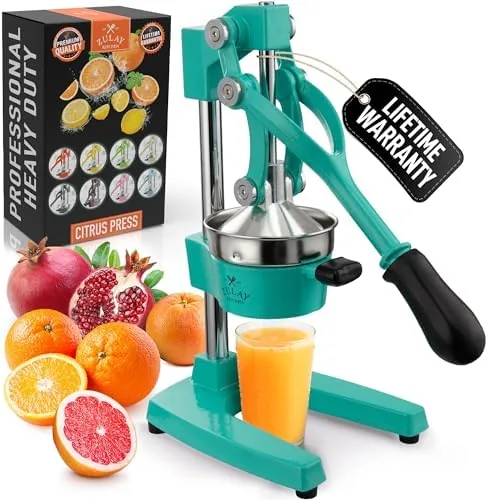
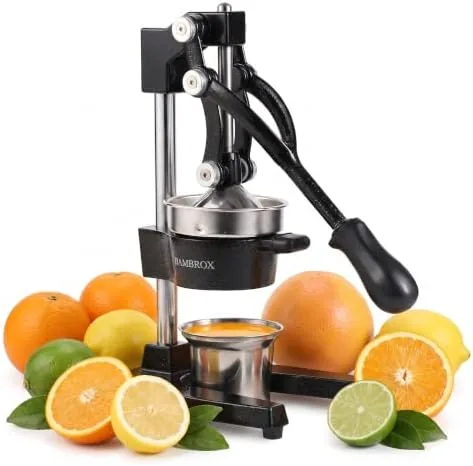
The squeezer is a study in honest engineering. A solid cast iron base holds a concave bowl, a wide cone rises from the center, and two long lever handles stretch out on either side. The whole unit is finished in matte black enamel, which gives it a classic hardware look that suits a farmhouse kitchen as well as a modern one. The weight is immediately reassuring: the base stays planted on the counter even when you put your full body weight behind the handles.

The cone sits on a short stem and detaches with a simple lift, so both the cone and the bowl rinse under running water. The bowl drains through a ring of straining holes into a well at the base, which holds the juice as you press. A stainless steel cup ships with the set and sits under the spout to catch the flow. The handles have a gentle curve that spreads the force across your palm, and they come together far enough to flatten the largest fruit without the hinges creaking.
Key Features
The feature that matters most is leverage, and this squeezer has it in abundance. The long handles multiply the force of your grip, so a lemon that fights a cheap plastic press gives up its last drops here. The wide cone accepts lemons, limes, oranges, and grapefruits, with the smaller fruits sitting high and the larger ones pressing down until the bowl fills. The detachable cone is genuinely useful, because the cone is the part that traps pulp, and being able to rinse it alone keeps the whole tool clean faster.
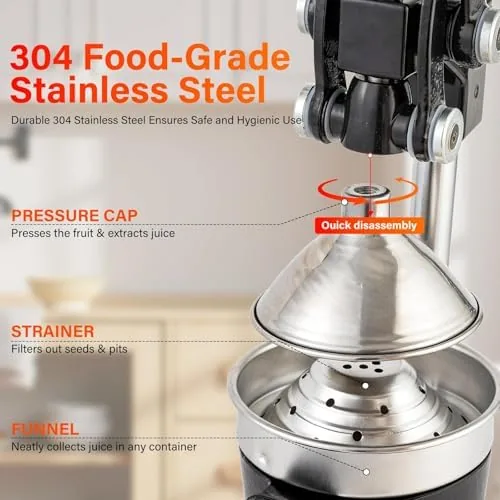
The included stainless steel cup is a small gift that solves a real problem. Rather than pressing over a glass and watching the juice splash the rim, you press over the cup and pour from the built-in spout. The cup is compact and dishwasher safe, and it doubles as a serving vessel for a single serving of juice. If you want to compare the current price against other manual juicers, the Amazon listing for the cast iron lemon squeezer is a useful reference.
Real-World Performance
I started with lemons, and the results were immediately better than any manual press I had used before. A single halved lemon, pressed skin side down, yielded almost every drop in two firm squeezes, with the cone turning the fruit to extract juice from the pith rather than leaving a soaked husk. The juice flowed through the straining holes cleanly, and the seeds stayed behind in the bowl while the liquid collected in the cup below.

Oranges were the next test. The wide cone handled a navel orange easily, and the long handles made the larger fruit feel effortless where a small press would have demanded a fight. A grapefruit needed the most pressure, and this is where the heavy cast iron paid for itself: the base never lifted off the counter, and the hinge never complained. The extraction rate for grapefruit was excellent, though it took three full presses to work through the thicker segments.
Limes produced the surprise of the month. A lime is small enough to sit awkwardly on many cones, but the wide rim of this cone holds it centered, and the pressing arc comes down over it without shooting the fruit across the counter. The enamel finish wiped clean with a damp cloth, the stainless steel cup went into the dishwasher, and nothing rusted or chipped over the four weeks. The only honest complaint is the weight in your hand while cleaning: this is a tool that lives on the counter, not in a drawer.

A large batch of lemonade brought out the tool one limitation and its best strength. Pressing eight lemons in sequence took steady work, but every fruit gave up its juice with the same two-squeeze rhythm, and the cup filled fast enough that I transferred it twice. The seeds stayed in the bowl the whole way, which meant no sieving before serving. A citrus vinaigrette came together even faster: two lemons, a spoon of mustard, and a slow drizzle of oil, all strained into the cup before the dressing went over the salad. For anyone who cooks with real juice rather than a bottle, that routine becomes second nature within a week.
Pros and Cons
Pros:
- Long handles give real leverage for oranges and grapefruits
- Heavy cast iron base stays planted on the counter
- Detachable cone rinses clean under running water
- Free stainless steel cup with a pour spout
- Straining holes keep most seeds out of the juice
Cons:
- Heavy and bulky, best kept on the counter
- Grapefruit requires significant arm strength
- Cast iron finish asks for prompt drying to avoid rust
How It Compares
Manual citrus tools split between lever presses, handheld reamers, and electric juicers, and the differences show up fast in real use. I compared this cast iron squeezer against a handheld reamer and a cheaper plastic lever press.
| Feature | Cast Iron Squeezer | Handheld Reamer | Plastic Lever Press |
|---|---|---|---|
| Material | Cast iron, enamel finish | Wood or plastic | Plastic |
| Leverage | Excellent | Hand grip only | Good |
| Largest fruit | Grapefruit | Orange | Orange |
| Stability | Heavy base, planted | Held in hand | Light, slides |
| Seeds filtered | Yes, mostly | No | Some |
| Included cup | Yes | No | No |

Against a handheld reamer, the cast iron press wins on juice yield and hands-free stability: a reamer drips juice down your wrist and leaves pulp in the glass, while this press strains as it goes. The plastic lever press matches it on price but cannot match the leverage or the weight, and it slides across the counter when you press down hard. For anyone who cooks with citrus regularly, the cast iron squeezer is the better buy, and it is the one I left on the counter after the month ended.
Who Should Buy It
Buy this squeezer if you make fresh lemonade, lime margaritas, or salad dressings from scratch, if you press oranges for breakfast juice most mornings, or if you find cheap plastic presses frustrating to use. It is a natural fit for a home bar, a farmhouse kitchen, or anyone who cooks and bakes with real citrus instead of bottled juice.
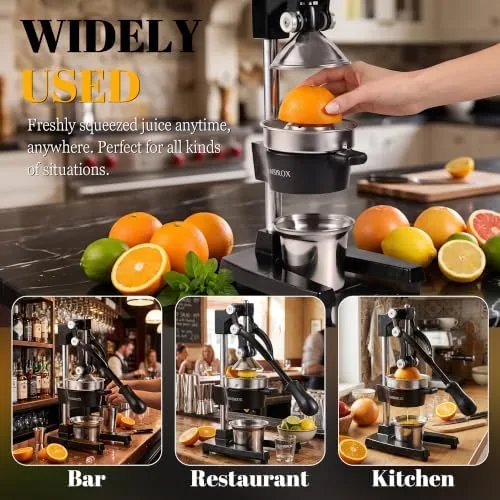
Skip it if you need a compact tool for a packed drawer, if you have limited hand strength and need an electric juicer, or if you only squeeze a lemon a few times a year. For everyone else, this is a simple tool that delivers on its one job. You can check the current price for the cast iron lemon squeezer on Amazon when you are ready to upgrade your citrus game.
How We Test
I pressed lemons, limes, oranges, and grapefruits over a month, weighing the juice yield for each fruit and timing how many presses each one needed. I tested the squeezer over a glass and with the included stainless steel cup, checked that the cone detached and rinsed clean, and left the unit assembled on the counter to confirm the enamel finish resisted stains and rust.
I deliberately pressed a fully seeded lemon and a thick-skinned grapefruit to test the straining holes and the hinge, and the seeds stayed behind in the bowl both times. I did not test the squeezer in a commercial kitchen or with frozen citrus, which are outside its normal range. Independent coverage such as the Wirecutter review of citrus juicers is a useful guide to how different press designs compare. The cast iron lemon squeezer listing on Amazon shows the current price and shipping details.
Cast Iron Lemon Squeezer: Questions People Ask
Will the cast iron squeezer juice oranges and grapefruits?
Yes. The wide cone and long handles give enough leverage to press oranges and grapefruits, though the largest fruits take more arm strength than a lemon.
Is the citrus cone really detachable?
Yes. The cone lifts off the base so you can rinse both parts under running water, and it snaps back into place for the next fruit.
How do you clean and maintain a cast iron lemon squeezer?
Rinse the cone and the stainless steel cup right after use and dry them thoroughly. Wipe the cast iron base dry so it stays free of rust and seasoning.
Does the stainless steel cup keep the seeds out of the juice?
The straining holes catch most seeds while the juice flows through, though a stray seed can slip through if you press very hard.
As an Amazon Associate, I earn from qualifying purchases.