
There are two complaints that follow manual citrus juicers around. The first is that they take too much muscle, that after three oranges your hand aches and you still have a fruit left to squeeze. The second is the cleanup, that a mesh strainer full of pulp is waiting for you the moment you finish, and washing it out is worse than the juicing. The Zulay Kitchen Cast Iron citrus press takes aim at both complaints with the same basic design. Its heavy cast iron base and long lever supply the pressure, and its detachable strainers pull apart so that seeds and pulp rinse away instead of lodging in place. I used this press nearly every day for a month in a kitchen that makes lemonade, orange juice, and the occasional round of cocktails, and this is the honest record of a month of real use.
Before the details, the standard note. This article contains affiliate links, and if you buy through one of them the site earns a small commission at no extra cost to you. That commission never changes what I test or what I recommend.
Design and Build
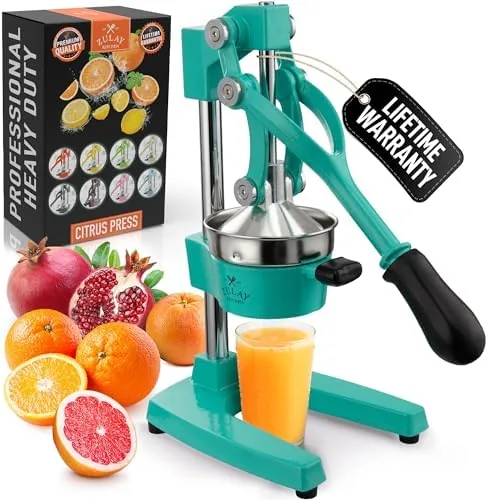
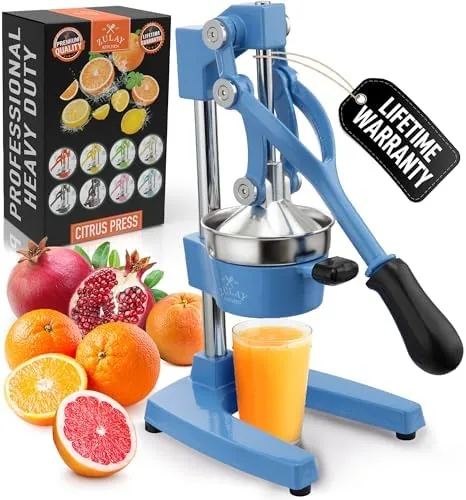
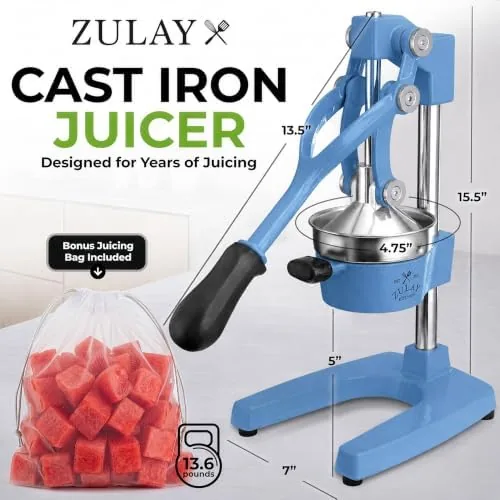
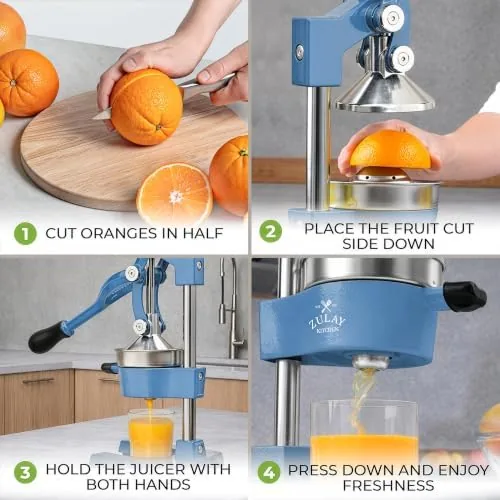
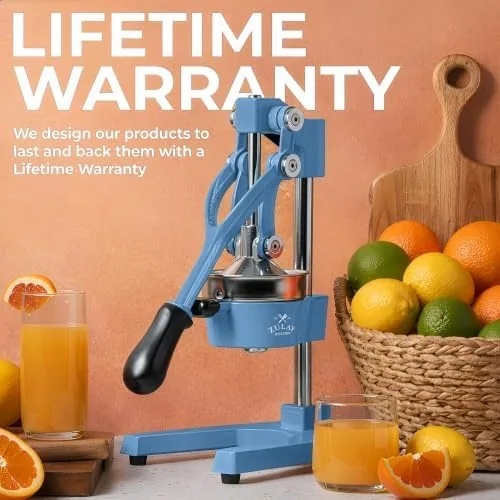
The press is built in the classic countertop style. A heavy cast iron base supports a juice bowl with a spout, and a pivoting upper arm carries the lever and the reamer. When you pull the handle down, the reamer presses into the fruit against the strainer, and the juice runs through the strainer into the bowl below. The whole assembly has a solid, industrial feel that is uncommon in kitchen tools aimed at home users.
The finish is smooth and coated, which keeps the iron from reacting with the acid in the fruit. The reamer is conical with a pointed tip that seats into the cut face of the fruit, and the strainer fits into the bowl with a shape that catches seeds without slowing the juice flow. The lever arm is long enough to give real mechanical advantage, and the base is heavy enough that the press does not need to be held or clamped while you work.
Key Features
The core feature is the cast iron leverage. The long handle multiplies your hand strength, so a full squeeze comes from the weight of the arm and your body weight rather than a tight hand grip. That means you can press a fruit completely dry without the fatigue that comes with a hand held squeezer, and it means the juice yield is consistently high.
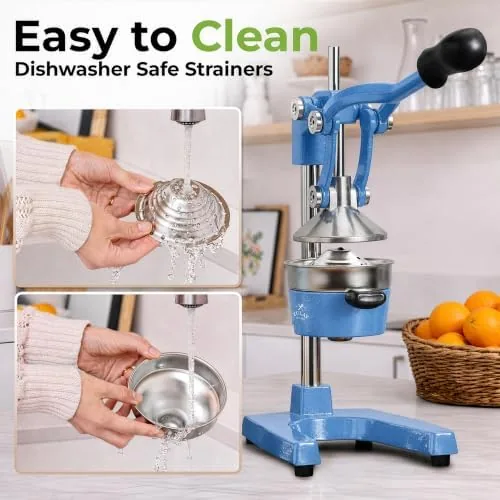
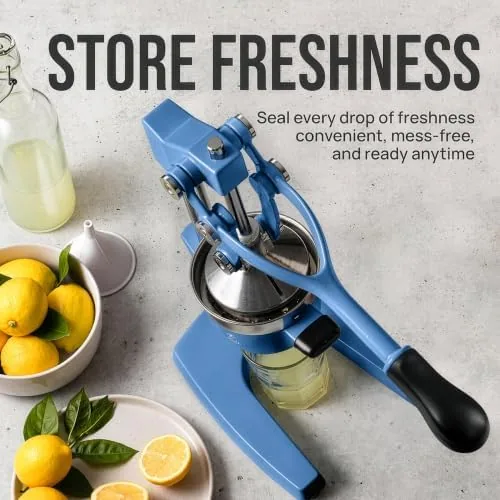
The detachable strainer is the feature that makes this press practical for daily use. The strainer lifts out of the bowl, and the bowl lifts out of the base, so the entire wet path of the tool separates into pieces that rinse under running water. There are no fixed screens and no hinge pockets for pulp to hide in, which is the design flaw of older cast iron presses.
The spouted bowl completes the layout. The juice collects in the bowl and pours out through the spout into a glass, a pitcher, or a cocktail shaker without a funnel, and the small size of the bowl keeps the tool compact on the counter. For a current look at the price and the available colors, the Amazon listing for the Zulay cast iron juicer is a useful reference.
Real-World Performance
My month of use started with oranges, because a pitcher of fresh orange juice was the whole reason the press came into the kitchen. Four navel oranges produced about eighteen ounces of juice in a few minutes, and the pour spout emptied the bowl cleanly into the pitcher. The reamer gripped each half without spinning it out, and the lever came down with a steady, controlled motion that did not splash.
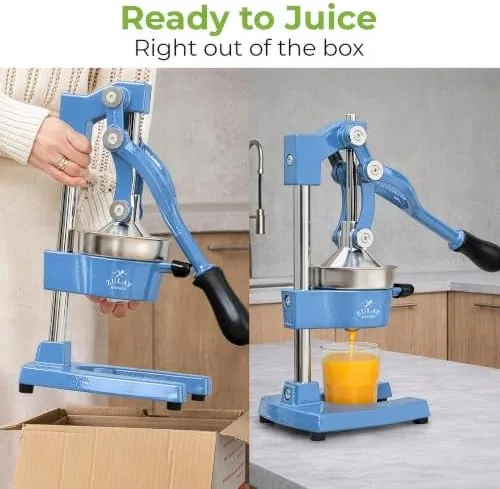
Lemons and limes became the weekly routine. A batch of lime juice for cocktails went through about six limes in under five minutes, and the strainer caught every seed, which is exactly what you want when you are squeezing directly into a shaker. Lemonade season put the press through its heaviest use, and the yield stayed high through a dozen lemons at a time, with no flex in the arm and no sign of strain in the base.
Cleanup was the real surprise. Each strainer and bowl popped apart, rinsed under the tap in about twenty seconds, and dried on the rack, and there was no pulp left behind in a hinge or a seam. I left the press out on the counter all month and it never showed a rust spot or a citrus stain, which speaks to the coated finish. The only caution is storage, because the press is genuinely heavy and needs a stable shelf spot rather than a crowded drawer.
Pros and Cons
Pros:
- Long lever and heavy base give a high yield with less effort
- Detachable strainer and bowl rinse clean in seconds
- Coated finish resists rust, staining, and citrus acid
- Spouted bowl pours straight into glass or shaker
- Strainer catches every seed cleanly
- Sturdy build shows no flex under sustained pressure
Cons:
- Too heavy for a crowded drawer or a high shelf
- Very large citrus must be halved or quartered to fit
- Manual work still required for huge daily batches
- Needs rinsing and drying to keep the finish spotless
How It Compares
Manual presses come in cast iron, aluminum, and plastic, and each changes the effort and the cleanup math. I compared this press against an aluminum press and a large plastic hand squeezer to see where the cast iron version sits.
| Feature | Cast Iron Press | Aluminum Press | Plastic Hand Squeezer |
|---|---|---|---|
| Stability on counter | Excellent, heavy base | Good, lighter | Held in hand |
| Leverage | Strong, long handle | Good | Limited |
| Juice yield | High | Good | Moderate |
| Cleaning | Detachable, fast | Fixed strainer | Fixed, simple |
| Durability | Very high | High, dent prone | Low, flexes |
| Price | Mid range | Mid range | Budget |
Against an aluminum press, the cast iron version wins on stability and yield, because the heavier base stays put and the stronger arm presses the fruit more fully, while aluminum can slide and dent over time. The aluminum press is easier to lift and store, which matters in a small kitchen. Against a plastic hand squeezer, the comparison is not close for anyone who juices often: the plastic tool is cheap and easy to rinse, but it flexes, tires the hand, and leaves juice in the fruit. For regular citrus use, the cast iron press is the better tool, and the detachable strainers close the cleanup gap that used to favor plastic.
Who Should Buy It
Buy this press if your kitchen goes through citrus every week, whether for morning juice, family lemonade, or a steady run of cocktails, and you want a tool that makes the work fast and the cleanup faster. It is an especially good fit for people who stopped using manual juicers because of the cleanup, since the detachable parts remove that excuse.
Skip it if you squeeze a lemon a few times a year and do not want a heavy counter fixture, if you need to store every tool in a drawer, or if you prefer an electric juicer for high volume mornings. For everyone else, this is a dependable workhorse that earns its counter space. You can check the current price for the Zulay cast iron juicer on Amazon when you are ready to buy.
How We Test
I tested this press for one month with nearly daily use, running oranges, lemons, limes, and grapefruit through it. I measured juice yield per fruit, timed a six lime batch, and tracked cleanup time after every session. I also soaked the disassembled parts in citrus juice overnight once to test the finish against acid, and inspected the metal for rust and staining at the end of the month.
I did not test the press in a commercial bar setting, on pomegranates or hard seeded fruit, or with continuous high volume use beyond home batches. For more on why pressing technique and tool leverage matter for yield, independent cooking resources such as Serious Eats' guide to juicing citrus fruits offer useful context. The Zulay cast iron juicer listing on Amazon shows the current price and available colors.
Zulay Cast Iron Citrus Press: Questions People Ask
Is this press stable enough to use without holding the base?
Yes. The cast iron base is heavy enough to stay planted on the counter, so both hands are free to work the lever, which is the main reason the press feels so solid during a squeeze.
What makes the detachable strainers different from a classic press?
On older presses the strainer is fixed inside the bowl, but here the strainer and bowl separate completely, so seeds and pulp rinse away instantly instead of lodging in corners and seams.
How much juice does a standard orange yield on this press?
In testing, a standard navel orange yielded roughly four to five ounces of juice, and lemons and limes produced near the high end of what each fruit can give with strong pressure.
Will citrus acid damage the cast iron over time?
No. The press uses a coated finish that resists citrus acid, so it does not rust or stain like bare iron, and a quick rinse and dry after each use keeps it looking new.
As an Amazon Associate, I earn from qualifying purchases.