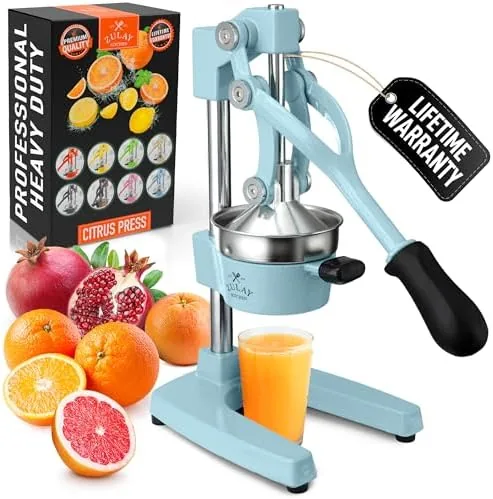

A good glass of fresh orange juice comes down to force. The fruit half sits on a cone, and the juice comes out only if enough pressure lands on it, evenly and completely. Handheld reamers get most of the juice but leave the rest trapped in the pulp, and electric juicers clean up like a small laboratory. The Zulay Kitchen cast iron juicer takes the oldest route, a heavy lever press that clamps a fruit half between a cone and a pressing head, and uses sheer weight and leverage to squeeze every drop out. I spent a month pressing oranges, lemons, limes, and grapefruit with it to find out whether a heavy iron tool earns its place on the counter. It does, with one clear caveat about where it lives.
Before the details, the standard note. This article contains affiliate links, and if you buy through one of them the site earns a small commission at no extra cost to you. That commission does not change what I test or what I recommend.
Design and Build
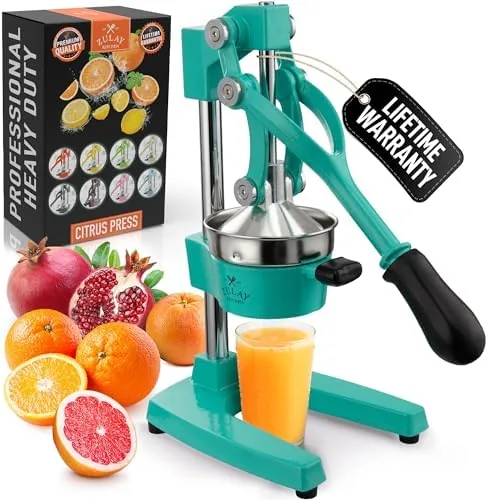
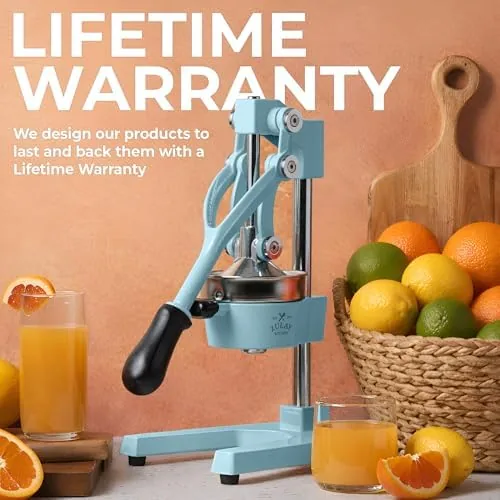
The Zulay cast iron juicer looks like it means business. It is a heavy, solid press on a wide base, with a long lever handle and a cast iron body that feels like it could outlast the house. The weight is immediately obvious, which is the point, because the entire design relies on the mass of the tool to stay planted while you pull the lever down on a fruit half.
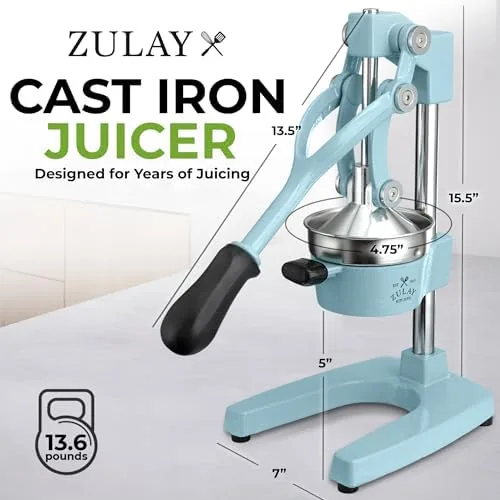
The build quality is genuinely heavy duty. The lever pivots smoothly, the pressing head seats squarely over the cone, and the base has enough grip that the press does not slide across the counter even with a firm pull. The strainers and the collection cup are detachable, which is the feature that changes the cleaning story, and they fit together without fiddling. For a manual tool, the fit and finish are excellent, and nothing about it feels flimsy or budget made.
Key Features
The headline feature is the lever press action. You set a fruit half on the cone, pull the lever down, and the pressing head clamps over it, applying pressure evenly across the entire half. That even pressure is the reason a press extracts more juice than a handheld reamer, which works a small patch of fruit at a time. The design handles a wide range of citrus, from limes to large oranges and even grapefruit.
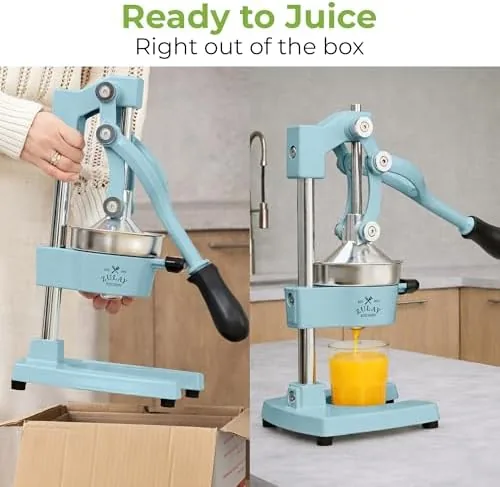
The detachable strainers are the second defining feature. Two strainer sizes catch seeds and pulp before the juice reaches the collection cup, and both slide out for cleaning. The collection cup itself detaches, so you can press a full batch and pour the juice straight out without transferring anything by hand. The weighted base completes the package, anchoring the press so the force of your pull goes into the fruit instead of into the counter. If you want to see the current price, the Zulay cast iron juicer listing on Amazon has the up to date details.
Real-World Performance
The month of testing started with a simple question: does the press actually get more juice than a handheld reamer? I answered it with a side by side test, pressing one half of each orange with the Zulay and reaming the other half by hand, then weighing the juice. The press won every time, extracting noticeably more juice from the same fruit, because the even pressure released juice the reamer left trapped. That result repeated with lemons and limes, and the difference was most dramatic with firm fruit that resists a handheld tool.
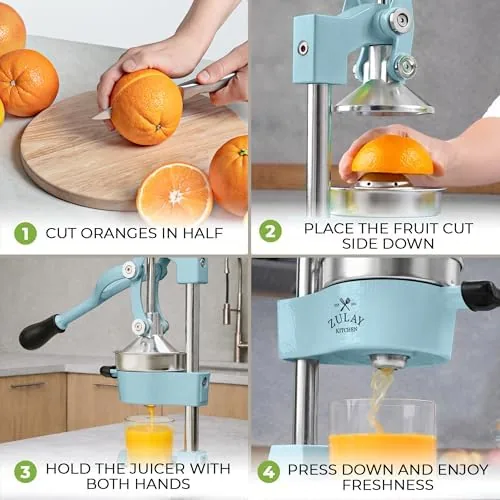
Day to day, the press became the fastest way to make a glass of orange juice in the house. A full glass took about four oranges and a couple of minutes, and the lever gave enough force that even firm fruit needed little arm effort. The strainers caught the seeds cleanly, and the juice came out clear enough that I rarely bothered to filter further. Cleanup lived up to the promise: strainers and cup rinsed under running water in seconds, and the iron base wiped down with a damp cloth, with a quick dry to keep the iron happy.
The honest limitations come down to physics and placement. The juicer is heavy, and that weight makes it a permanent counter piece rather than a tool you stash in a drawer. It takes up real space, and moving it around the kitchen is a two hand job. The juice yield is excellent, but for a single lemon for tea, pulling out a cast iron press feels like using a tow truck to move a bicycle, and that is where a small handheld squeezer still has a place. The iron also needs to be kept dry after cleaning, since bare iron will rust if it is left wet.
Pros and Cons
Pros:
- Noticeably higher juice yield than a handheld reamer
- Lever press needs little arm effort
- Handles oranges, lemons, limes, and grapefruit
- Detachable strainers and cup make cleanup quick
- Heavy base stays planted while pressing
- Built to last for years
Cons:
- Too heavy and large for a drawer
- Takes up permanent counter space
- Iron needs drying to prevent rust
- Overkill for a single squeeze
How It Compares
The citrus juicer market splits between handheld reamers, lightweight manual presses, and heavy cast iron presses like the Zulay. I compared the three to show where the extra money and counter space go.
| Feature | Cast Iron Press | Lightweight Press | Handheld Reamer |
|---|---|---|---|
| Juice yield | Highest | High | Moderate |
| Effort required | Low | Moderate | High |
| Stability | Excellent | Good | None needed |
| Cleanup | Quick, detachable parts | Quick | Simple |
| Counter space | Large | Small | None |
| Best for | Daily juice drinkers | Occasional users | Single lemons |

For anyone who drinks fresh juice regularly or tends a bar, the cast iron press is the right investment, because the yield and speed pay back the counter space quickly. For occasional use or a single lemon, a lighter tool is the practical choice. Culinary writers at Bon Appetit have covered the best citrus juicers and reached a similar verdict, that heavy lever presses win on yield for committed users.
Who Should Buy It
Buy the Zulay cast iron juicer if you make fresh orange juice most days, if you are tired of leaving juice behind with a reamer, or if you run a bar or frequently juice citrus for cocktails. It suits health enthusiasts who want a full glass of juice with minimal arm effort, and anyone who values tools that last decades.
Skip it if you only squeeze a lemon for tea occasionally, if your kitchen has no spare counter space, or if you prefer an electric juicer despite the cleanup. For daily citrus drinkers, the yield and ease are worth the footprint, and you can check the current price of the Zulay cast iron juicer on Amazon when you are ready to order.
How We Test
I used the Zulay cast iron juicer daily for a month, pressing oranges, lemons, limes, and grapefruit. I ran side by side yield tests against a handheld reamer, weighed the juice from each method, and tracked press effort, stability, cleanup time, and how the iron held up to daily washing and drying.

I did not test the juicer with non citrus fruit, since the press is designed for citrus only, and I did not attempt dishwasher cleaning because the iron finish is not meant for it. For independent context on citrus juicers, Bon Appetit's juicer guide is a useful reference before you decide.
Zulay Cast Iron Juicer: Questions People Ask
Does the cast iron juicer really get more juice than a handheld reamer?
Yes. In side by side tests the lever press extracted noticeably more juice from the same oranges than a handheld reamer, because the pressure is applied evenly across the Whole Fruit half.
How do you clean the Zulay cast iron juicer?
The strainers and the collection cup detach and rinse under running water, and the heavy base wipes down with a damp cloth. Drying the iron after washing keeps it free of rust.
Can the juicer handle lemons and limes, not just oranges?
Yes. The press handles oranges, lemons, limes, and grapefruit, and the lever gives enough force for firm fruit without much arm effort.
Is the cast iron juicer too heavy for everyday counter use?
The weight is a feature, since it keeps the press planted while you work. Expect it to live on the counter or a sturdy shelf rather than tucked into a drawer.
As an Amazon Associate, I earn from qualifying purchases.