
Ask a bartender what tool they reach for when the citrus order is large and the answer is rarely a plastic lemon squeezer. Small hand presses flex, cheap hinges bend, and the citrus stays stubbornly wet after the squeeze. The Zulay Kitchen cast iron juicer is the traditional answer to that problem, a heavy two piece press that sits on the counter like a piece of machinery and uses its weight and leverage to get the last drops out of lemons, limes, and oranges. The modern touch is a set of detachable strainers that pull apart for cleaning, which attacks the one real weakness of classic cast iron presses. I spent three weeks juicing for fresh margaritas, lemonade, and a batch of lime based cocktails, and this is the honest record of how it holds up.
Before the details, the standard note. This article contains affiliate links, and if you buy through one of them the site earns a small commission at no extra cost to you. That commission never changes what I test or what I recommend.
Design and Build
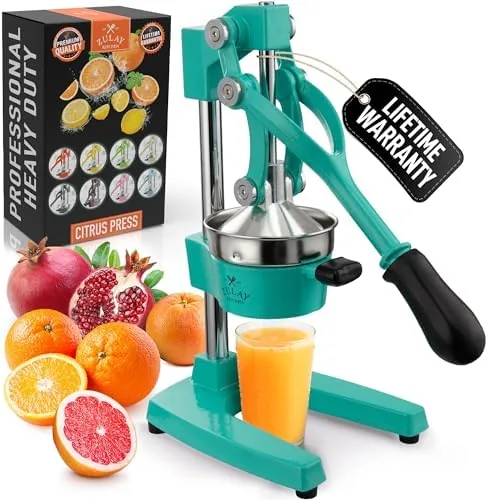
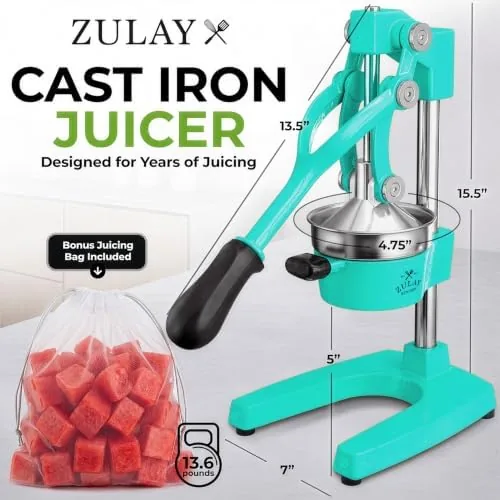
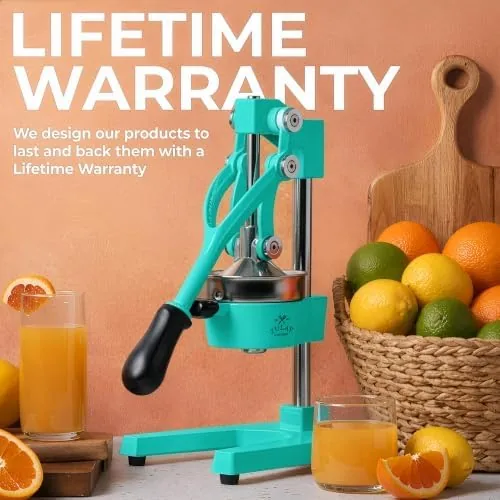
The juicer is a two piece cast iron press. A heavy base holds a juice bowl and a strainer, and an upper arm with a lever presses down onto a reamer that crushes the citrus against the strainer. The whole assembly weighs enough to stay planted on the counter, which is the core of the design: the base does not slide and the arm does not flex, so all of your force goes into the fruit.
The finish is a matte, coated cast iron that resists the corrosive action of citrus acid better than a bare iron skillet would. The reamer has a conical shape with a tapered point that grips the fruit half and spins it slightly as the arm comes down, which helps release the juice. The detachable strainer sits inside the juice bowl and catches seeds and pulp, and the bowl itself lifts out of the base, so nothing is fixed in place.
Key Features
The defining feature is the cast iron leverage. The long handle gives you mechanical advantage that a hand held press cannot match, and the weight of the base absorbs the motion instead of bouncing the whole tool across the counter. The result is a higher juice yield per fruit, because you can apply sustained pressure instead of short, tiring squeezes, and the press holds the fruit in place while you bear down.
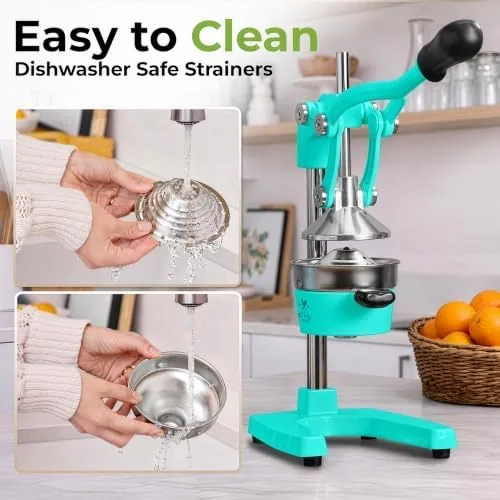
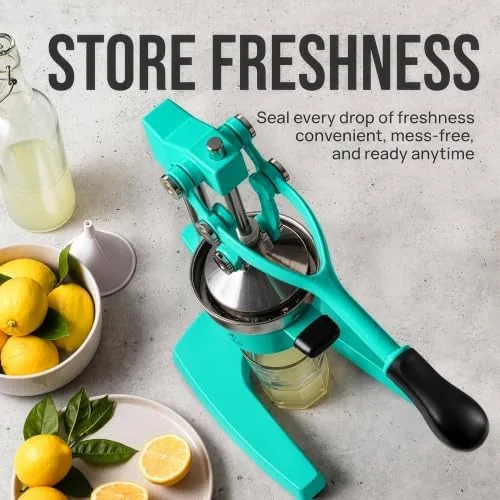
The detachable strainer system is the second feature, and it is the reason this press cleans up faster than its ancestors. In a classic one piece press, the strainer is fixed and pulp works its way into the hinge and the corners. Here, the strainer and bowl pop apart, and the strainer rinses clean under running water in seconds. The juice bowl collects the liquid in a spouted shape, so you pour straight into a glass or a shaker without transferring through a funnel.
The multi fruit sizing rounds out the feature set. The reamer bowl handles standard oranges, lemons, and limes, and the press works equally well for grapefruit halves cut to fit. For a current look at the price and the exact dimensions, the Amazon listing for the Zulay cast iron juicer is a useful reference.
Real-World Performance
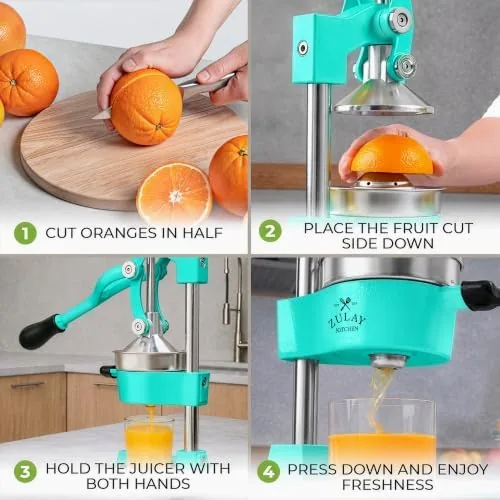
I started with limes, the most demanding test because they are small, tough skinned, and usually needed in bulk. Each lime half sat on the reamer, the arm came down with steady pressure, and the juice flowed through the strainer into the bowl. A standard lime yielded close to what a heavy duty bar press gives, and the juice came through clean, with the strainer catching seeds and most of the pulp.
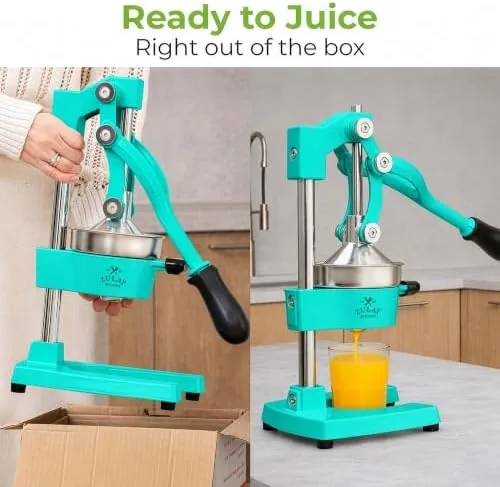
Lemons followed for a batch of lemonade. The larger fruit pressed just as easily, and the conical reamer gripped the half so it did not spin out from under the pressure. A dozen lemons produced over three cups of juice in about ten minutes, which is faster and less tiring than a hand held squeezer, and the pour spout made filling the pitcher clean and controlled.
Oranges tested the capacity. A standard navel orange pressed with the same leverage, and while the peel absorbed a little more force than the flesh, the yield was still high. The strainer caught the seeds that come loose from oranges, which was the main reason I preferred it over the smooth cone on a traditional press. Cleaning after each batch took under a minute: pop the strainer and bowl apart, rinse, dry, and reassemble. The coated finish wiped clean with no citrus residue or staining after three weeks of daily use.
Pros and Cons
Pros:
- Cast iron weight keeps the press stable under full pressure
- Long handle delivers Leverage for a higher juice yield
- Detachable strainer and bowl clean in under a minute
- Strainer catches seeds and pulp for clean juice
- Pour spout transfers juice without a funnel
- Coated finish resists citrus acid and staining
Cons:
- Heavy enough to be awkward to store in a small cabinet
- Oversized citrus must be cut to fit the bowl
- Needs prompt drying to avoid water spots
- Manual pressing still takes effort for very large batches
How It Compares
Manual citrus juicers range from small plastic hand presses to this style of heavy cast iron press, and the choice usually comes down to effort versus convenience. I compared this press against a plastic hand squeezer and a lightweight aluminum press.
| Feature | Cast Iron Counter Press | Plastic Hand Squeezer | Aluminum Counter Press |
|---|---|---|---|
| Leverage | Excellent, long handle | Limited, hand grip | Good |
| Stability | Very stable, heavy base | Held in hand | Stable, lighter |
| Yield per fruit | High | Moderate | Good |
| Cleanup | Detachable parts | Fixed, easy | Fixed, moderate |
| Durability | Cast iron, very durable | Plastic, flexes | Metal, dent prone |
| Price | Mid range | Budget | Mid range |
Against a plastic hand squeezer, the cast iron press wins on every meaningful measure except price and storage. The plastic tool is cheap and tucks into a drawer, but it flexes under pressure, tires your hands on a batch, and leaves citrus noticeably wetter. Against an aluminum press, the cast iron version wins on stability and yield, since the lighter base can slide and the thinner metal can dent over time, though aluminum is easier to lift and store. The cast iron press is the strongest choice for anyone who juices regularly, which is exactly the audience this tool was designed for.
Who Should Buy It
Buy the Zulay cast iron juicer if you juice citrus regularly for cocktails, lemonade, marinades, or daily health drinks, and you want a tool that makes the job faster and less tiring. It is a natural pick for home bartenders and for people who drink fresh juice every morning, and the easy cleaning removes the one excuse that keeps people from using manual juicers.
Skip it if you juice citrus a few times a year and do not want a heavy counter tool, if you have very limited storage space, or if you prefer the convenience of an electric juicer for large daily batches. For most citrus lovers, this press earns its place on the counter. You can check the current price for the Zulay cast iron juicer on Amazon when you are ready to press.
How We Test
I tested the Zulay juicer over three weeks with lemons, limes, oranges, and grapefruit. I measured yield per fruit against a plastic hand squeezer, timed a twelve lime batch for a cocktail night, and verified that the strainer caught seeds across every fruit type. I cleaned the press after every session, timed the cleanup, and checked the finish for citrus staining after repeated use.
I did not test the press on pomegranates, hard seeded tropical fruit, or continuous commercial service, and I recommend cutting oversized specialty citrus to fit the bowl. For a broader look at juicing tools and techniques, independent resources such as Serious Eats' guide to getting the most juice from citrus explain why leverage matters. The Zulay cast iron juicer listing on Amazon shows the current price and available colors.
Zulay Kitchen Cast Iron Juicer: Questions People Ask
Does the cast iron construction really make a difference for juicing citrus?
Yes. The weight keeps the press stable on the counter and the long handle delivers more leverage, so you extract more juice per fruit with noticeably less effort than a plastic press.
How do the detachable strainers work, and do they make cleaning easier?
The strainer and juice bowl pop apart for rinsing, and the strainer catches seeds and pulp, so a full cleanup takes under a minute instead of scrubbing a fixed press.
Is this juicer better for lemons and limes or for larger oranges?
It handles both well. The bowl is sized for standard oranges, and the same leverage works for small lemons and limes, though oversized specialty citrus needs cutting to fit.
Do I need to season or oil the cast iron like a skillet?
No. The juicing surfaces are coated to resist citrus acid, so the press needs no skillet style seasoning, but rinsing and drying it promptly prevents water spots on the iron.
As an Amazon Associate, I earn from qualifying purchases.