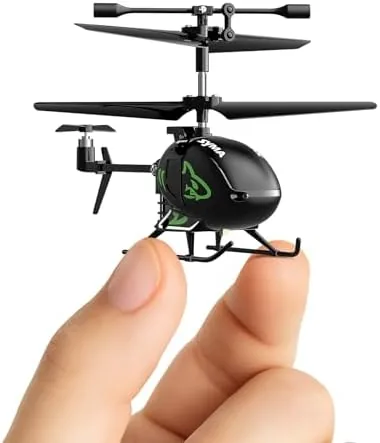

There is a moment every parent recognizes when a child first sees a flying toy. The interest is instant, and the next question is whether the thing will survive the first ten minutes, the ceiling, the furniture, and the general chaos of a bedroom floor. The SYMA S100 exists for exactly that moment. It is a compact mini RC helicopter designed for indoor beginner practice, with altitude hold to keep it steady and a 3.5-channel control system that stays simple enough for a child to learn. After a week of flying the S100 in a bedroom and a playroom, bouncing it off walls on purpose, and timing every charge and flight, I have a clear picture of whether this little black helicopter earns its place as a first toy.
Before the flights, the disclosure. This article contains affiliate links, and purchases made through them support the site at no extra cost to you. The test results below come from my own flying, not from any arrangement with the manufacturer.
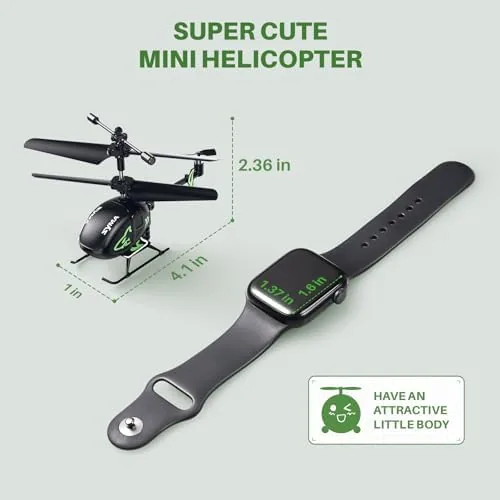
The S100 is small in the way toy helicopters should be: light, tough, and sized for a child's hand and a small room. The rest of this review covers the build, the altitude hold, the controls, real flight results, and how it compares with the other mini helicopters a parent might consider.
Design and Build
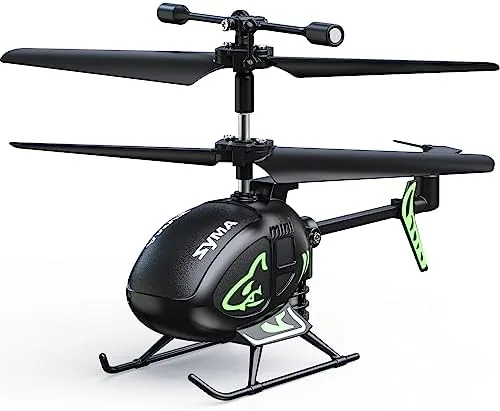
The S100 is a tiny coaxial helicopter with a black plastic body, a twin rotor system, and a compact tail boom. The whole unit is light enough to survive the crashes that come with beginner flying, and the rotor blades sit inside a guard that protects them, and the furniture, during the inevitable collisions. It is deliberately built for the bedroom and playroom rather than the park.
The build quality is typical SYMA, which is to say solid for the price. The plastics are smooth and the joints are snug, the black body looks sharp out of the box, and the rotor guards are substantial rather than decorative. The small rechargeable battery sits inside the body, and the unit charges through a USB cable rather than requiring a separate charger.
The controller completes the package. It is a compact remote with the standard layout of a stick for climb and rotation and another for forward and reverse, plus trimming controls for fine tuning. There is nothing here that would intimidate a child, and nothing that would impress a veteran, which is exactly the balance a first helicopter should strike.
Key Features
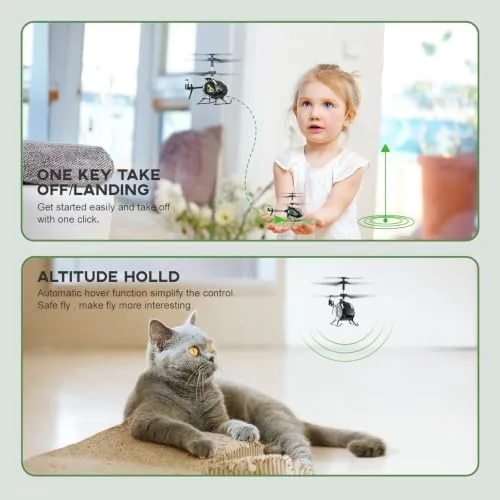
The headline feature is altitude hold. The S100 locks onto a steady height automatically, so the pilot does not have to constantly work the throttle to keep the helicopter level. That removes the hardest part of beginner flying, which is the constant fight with altitude, and leaves the child free to focus on turning and steering.
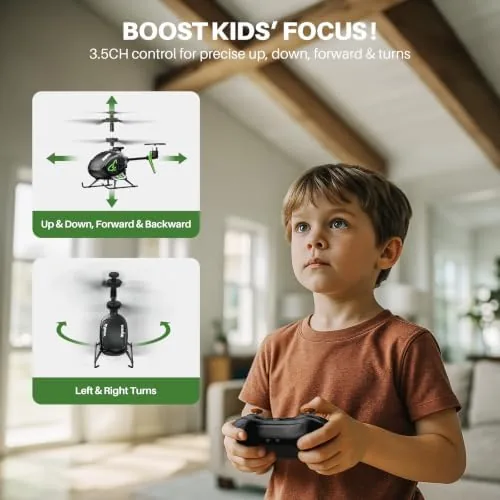
The 3.5-channel control system is the other pillar. It handles climb and descent, left and right rotation, and forward and reverse movement, which covers everything a beginner needs without the complexity of a full 6-channel setup. The throttle is responsive but gentle, and the helicopter reacts predictably to small inputs rather than lurching.
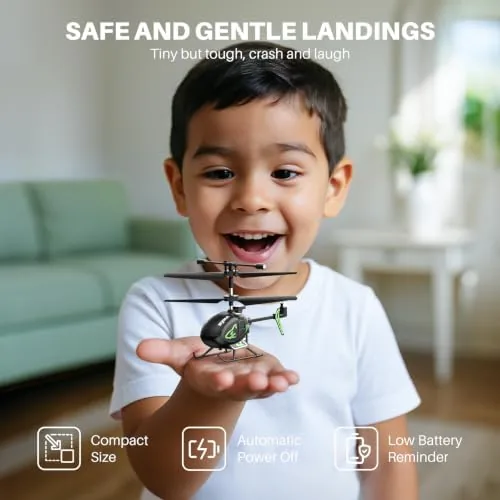
The compact design is what makes the toy work in a small room. The S100 fits in the space above a bed, maneuvers between a desk and a dresser, and can hover in a gap that would swallow a larger drone. The five to seven minute flight time per charge is short by modern standards, but it suits a child's attention span, and the USB charging makes the next flight simple.
Real-World Performance
I flew the S100 in a bedroom with standard furniture, a playroom with a rug and toys on the floor, and a hallway, and I started with the throttle in my hand and modest expectations. The first surprise was the altitude hold. Even in the first flight the helicopter held a steady height with minimal trimming, and the twin rotors kept the machine level through gentle turns. For a child learning to fly, that stability is everything.
The flying character is gentle and forgiving. The S100 climbs and descends smoothly, turns with a predictable rotation, and drifts forward and backward at a modest pace. It will not do flips or roll maneuvers, and it will not impress anyone who wants speed, but that is not its job. Its job is to teach the basics without punishing mistakes, and in that role it performs well.
Crashes were the real test, because crashes are what a first helicopter faces. I banked it into a curtain, dropped it onto a bed, and clipped a dresser, and every time the little machine dropped, stayed intact, and took off again after a quick reset. The light weight, the rotor guards, and the coaxial design absorb impacts that would snap the frame of a heavier model. By the end of the week I had stopped flinching, which is the highest compliment a crash test can earn.
Two limitations defined the experience honestly. The flight time is short, so a session becomes a cycle of five or six minute flights and recharges, which means a patient child, or a spare battery, is part of the plan. And the helicopter needs calm air, because it is an indoor toy through and through, and even a gentle breeze from an open window will push the light body around.
The learning curve is genuinely friendly. A child can learn to hover in minutes, and the altitude hold removes the frustration that kills most beginner toys within a day. The trimming controls take a moment to understand, but once set, the helicopter flies straight and steady for the rest of the battery.
Pros and Cons
Pros:
- Altitude hold keeps the helicopter steady for beginners
- Compact size suits bedrooms and playrooms
- Lightweight build survives crashes and impacts
- Simple 3.5-channel controls for a child
- USB charging with no separate charger needed
- Low price makes it a low risk first helicopter
Cons:
- Flight time of five to seven minutes is short
- Indoor only, any breeze disrupts it
- No aerobatics, purely a beginner hover craft
- Recharge time means waiting between flights
How It Compares
The S100 does not compete with camera drones, and it is more honest to measure it against the other mini helicopters a parent might consider for a child. The table below lines up the options.
| Feature | SYMA S100 | Non Gyro Mini | Camera Drone |
|---|---|---|---|
| Altitude hold | Yes | No | Yes |
| Control channels | 3.5 | 3 | 4 or more |
| Indoor focus | Yes | Yes | Outdoor preferred |
| Flight time | 5 to 7 minutes | 5 to 8 minutes | 10 to 20 minutes |
| Crash resistance | Excellent | Good | Fragile |
| Price | Lowest | Lowest | Much higher |
Against a non gyro mini helicopter, the S100 wins clearly on stability, since the altitude hold removes most of the constant throttle corrections that frustrate new pilots. Against a camera drone, it loses range, battery, and capability but wins on price, safety, and indoor suitability. For a first helicopter bought for a child in a small room, the S100 is the smartest value of the three.
Who Should Buy It
Buy the SYMA S100 if you are buying a first helicopter for a child, if you want to test whether the hobby suits your family without spending much, or if you need an indoor toy that survives clumsy hands. The altitude hold and compact design make it the closest thing the RC world has to a safe introduction, and it is a sensible gift for a birthday or holiday. You can check the current price of the SYMA S100 on Amazon.
Skip it if you want a camera, GPS, or outdoor flying, because those require a real Drone with a budget to match, or if a longer flight time matters, because the five to seven minute ceiling will test your patience. For everyone else, the S100 is a low risk buy that teaches real piloting basics.
How We Test
I flew the S100 across a week of indoor sessions in a bedroom, a playroom, and a hallway, logging more than a dozen flights and a controlled crash test against furniture and curtains. I timed every charge and every flight, measured how well the altitude hold maintained height, and tested the trimming controls and the control response for a beginner pilot. For broader context on the current state of RC helicopters and drones, Tom's Hardware news regularly covers the flying tech space and is a useful read before you decide.
The SYMA S100 helicopter listing on Amazon shows the current price, available colors, and delivery details.
SYMA S100 Mini Helicopter: Questions People Ask
Is the SYMA S100 good for a child's first helicopter?
Yes, the compact size, altitude hold, and gentle control response make it one of the most forgiving first helicopters for indoor beginner practice.
How long does the battery last on the S100?
A full charge delivers roughly five to seven minutes of flight time, followed by a recharge period before the next flight.
Can the S100 fly outdoors?
It is really an indoor model. The light weight and small size make it easy to fly in a bedroom or playroom, but even a light breeze will push it around outside.
How does altitude hold work on the S100?
Altitude hold locks the helicopter at a steady height so the pilot focuses on direction and rotation instead of constantly adjusting the throttle.
As an Amazon Associate, I earn from qualifying purchases.