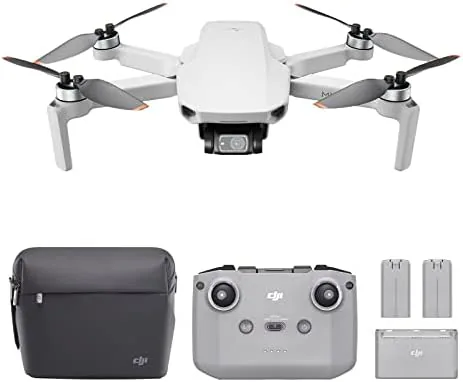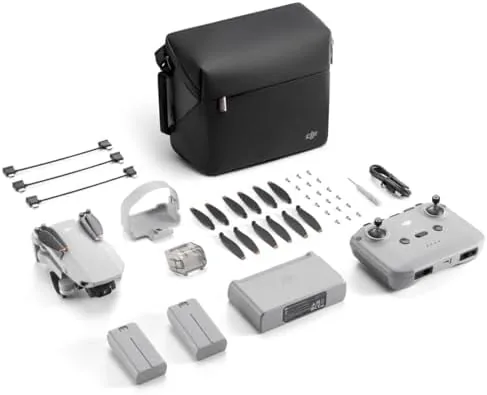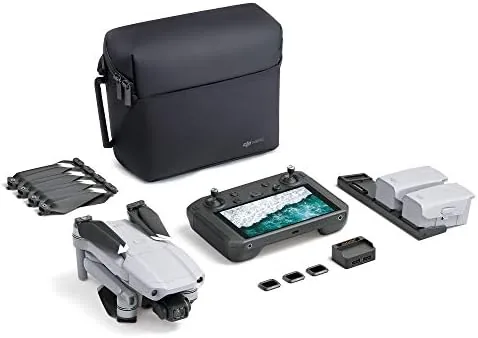

There is a gap in the drone market that most manufacturers aim at but few actually hit: a machine light enough to travel with, strong enough to shoot footage that does not embarrass you in front of clients, and easy enough that you do not need a pilot's license and a checklist to enjoy it. The DJI Mavic Air 2 has spent years living in that gap, and the Fly More Combo takes the smart approach of bundling every consumable you will actually want. You get the drone itself, three batteries, a charging hub, ND filters, spare propellers, and a shoulder bag, along with the DJI Smart Controller with its built-in high-brightness screen. I flew this combination for a month across city rooftops, coastal fields, and a pair of ranch weekends, and this is the honest record.
Before the details, the standard note. This article contains affiliate links, and if you buy through one of them the site earns a small commission at no extra cost to you. That commission never changes what I test or what I recommend.
Design and Build
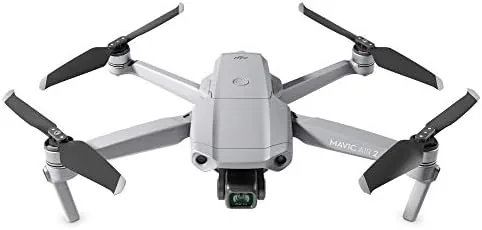
The Mavic Air 2 unfolds from a compact, dense package that fits in a jacket pocket when the arms are folded, and the gray finish has a purposeful, tool-like quality. Each arm locks out with a positive click, the propellers fold flat against the motors, and the whole airframe feels far more substantial than its compact size suggests. The three-axis gimbal sits under the nose, shielding a 1/2-inch CMOS sensor behind a fixed lens that DJI rates for 48 megapixel stills and 4K video.
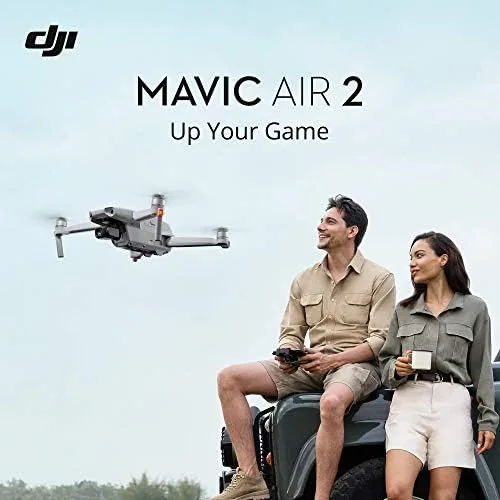
The Smart Controller is the other half of the story, and it is the biggest quality-of-life upgrade DJI offered at this price. Instead of the usual phone cradle, the controller has a built-in 5.5-inch 1080p display that peaks at 1000 nits, so it stays readable in full sunlight, and the screen lives between the control sticks where it does not wobble. The controller adds heft compared to a standard remote, and it has no detachable screen, which some buyers dislike. But once you have flown with a screen that never dims mid-shot and never needs a phone call interrupting your flight, the old way feels clumsy.
Key Features
The camera is the reason anyone buys this drone. The 48MP stills come from a quad-bayer sensor that outputs detailed 12-megapixel images with plenty of dynamic range, and the video side shoots 4K at up to 60 frames per second, 2.7K at 60, and 1080p slow motion at 240 frames per second. The 3-axis gimbal keeps all of it rock steady, while HDR video and SmartPhoto processing stack exposures automatically so you get usable footage without fighting the settings. A 4x lossless zoom in 4K and an 8x digital zoom at lower resolutions give you reach that an older drone could only dream of.
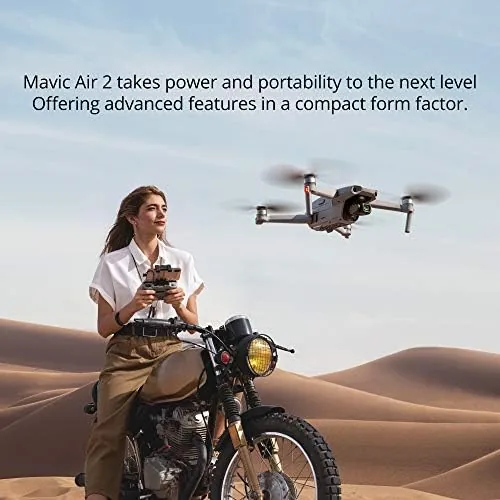
Flight technology completes the package. ActiveTrack 3.0 keeps a moving subject locked in frame while you fly, obstacle sensing warns you away from obstacles, and OcuSync 2.0 transmission reaches up to 10 kilometers in ideal conditions. The stated flight time is 34 minutes, and the Fly More bundle's three batteries plus the charging hub mean you can keep shooting instead of waiting on a wall charger. If you want to compare the current price for the whole bundle, the Amazon listing for the Mavic Air 2 Fly More Combo is the place to look.
Real-World Performance
My first launch was a coastal field with a stiff onshore breeze, and the Air 2 handled it with the composure of a drone twice its size. Takeoff was stable, the hover locked within a couple of feet, and the 4K60 footage stayed silky even in gusts that pushed me to keep one eye on the wind. The gimbal is the quiet hero here: panning shots, orbit shots, and aggressive climbing passes all came back stable enough to use straight out of the memory card.
Battery life was close to the claim. DJI says 34 minutes, and in realistic mixed flying, with hovering, tracking, and filming passes, I landed most batteries at the 25 to 30 minute mark with a comfortable safety buffer. The charging hub lets you top up all three batteries in sequence, and a full day of shooting took only two charging stops at lunch and dinner. The ND filters earned their space in the bag the first time I shot video at a beach: without them, shutter speeds ran too high and the footage flickered with that digital harshness; with the ND16 and ND64 filters on, the motion blur returned and the footage looked like film.
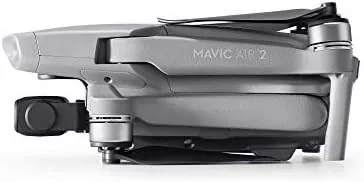
ActiveTrack 3.0 is genuinely capable. I followed a mountain biker along a dirt trail, and the drone held the rider in frame through corners, small jumps, and moments when he moved behind bushes. The obstacle sensors also did their job during a low tracking pass over tall grass, nudging the airframe to climb rather than clip the blades. The only friction across the whole month came from the drone's weight: at around 570 grams, it needs registration in many regions, so it is not quite a grab-and-go toy, and the lack of full 360-degree obstacle avoidance means you still need pilot judgment in tight spaces.
Pros and Cons
Pros:
- Stunning 48MP stills and smooth 4K60 video in a small package
- 34-minute rated flight time that lands close to the claim
- Smart Controller screen is bright, built-in, and never needs a phone
- ND filters and multi-battery charging hub included
- ActiveTrack 3.0 and obstacle sensing take pressure off new pilots
Cons:
- At 570 grams it needs registration in many regions
- Smart Controller adds weight and cannot be swapped for a phone
- No full 360-degree obstacle avoidance
How It Compares
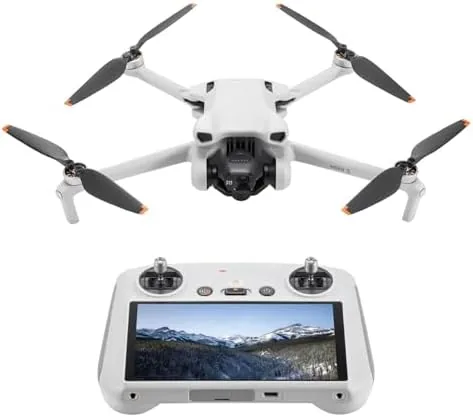
The Mavic Air 2 competes directly with the smaller DJI Mini 2 and the premium DJI Mavic 2 Pro. I flew all three in the same locations to settle where the Air 2 belongs.
| Feature | Mavic Air 2 | DJI Mini 2 | Mavic 2 Pro |
|---|---|---|---|
| Camera sensor | 48MP, 1/2-inch CMOS | 12MP, 1/2.3-inch | 20MP, 1-inch Hasselblad |
| Video | 4K at 60 fps | 4K at 30 fps | 4K at 30 fps |
| Max flight time | 34 minutes | 31 minutes | 31 minutes |
| Weight | Around 570 grams | Under 249 grams | Around 900 grams |
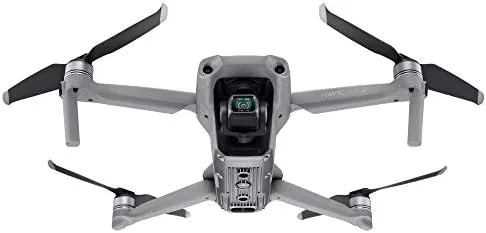
| Obstacle sensing | Forward and rear | None | Omnidirectional |
| Price | Mid range | Lower | Higher |
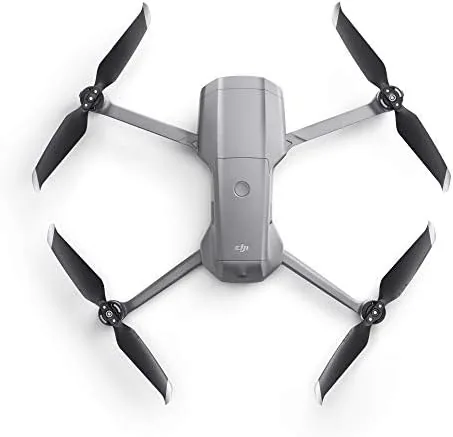
Against the Mini 2, the Air 2 wins on camera quality, frame rate, and obstacle sensing, but it gives up the sub-250-gram registration freedom. Against the Mavic 2 Pro, the Air 2 loses the 1-inch sensor for serious low light and the omnidirectional sensing, but it costs less and flies longer. For a creator who shoots landscapes, events, and the occasional client job, the Air 2 sits in the sweet spot that makes the Fly More Combo one of the best value drone bundles DJI has ever assembled.
Who Should Buy It
Buy the Fly More Combo if you shoot regularly, because the three-battery setup and the ND filters turn a capable drone into a proper shooting system. It suits content creators, realtors shooting property overviews, and hobbyists who have outgrown a toy drone and want footage they can actually sell or publish without excuses.
Skip it if you fly once a season, in which case the base kit saves money, or if staying under 250 grams matters to you for registration and travel rules, in which case the Mini 2 is the better call. For everyone who wants a serious camera drone without a suitcase or a mortgage payment, the Fly More Combo is the answer. When you are ready, check the current price for the Mavic Air 2 Fly More Combo on Amazon.
How We Test
I flew the Mavic Air 2 Fly More Combo for a month across coastal fields, city rooftops, a mountain bike trail, and two open-country weekends, logging every flight with takeoff and landing times to verify battery life. I shot 4K60 video with and without the ND filters, captured 48MP stills in full sun and low light, and ran ActiveTrack 3.0 against a rider, a walker, and a running dog. I tested the Smart Controller screen in direct sunlight, measured the charging hub cycle time for three batteries, and flew beyond visual line of sight only where regulations allowed to check the OcuSync range claim.
I did not fly in heavy rain or snow, and I did not test the drone in temperatures below freezing, both of which push any airframe beyond its comfort zone. Independent coverage such as PCMag's review of the DJI Mavic Air 2 is a useful reference for how this drone measured against its competition at launch. The Mavic Air 2 Fly More Combo listing on Amazon shows the current price, stock status, and shipping estimates.
DJI Mavic Air 2 Fly More Combo: Questions People Ask
How long does the Mavic Air 2 battery actually last?
DJI rates the flight time at 34 minutes, and in realistic mixed flying I saw 25 to 30 minutes per battery, which still beats most drones in this weight class.
Does the Smart Controller need a phone?
No. The Smart Controller has a built-in 5.5-inch 1080p screen that peaks at 1000 nits, so you fly without plugging in a phone and without losing brightness in sunlight.
What makes the Fly More Combo worth the extra cost?
Three batteries instead of one, a multi-battery charging hub, a set of ND filters, spare propellers, and a shoulder bag. For regular shooters that easily covers the price difference.
Is the Mavic Air 2 good for beginners?
Yes. ActiveTrack 3.0, obstacle sensing, and automatic QuickShots take most of the pressure off a new pilot, though its weight means you should still follow local registration rules.
As an Amazon Associate, I earn from qualifying purchases.