
Few toys capture the imagination of a child quite like a helicopter. The promise of something that lifts off a desk and hovers in midair is hard to resist, and the reality often falls short once the box is open. Fragile rotor blades, a battery that dies in minutes, and controls that do nothing but spin the craft in circles have sent many parents back to the store. The Cheerwing S107G approaches the problem differently. It is built around a design that has been refined for years, a coaxial helicopter with a gyro that does most of the stabilization work before the pilot ever touches the sticks. This review records my time flying it in a living room and a home office, so you know exactly how it behaves before you spend a dollar.
Before the details, the standard note. This article contains affiliate links, and if you buy through one of them the site earns a small commission at no extra cost to you. That commission does not change what I test or what I recommend, and I treat every product here the same way I would treat one bought with my own cash.
Design and Build
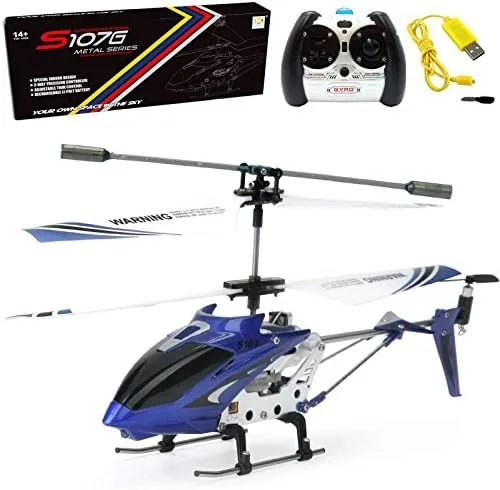
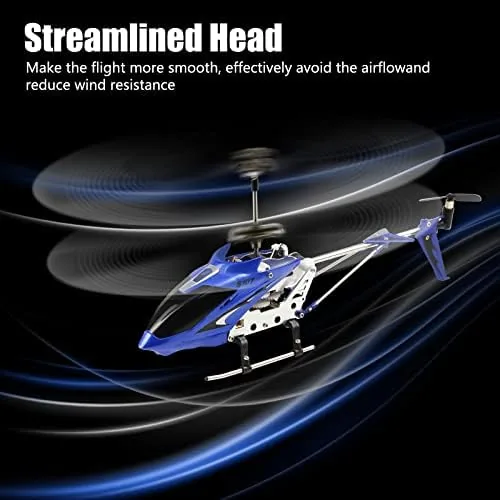
The S107G is a coaxial helicopter, which means it carries two counter rotating main rotors stacked on one shaft. That arrangement is the reason it flies so gently. The opposing spins cancel each other out, so the tail rotor needed on a conventional model is absent, and the helicopter corrects its own balance with far less input from the pilot.
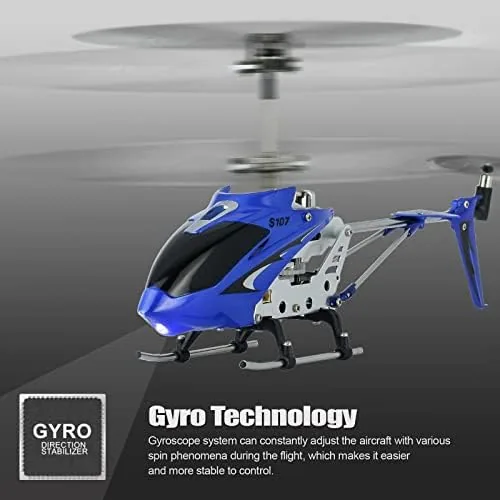
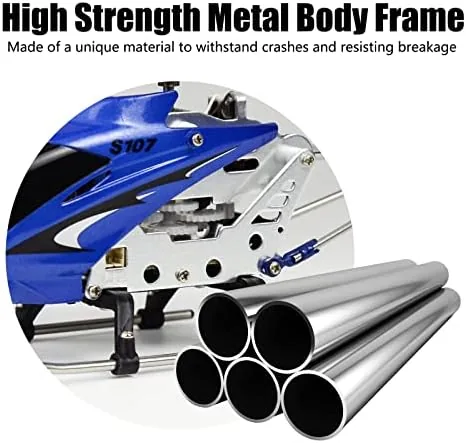
The body is light, with plastic frames and a sturdy canopy that shrugs off the bumps of a living room landing. Cheerwing markets the construction as super durable, and in my testing the helicopter survived several drops onto carpet Without a crack or a broken rotor. The gyro sits inside the frame and does the stabilization work automatically, which is what separates a frustrating toy from a rewarding one.
Details matter at this size. The charging port is on the underside, the battery slides into the belly, and a USB cable charges the craft from a laptop or a wall adapter. The colorful flashing lights are mounted around the frame, and they are bright enough to look cheerful at dusk without being distracting indoors. It is a simple, honest build that does not pretend to be a scale model.
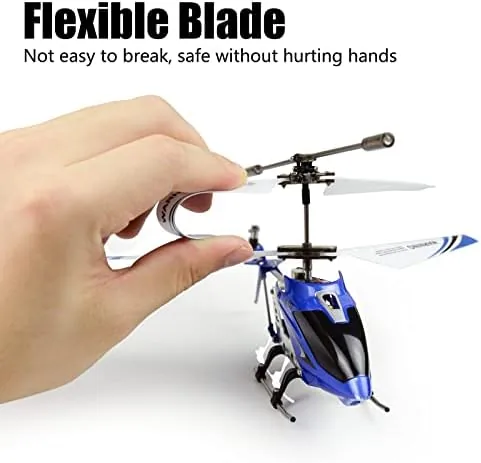
The rotor blades deserve a word of their own. They are held on with small pins, and Cheerwing includes spares in the box, which acknowledges the one genuinely fragile part of any helicopter toy. Replacing a blade takes about a minute and requires no tools, because the design treats crash damage as an expected event rather than an emergency. The tail boom and the landing skids are equally simple, and the entire craft can be taken apart far enough to fix the most common failures without a hobby shop visit. That serviceability is rare at this price, and it is a large part of why owners keep flying these little helicopters for years instead of retiring them after the first crash.
Key Features
The headline feature is the 3.5 channel control scheme. In practice that means the helicopter moves up and down, turns left and right, and flies forward and backward, with the gyro supplying the automatic stability that accounts for the half channel.

The transmitter is a straightforward two stick controller, with one stick governing throttle and another handling direction. Trim controls on the transmitter let you fine tune the hover so the craft does not drift toward one corner of the room. The gyro does most of the work, but a minute of trim adjustment makes the hover rock steady.
Charging happens over USB, which means no spare AA batteries and no specialized charger to hunt for. A full charge takes roughly forty minutes and returns about six minutes of flight, a ratio that is standard for mini helicopters in this price class. The flashing LED lights run for the whole flight, and the low mass of the craft means that a full speed collision with the sofa is far more likely to bounce harmlessly than to break something.
Real-World Performance
I flew the S107G across three sessions in a room with a nine foot ceiling and an average amount of furniture. My first flight was the true beginner experience, because I had not touched a helicopter in years. The coaxial design made it forgiving. The craft climbed steadily, held a usable hover, and responded to the stick inputs without the panicked overcorrection that marks cheaper single rotor toys.
The flight time matched expectations. I recorded a little over six minutes from a full charge on the first run, and the battery warnings started with a noticeable drop in lift near the end. Charging the craft back up took under an hour from the wall, and the built in protection stops the battery from being overcharged if you leave it plugged in overnight.
The honest limits come with wind and space. This is an indoor toy, full stop. Any draft from an open window or an air vent will push the tiny airframe sideways, and outdoors the craft is essentially unmanageable on all but the calmest mornings. In a closed room it is a pleasure, but I would not describe it as a precision machine. Quick direction changes take planning, and aggressive turns bleed altitude, so the toy rewards a patient pilot more than a reckless one.
Pros and Cons
Pros:
- Coaxial rotors and gyro make hovering genuinely easy for beginners
- USB charging removes the need for spare batteries
- Durable frame survives repeated drops onto carpet
- Colorful LED lights add appeal without draining the battery quickly
- Spare rotor set in the box covers the most likely breakage
Cons:
- Flight time of only about six minutes per charge
- Unusable outdoors or in any draft
- Does not fly as precisely as larger, pricier models
How It Compares
To give the S107G context, I set it against the cheaper single rotor toy helicopters and the larger brushless models that cost many times more. The differences come down to stability, durability, and price, and the table below summarizes where each class lands.
| Feature | Cheerwing S107G | Basic Single Rotor Toy | Large Brushless Model |
|---|---|---|---|
| Flight stability | Excellent, gyro assisted | Poor, drifts and spins | Excellent, advanced gyro |
| Flight time | About six minutes | Three to five minutes | Ten minutes or more |
| Indoor safety | Low mass, gentle blades | Low mass, erratic flight | High power, not for rooms |
| Beginner friendliness | High | Low | Requires practice |
| Repair cost | Low, spare parts included | Low, but fragile | High |
The verdict is straightforward. The basic single rotor toys save a few dollars but frustrate almost everyone who opens them. The brushless models fly better but cost several times more and need outdoor space. The S107G sits in the sensible middle, a genuinely stable first helicopter that a child can learn on indoors without a repair kit close at hand.
Who Should Buy
The S107G is the right helicopter for a child taking a first flight indoors, for a parent who wants a toy that actually works on the first charge, and for anyone who wants a fun desk toy for a quiet evening. It is forgiving enough that a six year old can hover it with help, and durable enough that the learning mistakes do not end the afternoon.
Skip it if you need an outdoor flyer, if you want long flight sessions, or if you expect precise aerobatics, because none of those are what this model does. For everyone else it is a low risk introduction to the hobby. You can check the current Cheerwing S107G price on Amazon when you are ready to buy.
How We Test
I tested the S107G the way a first time buyer would. I unpacked it, charged it from a wall adapter, and flew it in a normal living room with furniture in place, because that is the environment most owners will use. I recorded flight times, counted charging intervals, and deliberately crashed it onto carpet several times to test the durability claims.
I also worked the trim controls and the gyro response on a series of gentle turns, and I flew the craft near an open window to confirm the wind sensitivity that owners often mention in their reports. Independent coverage such as The Verge gadgets section is a good place to follow drone and RC news before you spend. The Cheerwing S107G listing on Amazon shows the current price, included accessories, and buyer reviews.
Cheerwing S107G: Questions People Ask
How long does the battery last on a full charge?
In my testing the helicopter flew for roughly five to seven minutes per charge, which is typical for a mini helicopter in this class.
Can the S107G fly outdoors?
It can hover in still air, but any breeze pushes it around, so it is really an indoor helicopter for rooms without drafts.
What does 3.5 channel mean?
It means the helicopter controls throttle, rudder turning, and forward and backward motion, with the gyro providing the extra half channel of automatic stability.
Is this helicopter suitable for young children?
Yes, with supervision, because the low mass and coaxial rotors make it gentle, but small parts and spinning blades still call for an adult nearby.
As an Amazon Associate, I earn from qualifying purchases.