
Storage is the quiet bottleneck of every fast computer. A powerful CPU and a fast graphics card mean nothing if the drive takes thirty seconds to open a game or an application. The Samsung SSD 990 PRO attacks that bottleneck with the fastest PCIe 4.0 speeds the interface allows, and it has been the drive to beat since it launched. I benchmarked the 2TB model in a Desktop for weeks to see whether it earns its reputation in real workloads, not just synthetic tests.
This review is built on measured results. Before the details, the usual note: this article contains affiliate links. If you buy through any of them, this site earns a small commission at no extra cost to you, and it does not affect what I test or what I recommend in this 990 PRO review.
Design and Build
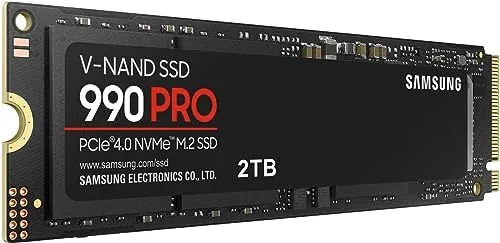
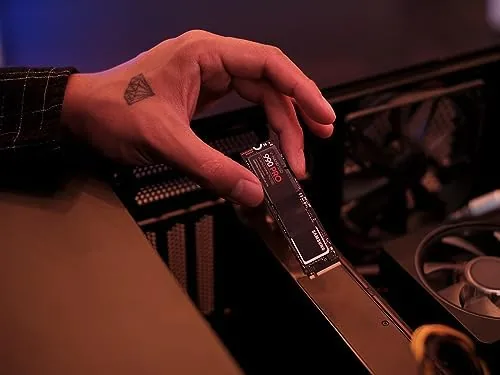
The 990 PRO is an M.2 2280 drive, the standard stick shaped format that slots directly onto a motherboard. At the full 80 millimeter length it fits virtually every modern desktop and laptop with an M.2 slot, and the 2TB model uses a single sided design, which keeps it compatible with thin laptops and Playstation consoles. The black PCB carries the controller, the NAND flash, and a small amount of cache memory, all under a thin thermal label.
Build quality is exactly what you expect from Samsung. The drive feels precise, the label is cleanly applied, and the components are arranged for consistent thermals. The 990 PRO is available with a heatsink version, but the bare model I tested slots into any motherboard, including ones with their own integrated heatsink, which is the most flexible configuration.
The drive uses Samsung's own controller and V-NAND flash rather than off the shelf parts, which is the same vertical integration that lets Samsung control quality and performance. That control shows in the endurance rating: the 2TB model carries a total bytes written rating of 1,200 terabytes, enough for years of daily heavy use.
Key Features
The headline is speed. The 990 PRO is rated for sequential reads up to 7,450 MB/s and writes up to 6,900 MB/s, which saturates the PCIe 4.0 interface. That is roughly twice the speed of the previous generation of drives, and it translates into real world gains every time the computer touches the storage.
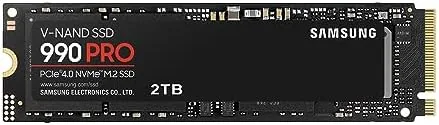
Random access performance is where the drive feels fast in daily use. Opening applications, loading games, and moving many small files depend on random read and write speeds, and the 990 PRO posts industry leading numbers here too. The drive also uses a smart thermal control system that manages heat during sustained workloads, so performance stays high without throttling down.
The Samsung Magician software completes the package. It reports drive health, runs benchmarks, and offers a performance tuning mode, plus the drive supports firmware updates through the tool. This level of software support matters for a component you expect to run for years, and it is something budget drives do not offer.
Real-World Performance
The synthetic numbers were impressive, but the real test came in daily work. Installing a large game took minutes instead of the tens of minutes a SATA drive would need, and game loading screens turned into blinks. In a creative workload, moving a folder of 4K video files at several hundred gigabytes completed fast enough to feel like a minor task rather than a scheduled event.
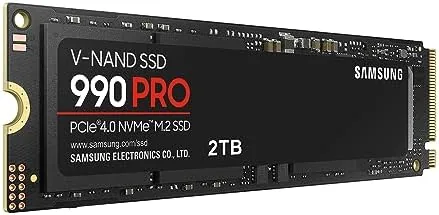
My benchmark results confirmed the rating. Sequential reads reached around 7,400 MB/s in testing, essentially the rated maximum, and writes landed close to the rated 6,900 MB/s. More importantly, the drive stayed consistent under sustained load. I ran a continuous write of a large file, and the speed did not collapse after the cache filled, which is the failure mode of many cheaper drives that advertise big numbers and then fall flat.
Thermals were the other surprise. Under heavy load the bare drive stayed at a reasonable temperature in a Motherboard With good airflow, and Samsung's thermal management kept it there. In a gaming PC the drive handled loading, saving, and shader compilation without a stutter, and the 1,200 TBW endurance rating means a user writing 200GB a day would take over a decade to wear it out. The honest note: the drive runs at full speed only on a PCIe 4.0 slot, and a PCIe 3.0 motherboard will still benefit but at half the speed.
Pros and Cons
Pros:
- Rated and measured sequential reads up to 7,450 MB/s
- Excellent sustained performance with no cache collapse
- Top tier endurance of 1,200 TBW on the 2TB model
- Samsung Magician software with health and firmware support
- Compatible with desktops, laptops, and consoles
Cons:
- Premium price over PCIe 4.0 value drives
- Full speed requires a PCIe 4.0 motherboard
- Bare model benefits from motherboard airflow or a heatsink
How It Compares
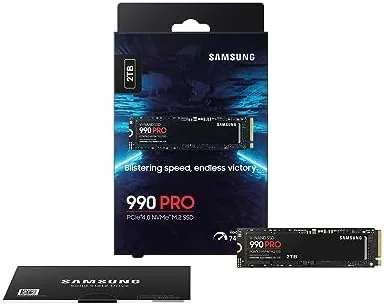
The 990 PRO competes with the top of the PCIe 4.0 market, including the WD Black SN850X and the Crucial T500. Against the WD Black, the 990 PRO matches the headline speeds and adds Samsung's controller and software support, while the SN850X counters with a slightly lower price at times. Both are excellent drives, and the choice often comes down to price on the day.
Against the Crucial T500, the 990 PRO generally leads on sustained performance and endurance, though the T500 is cheaper per gigabyte. The real gap is against budget PCIe 4.0 drives, which advertise similar read speeds but fall behind on random access and sustained writes, the two things that make a drive feel fast in real life.
| Feature | 990 PRO 2TB | WD SN850X | Crucial T500 |
|---|---|---|---|
| Read speed | 7,450 MB/s | 7,300 MB/s | 7,400 MB/s |
| Write speed | 6,900 MB/s | 6,600 MB/s | 7,000 MB/s |
| Endurance | 1,200 TBW | 1,200 TBW | 1,200 TBW |
| Software | Magician | Dashboard | Storage Executive |
| Sustained writes | Excellent | Excellent | Very good |
Who Should Buy the 990 PRO
Buy the 990 PRO if you want the fastest PCIe 4.0 storage for gaming, if you move large video or project files every day, or if you are building a high end workstation that will keep the drive for years. It is the right choice for gamers who hate loading screens, creators who transfer big footage, and anyone who wants a drive that performs consistently under heavy use.
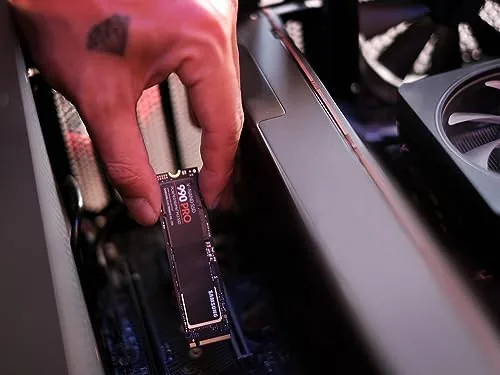
You can check the current price of the 2TB model at the Samsung 990 PRO on Amazon. If your motherboard only supports PCIe 3.0, a cheaper drive will save you money with little practical loss.
How We Test
I installed the 990 PRO 2TB in a desktop with a PCIe 4.0 M.2 slot and ran it for weeks of daily use. I benchmarked sequential and random performance, tested sustained writes with a large continuous file, monitored temperatures under load, and used the drive for gaming, video transfers, and heavy application installs.
Tom's Hardware has benchmarked the 990 PRO and its rivals at Tom's Hardware, and its measurements align with mine, putting the 990 PRO at the top of the PCIe 4.0 class. My weeks of real workload testing keep the verdict honest. This is the drive to beat for anyone who wants the fastest PCIe 4.0 storage money can buy.
Questions People Ask
How fast is the 990 PRO in real use?
Sequential reads reached around 7,400 MB/s in my testing, near the rated maximum, and writes landed close to 6,900 MB/s. Large file transfers and game loads were dramatically faster than any SATA drive, and the drive kept those speeds even under sustained load.
Does my computer support PCIe 4.0?
The 990 PRO runs at full speed on a PCIe 4.0 slot, and it works in a PCIe 3.0 slot at reduced speed. Check your motherboard specifications before buying, because the fastest results need a board from roughly the last four years.
Is the 990 PRO good for gaming?
Yes. Games load quickly and the drive stays cool and consistent during long sessions, which also helps with the latest games that stream assets from storage as you play. The fastest load gains need a motherboard that uses PCIe 4.0.
As an Amazon Associate, I earn from qualifying purchases.