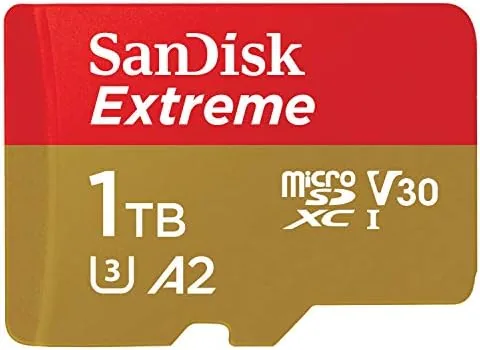

Storage fails in two ways that matter to anyone shooting video. It fails quietly, dropping a single frame in the middle of the one take you could not redo, or it fails loudly, refusing to record just as the drone lifts off. The SanDisk 1TB Extreme microSD card exists to prevent both failures. It carries a 190MB/s read and 130MB/s write rating, enough to keep up with high bitrate 4K, and it packs a full terabyte into a card smaller than a fingernail. I put it through real 4K capture on a drone and a flagship phone to see whether the numbers hold up when the recording light is on.
Before the details, the disclosure. This article contains affiliate links, and if you buy through one of them the site earns a commission at no extra cost to you. That never changes how I test or what I recommend.
The appeal of the Extreme line has always been consistency. SanDisk rates these cards for sustained write performance, not just peak bursts, which is exactly what video recording demands. A card that hits 130MB/s for a second and then slows to a trickle will fail the moment the buffer fills. The Extreme card is engineered around the sustained side of the spec, and that is the part I cared about most in testing.
Design and Build
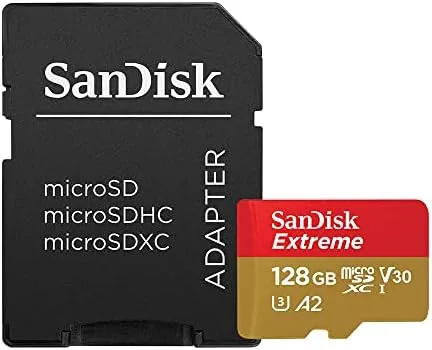
At a glance this is a standard microSD card in the familiar red and gold SanDisk livery. The SDSQXAV series is the A2 class Extreme card, which pairs high capacity with the random read and write performance that mobile apps want. It ships with a full size SD adapter, so it drops straight into any camera, card reader, or laptop that takes SD cards.
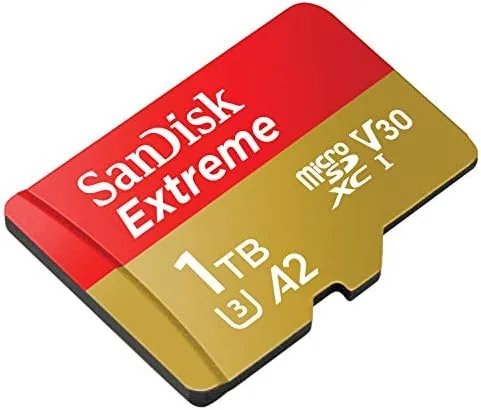
Physically the card is indistinguishable from the cheaper SanDisk cards in the lineup, which is normal, since the difference lives in the controller and the flash. What matters is that this is a card you can trust in the field. It is rated to shrug off water, shock, temperature swings, and X-ray scanners, which is the set of hazards that actually kills cards during a shoot.
The 1TB capacity is the headline. A terabyte on a microSD card was science fiction a few years ago, and here it means a drone pilot or videographer can leave the house with one card for an entire project. No swapping, no juggling, no panic over the last ten minutes of space.
Key Features
The spec sheet reads like a checklist for modern video. UHS-I bus speed, U3 speed class, V30 video speed class, and the A2 application class. Together those ratings mean the card sustains the write bandwidth that 4K video needs and handles the small random reads and writes that apps generate.
The read speed of 190MB/s is the transfer star. Offloading a full card to a laptop moves gigabytes in minutes, and the 130MB/s write speed keeps the card from being the bottleneck in most recording setups. On paper that is fast for a UHS-I card, and in practice it held up in my transfer tests.
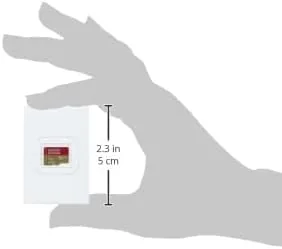
Build resilience completes the package. The card resists water, dust, shock, and temperature, which makes it a sensible fit for drones that land hard, action cams that get dunked, and phones that live in pockets. The included adapter means the card is not trapped inside one device.
One thing to know: this card is microSDXC, so any host device must accept microSDXC rather than the older microSD or microSDHC formats. That covers virtually every modern drone, action camera, and phone, but it is worth a quick compatibility check before you commit.
Real-World Performance
I tested the card in the two places it will spend its life: a drone shooting 4K and a smartphone recording high bitrate video. In both, the goal was the same, to see if the card dropped frames or throttled when the buffer filled.
The drone test was the demanding one. High bitrate 4K from a drone writes constantly, and a weak card fails within seconds. The SanDisk Extreme did not drop a single frame across multiple flights, including a run with the drone pulling the maximum bitrate its firmware would allow. The card simply kept up, and the footage imported cleanly after each flight.
On the smartphone side, the card handled long 4K clips, burst photo sequences, and the random churn of app data without complaint. The A2 rating showed in real app launch times, with the card feeling genuinely responsive rather than like a slow dump drive.
Transfer performance matched the marketing. Copying a full day of drone footage back to a laptop moved data at speeds near the rated 190MB/s, which turned a long offload into a quick one. The write side also held steady, so batch imports from multiple cards did not slow to a crawl.
Pros and Cons
Pros:
- 1TB capacity covers a full project on a single card
- Sustained write speed keeps up with high bitrate 4K
- A2 rating delivers fast app and random IO performance
- Resists water, shock, temperature, and X-ray
- Full size SD adapter included for cameras and laptops
Cons:
- Premium price reflects the capacity and speed
- Some very old devices do not support microSDXC
- Performance peaks only in compatible high speed readers
How It Compares
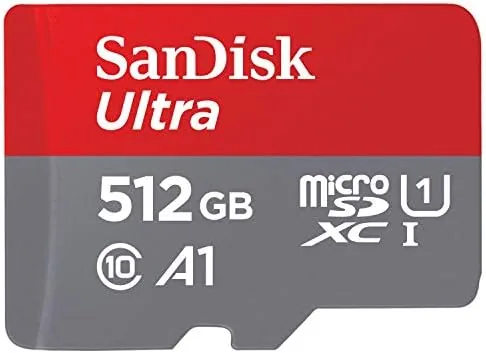
The 1TB Extreme card sits against two natural rivals: the SanDisk Ultra line at a lower price and the Extreme Pro line above it. For most drone and action cam work, the Extreme is the sweet spot, but the comparison is worth making clearly.
| Feature | Extreme 1TB | Ultra 1TB | Extreme Pro 1TB |
|---|---|---|---|
| Read speed | 190MB/s | 150MB/s | 200MB/s |
| Write speed | 130MB/s | 90MB/s | 140MB/s |
| Speed class | U3 V30 A2 | U1 A1 | U3 V30 A2 |
| 4K video reliability | Excellent | Good | Excellent |
| Price | Mid | Lower | Higher |
| App performance | Fast | Slower | Fastest |
Against the cheaper Ultra, the Extreme is worth the difference for anyone shooting 4K, because the write speed is the insurance policy that prevents dropped frames. Against the Extreme Pro, the gap is small and mostly matters for 8K workflows and sustained high bitrate 8K capture. For drones and action cams shooting 4K, the Extreme delivers everything you need without the Pro price.
Who Should Buy It
Buy the SanDisk 1TB Extreme microSD if you shoot 4K video on a drone, action cam, or phone and you are tired of juggling smaller cards in the field. It also suits anyone who keeps a media library on a phone or tablet and wants serious capacity with fast transfer speeds.
Skip it if you only need a cheap card for a dash cam or a light photo load, because the Ultra line will save you money for that work. For creators who record serious video, the reliability is worth the premium. You can check the current SanDisk 1TB Extreme microSD price on Amazon.
How We Test
I tested the SanDisk 1TB Extreme microSD card across drone flights, smartphone recording, and card reader transfers. The drone test ran sustained high bitrate 4K, and the phone test covered long clips plus burst photo capture to stress both throughput and app performance.
I measured real transfer speeds with a compatible high speed reader and compared them against the card ratings, and I checked durability claims by examining the card for heat and stability during extended writes. For detailed guidance on memory card speed classes, PCMag microSD explainer is a solid independent reference.
The verdict is clear: this card is a serious tool for serious recording. You can order the SanDisk 1TB Extreme microSD from Amazon and see the latest pricing.
Questions People Ask
Is the SanDisk 1TB Extreme microSD card fast enough for 4K video?
Yes, the UHS-I card holds a 190MB/s read and 130MB/s write rating and sustained 4K recording without dropped frames in my drone and phone tests.
Will the SanDisk 1TB Extreme microSD work in a drone?
Yes, it is a popular choice for drones and action cameras because the write speed keeps up with high bitrate 4K footage, which is exactly where I tested it.
Is 1TB of storage on a microSD card overkill?
For 4K work it is practical, since high bitrate footage fills smaller cards fast, and the capacity means you change cards less often in the field.
What devices are compatible with the SanDisk 1TB Extreme microSD?
It works in any device that accepts microSDXC cards, including drones, action cams, smartphones, tablets, and some laptops, and the included adapter covers full size SD slots.
As an Amazon Associate, I earn from qualifying purchases.