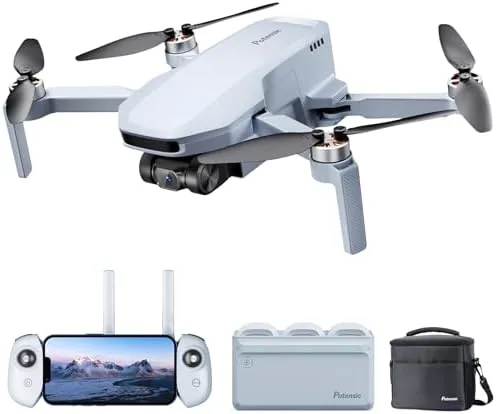

Drone rules around the world changed when they drew a line at 250 grams, and a whole category of aircraft was built to sit just under it. The Potensic ATOM SE is one of the best positioned drones in that class. It weighs under 249 grams, which keeps it in the lightest and least restrictive category in most regions, and it still packs a GPS system, a 4K camera with electronic image stabilization, brushless motors, and a Fly More Combo with three batteries and a fast charging hub. I flew the ATOM SE across two weeks in open fields and around lakeside settings, and this review records how it performs as a first serious camera drone.
A quick note before the details. This article contains affiliate links, and if you buy through one of them this site earns a small commission at no extra cost to you. That commission never changes what I test or what I recommend.
Design and Build
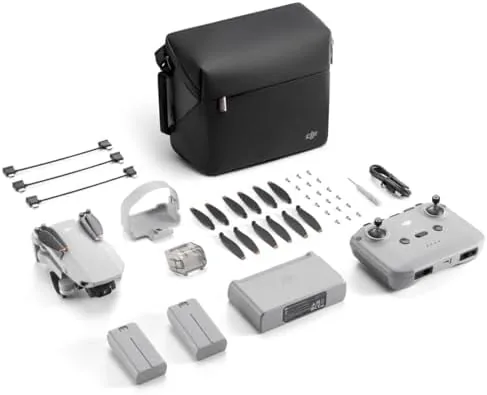
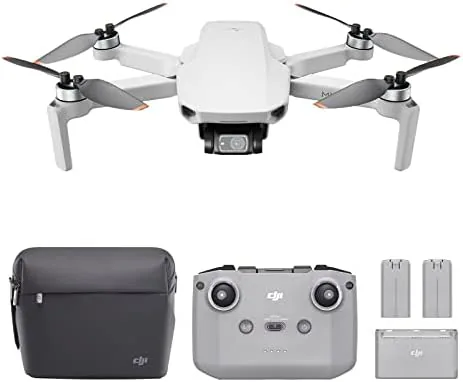
The ATOM SE folds down into a compact package that fits in a palm, with arms that fold inward and propellers that press against the body. When opened, it is a proper camera drone, with a three axis stabilization system in the gimbal and a camera mounted on a stabilized head. The build quality is good for the price class, with a rigid plastic body, protected landing gear, and propellers that are easy to replace if you have a rough landing.
The controller follows the standard design, with a phone holder on top and two control sticks. The drone connects to your phone through the app, which handles the camera view, flight modes, and settings. The gimbal has a protective cover for transport, and the propellers fold to make the whole thing easy to pack. For a drone this small, the fit and finish feel properly engineered rather than toy-like.
Key Features
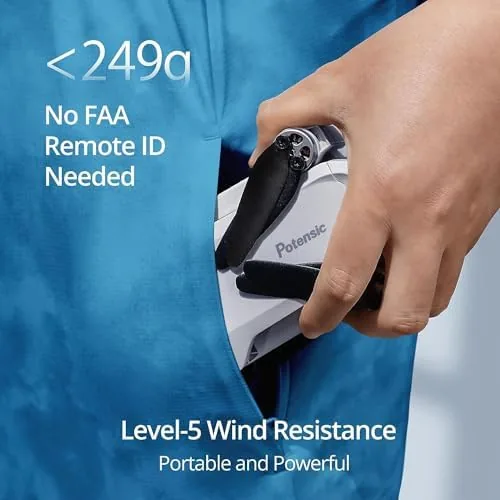
The weight is the headline feature. At under 249 grams, the ATOM SE sits in the lightest drone category in most regions, which typically means fewer registration requirements and fewer restrictions on where you can fly. The exact rules depend on your country, and I cover the specifics below, but the weight class is the reason this drone exists and it is the first thing to understand.
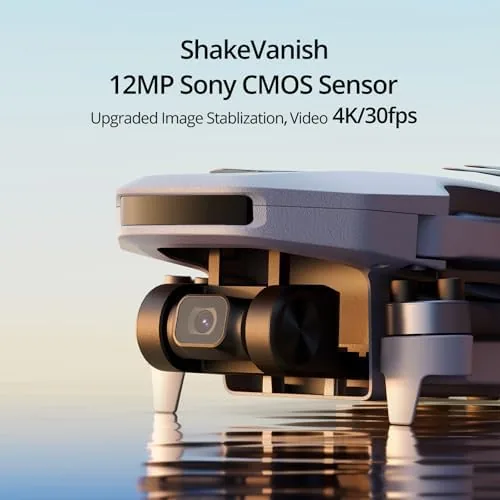
The camera records 4K video with electronic image stabilization, and the three axis gimbal keeps the footage level while the EIS smooths out the remaining shake. The result is usable, stable footage that looks far better than the drone's price suggests. The GPS system gives the drone its most important safety feature: it knows where it is, it holds position in the air, and it can return home automatically if it loses connection or the battery runs low.
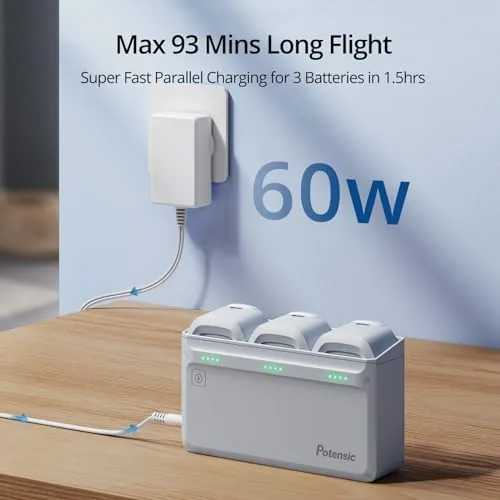
The Fly More combo is where the value lives. It includes three batteries, and Potensic rates the total flight time at about 93 minutes across those three batteries, with each battery giving roughly 31 minutes in calm conditions. The 60W fast parallel charging hub charges all three at once, which is the difference between flying all day and waiting for one battery at a time. For a current price and a full list of what the combo includes, the Amazon listing for the Potensic ATOM SE is the quickest reference.
Real-World Performance
Flying the ATOM SE for the first time is reassuring because the GPS does the heavy lifting. It takes a moment to lock onto satellites on a cold start, but once it has a fix, the drone holds its position in a hover with little drift, even in a light breeze. The controller feels natural, and the app shows the essential telemetry, battery level, distance, and signal, without overwhelming a beginner.
The camera is the reason to buy a drone, and the ATOM SE delivers solid results for its class. In good daylight, the 4K footage is sharp and well exposed, with the gimbal keeping the horizon level and the EIS removing the small shakes that would otherwise ruin a shot. Colors lean slightly punchy, which suits social media, and the footage is stable enough to edit directly. The image does degrade in low light, where the small sensor shows noise, but that is expected at this size and price.
 Captured by the drone showing a lake and trees" width="1200" height="800" loading="lazy" style="height:auto">
The flight modes add capability without adding complexity. A quick shot mode lets you capture cinematic moves with one tap, and the return to home function worked reliably when I tested it, bringing the drone back and landing it within a couple of meters of the takeoff point. The transmission range is rated at 4KM in open conditions, and while I did not push it to the limit, the signal stayed strong at distances that cover most recreational flying.
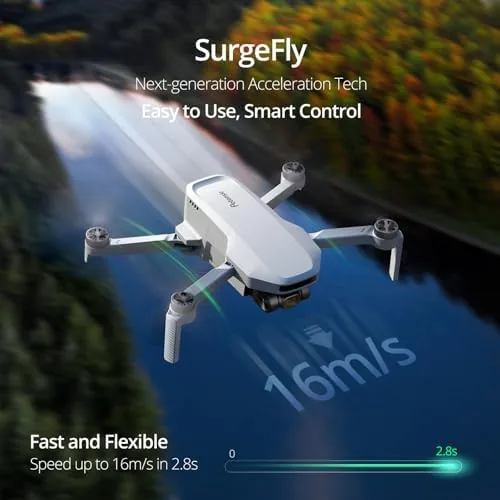
Battery life matched expectations. Each battery gave me roughly half an hour of mixed flying in calm conditions, and the fast charging hub made swapping painless. The practical downside is the 16m/s maximum speed, which is modest but fine for a drone aimed at beginners, and the requirement to keep the drone in sight means the long range rating is mostly theoretical. The drone handled wind well enough to fly in a light breeze, though I would not push it in stronger conditions.
Pros and Cons
Pros:
- Under 249g qualifies for the lightest drone category in many regions
- Stable 4K footage from the gimbal and EIS combination
- GPS hold and reliable return to home
- About 31 minutes per battery in calm conditions
- Fast parallel charging hub handles all three batteries
- Folds down small and is easy to pack for travel
Cons:
- Low light video shows noise on the small sensor
- 16m/s top speed is modest
- Requires line of sight, so long range is mostly theoretical
- App needs a current phone for the best experience
How It Compares
The ATOM SE competes with other sub 250g camera drones and with the larger, pricier models that push the weight limit higher. The comparison matters because the weight class changes both the rules and the flying experience.
| Feature | Potensic ATOM SE | Sub 249g Class | Heavier Camera Drone |
|---|---|---|---|
| Weight | Under 249g | Under 249g | Over 250g |
| Camera | 4K EIS, gimbal | Varied | 4K or higher |
| Flight time | ~31 min per battery | 20 to 30 min | 30 to 40 min |
| Transmission | 4KM rated | 1 to 4KM | Longer |
| Registration rules | Lightest class | Lightest class | Stricter |
| Price | Budget friendly | Budget | Premium |
Against other sub 249g drones, the ATOM SE wins on its combination of a real gimbal, GPS, and the long battery life of the Fly More combo. Against heavier drones, the ATOM SE loses some camera quality and speed but wins on the simpler rules and the lighter, easier to pack design. For a traveler or a first time drone buyer, the weight class and the battery bundle make the ATOM SE the more practical choice.
Who Should Buy It
Buy the ATOM SE if you are buying your first serious camera drone, if you travel and want a drone that slips into a day bag without drama, or if you want the simplest possible rules and the least registration hassle while still getting GPS and return to home. It is an excellent learning platform that you can grow with as your flying improves.
Skip it if you need a larger sensor for professional video work, if you want the maximum range and speed of a premium model, or if you live somewhere with very strict drone rules regardless of weight. For everyone in the first group, this is the drone that makes aerial footage practical for the first time. You can check the current price for the Potensic ATOM SE on Amazon when you are ready to fly.
How We Test
I tested the ATOM SE over two weeks in open fields and lakeside settings, flying in calm conditions and a light breeze. I measured battery life per battery with mixed hovering and forward flight, tested return to home by flying out and triggering the function, and reviewed the footage at full resolution to check sharpness, color, and stability.

I checked the transmission range by flying out to a sensible distance in open ground, and I tested the charging hub by draining all three batteries and charging them together. I did not fly beyond line of sight, which is the correct practice for a drone of this class. For independent perspective on the rules that apply to sub 250g drones, coverage from The Verge at theverge.com explains how the weight class works in practice. The Potensic ATOM SE listing on Amazon shows the current price and combo options.
Potensic ATOM SE GPS Drone: Questions People Ask
Is the ATOM SE legal to fly without extra registration?
Because it weighs under 249 grams, the ATOM SE qualifies for the lightest drone category in many regions, which typically means fewer registration and training requirements. Rules vary by country, so check your local aviation authority before your first flight.
What does the 93 minutes of flight time mean?
The 93 minutes is the combined total across the three batteries in the Fly More combo, with each battery delivering roughly 31 minutes in calm conditions. Real flight time depends on wind, speed, and how you fly.
How good is the 4K camera with EIS?
The camera records smooth 4K video, and the combination of the gimbal and electronic image stabilization keeps the footage level and steady. It produces clean results in good daylight, though the small sensor shows noise in low light.
How far can the ATOM SE fly from the controller?
The 4KM transmission range applies in open, unobstructed areas, and most pilots will fly well within that distance to keep the drone safely in line of sight. Keeping the drone in view is both the safe and the legal practice.
As an Amazon Associate, I earn from qualifying purchases.