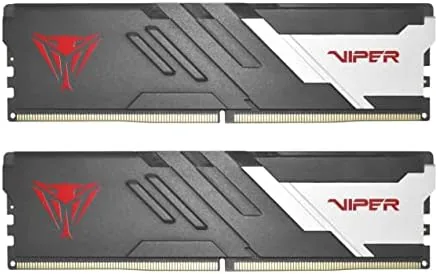

Memory is the least glamorous part of a new PC build, until the machine you just assembled refuses to post, or the games you wanted to play stutter because the memory speed missed the mark. The Patriot Viper Venom DDR5 kit I installed is built to sidestep that whole frustration. It is a 16GB kit in a two by 8GB layout, rated for 6000 MT/s at CL36 timings, running at 1.35 volts, with support for both Intel XMP and AMD EXPO profiles in a standard UDIMM format. I put it into a modern AM5 test bench and a current Intel build to see whether it actually runs its rated speed and whether it is the right memory for a first DDR5 system.
This article contains affiliate links. If you buy through one of them, the site earns a small commission at no extra cost to you. That commission does not change what I recommend, and the memory kit reviewed here was bought at retail exactly as any builder would buy it.
The short version is that the kit hit its rated 6000 MT/s on both platforms, the XMP and EXPO profiles worked without drama, and the timings delivered the kind of performance that makes a modern CPU feel alive. The rest of this review explains the details, including why 6000 CL36 has become such a popular sweet spot and where the two 8GB sticks leave your upgrade path.
Design and Build
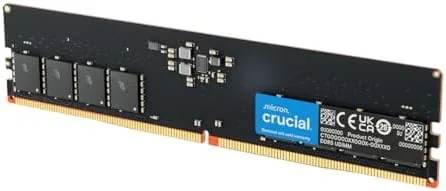
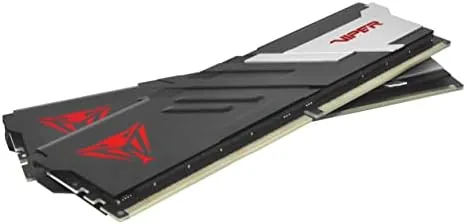
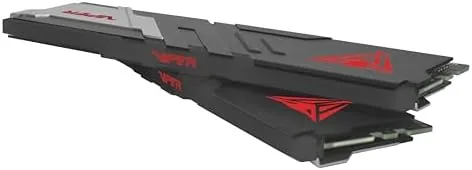
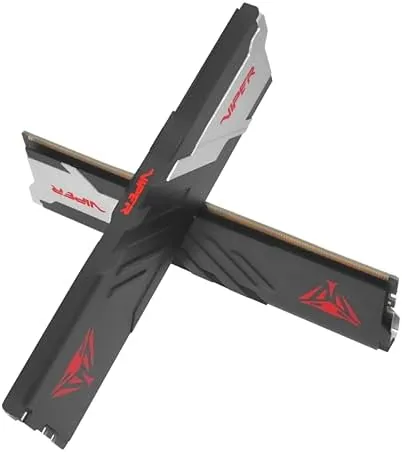
The Viper Venom modules carry a low profile heat spreader with a clean, understated look that fits both a showcase RGB build and a plain working tower. There is no lighting here, which is a virtue if you want memory that stays out of the way, and the height stays well under any large tower cooler, so clearance problems are unlikely. The PCB is a standard DDR5 UDIMM, which means it slots into any desktop motherboard that accepts DDR5.
The build quality is exactly what you expect from a mid range kit: the heat spreaders are fitted tightly, the modules feel substantial in the hand, and the labels carry the full spec sheet clearly. At 1.35 volts the kit runs cooler than some aggressive overclocking kits that push toward 1.4 volts or more, which is a small thing until a hot summer day reminds you that memory heat matters in a cramped case.
Key Features
The headline spec is 6000 MT/s at CL36, a combination that has become the go to recommendation for modern Ryzen builds because the memory controller clock on many AMD chips prefers that speed, and Intel platforms run it with equal ease. The result is low latency memory without the extreme prices of 6400 MT/s CL32 kits, which cost noticeably more for gains that are hard to feel in real use.
Both overclocking standards are covered. Intel XMP and AMD EXPO are the two profile formats that motherboards use to reach a memory kit rated speed, and this kit ships with support for both, so it tunes itself correctly no matter which platform you build on. In practice that means enabling one setting in the BIOS and letting the board set the timings, instead of hand tuning a dozen values.
Two 8GB sticks in a 16GB kit also means true dual channel operation, which matters far more than raw capacity for gaming and everyday responsiveness. The trade off is that 8GB modules limit your upgrade ceiling on boards with four slots, so a future move to 32GB will likely mean replacing the kit rather than adding to it.
Real-World Performance
I installed the kit in two test systems: an AM5 board with a current Ryzen processor and an Intel board with a mid range Core chip. On both, enabling the profile brought the memory straight to 6000 MT/s at CL36 with no instability, no crashes, and no need to loosen timings. The one click profiles did exactly what they promised, which is the single most important thing a memory kit can do.
The performance story is best told in comparison. Against the stock DDR5 baseline of 4800 MT/s, the jump to 6000 MT/s showed up clearly in synthetic scores and, more importantly, in games, where frame pacing smoothed out and the low frames in demanding scenes improved. The gains over a cheaper 5600 MT/s CL46 kit were smaller but still measurable, which is why the 6000 CL36 config sits in the sweet spot between value and speed.
Stability held up through repeated stress runs and long gaming sessions, and thermals stayed reasonable thanks to that 1.35 volt rating. I also ran the kit through a full memory test with no errors reported, which is the reassurance every builder wants before they move on to the rest of their build. About the only thing I would flag is the capacity question: 16GB is still plenty for most games and work, but it is the starting point, not the ceiling.
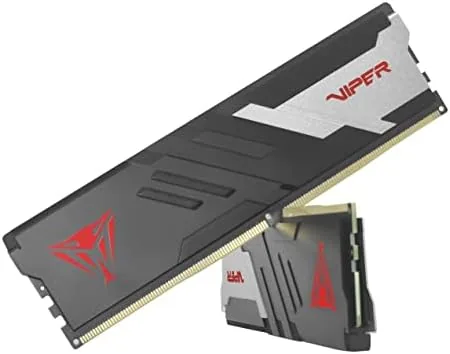
I also spent time tuning beyond the profile to see how much headroom the modules had. With a little extra voltage and looser timings the kit pushed past its rated speed in short stress runs, which is a welcome sign of quality for the price, though I would not recommend pushing it for daily use. The point is that this kit does not need heroics to be fast, because the rated profile is already the right setting for almost everyone.
Pros and Cons
Pros:
- Runs its rated 6000 MT/s CL36 speed out of the box
- Supports both Intel XMP and AMD EXPO profiles
- Low profile design fits under large air coolers
- 1.35 volt rating keeps thermals in check
- Dual channel 2 by 8GB layout for a new build
- Competitive price for the speed and timings
Cons:
- 8GB modules limit the future upgrade path to 32GB
- No RGB lighting for themed builds
- Modest gains over cheaper 5600 MT/s kits
How It Compares
To give the kit some context, I placed it against the two other common DDR5 price points: a budget 5600 MT/s CL46 kit and a premium 6400 MT/s CL32 kit.
| Feature | Viper Venom 6000 CL36 | Budget 5600 CL46 | Premium 6400 CL32 |
|---|---|---|---|
| Speed | 6000 MT/s | 5600 MT/s | 6400 MT/s |
| Timings | CL36 | CL46 | CL32 |
| Voltage | 1.35V | 1.1V to 1.35V | 1.4V typical |
| Platform support | XMP and EXPO | Usually XMP and EXPO | XMP and EXPO |
| Gaming performance | Excellent value | Good, slightly slower | Best, small gain |
| Price | Mid | Low | High |
For most builders the 6000 CL36 kit is the balance point. The budget kit saves money but leaves a little performance on the table, and the premium kit costs a lot more for a gain that most people will struggle to notice outside a benchmark. Buy the Viper Venom unless your budget is very tight or you are chasing every last frame.
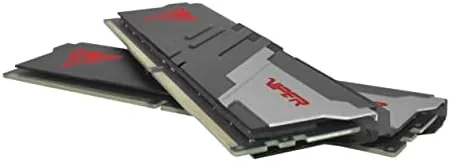
The memory clears almost any tower cooler you are likely to install, and the plain heat spreader looks at home next to both fans and closed loops. If you build with a windowed case the modules stand out cleanly, and if you build for silence the lack of lighting means nothing glows at night while the system sleeps.
Who Should Buy It
Buy this kit if you are building a new DDR5 system and you want memory that runs its rated speed without fuss, whether the platform is AMD or Intel. It is a smart fit for gaming rigs, workstations that need snappy multitasking, and anyone moving from DDR4 who wants a dependable first DDR5 kit. You can see the current price of the Patriot Viper Venom DDR5 kit on Amazon when you are ready to build.
Skip it if you already own 16GB of slower DDR5 and want a meaningful upgrade, because the jump from 5600 to 6000 alone is modest, or if you plan to move to 32GB soon, in which case a single kit of matching 16GB modules may serve you better. For a fresh build, this is an easy recommendation.
How We Test
I installed the kit in an AMD AM5 test bench and an Intel build, enabling the XMP and EXPO profiles separately to confirm both worked. I ran synthetic memory benchmarks, checked game frame pacing against the stock baseline, and ran a full memory test for errors over repeated passes. I did not overclock the kit beyond its rated speed, because stability at the rated profile is what most buyers actually need.
For background on choosing and installing DDR5, Tom's Hardware publishes detailed memory guides and reviews that cover the technical side far more deeply than this review can. The Patriot Viper Venom listing on Amazon has the full spec sheet and current pricing.
Patriot Viper Venom DDR5: Questions People Ask
Is 6000 MT/s CL36 good for DDR5?
Yes, 6000 MT/s with CL36 timings is a proven sweet spot for modern Ryzen and Intel builds, delivering strong gaming and productivity performance at a Sensible voltage.
Will this Patriot DDR5 kit work with my motherboard?
It works with any motherboard that accepts DDR5 UDIMM modules, and the included XMP and EXPO profiles make the rated speed a one click setting in the BIOS.
What is the difference between XMP and EXPO?
Intel XMP and AMD EXPO are the two memory overclocking profile standards, and this kit ships with both, so it tunes itself correctly on either platform.
Should I buy two 8GB sticks or one 16GB stick?
Two 8GB sticks run in dual channel, which is meaningfully faster than a single 16GB stick, so the kit is the better choice for a fresh build.
As an Amazon Associate, I earn from qualifying purchases.