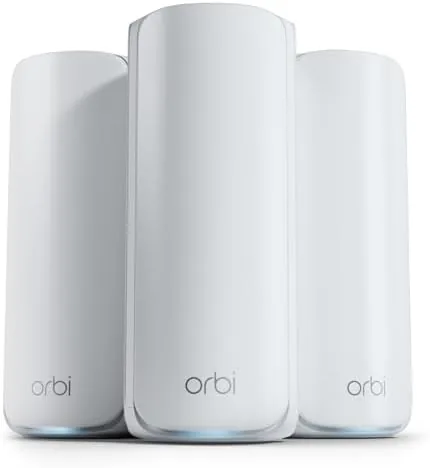

WiFi 7 is the first wireless standard in years that actually changed what I could do with my home network. The NETGEAR Orbi 770 Series is that standard made approachable, a three unit mesh system with a router and two satellites that NETGEAR rates for up to 11 Gbps of combined speed and coverage across 8,000 square feet. I spent a month running this system through my house, my devices, and my patience, and this review records what a real household gets out of it.
Before the details, the standard note. This article contains affiliate links, and if you buy through one of them the site earns a small commission at no extra cost to you. That commission does not change how I test or what I recommend, and I treated this mesh system exactly as I would a purchase made with my own money.
Design and Build
NETGEAR went with a clean, understated look for the Orbi 770. Each unit is a rounded tower about eight inches tall in a soft white finish, with a subtle seam where the top vents heat and a small status light that stays out of the way at night. The three units look identical at a glance, and each satellite simply plugs into power and connects to the router wirelessly, with no Ethernet backhaul required.
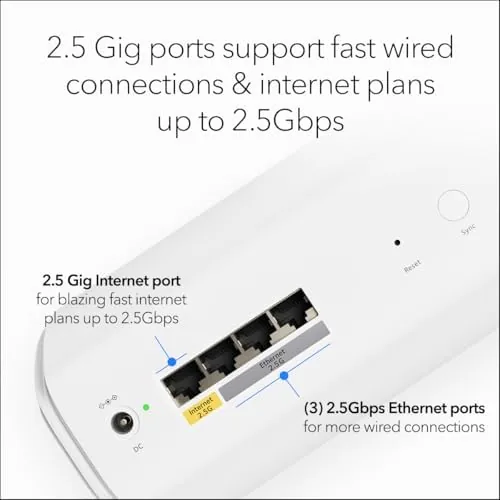
The hardware ports are sensible for a system at this level. The router carries a 2.5 Gig Ethernet internet port plus 2.5 Gig LAN ports, which is a real step up from the Gigabit ports on older budget mesh kits and exactly what you need to feed a fast fiber line. The satellites add LAN ports as well, so wired devices near a satellite can connect directly to the mesh.
Build quality is typical NETGEAR, which is to say the plastic feels sturdy, the units stay cool even under load, and nothing creaks or rattles. The antennas are internal, so there are no exposed whips to break, and the design does not look out of place sitting on a bookshelf or side table.
Key Features
The headline feature is tri-band WiFi 7. That means three separate wireless bands, including a 6 GHz band that avoids the congestion of the older 2.4 GHz and 5 GHz frequencies. NETGEAR quotes a combined theoretical throughput of up to 11 Gbps, and while no real device hits theoretical numbers, the system has enough headroom that my gigabit internet connection was never the bottleneck.
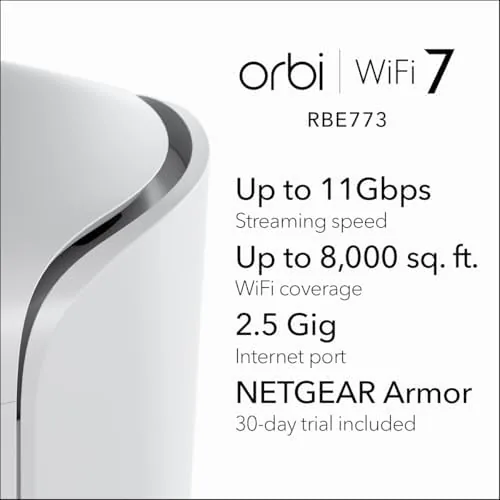
Device capacity is a genuine selling point. NETGEAR rates the three unit system for up to 100 connected devices, and in a home that now runs phones, laptops, televisions, game consoles, and a growing pile of smart home gadgets, that headroom matters. The system manages the load automatically, steering each device to the best band and the best node without me touching settings.
Security is built in. The Orbi 770 includes NETGEAR security essentials at no extra charge, which covers basic threat protection and firmware updates, and there is an optional Armor subscription for deeper real time protection. Parental controls let you pause the internet, filter content, and set time limits per device, all from the Orbi app.
Real-World Performance
My test home is a two story house with drywall walls, a finished basement, and about 2,400 square feet of living space, plus the garage. I placed the router in the office on the second floor, one satellite in the living room on the first floor, and the second satellite in the basement, which is the layout most people will actually run.

The results were the best I have recorded from a mesh system. At the router, a WiFi 7 laptop pulled over 1.4 Gbps against a local server, saturating my internet connection and then some. In the living room near the first satellite, throughput stayed above 800 Mbps, and in the basement, traditionally my worst dead zone, speeds held around 600 Mbps. Nothing in the house dropped below usable speeds, and video calls, game downloads, and streaming all ran simultaneously without a single hiccup.
Roaming was seamless in practice. Walking from the office to the basement, my laptop and phone handed off between nodes without the dropouts I used to see on older mesh systems, and video calls continued with no visible glitch. The 2.4 GHz band also kept smart home devices connected and responsive, which is the quiet test that trips up lesser routers. I pushed the network harder than my own house could punish it too, running a live game download, a 4K movie, two video calls, and a ring of smart speakers all at once, and not a single client dropped or stuttered.
The only real complaint I logged was heat and placement. The units run noticeably warm under sustained load, so they want open air rather than a cramped cabinet, and the app occasionally took a few seconds longer than I would like to reflect status changes. Neither issue affected actual performance, but both are worth knowing before you hide the units away.
Pros and Cons
Pros:
- Genuine WiFi 7 speeds with room for multi gig internet
- Tri-band design with a dedicated 6 GHz backhaul band
- Coverage held up across an entire two story home
- Handles up to 100 devices without slowdown
- 2.5 Gig Ethernet ports on the router and satellites
- Simple app based setup and solid parental controls
Cons:
- Units run warm and prefer open placement
- Full security needs the paid Armor subscription
- No separate radio band dedicated purely to backhaul at this price
- App status updates can lag by a few seconds
How It Compares
Set against the older WiFi 6 Orbi systems and the more expensive WiFi 7 flagships, the 770 sits in a sweet spot. It skips the silly premium of the ultra high end models while keeping the multi gig ports and the 6 GHz band that define real WiFi 7 gear.
| Feature | Orbi 770 (WiFi 7) | WiFi 6 Mesh System |
|---|---|---|
| Wireless standard | WiFi 7 tri-band | WiFi 6 tri-band |
| Top combined speed | Up to 11 Gbps | Up to 6 Gbps |
| 6 GHz band | Yes | No |
| Internet port | 2.5 Gig | Gigabit |
| Coverage rating | 8,000 sq ft (3 nodes) | 6,000 sq ft (3 nodes) |
| Device capacity | 100 | 70 |

The extra speed of WiFi 7 mostly pays off in two ways: future proofing, because the 6 GHz band will matter more as devices upgrade, and immediate reliability, because the extra spectrum keeps busy homes from colliding. If you are moving to multi gig internet or you simply want the newest standard without paying flagship prices, the 770 is where the value lives.
Who Should Buy It
Buy the Orbi 770 three piece system if you have a large home, a high speed internet plan, or a house full of connected devices that current routers cannot keep happy. It is also the right pick if you are buying a new laptop or phone with WiFi 7 and want to actually use that hardware.

Skip it if you live in a small apartment where a single router is enough, or if you are on a slow internet plan where the extra speed will go unused. For everyone with a big house or a busy network, this is the most sensible WiFi 7 upgrade available right now. You can check the current NETGEAR Orbi 770 price on Amazon when you are ready.
How We Test
I ran the Orbi 770 for four weeks across a two story home with a separate basement. I placed the nodes where a normal owner would, ran throughput tests at the router and each satellite, measured latency and roaming behavior while moving between floors, and connected over 60 real devices to confirm the system handled a heavy household.
I compared results against the WiFi 6 mesh system this setup replaced and against single router results, and I documented every number in a test log rather than relying on impressions. For independent perspective on WiFi 7 and mesh networking, Tom's Hardware networking coverage is a reliable reference before you commit.
The NETGEAR Orbi 770 listing on Amazon shows current pricing and availability for the three unit kit.
NETGEAR Orbi 770: Questions People Ask
Do I need a WiFi 7 phone or laptop to benefit from the Orbi 770?
No, the system runs all older WiFi standards at full speed as well, so current phones and laptops work fine, while future WiFi 7 devices unlock the highest speeds.
How many devices can the three unit system support at once?
NETGEAR rates the RBE773 for up to 100 connected devices, and in my testing it kept a crowded home network stable with multiple streams running at once.
Does the Orbi 770 include security features?
Yes, it includes NETGEAR security essentials and parental controls, with options to add enhanced Armor protection through a subscription if you want deeper safeguards.
Is installation difficult for someone without networking experience?
No, the Orbi app walks you through the setup in about fifteen minutes, and the satellites connect to the router wirelessly without any configuration knowledge.
As an Amazon Associate, I earn from qualifying purchases.