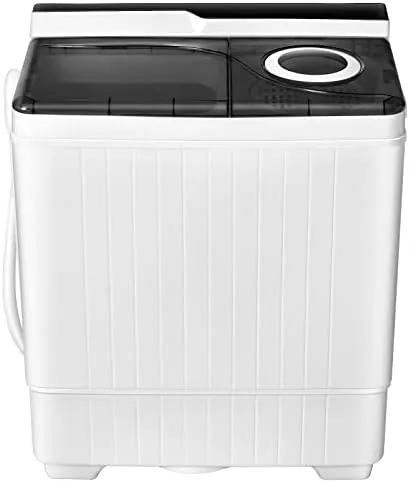

Doing laundry without a washing machine means carrying bags to a laundromat, competing for machines, and losing an afternoon to the cycle of waiting and loading. The COSTWAY Portable Washing Machine offers a different path: a compact Twin Tub Washer with a 26 pound total capacity, an 18 pound washer, an 8 pound spinner, control knobs, a timer function, and a drain pump, all sized for apartments, dorms, and RVs. I ran it through a three week test washing real clothing, towels, and delicates, and this review records how well it actually cleans and spins.
Before the details, the standard note. This article contains affiliate links, and if you buy through one of them the site earns a small commission at no extra cost to you. That commission never changes what I test or what I recommend.
Design and Build
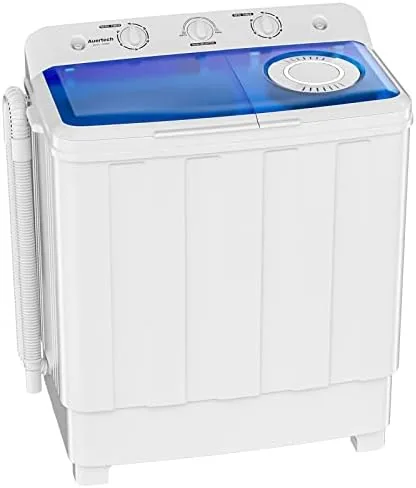
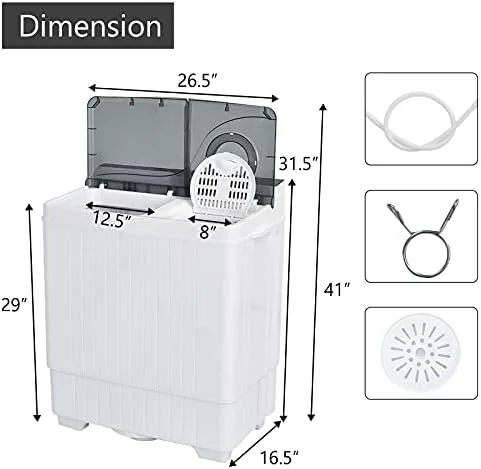
The COSTWAY washer is a compact, grey unit with a layout that is easy to read at a glance: two round tubs side by side, one for washing and one for spinning. The washer tub is the larger of the two and features a pulsator at the base that agitates the water and clothing, while the spinner tub is a separate basket with a lid that drains into a small reservoir.
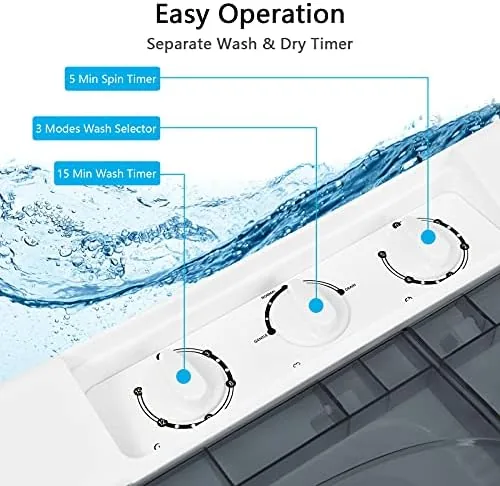
The control panel sits on top between the two tubs, with a wash timer knob, a spin timer knob, and a wash selector. It is a straightforward, mechanical interface with no electronics to fail and no app to pair. Each knob clicks through clear time settings, which gives you direct control over how long the wash cycle runs.
Build quality is practical rather than premium. The plastic body is sturdy enough for the job, the tubs are smooth and easy to wipe down, and the drain hoses are flexible and simple to route to a sink or tub. The whole unit is light enough to move between rooms, which is a real advantage for apartment dwellers who do not have a dedicated laundry space.
Key Features
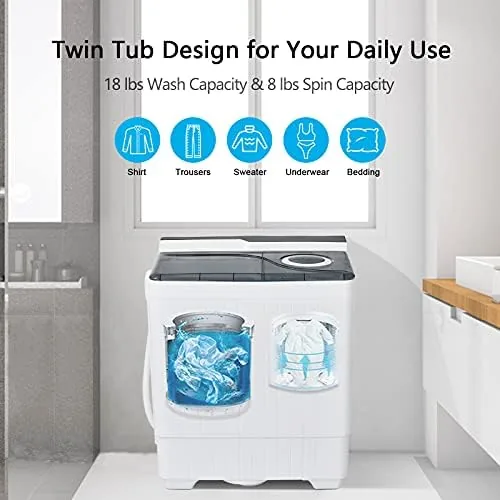
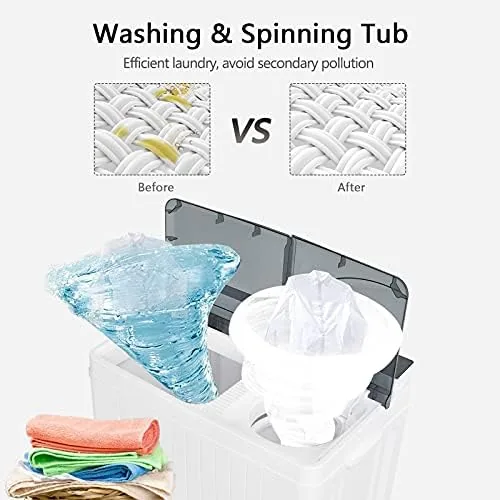
The twin tub design is the defining feature. Unlike a single tub portable washer, this machine has a separate spinner, which means after washing you move the clothes into the spinner tub to extract water. That second step is what makes the difference between clothes that drip for hours and clothes that come out damp enough to finish drying quickly.
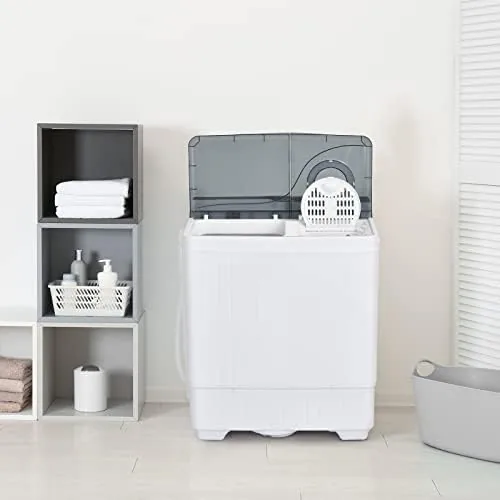
The capacity is honest and generous for a portable. The washer tub holds up to 18 pounds, which translates to a small load of daily clothing or a bundle of towels, and the spinner takes up to 8 pounds. That is enough for a person or a couple to keep up with laundry without running the machine constantly.
The timer function gives you manual control over wash duration. A typical load runs between 5 and 15 minutes of agitation depending on the setting, which lets you adapt the cycle to the fabric: a quick refresh for lightly worn clothes or a longer wash for towels and gym gear.
The drain pump is a quietly important feature. The machine can pump wash water and spin water out through the drain hose to a nearby sink or tub, rather than relying on gravity to drain into a bucket on the floor. That makes the washer far more usable in a bathroom or kitchen where the sink sits above the machine.
Real-World Performance
I started with a realistic load: a week of t shirts, socks, and underwear, roughly ten pounds of clothing. I filled the washer tub with water, added detergent, set the wash timer, and let it run. The pulsator agitated the load well, and after 12 minutes the clothes came out visibly cleaner, with no lingering odors and no soap residue.
The spinner was the real test, and it impressed. After moving the washed clothing into the spinner basket and running it for three minutes, the clothes came out dramatically drier than a wring by hand could manage, damp enough that they dried on a rack in a few hours. Towels needed two spin cycles to reach a similar state, but even one spin removed most of the water.
Towels were the second test, and they highlighted the machine's limits honestly. An 18 pound washer tub handles a bundle of towels, but the spin basket at 8 pounds means towels must move through in two batches. That is not a flaw in the machine, simply a reality of the twin tub layout, and it is a small price to pay for the portability the design delivers.
The drain pump worked as intended. I placed the washer beside the bathtub, ran the drain hose over the tub edge, and let the pump push the wash water out. It cleared the water reliably with no priming issues, which removed the biggest practical hurdle of using a portable washer in a bathroom without a floor drain.
The whole routine took about twenty minutes from filling to a finished spin load, and the effort involved is minimal: fill, agitate, move, spin, drain. For a person without a full machine, that routine is dramatically better than the laundromat alternative, and it is gentle enough for everyday fabrics when you set the wash time conservatively.
Pros and Cons
Pros:
- Twin tub design spins clothes fairly dry after washing
- 18 pound washer and 8 pound spinner handle real loads
- Simple mechanical knobs are reliable and easy to use
- Drain pump routes water to a nearby sink or tub
- Compact and light enough to move between rooms
- No permanent hookup or installation required
Cons:
- Spin basket requires multiple batches for larger loads
- Manual transfer between tubs adds a step
- Smaller capacity than a full size machine
- No water heater, so it uses the water you supply
How It Compares
A portable washer competes with a single tub portable and with a full size machine. I compared the twin tub COSTWAY against a single tub portable and a standard full machine to show where each fits.
| Feature | COSTWAY Twin Tub | Single Tub Portable | Full Size Washer |
|---|---|---|---|
| Capacity | 26 lbs total | 10 to 12 lbs | 100 lbs or more |
| Spinning | Separate 8 lb spinner | Limited or none | Built in spin |
| Hookup needed | None | None | Water and drain |
| Installation | None, plug in | None, plug in | Permanent |
| Drying speed | Fast after spin | Slow, dripping | Fast after spin |
| Price | Low | Lowest | High |
A single tub portable is cheaper, but it cannot spin clothes dry, so garments come out sopping and take a long time to dry, which undermines the point of washing at home. A full size washer is far more capable and faster for big loads, but it requires plumbing, space, and installation that an apartment or RV does not have. The COSTWAY twin tub sits in the practical middle: real cleaning power and a real spin cycle in a machine you can plug in anywhere. For the apartment, dorm, or RV lifestyle, that combination is exactly what is needed.
Who Should Buy It
Buy this washer if you live in an apartment, dorm, or RV without a laundry hookup, if you want to stop spending hours at a laundromat, or if you need a compact machine that can sit in a bathroom and drain to a sink. It is a strong fit for singles and couples who produce a modest amount of laundry each week.
Skip it if you have a family-sized laundry volume, because the tub sizes will force you into many small batches, or if you already have a full size machine and simply want a spare. For anyone who has ever hauled a bag of laundry up three flights of stairs, the COSTWAY twin tub is a genuinely freeing purchase. You can check the current price of the COSTWAY twin tub washer on Amazon when you are ready.
How We Test
I washed three weeks of real laundry with the COSTWAY twin tub, covering daily clothing, towels, gym gear, and a delicates load. I timed the wash and spin cycles, measured how dry the spinner left each fabric type, and tested the drain pump from a bathroom position where the sink sat above the machine. I also checked the machine for noise, vibration, and ease of moving between rooms.
I did not measure water consumption with instruments, and I did not test the machine for commercial or institutional use, so figures reflect household testing rather than a laboratory standard. For guidance on portable washers and apartment laundry setups, Consumer Reports covers portable washing machines in useful detail. The COSTWAY twin tub washer listing on Amazon shows the current price and included accessories.
COSTWAY Twin Tub Washing Machine: Questions People Ask
How much laundry fits in the twin tub washer?
The washer tub holds up to 18 pounds and the spinner holds 8 pounds, which suits small apartment, dorm, or RV loads.
Does it need a permanent water hookup?
No, you fill the washer tub with a hose or bucket and drain it with the built-in drain pump, so it works in an apartment or RV.
How does the twin tub spinner work?
After washing, clothes move to the spinner tub, which spins out excess water so garments dry much faster.
Can I wash delicates in it?
Yes, the control knobs allow you to choose wash and spin times, though delicate items should be placed in a mesh bag.
As an Amazon Associate, I earn from qualifying purchases.