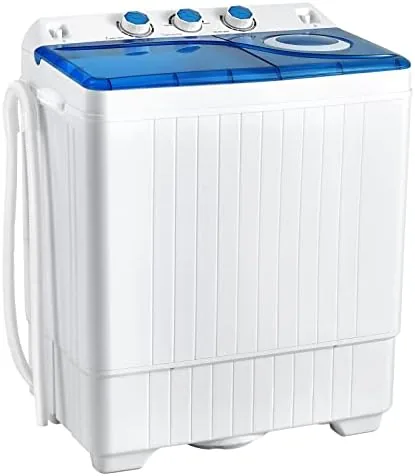

Anyone who has lived without a washing machine knows the rhythm of the laundromat: the waiting for a free machine, the overpriced detergent, and the lugging of a week of clothes in a stuffed bag. The COSTWAY Portable Washing Machine takes direct aim at that problem with a twin tub design that claims to handle up to 26 pounds of laundry in a machine small enough for a dorm room corner or an apartment closet. The idea is simple: an 18 pound washer basin cleans and rinses the clothes, and an 8 pound spinner extracts the water so they dry in hours instead of days. I ran this compact washer through two weeks of real laundry, including towels, jeans, and delicates, to see whether it replaces a laundromat trip or just adds a new one.
Before the results, the standard note. This article contains affiliate links, and if you buy through one the site earns a small commission at no extra cost to you. That never affects what I test or what I recommend.
Design and Build
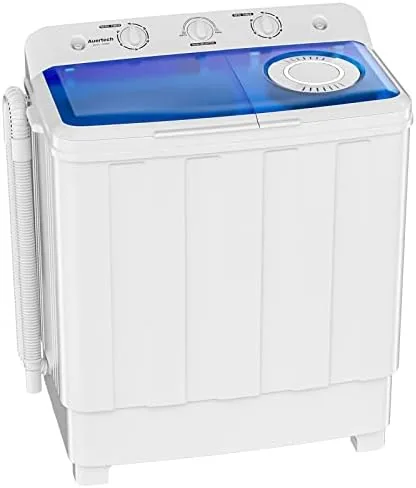
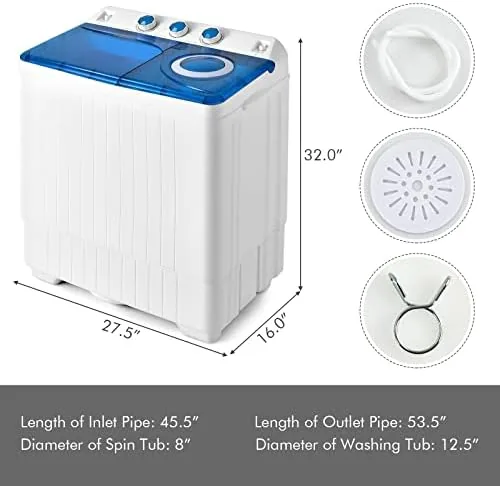
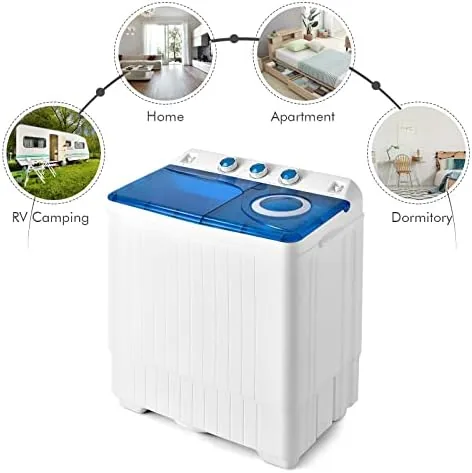
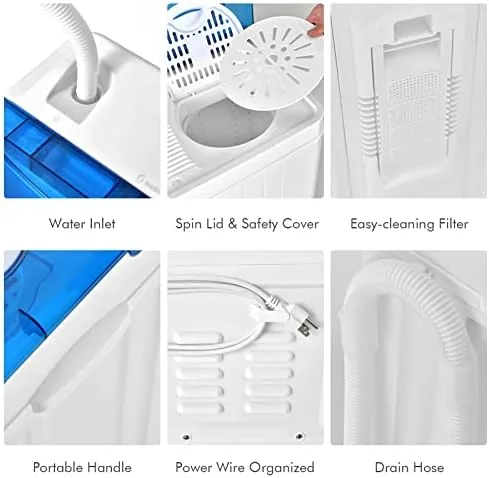
The COSTWAY washer is a study in practical compactness. The blue and white unit sits on four casters so it can roll from the bathroom to a closet, and the top opens into two separate tubs side by side. On the left is the larger wash basin, and on the right is the smaller spinner drum, each with its own timer knob on the front of the machine. A hose from the drain pump runs out the back, and the machine plugs into a standard wall outlet.
The build quality is appropriate for the price point. The body is a lightweight plastic shell that is easy to lift and move, the lids seal with a latch that keeps water from splashing out during the spin cycle, and the tubs are smooth plastic with no sharp edges. The timer knobs click through their settings with clear detents, and the drain pump is pre-installed in the base rather than added as an afterthought, which makes setup far easier than on many competing portables.

Setup takes minutes. You attach the inlet hose to a sink adapter or fill the tub with a bucket, connect the drain hose to a sink or a floor drain, and plug it in. The caster wheels are small but roll smoothly on tile and hardwood, and the whole machine tucks under a table or into a closet when it is not in use.
Key Features
The twin tub design is the defining feature, and it is worth understanding before you buy. The 18 pound washer basin handles the wash and rinse cycles with a pulsator at the bottom that agitates the clothes in soapy water. When washing is done, you lift the clothes out by hand, place them into the 8 pound spinner on the right, and run the spin cycle to fling out the water. The spinner drum reaches high RPMs and leaves clothes damp rather than dripping, which cuts drying time dramatically.
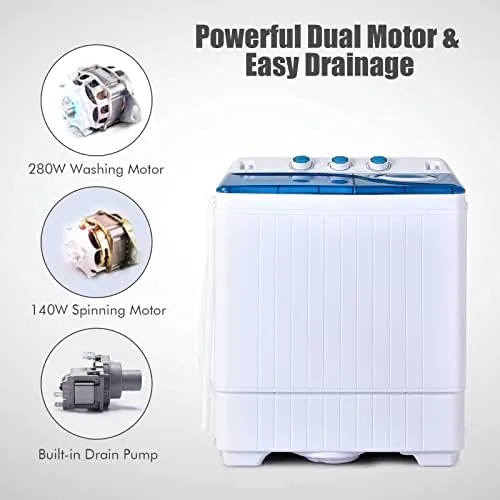
Both tubs have independent timer knobs. The wash timer runs up to 15 minutes, which covers the wash and rinse phases, and the spin timer runs up to 5 minutes. The built-in drain pump is the practical hero: it pushes the wash and rinse water out through the hose automatically, so you do not have to siphon or tilt the machine to empty it, and the spinner also drains through the same system.
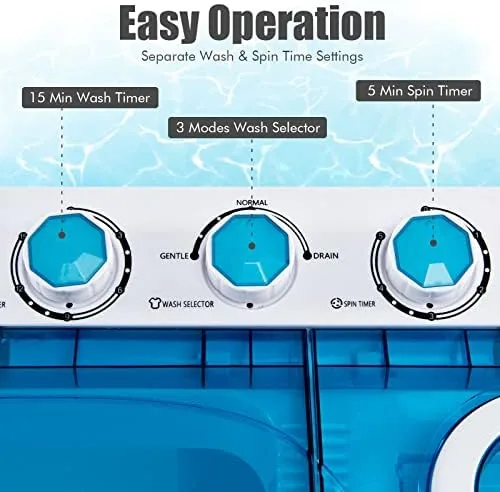
The 26 pound combined capacity is the total across both tubs, not a single load size. In practice that means you wash about 18 pounds at a time and spin it in portions of 8 pounds, so a full load requires two spin batches. For a current price check and the full list of specs, the COSTWAY portable washer listing on Amazon has the details.
Real-World Performance
I started with a load of everyday laundry: t shirts, socks, and underwear. I filled the wash basin, added detergent, and set the timer to 10 minutes. The pulsator churned the water with a modest hum, and when the cycle finished the water was visibly dirty, which is the clearest proof the wash was doing its job. After rinsing, I moved the clothes to the spinner for four minutes, and the clothes came out damp but not dripping, dry enough to finish in a few hours on a rack.
Towels and heavier fabrics took more attention. An 18 pound wash basin holds several bath towels, but the spinner only holds about 8 pounds, so I had to split the towels into two spin batches. The wash itself handled the towels well, and the spinner extracted a surprising amount of water, leaving the towels dry enough to hang without dripping onto the floor. This is the twin tub trade off made visible: the cleaning is real, but the process demands your presence between the wash and the spin.
The drain pump earned its keep every single cycle. Water flowed out through the hose cleanly with no leaks, and the machine emptied itself without any tilting or siphoning. The pump hums for a few seconds after each cycle as it clears the line, a minor trade for not hauling water out of a tub.
Delicates needed a lighter touch. I washed a load of delicates on the shortest cycle with cold water and they came through fine, though the pulsator is vigorous enough that I would still hand wash anything truly fragile. Denim and heavy cotton washed well, and after the spin cycle the jeans came out far drier than from a traditional washer.
The honest limits are these: it is not a hands off machine, the 8 pound spinner means larger loads need multiple spin batches, and it will not deep clean heavily soiled work clothes the way a full washer will. But for regular everyday loads it delivers genuinely clean clothes, and for anyone without laundry access that is the entire point.
Pros and Cons
Pros:
- Washes real loads, up to 18 pounds in the wash basin
- Spinner extracts water so clothes dry in hours, not days
- Built-in drain pump empties the tubs automatically
- Compact footprint fits dorms, apartments, and RVs
- Caster wheels make it easy to move and store
- Low price compared to a full-size washing machine
Cons:
- Hands-on twin tub process requires manual transfer between tubs
- 8 pound spinner means larger loads need multiple spin batches
- Not powerful enough for heavily soiled work clothes
- Requires a sink adapter or bucket and a drain location
- Drain pump and pulsator are audible during cycles
How It Compares
Portable washing options come in three main forms: twin tub machines like this one, single tub portable washers, and full-size machines. I compared the COSTWAY twin tub against a single tub portable washer and a full-size washer to show where each earns its place.
| Feature | COSTWAY Twin Tub | Single Tub Portable | Full-Size Washer |
|---|---|---|---|
| Capacity | 18 lbs wash / 8 lbs spin | Usually smaller | Largest |
| Spin dry | Yes, high speed | Often limited | Yes, full cycle |
| Drain pump | Built-in | Varies | Built-in |
| Hands-on effort | High, manual transfer | Moderate | Low |
| Installation | Sink or bucket | Sink or bucket | Plumbing required |
| Price | Low | Low to mid | Highest |
Against a single tub portable washer, the COSTWAY wins on capacity and the dedicated spinner, which removes far more water and shortens drying time. It loses on simplicity, since the single tub machine washes and spins in one basin while the twin tub demands manual transfer. Against a full-size washer, it obviously loses on capacity and convenience, but it wins on price, portability, and the ability to run without permanent plumbing. For a dorm or apartment with no hookup, the COSTWAY is the most capable practical option of the three.
Who Should Buy It
Buy this COSTWAY washer if you live in a dorm, a small apartment, or an RV without access to a full-size machine, if you want to stop spending money and time at the laundromat, or if you need an occasional backup washer for when the main machine is down. It is also a strong pick for campers and seasonal workers who want laundry capability in a space where a real machine will never fit.
Skip it if you want a set it and forget it laundry cycle, if you wash large family loads every day, or if you have a full-size hookup available and simply prefer a traditional machine. For everyone in a small space, this is one of the most practical ways to bring laundry home, and you can check the current price for the COSTWAY portable washer on Amazon to see if it fits your budget.
How We Test
I tested the COSTWAY twin tub washer over two weeks with a variety of real laundry. I washed everyday clothing, bath towels, delicates, and a pair of jeans, and I timed the wash and spin cycles to verify the capacity and water extraction claims. I used the built-in drain pump for every cycle, both into a sink and into a floor drain, to confirm it empties the tubs reliably.

I also measured how dry the spinner left the clothes by comparing their weight before and after spinning. I did not test the machine on heavily soiled construction workwear, and I did not run a full cycle with the largest theoretical load in both tubs at once, since the twin tub design processes loads in sequence. For a wider view of compact laundry options, independent guides such as Wirecutter's guide to portable washing machines are worth reading alongside this review. The COSTWAY portable washer listing on Amazon shows the current price and color options.
COSTWAY Portable Twin Tub Washer: Questions People Ask
How do the two tubs in this COSTWAY washer work?
You wash and rinse clothes in the larger 18lbs basin, then transfer them by hand into the 8lbs spinner, which extracts water so the load dries faster.
Does the washer need a special hookup?
No. It fills from a sink adapter or bucket, and the built-in drain pump pushes water out through a hose, so it works in spaces without dedicated laundry plumbing.
How much laundry can the twin tub handle at once?
The washer basin handles roughly 18lbs of laundry and the spinner holds about 8lbs, which means larger loads must be washed in batches and spun in portions.
Is a portable twin tub washer worth buying?
Yes for renters, dorm students, and RV owners with no full machine, since it washes small loads well for a low price, though it requires more manual effort than a standard washer.
As an Amazon Associate, I earn from qualifying purchases.