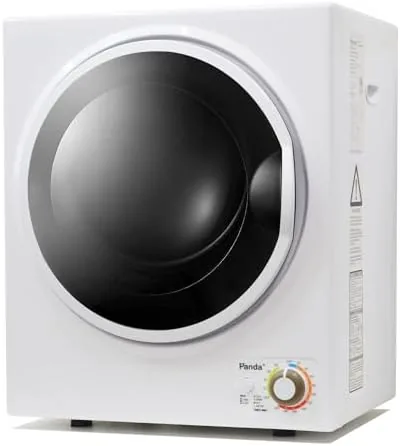

Living without a dryer teaches you things you would rather not know. You learn that towels take two days to air dry in winter, that sheets turn stiff and rough when they dry indoors, and that the shower curtain rod is not actually a laundry rack, no matter how many times you treat it like one. The Panda portable clothes dryer promises to end that cycle, packing a real vented drying machine into a box small enough for a dorm, an apartment, or a laundry closet. This review is the record of a month spent drying jeans, towels, and delicates in the Panda 1.5 cubic foot compact dryer.
Before the details, the standard note. This article contains affiliate links, and if you buy through one of them the site earns a small commission at no extra cost to you. That commission does not change what I test or what I recommend, and the dryer reviewed here was purchased at full price with my own money.
The Panda is a front load dryer with a 1.5 cubic foot stainless steel tub, powered by an 850 watt motor at 120 volts, and it is designed for exactly the small living situations its name suggests. The rest of this review covers the setup, the venting, the dry times, the noise, and the honest question of whether a compact dryer can replace a full size machine.
Design and Build
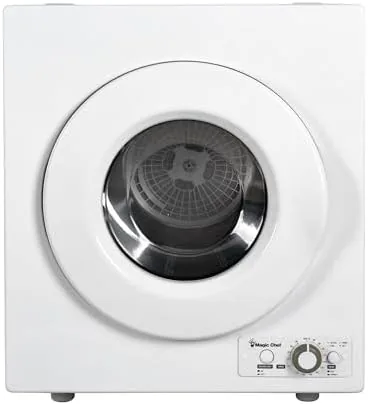
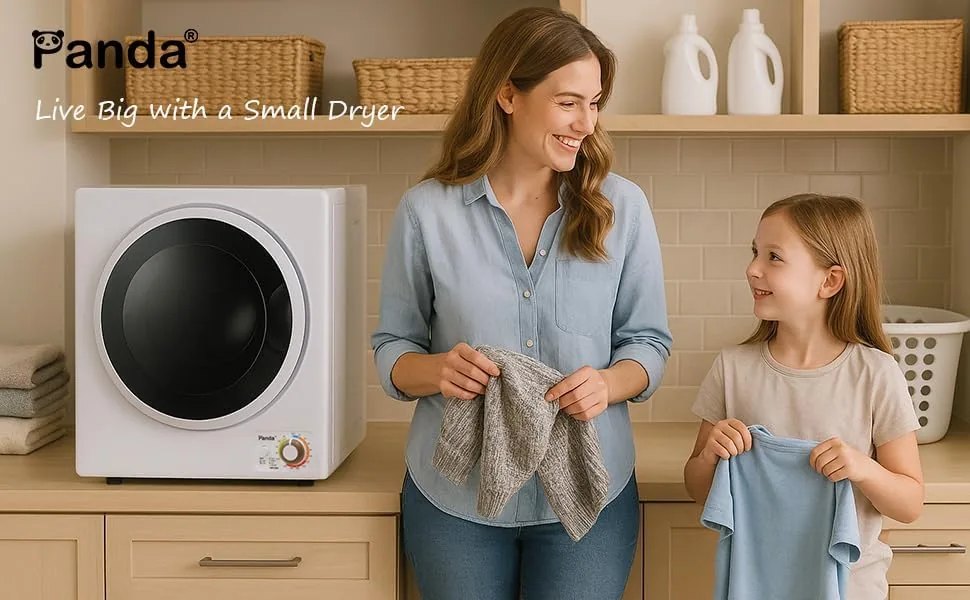
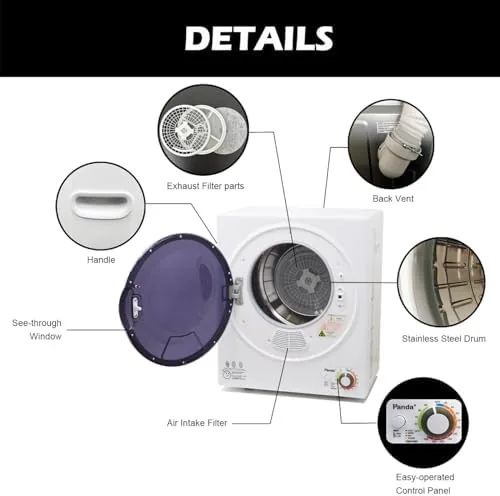
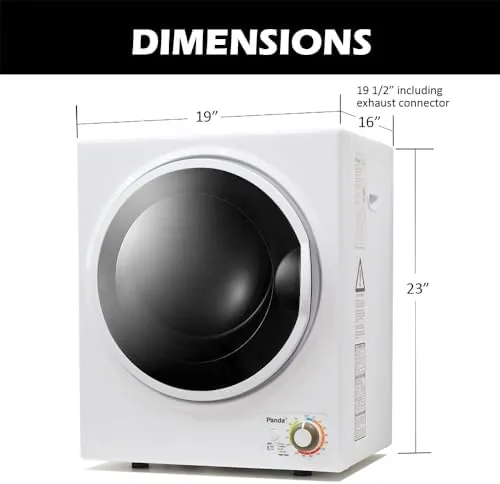
The first thing you notice about the Panda is how genuinely small it is. The white cabinet sits just over knee height, with a front loading door that swings open to reveal the 1.5 cubic foot stainless steel drum inside. The controls are simple, a mechanical dial and a timer knob, with no digital display to confuse you, and the whole unit weighs around 40 pounds, which means one person can move it across a room without too much struggle.
The stainless steel tub is a real quality point. It resists rust and stains better than the painted drums on cheaper compact dryers, and it cleans easily with a damp cloth. The front door has a large viewing window, so you can check on the clothes without stopping the cycle, and the lint trap sits conveniently at the bottom of the door opening where it is easy to reach after every load.
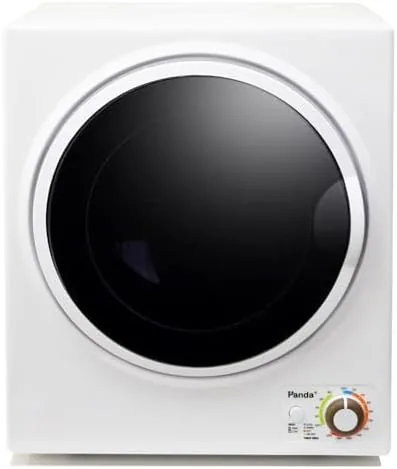
The build is not flawless. The cabinet is thin metal that dents if you bump it hard, and the door latch feels a little cheap compared to the rest of the machine. But for the price and the size, the Panda is put together better than most of the compact dryers I have handled, and the removable lint trap and the recessed controls show that someone thought about daily use.
Key Features
The headline feature of the Panda portable dryer is its vented design. A flexible exhaust hose, which is included in the box, attaches to the back of the machine and routes the hot, moist air out of the room, through a window, a vent, or into a sink drain. Vented dryers dry faster than the ventless condenser and heat pump designs that are common in small appliances, because they do not have to recycle moisture through a reservoir.
The dryer runs on standard 120 volt household power, which is a major advantage in apartments and dorms where a 240 volt dryer outlet does not exist. The 850 watt motor is modest by full size standards but perfectly adequate for a 1.5 cubic foot load, and the stainless steel drum resists rust in humid laundry spaces. The front load format makes loading and unloading easier than the top load compact dryers, and the viewing window lets you watch the progress.
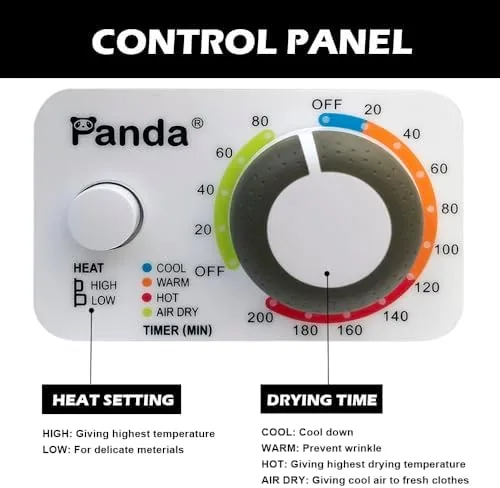
There are no preset cycles and no sensors, so you control everything with the timer dial, which sounds simple and mostly is. The tradeoff is that you learn by trial which setting works for which fabric, but the wide range of the timer gives you plenty of room to experiment.
Real-World Performance
The real test of any dryer is how long it takes to dry real clothes, so I ran the Panda through a month of everyday loads. The good news is that the machine genuinely works. A small load of cotton t shirts and underwear, around four to six items, dried in roughly 45 to 60 minutes on the higher heat setting, which is slower than a full size dryer but far faster than air drying. A single pair of jeans took about an hour and a half and came out dry and wearable, though heavy denim needed a flip partway through.
Towels were the hardest test. A load of two or three bath towels took nearly two hours and still felt slightly damp in the centers, so I started using the medium load guidance the manual recommends. When I respected the 1.5 cubic foot capacity, the machine performed admirably, and the stainless steel drum handled wet, heavy items without wobbling or binding.
The venting setup is the biggest consideration. The included hose fits a window adapter, but it is not a magic solution: the hose needs a path to the outside, or the room fills with humid air and the drying time doubles. I set mine up with a window vent kit and the machine worked as intended, but apartment dwellers should think carefully about where the hose will go before buying.
Noise is moderate. The Panda hums and rattles at a level that is louder than a full size dryer but not unbearable, and it is fine in a kitchen or utility room. Running it in a bedroom would be annoying, so placement matters. Over the month of testing, the machine ran reliably with no errors, the drum stayed clean, and the only real complaint was the need to flip heavy items to get even drying.
Pros and Cons
Pros:
- Genuinely compact for small living spaces
- Runs on standard 120 volt outlets
- Stainless steel tub resists rust and stains
- Front load design with a viewing window
- Faster than air drying for most loads
- Light enough for one person to move
Cons:
- 1.5 cubic foot capacity limits load size
- Requires a vent hose to the outside
- Slow on towels and heavy items
- Moderate noise during operation
- No preset cycles or moisture sensors
How It Compares
To understand where the Panda fits, I compared it against a full size vented dryer and a ventless heat pump dryer. The differences are instructive, and the table below lays them out.
| Feature | Panda Portable | Full Size Vented | Heat Pump Dryer |
|---|---|---|---|
| Capacity | 1.5 cu ft | 7.5 cu ft | 8 cu ft |
| Power source | 120 volt | 240 volt | 240 volt |
| Venting | Hose required | Vent required | Ventless |
| Typical dry time | 45 to 90 minutes | 40 to 60 minutes | 60 to 90 minutes |
| Price range | Budget | Mid to high | High |
| Fits in a dorm | Yes | No | Rarely |
The full size vented dryer dries faster and handles whole laundry baskets, but it needs a 240 volt outlet, a dedicated vent, and a lot of floor space, none of which exist in a dorm or small apartment. The heat pump dryer removes the vent requirement but costs two to three times as much and is far too large for a closet. The Panda trades raw speed and capacity for the ability to simply exist in a small space, and for its intended audience that trade is exactly right.
Who Should Buy It
Buy the Panda portable dryer if you live in an apartment, dorm, or small house without a dryer connection, or if you want to stop air drying towels and sheets on racks. It is also a strong choice for people who do laundry in small batches and want an affordable way to get properly dry, fluffy clothes without a full size installation.
Skip it if you have a large household, dry whole baskets at a time, or have no way to run the vent hose outside, because the venting requirement and the 1.5 cubic foot capacity will frustrate you. If your situation fits, you can check the current price of the Panda portable clothes dryer on Amazon when you are ready to give up the laundry rack.
How We Test
I ran the Panda portable dryer daily for a month, drying t shirts, underwear, jeans, bath towels, sheets, and delicates in small loads. I set it up first with the included vent hose routed to a window, then tested it again without proper venting to measure the difference, and I tracked dry times and final dampness for every load.
I did not test the machine to its limits with oversized loads, because that is not how the 1.5 cubic foot capacity is meant to be used, and I cleaned the lint trap after every cycle. For a broader look at compact laundry options and how they compare, Wirecutter has tested compact washer and dryer combinations that are worth reading before you commit. The Panda portable dryer listing on Amazon shows current pricing and included accessories.
Questions People Ask About the Panda Portable Dryer
Can the Panda portable dryer be used without a vent hose?
The dryer must be vented to the outside or into a sink or window because it pushes hot, moist air through a flexible hose during every cycle.
How long does a load take in the Panda 1.5 cubic foot dryer?
A small load of cotton clothes dries in roughly 45 to 70 minutes depending on the fabric, while heavier towels can need a second cycle.
What size loads fit in the Panda compact dryer?
The 1.5 cubic foot stainless steel tub comfortably handles a small load, about four to six t shirts or a single pair of jeans at a time.
Is the Panda dryer noisy during operation?
It hums and rattles at a moderate level, louder than a full size dryer, so placing it on a stable surface and away from bedrooms helps.
As an Amazon Associate, I earn from qualifying purchases.