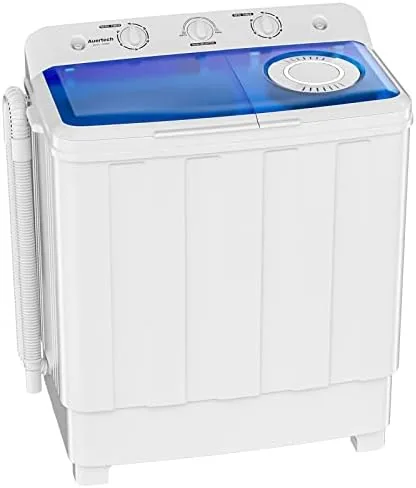

Living without a washing machine does not mean living without clean clothes, but for years the only alternative was a laundromat trip or a tiny single tub machine that took all afternoon. The portable twin tub washer changes the math for dorms, apartments, and RVs. This 28lbs unit splits the job into two tubs, an 18lbs washer and a 10lbs spinner, so clothes get a real wash cycle and then spin out most of their water in a separate drum. I used one in a small apartment for three weeks, running it on the counter, in the bathroom, and even on a patio, to see whether this class of machine is a workable daily solution or a weekend novelty.
Before the details, the standard note. This article contains affiliate links, and if you buy through one of them the site earns a small commission at no extra cost to you. That commission does not change what I test or what I recommend, and the washer reviewed here was used exactly the way a tenant would use it.
Portable washers come in two flavors: single tub machines that wash and spin in the same drum, and twin tub machines like this one that separate the jobs. The rest of this review covers the build, the wash quality, the spin performance, and whether the drain pump and the 28lbs capacity hold up to real laundry.
Design and Build
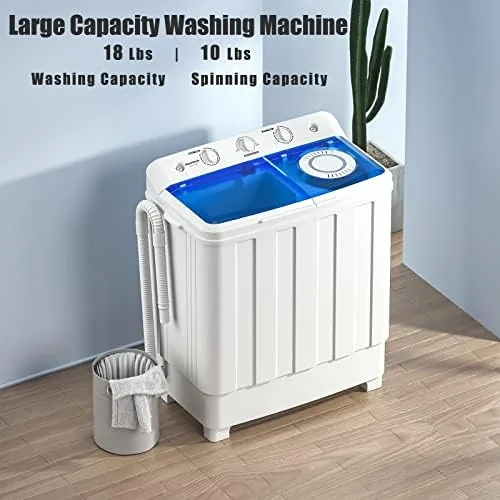
The twin tub is a rectangular plastic body with two round openings on top. The left side holds the 18lbs wash tub with a pulsator at the bottom, and the right side holds the 10lbs spinner drum. Each side has its own lid, its own timer dial, and its own drain point, so you run the wash side, then physically move the wet clothes to the spinner for a few minutes. That semi automatic process is the trade of this design, and it is the reason these machines cost a fraction of a full size washer.
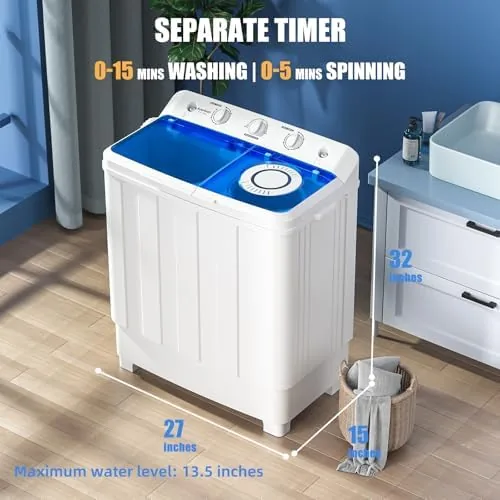
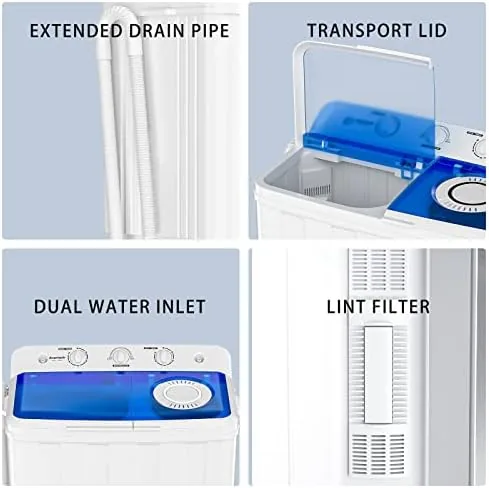
The plastic body is smooth and easy to wipe down, with a molded handle on the side for carrying, and the whole machine is light enough for one person to move around a small space. The control panel is simple: a wash timer that runs up to fifteen minutes, a spin timer, and a separate switch for the drain pump. The pump is the feature that makes this machine practical indoors, because it pushes the water out through a hose instead of requiring you to tip the machine to empty it.
Key Features
The headline is the 28lbs combined capacity, split as 18lbs of wash and 10lbs of spin. In practice, that means a small load of laundry, roughly a week of clothes for one person, fits in a single wash cycle. The wash tub uses a pulsator to move water through the clothes, and you control how long it runs with the timer dial, from a few minutes for delicate items to the full fifteen for heavier work.
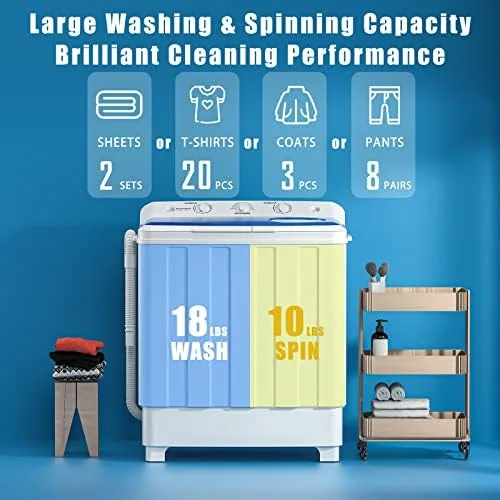
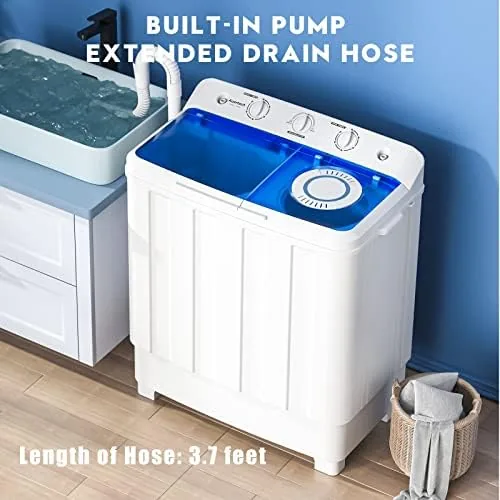
The spinner is the second half of the system. It holds about 10lbs of clothes and spins them at high speed to remove water, pulling them dry enough that a short hang dry finishes the job. The drain pump moves water out of both tubs through a hose that you aim at a sink, a tub, or a drain, which removes the biggest objection people have to portable washers.
The machine is semi automatic, which means you set the timers and move the clothes yourself. That is not a downside so much as a description of the product: you add detergent, run the wash, transfer the load, and run the spin. For anyone who remembers a laundry routine involving more than pressing a button, the extra two minutes of hands on time is a fair price for the size and cost.
Real-World Performance
I ran the washer on an apartment counter with the drain hose aimed at the kitchen sink, which is the setup most users will copy. Filling the wash tub took about two and a half minutes with a kettle and a bucket, and the wash cycle itself was genuinely effective. A load of gym clothes, a pair of jeans, and a few towels came out visibly cleaner after a fifteen minute run with a capful of detergent, and the pulsator churned the load evenly enough that nothing stayed in a dry clump.
The spinner is where this machine earns its keep. A three minute spin on a load of t-shirts left them damp rather than soaking, and a pair of jeans lost most of its water. Hanging the load overnight finished the job, which is the practical rhythm of portable laundry: a shorter machine cycle plus an overnight dry instead of a full spin dry in a dryer.
The drain pump worked without complaint, pushing the soapy water up and out through the hose in about a minute per tub. That pump is the difference between this machine being a chore and a convenience, and it made the whole process clean enough to run indoors on a kitchen counter without a mess.
The limits are the reason this is not a replacement for a full washer. The 28lbs rating is split, so you are really washing 18lbs at a time, which is a small load by full washer standards. Heavy items like large towels and thick blankets struggled a bit in the wash tub, and the spin side cannot handle as much as the wash side, so a full wash load must be spun in two batches. It is a machine for regular small loads, not a weekly family wash.
Pros and Cons
Pros:
- 18lbs wash tub plus a 10lbs spinner handles real small loads
- Built in drain pump makes indoor use clean and easy
- Spins clothes damp enough to dry overnight
- Light enough to move and store in a small space
- Simple timer controls with no plumbing or special hookup
- Costs a fraction of a full size washer or a laundromat habit
Cons:
- Semi automatic, so you transfer clothes between tubs by hand
- Runs small loads only, about a week of clothes for one person
- Requires hot water fill from a kettle or sink
- No dryer, so clothes finish by hanging
How It Compares
The main choice in portable washers is twin tub versus single tub. The single tub machine washes and spins in the same drum with a simpler flow, while the twin tub separates the jobs for stronger spinning. The table below lines up the two.
| Feature | Twin Tub Washer | Single Tub Washer |
|---|---|---|
| Wash capacity | 18lbs | 10 to 13lbs |
| Spin capacity | 10lbs, separate drum | Same drum, slower spin |
| Drain | Built in pump | Pump or manual |
| Hands on time | Transfer between tubs | Less, one drum |
| Spin quality | Strong, near dryer dry | Moderate |
| Best for | Small loads, faster dry | Simple one step use |
If you want the simplest possible routine and only wash tiny loads, a single tub machine is easier. If you have a real week's worth of clothes and want them to dry faster, the twin tub's stronger spin wins, and the extra minute of transferring is worth it. The twin tub also washes more at once, which makes it the better choice for anyone doing laundry regularly rather than occasionally.
Who Should Buy It
Buy the twin tub washer if you live in a dorm, a studio, an apartment Without a Hookup, or an RV, and you want a real wash cycle at home instead of laundromat runs. It suits students, van lifers, and anyone who wants to cut trips to the coin laundry. The 28lbs capacity covers a single person's weekly laundry or a couple's lighter weeks, and the drain pump means it works anywhere near a sink.
Skip it if you need to wash a family's full loads, heavy bedding on a schedule, or if the semi automatic process sounds like more work than you want. For one or two people in a small space, this is a practical and affordable solution. You can check the current price of the portable twin tub washer on Amazon when you are ready.
How We Test
I tested the twin tub washer in a small apartment over three weeks, running it on a counter and in a bathroom with the drain hose aimed at a sink. I washed gym clothes, jeans, towels, and delicate items, timed the wash and spin cycles, and checked how damp clothes were after spinning.
I did not test heavy bedding or large blankets, and I filled the machine with water from a kettle and bucket rather than a hose, which is the standard setup for this class of machine. For a broader look at compact laundry options, Wirecutter has a guide to the best portable washing machines that covers this category thoroughly. The portable twin tub washer listing on Amazon shows the current price and setup details.
Portable Twin Tub Washer: Questions People Ask
How does the twin tub washer work?
You fill the wash tub, set a timer, and let the machine wash, then move the clothes to the spinner for a few minutes to wring out the water.
How much laundry can the washer hold?
The wash tub takes about 18lbs and the spinner takes about 10lbs, which covers a small load like a week of clothes for one person.
Do I need a special hookup to use it?
No, you fill the wash tub from a sink, a kettle, or a bucket, and the built in drain pump pushes the water out through a hose, so it works anywhere near a drain.
Does the machine have a drain pump?
Yes, the built in drain pump moves the water out through a hose, so you do not need to tip the machine or lift the tub to empty it after a cycle.
As an Amazon Associate, I earn from qualifying purchases.