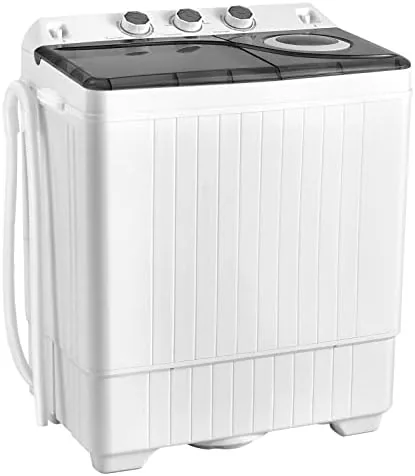

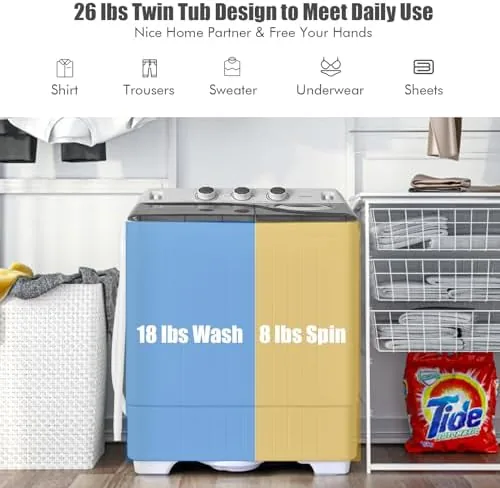
Dorm rooms and small apartments rarely come with a washer and dryer, and hauling laundry to a laundromat or a shared machine is a weekly chore that eats time and money. The COSTWAY Portable Washing Machine takes a different approach: it is a twin tub unit with an 18 pound washer on one side and an 8 pound spinner on the other, all in a compact body that fits a bathroom or closet. It uses timer knobs, includes a built in drain pump, and needs no permanent plumbing, which is the feature that makes it possible to wash clothes in a room that has only a sink. I ran it through two weeks of real laundry in a small apartment, washing everything from t shirts to jeans, and this review covers the wash quality, the spin performance, and the daily reality of using it.
Before the details, the standard disclosure. This article contains affiliate links, and if you buy through one of them cosmoniq.com earns a small commission at no extra cost to you. That commission never changes what I test or what I recommend.
Design and Build
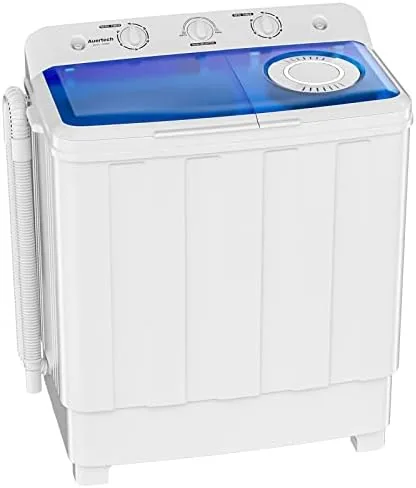
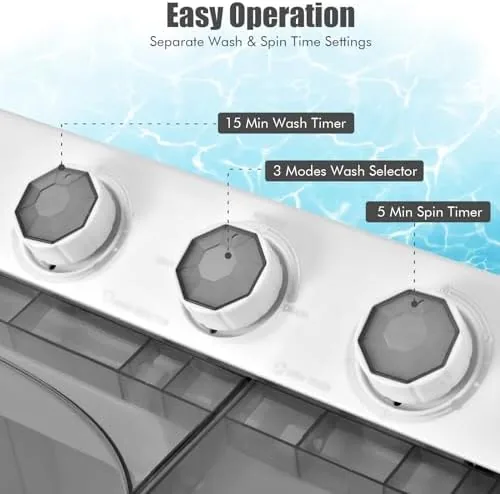
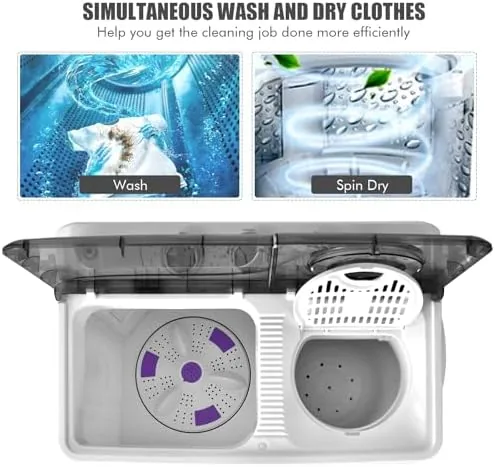
The machine is a twin tub design in a grey and white shell that is compact enough to roll into a closet when idle. On the left sits the wash tub with its own agitator, and on the right sits the smaller spin tub with a lid that locks during the spin cycle. Two timer knobs on top control the wash and spin timers, and a small panel carries the power controls.
The build is functional rather than premium. The plastic shell feels sturdy enough for moving and daily use, the lids close with firm latches, and the wheels on the base make it easy to roll between a sink and a storage spot. The wash tub is generously sized for a portable unit, and the spinner tub is deep enough to hold the wet clothes from a typical small load.
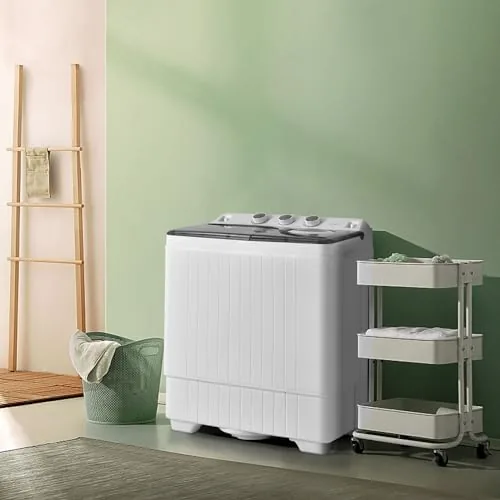
Portability is the design goal, and the machine hits it. There are no hoses to attach to a faucet and no permanent drain line. You fill the wash tub with water from a bucket or a sink sprayer, and the built in drain pump pushes the dirty water out through a hose into a sink or tub. That is the key feature that makes the machine work in a dorm with nothing but an outlet.
Key Features
The twin tub design is the headline feature. Because the washer and spinner are separate, you can wash a fresh load while the previous load spins, which cuts the total time for a batch of laundry compared to a single tub that must do one step at a time.
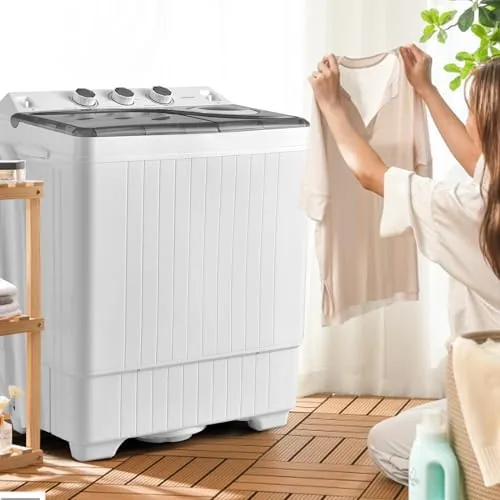
The timer knobs keep the controls simple. You set the wash timer with one knob, let the machine agitate and rinse, then transfer the clothes to the spinner and set the spin timer with the other knob. There is no digital display and no menu to learn, which is exactly right for a machine that needs to be simple to run.
The built in drain pump is the feature that makes the machine genuinely portable. Instead of lifting a full tub of water to empty it, you route the drain hose to a sink or tub and let the pump do the work. The pump moves water quickly and handles the sudsy wash water without clogging, which is the detail that separates a usable portable washer from a frustrating one.
Real-World Performance
I started with a small load of t shirts, socks, and workout gear, about six pounds of clothes. I filled the wash tub with warm water and detergent, set the wash timer for the standard cycle, and let the agitator work for fifteen minutes. The wash was genuinely clean: the t shirts came out fresh, the workout gear lost its odor, and there was no visible residue.
The drain pump handled the rinse water without complaint. I rinsed the load once in the wash tub, ran the pump to empty it, then transferred the clothes to the spinner. This is where the twin tub shines: the spin cycle removed a surprising amount of water, leaving the clothes damp rather than dripping, and the heaviest items came out at the top of the drum after the spin stopped.
The spin performance was the biggest surprise. A full spin cycle left my t shirts dry enough to hang on a rack and expect them dry by morning, and even the jeans came out with only damp seams. In an apartment with no dryer, that spin power is the difference between laundry that air dries in hours and laundry that stays damp for days.
The daily routine took some getting used to. Filling the tub by hand with a bucket is the reality of a portable washer, and a full load needs several buckets of water. The wash cycle is also noisier than a full size machine, with the agitator and pump making a steady mechanical hum, though it is not loud enough to disturb a neighbor in the next room. Once the routine was established, a small load took about forty minutes from fill to spin, which is a fair price for laundry done at home.
Capacity discipline mattered. The 18 pound wash tub rating is generous, but packing it full meant less effective agitation, so I found the sweet spot around ten to twelve pounds for a proper clean. The 8 pound spinner handled the corresponding wet clothes with room to spare, and the spin balance held steady even with heavier items mixed in.
Pros and Cons
Pros:
- Twin tub design washes and spins at the same time
- Built in drain pump empties water automatically
- Needs no permanent plumbing or faucet connection
- Spinner removes most of the water for fast air drying
- Compact with wheels for easy moving and storage
- Simple timer knobs with no menu to learn
Cons:
- Water must be added by bucket or sink
- No spin dryer for large loads in one go
- Agitator cycle is noisier than a full size machine
- Manual transfer between wash and spin tubs
How It Compares
I compared the COSTWAY twin tub against a full size washer and hand washing to show where each fits a small space.
| Feature | COSTWAY Twin Tub | Full Size Washer | Hand Washing |
|---|---|---|---|
| Load capacity | Up to 18 lbs wash | Full load | Small |
| Installation | Plug in and go | Plumbing required | None |
| Spin drying | Yes, separate tub | Yes | No |
| Water handling | Fill by hand, pump out | Automatic | By hand |
| Space | Compact, wheeled | Permanent spot | None |
| Time per load | About 40 minutes | 30 to 60 minutes | Long and tiring |
A full size washer is faster, quieter, and handles far more, but it needs plumbing, a permanent spot, and a budget several times higher. Hand washing is free and needs no machine, but it is exhausting, slow, and hard on clothes, and it cannot spin water out. The COSTWAY sits between them: it needs no plumbing, spins clothes properly, and fits in a closet, at the cost of filling water by hand and a noisier cycle. For a dorm or studio, it turns a miserable chore into a manageable one.
Who Should Buy It
Buy this machine if you live in a dorm or apartment with no washer, if you want to stop hauling laundry to a laundromat, if you need a machine that needs no plumbing, or if you want the spin drying power that makes air drying practical indoors.
Skip it if you wash large family loads, if you have no sink or tub to fill and drain it, or if you expect full size washer convenience and silence. For singles, students, and small households, this is one of the most practical ways to wash clothes without a laundry room. You can check the current price of the COSTWAY twin tub washer on Amazon when you are ready.
How We Test
I used the COSTWAY machine for two weeks in a small apartment, washing t shirts, socks, workout clothes, and jeans in a mix of full and partial loads. I timed the wash and spin cycles, evaluated cleaning results and odor removal, measured how dry the spin left clothes, and tested the drain pump, timer knobs, and portability across every load.
I did not measure water consumption or spin speed with instruments, and wash quality depends on water temperature, detergent, and load size, so your results may vary. For more on portable laundry options, Wirecutter covers full size washers and dryers for comparison. The COSTWAY twin tub washer listing on Amazon shows the current price and included accessories.
COSTWAY Twin Tub Washing Machine: Questions People Ask
How much laundry can it handle at once?
The washer tub handles roughly 18 pounds of clothes, which suits a few outfits or a small load, and the spinner drum carries up to 8 pounds at a time.
Do I need to connect it to a faucet?
No, you pour water into the washer tub by hand or with a bucket, and the built-in drain pump pushes the dirty water out through the included drain hose.
Does the spinner actually dry clothes?
The spinner removes a surprising amount of water, leaving clothes damp rather than dripping, which cuts the drying time on a rack or in a dryer substantially.
Is it easy to move and store?
The machine is compact with wheels and a handle, so it rolls into a closet or under a table when a load is finished, which suits dorm rooms and small apartments.
As an Amazon Associate, I earn from qualifying purchases.