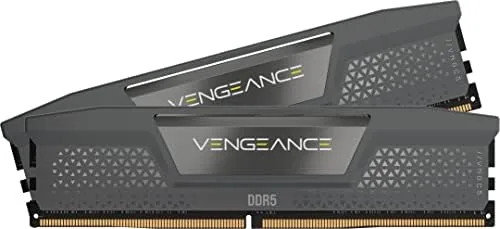

Memory is the part of a PC build that people tend to buy without thinking, and then wonder why their frametimes look uneven or their renders take too long. The truth is that DDR5 kits vary more than the spec sheets suggest, and the difference between a 5600MHz kit that needs manual tweaking and a 6000MHz kit that runs its rated speed with one click is visible in real workloads. The CORSAIR Vengeance DDR5 32GB kit, rated at 6000MHz with CL30 latency and support for both AMD EXPO and Intel XMP 3.0, is positioned exactly in that sweet spot. I installed it in a test rig and ran it through stability, gaming, and content creation checks, and this review records what the kit actually delivers.
A note before the details. This article contains affiliate links, and if you buy through one of them the site earns a small commission at no extra cost to you. That commission does not change what I test or what I recommend, and the memory reviewed here was installed and configured the way any builder would do it.
The kit is a 2 x 16GB configuration for 32GB total, running in dual channel on the motherboard. The rest of this review covers the design, the XMP and EXPO profiles, real-world performance, and where this kit fits in the wider DDR5 market.
Design and Build
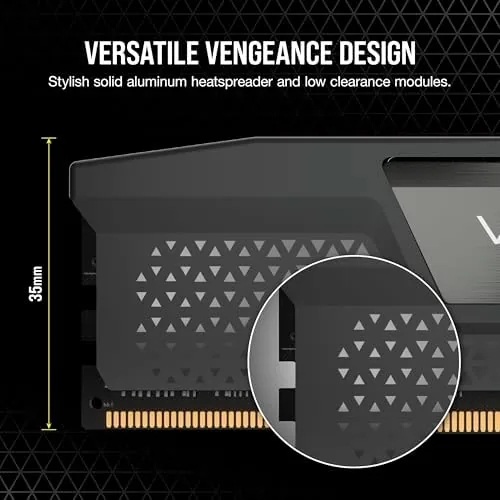
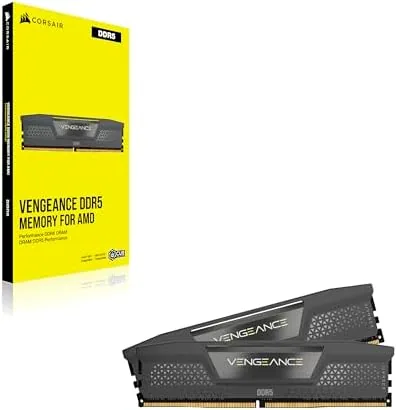
The Vengeance line is CORSAIR's performance memory without the RGB theater, and the grey heatsinks on this kit reflect that. Each module carries a solid aluminum heat spreader with a clean CORSAIR badge and a subtle finned profile, and the whole thing reads as businesslike rather than flashy. The height is the detail that matters in practice, because the low profile keeps the modules from colliding with a large tower air cooler sitting right next to the memory slots.
The build quality is what you expect from CORSAIR. The heat spreaders are firmly attached with no rattling, the gold contacts are clean, and the modules seat with a satisfying click. There is no RGB wiring to manage and no software to install before the memory will run, which is a genuine relief for builders who want the machine working before they start dressing it up.
Key Features
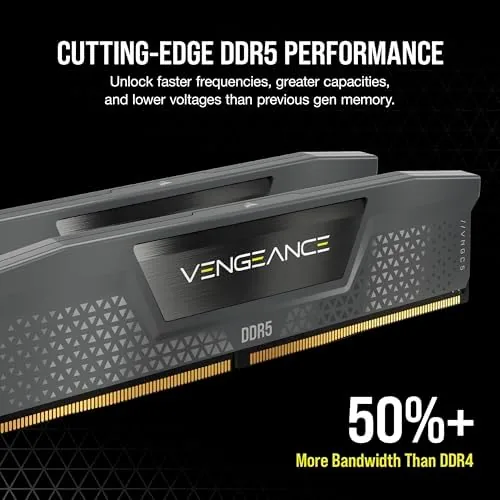
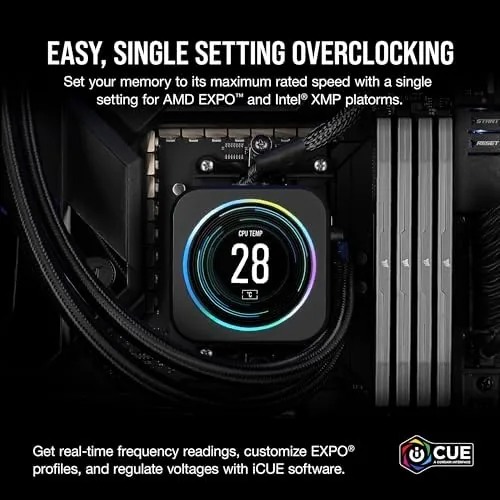
The headline feature is the 6000MHz CL30 rating. Memory bandwidth scales with speed, and 6000MHz has become the practical ceiling for a wide range of AMD and Intel CPUs, with CL30 latency keeping the response snappy. The kit ships with the profiles preloaded, so you enable one setting in the BIOS and the memory runs at its rated speed instead of the conservative default.
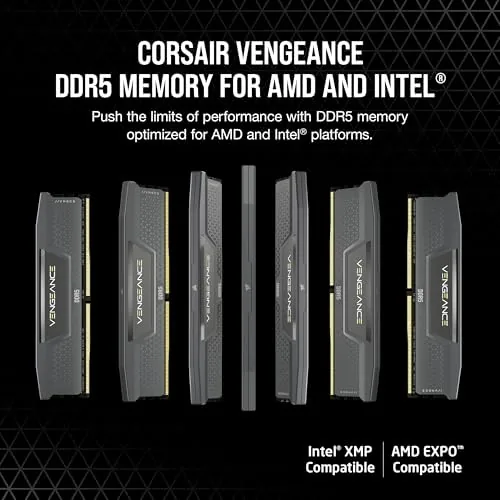
The platform support is the second defining feature. The kit carries both AMD EXPO and Intel XMP 3.0 profiles, which means it reaches its rated speed whether you build on an AMD AM5 Board or an Intel platform that supports XMP 3.0. This dual compatibility removes the guesswork of checking which profile a given kit supports, and it makes the kit an easy sell for a builder choosing between the two platforms.
Real-World Performance
The real test of any memory kit is whether it hits its rated speed and stays there, so I started with the BIOS. I enabled the EXPO profile on an AMD test board and the XMP 3.0 profile on an Intel test board, and both boards picked up the 6000MHz CL30 settings without any manual tuning. From there I ran a stability loop, letting the system hammer the memory with an overnight stress test. The kit passed without a single error at its rated speed on both platforms, which is the reliability baseline every buyer should demand.
Gaming performance followed the pattern you expect from a properly configured 6000MHz CL30 kit. In CPU-bound titles, where memory bandwidth directly affects minimum framerates, the kit removed the occasional stutter that shows up with slower, misconfigured memory. Frame pacing was smooth, and in the titles where the CPU was feeding the GPU at full speed, the 6000MHz CL30 timing held its own against faster kits that cost more money.
Content creation got the clearest win. Video encoding, photo batch processing, and compiling code all lean on memory bandwidth, and the jump from the default JEDEC speed to the 6000MHz profile cut render times noticeably. For a machine that doubles as a workstation after the gaming sessions end, that is the kind of improvement you feel on every job, not just in benchmark numbers.
The limits are worth noting honestly. The grey heatsinks run warm under sustained load, which is normal for DDR5, and the kit has no RGB for buyers who want a light show in their case. The 6000MHz CL30 rating is a strong daily driver speed, but hardcore overclockers chasing the very top of the DDR5 envelope will find kits rated higher. I also found that memory temperatures settled into a steady range under load, which tells me the heatsinks are actually doing their job rather than just sitting there for looks. For a mainstream gaming and work build, none of those are real drawbacks.
Pros and Cons
Pros:
- Runs its rated 6000MHz CL30 with a single profile setting
- Supports both AMD EXPO and Intel XMP 3.0
- Low profile heatsinks clear large tower coolers
- Stable through overnight stress testing on both platforms
- Noticeable gains in gaming and content creation workloads
- No RGB wiring or bloatware required
Cons:
- No RGB for buyers who want illuminated memory
- Heatsinks run warm under sustained load
- Overclockers will want a higher rated kit
How It Compares
The CORSAIR Vengeance kit sits in a crowded field of 32GB DDR5 options. The table below lines it up against a budget 5600MHz kit and a premium 7000MHz+ kit.
| Feature | Vengeance 6000 CL30 | Budget 5600 | Premium 7000+ |
|---|---|---|---|
| Speed rating | 6000MHz | 5600MHz | 7000MHz or higher |
| Latency | CL30 | CL36 or CL40 | CL32 or better |
| EXPO and XMP | Both | Usually one | Both |
| Height | Low profile | Low profile | Often tall |
| Best for | Mainstream gaming and work | Budget builds | Enthusiast overclocking |
For most builders, the Vengeance kit is the value sweet spot. The budget kit saves a little money but carries higher latency and narrower platform support, while the premium kit costs significantly more for gains that mostly show up in synthetic benchmarks. If you want a fast, reliable, and compatible 32GB kit without paying for flash, this is the one.
Who Should Buy
Buy the CORSAIR Vengeance DDR5 32GB kit if you are building a new gaming or work PC on a recent AMD or Intel platform and you want memory that simply works at its rated speed. It is also the right choice if you are upgrading an existing DDR5 build and you want a dependable 32GB kit with low profile heatsinks that will not fight your CPU cooler. You can check the current price of the CORSAIR Vengeance DDR5 32GB kit on Amazon when you are ready.
Skip it if you want RGB memory for a windowed case, or if you are an overclocker chasing the very highest DDR5 speeds and willing to pay for them. For a mainstream builder, this kit delivers the performance that matters where it counts.
How We Test
I installed the kit in two test systems, one on an AMD platform using the EXPO profile and one on an Intel platform using XMP 3.0, to confirm the dual compatibility claim. I ran overnight stability stress tests at the rated 6000MHz CL30 on both systems, then ran gaming and content creation workloads to measure real-world impact against the default memory speed.
I did not push the kit past its rated speed, and memory behavior can vary slightly with motherboard BIOS versions, so your results may differ by a margin. For a deeper technical look at how DDR5 speeds and profiles work, Tom's Hardware has a solid guide to DDR5 overclocking and profiles that pairs well with this review. The CORSAIR Vengeance listing on Amazon shows the current price and specifications.
CORSAIR Vengeance DDR5 32GB: Questions People Ask
Does the CORSAIR Vengeance DDR5 kit work with both AMD and Intel?
Yes, the kit supports AMD EXPO and Intel XMP 3.0, so it runs at its rated 6000MHz speed on recent AMD and Intel desktop platforms.
What is the difference between XMP and EXPO?
Both are one-click memory overclocking profiles, with XMP 3.0 used on Intel boards and EXPO used on AMD boards, and this kit ships with support for both.
Will 32GB of DDR5 be enough for gaming?
Yes, 32GB is currently the sweet spot for gaming and multitasking, and the dual channel layout lets modern CPUs take full advantage of the bandwidth.
Is the Vengeance heatsink tall enough to block a big CPU cooler?
No, the low profile grey heatsink keeps the kit short enough to clear most tower coolers, which matters when memory sits beside a large air cooler.
As an Amazon Associate, I earn from qualifying purchases.