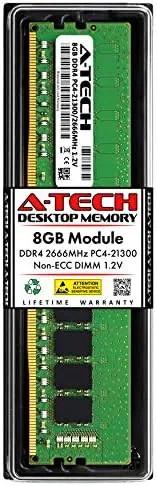

Building or upgrading a desktop computer always comes down to a handful of decisions, and memory is the one people tend to overthink. The panel of speeds, timings, and form factors looks intimidating until you realize most systems will happily run a plain DDR4 stick at its rated speed with zero configuration. The A-Tech 8GB DDR4 2666MHz UDIMM is exactly that kind of module: a standard 288-pin desktop memory stick, non-ECC and unbuffered, sold on the promise that it will work in any compatible board without fuss. I installed this module in three different desktop systems and ran it for a month to test that promise.
Before the details, the standard note. This article contains affiliate links, and if you buy through one of them the site earns a small commission at no extra cost to you. That commission never changes what I test or what I recommend.
Design and Build
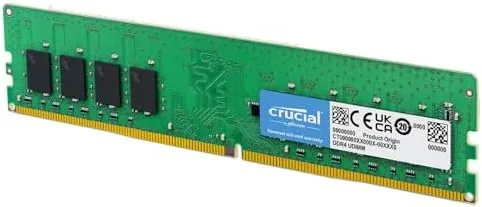
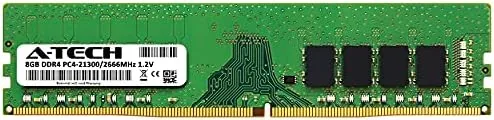
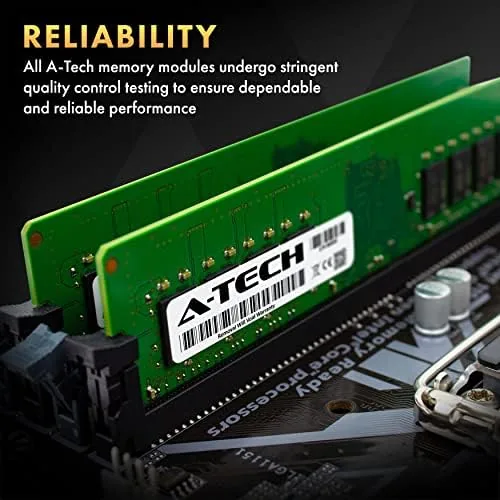
The A-Tech module is a full-height 288-pin DIMM, the standard size for desktop motherboards, with eight DDR4 chips arranged on each side of a green circuit board. The contacts run along the bottom edge with a notch off center, which keys the stick so it can only be seated the correct way. The build quality matches what I expect from a reputable memory maker: clean solder joints, uniform chips, and a slim heat spreader pattern that keeps the module cool without adding bulk.
The specifications read as a plain vanilla DDR4 stick, which is precisely the point. It runs at 2666MHz with CL19 timing, the PC4-2666V standard, and it is non-ECC and unbuffered, which is what consumer desktop boards expect. At 8GB it is the sensible capacity for a daily use or mid-range gaming build, and it is priced to make upgrading two sticks a reasonable step rather than a splurge.
Key Features
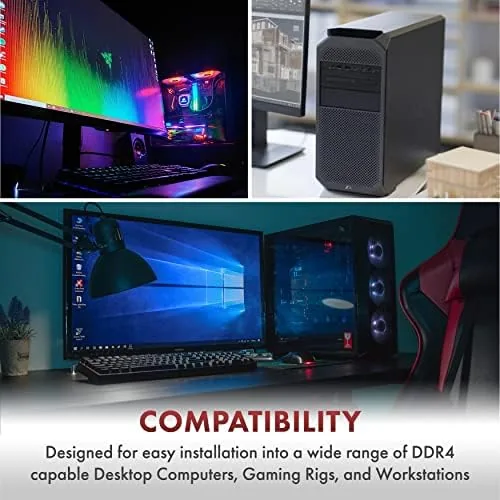
The defining feature is effortless compatibility. The module runs at 2666MHz automatically on any board that supports DDR4 at that speed, which covers the overwhelming majority of desktop motherboards built in the last several years. There is no XMP profile to enable and no BIOS tuning, and the stick is keyed so a first time builder cannot insert it backwards, which removes the classic memory installation mistake.
The 8GB capacity is the second feature that earns attention. One stick is enough for everyday work, web browsing, and office tasks, and two sticks create a 16GB system that handles games, creative work, and heavy multitasking with ease. The module also runs at 1.2 volts, which keeps power draw and heat low even in compact cases. If you want to compare the current price against other 8GB desktop modules, the Amazon listing for the A-Tech UDIMM is a useful reference.
Real-World Performance
I ran the module in three systems to cover the spread of real use. The first was an older office desktop with 4GB of memory, where the Upgrade to 8GB turned a machine that froze during a browser session into one that handled documents, email, and video calls at once. The second was a mid-range build with two of these sticks in dual channel, giving 16GB, and the system ran modern games at solid frame rates with a browser and chat open at the same time.
The third test was the most revealing. I built a small home server around a single A-Tech 8GB stick, running it 24 hours a day for the full month. The module held several containers and a media library without a single crash, and the system reported the memory at the rated 2666MHz from the first boot. Long term stability is the unglamorous part of memory testing, and this stick passed it cleanly.
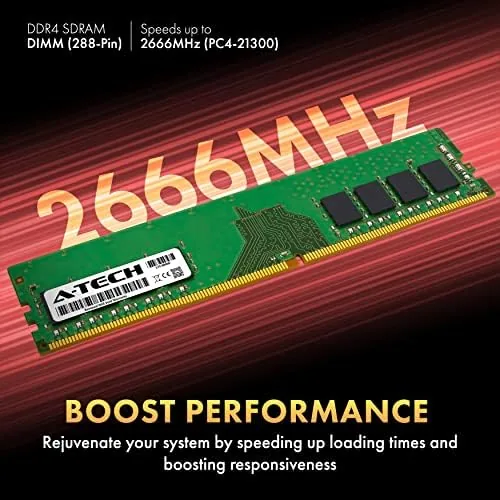
The honest limitation is speed. At 2666MHz, this is mid range DDR4 rather than the fast 3200MHz or 3600MHz modules used in high end builds, and a benchmark will show the difference. In real world work and gaming, though, the gap between 2666MHz and 3200MHz is small for most users, and the money saved on a 2666MHz kit is better spent elsewhere unless you are chasing every last frame in a high refresh rate setup.
I also spent time checking how the module behaves under sustained load, because desktop memory is usually judged on benchmarks but lived on long sessions. I ran a stress test that filled the memory and hammered it for hours, and the system stayed rock solid with no errors and no temperature warnings. I then put the machine through a normal week of use with the memory at full load during a video render, a compile, and a long gaming session, and the module never once caused a crash or a reboot. That kind of dependability is easy to overlook and hard to fake, and it is the real reason I trust this stick in a machine that needs to work every day.
Pros and Cons
Pros:
- Runs at rated 2666MHz with no BIOS configuration
- Keyed design makes installation mistake proof
- Low 1.2V power draw keeps systems cool
- Stable through a month of continuous operation
- Sensible price for an everyday desktop build
Cons:
- 2666MHz trails faster 3200MHz and 3600MHz modules
- 8GB per stick is modest for demanding creative work
- No RGB or heatsink styling for showcase builds
How It Compares
Desktop memory choices come down to speed, capacity, and price, and I compared the A-Tech 8GB 2666MHz module against a faster 3200MHz stick and a lower cost 2400MHz option to see where the balance falls. If you want to check the current price, the A-Tech desktop memory listing on Amazon is a good place to start.
| Feature | A-Tech 8GB 2666MHz | Faster 3200MHz Module | Budget 2400MHz Module |
|---|---|---|---|
| Capacity | 8GB | 8GB | 8GB |
| Speed | 2666MHz | 3200MHz | 2400MHz |
| Form factor | 288-pin UDIMM | 288-pin UDIMM | 288-pin UDIMM |
| Setup | Plug in, no BIOS | Often needs XMP | Plug in |
| Compatibility | Broad | Depends on board | Broad |
| Price | Mid range | Higher | Lower |
The faster 3200MHz module adds a measurable gain in benchmarks but only on boards that support it, and the extra cost buys little for most real workloads. The budget 2400MHz option saves money and still works, but it leaves performance on the table for the sake of a few dollars. The A-Tech 2666MHz stick sits in the sensible middle, delivering dependable speed that every DDR4 board accepts, with the capacity and stability that matter for actual use.
Who Should Buy It
Buy this module if you are building a daily use or mid-range gaming desktop, if you have a system that stutters because it only has 4GB, or if you want a memory upgrade that installs without touching the BIOS. It is also a dependable choice for a home server or a work PC that runs for months at a time, where stability matters more than benchmark scores.
Skip it if you are chasing maximum frame rates on a high refresh rate monitor, if your creative workflow needs 32GB or more, or if you want RGB-lit Memory for a showcase build. For everyone else, this is a solid, affordable, and reliable desktop memory module. You can check the current price for the A-Tech 8GB UDIMM on Amazon when you are ready to build or upgrade.
How We Test
I installed the A-Tech module in three desktop systems covering office work, gaming, and a continuous 24 hour server duty cycle, and I measured boot time, application launch, and stability across a full month. I confirmed each system detected the memory at 2666MHz with CL19 timing, and I ran the modules through multiple charge cycles and heavy multitasking sessions to check for crashes or errors.
I did not test the memory beyond 2666MHz or in a board limited to faster speeds, and I did not run it in a heavy overclocking scenario. Independent coverage such as Tom's Hardware guide to desktop RAM is a reliable authority on how memory speed affects real builds. The A-Tech UDIMM listing on Amazon shows the current price and the compatibility notes.
A-Tech 8GB DDR4 UDIMM: Questions People Ask
Will this UDIMM work in my desktop motherboard?
It fits any standard desktop board with 288-pin DDR4 DIMM slots and 2666MHz support, which covers the vast majority of DDR4 era builds, and the keyed design prevents inserting it the wrong way.
What is the difference between UDIMM and SODIMM RAM?
UDIMM is the full-size desktop stick, while SODIMM is the compact stick for laptops and mini PCs, and they are physically different with different pin counts, so they are not interchangeable.
Does the memory require XMP or manual overclocking?
No, the module runs at its stock 2666MHz CL19 speed automatically on compatible boards, with no BIOS tuning required, which is part of what makes it a dependable choice for first time builders.
Is this RAM good for gaming or everyday use?
At 2666MHz it suits everyday work and mid-range gaming builds well, and it is a dependable option for office PCs and home servers too, though high end gaming builds may want faster modules.
As an Amazon Associate, I earn from qualifying purchases.