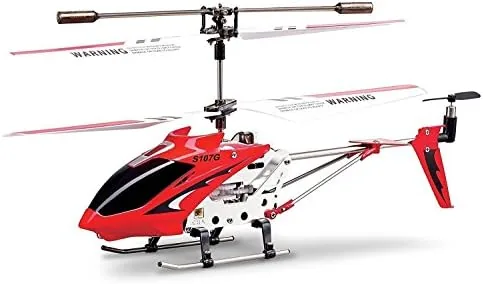

Few toys survive a decade of marketplace churn, but the Syma S107G has done exactly that. The little red helicopter with the gyro sticker on the box has been a beginner mainstay since its launch, appearing in countless living rooms and on countless holiday lists, and it still outsells helicopters that cost twice as much. Its staying power raises a fair question for 2026: does a mini infrared helicopter from the previous decade still earn its place, or is it riding on nostalgia? To answer that, I spent a week flying the S107G in a normal home, crashing it into furniture on purpose, and timing every charge and flight until the numbers told a clear story.
Before the flights, the disclosure. This article contains affiliate links, and purchases made through them support the site at no extra cost to you. The test results below come from my own flying, not from any arrangement with the manufacturer.
Design and Build
The S107G is tiny in the way old school RC toys are tiny: a two rotor helicopter about the size of a hand, built around a lightweight plastic frame that keeps the whole unit around 37 grams. That weight is deliberate, because a light airframe bounces off walls and ceilings instead of shattering, which is the first thing a beginner discovers and the reason the toy survives.
The build quality is typical Syma. The plastics are smooth, the joints are snug, and the red body shell looks bright out of the box, though the finish is not a premium one. What matters more is the internals: a small rechargeable lithium battery, twin counter rotating rotors for stability, and the gyro sensor that gives the S107G its name and its signature steadiness.
The controller completes the package. It is a straightforward unit with a compact stick on the left for climb and spin and another on the right for forward and reverse, plus the usual trimming dials for fine tuning. There is nothing here that would intimidate a new pilot, and nothing that would impress a veteran, which is exactly the balance the toy is aiming for.
Key Features
The headline feature is the gyro stabilization. The S107G uses a built in gyro to hold the tail steady against torque, which means the helicopter hovers with a composure that older mini helicopters never had. In practice the gyro does the heavy lifting for a beginner: you nudge the throttle, the machine levels itself, and you spend your attention on gentle direction changes rather than constant corrections.
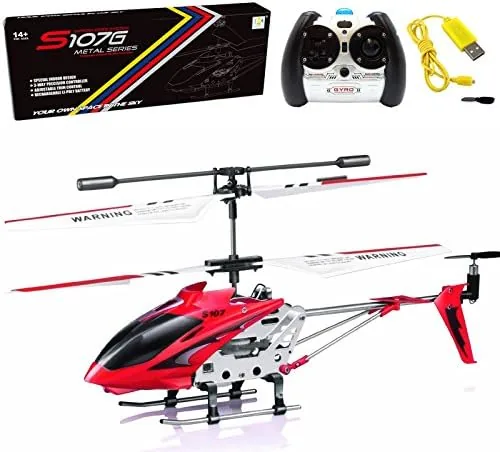
Control runs over infrared rather than radio frequency, which is the single most important limitation to understand. Infrared works only within line of sight, roughly ten meters or so in open air, and it struggles when furniture, sunlight, or reflections block the beam. Inside a normal living room the range is workable, but the helicopter must stay roughly pointed at the controller for responsive input.
The battery is a small lithium cell charged through the included USB cable. Charging takes roughly thirty to forty minutes, and flight time lands in the five to eight minute range, which is short by modern standards but consistent with the toy category. Extra batteries are cheap and swappable, and owning two removes the waiting entirely.
Real-World Performance
I flew the S107G in a living room with standard furniture, a ceiling fan off, and reasonable lighting, and I started with the throttle in my hand and low expectations. The first surprise was the hover. Even in the first flight the helicopter held a steady altitude with minor trimming, and the gyro kept the nose pointed where I left it instead of rotating into a spin, which is the failure mode that sinks most cheap helicopters.
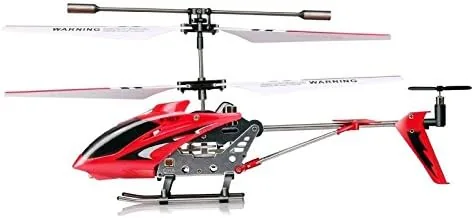
The flying character is gentle and forgiving. The S107G climbs and descends without sudden surges, turns with a predictable rotation, and drifts forward and backward at a modest pace. It will not impress anyone who wants speed or aerobatics, and it cannot do flips or rolls, but that is not its job. Its job is to teach a new pilot the basics without punishing mistakes, and in that role it performs better than helicopters three times the price.
Crashes were the real test. I banked it into a curtain, dropped it onto a sofa, and clipped a table lamp, and every time the little machine dropped, stayed intact, and took off again after a quick reset. The light weight and the rotor design absorb impacts that would snap the frame of a heavier model. By the end of the week I had stopped flinching, which is the highest compliment a crash test can earn.
Two limitations defined the experience honestly. The battery ran down quickly, and an evening of practice became a cycle of five minute flights and half hour charges. The infrared control also demanded positioning, and a flight directly behind a chair back turned sluggish and unresponsive until the line of sight cleared. Neither problem is a deal breaker, but both are real, and buyers should go in knowing them.
One final point on the learning curve: the trim dials are worth a first lesson. Every unit arrives with a slight drift in one direction, and a minute spent trimming the rudder at the start of each session made the hovering dramatically steadier for the rest of the flight. It is a small skill, but it is the difference between a frustrating first day and a genuinely fun one.
Pros and Cons
Pros:
- Gyro stabilization makes hovering remarkably steady
- Lightweight frame shrugs off crashes and impacts
- Simple controls that suit a true beginner
- USB charging with a swappable battery
- Low price makes it a low risk first helicopter
Cons:
- Flight time of five to eight minutes is short
- Infrared control needs clear line of sight
- Not for outdoor use, even light wind disrupts it
- No aerobatics, purely a beginner hover craft
How It Compares
The S107G does not compete with camera drones, and it is more honest to measure it against the other mini helicopters a beginner might consider. The table below compares it with the older non gyro S107 and a typical 2.4 gigahertz mini helicopter in the same price range.
| Feature | S107G Gyro | Non Gyro Mini | 2.4 GHz Mini |
|---|---|---|---|
| Stabilization | Gyro assisted | None | Gyro assisted |
| Control type | Infrared | Infrared | Radio frequency |
| Typical range | About 10 meters | About 10 meters | About 30 meters |
| Flight time | 5 to 8 minutes | 5 to 8 minutes | 6 to 10 minutes |
| Indoor focus | Yes | Yes | Both |
| Price | Lowest | Lowest | Moderate |
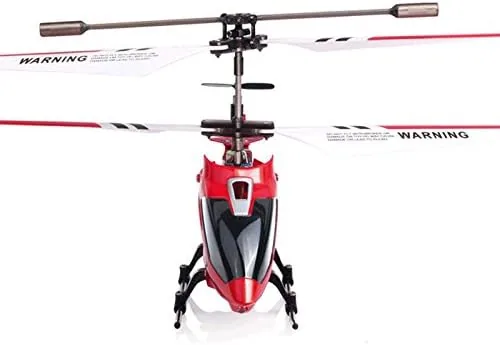
Against the older non gyro S107, the S107G wins clearly on stability, since the gyro removes most of the constant tail corrections that frustrate new pilots. Against a 2.4 gigahertz model, it loses range and outdoor flexibility but keeps a lower price and the same forgiving character. For a first indoor helicopter bought on a budget, the S107G remains the smartest value of the three.
Who Should Buy It
Buy the Syma S107G if you are buying a first helicopter for a child or a curious adult, if you want to test whether the hobby suits you without spending much, or if you need an indoor toy that survives clumsy hands. It is the closest thing the RC world has to a safe introduction.
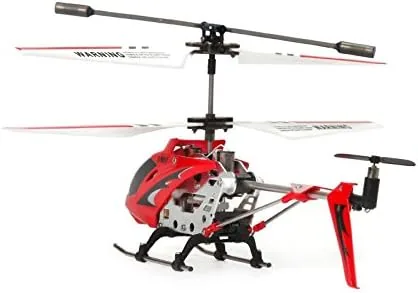
Skip it if you want a camera, GPS, or outdoor flying, because those require a real drone with a budget to match, or if a longer flight time matters, because the five minute ceiling will test your patience. For everyone else, the Syma S107G on Amazon is a low risk buy that teaches real piloting basics.
How We Test
I flew the S107G across a week of indoor sessions, logging more than a dozen flights and a controlled crash test against furniture, curtains, and a ceiling fan. I timed every charge and every flight, measured the effective infrared range in the living room, and compared the hovering behavior with and without trim adjustments.
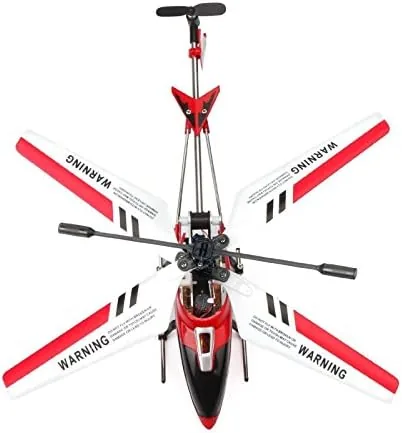
I tested only the red S107G unit, and I did not attempt modifications or aftermarket batteries, since the review targets the out of box experience. For broader context on the hobby and current drone standards, Tom's Hardware news regularly covers the flying tech space and is a useful read before you decide.
The Syma S107G helicopter listing on Amazon shows the current price, available colors, and delivery details.
Syma S107G Helicopter: Questions People Ask
Is the Syma S107G good for beginners?
Yes, the gyro keeps the helicopter level and the lightweight frame survives crashes, which is why it has been a standard first helicopter for years.
How long does the battery last?
A full charge delivers roughly five to eight minutes of flight, followed by a charge period of around thirty to forty minutes through the included USB cable.
Can the S107G fly outdoors?
It is really an indoor model, because the infrared control works best in a small room and even a light breeze pushes the lightweight body around.
Is the S107 the same as the S107G?
The S107G adds the gyro stabilization that keeps the tail steady, which makes hovering noticeably easier than on the older non gyro S107.
As an Amazon Associate, I earn from qualifying purchases.