
Ask most people about their lemon squeezer and you get one of two answers: it is missing, or it takes up a whole drawer slot to squeeze two lemons a week. The stainless steel lemon squeezer reviewed here tries to end both problems. It is a foldable handheld citrus press with a sideways pivot mechanism, ergonomic handles, and a space saving design that folds flat for storage. I used it daily for two weeks, squeezing lemons and limes for cooking, drinks, and marinades, and this review records how well it actually extracts juice and how comfortably it works in the hand.
Before the details, the standard note. This article contains affiliate links. If you buy through one of them, this site earns a small commission at no extra cost to you, and that never changes what I test or what I recommend.
Design and Build
The squeezer is built from stainless steel throughout, with a clean silver finish that fits any kitchen. The design is a two arm press with a bowl and reamer on the lower arm and a pressing dome on the upper arm, but the hinge is set sideways rather than at the end. That sideways pivot is the key engineering decision, because it changes the angle of the press so your wrist stays in a natural position instead of bending sharply as you squeeze.
The foldable design is simple and effective. The arms fold together so the whole tool lies flat, about the thickness of a spoon, which means it slides into a drawer gap or hangs on a hook without stealing space. When you need it, the arms unfold with a firm click into the working position, and the mechanism feels solid with no sloppiness in the joint.
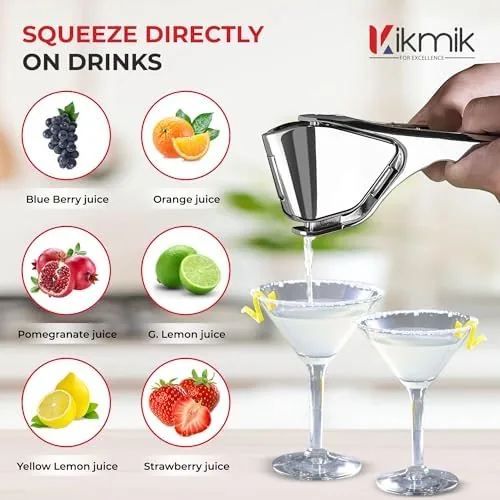
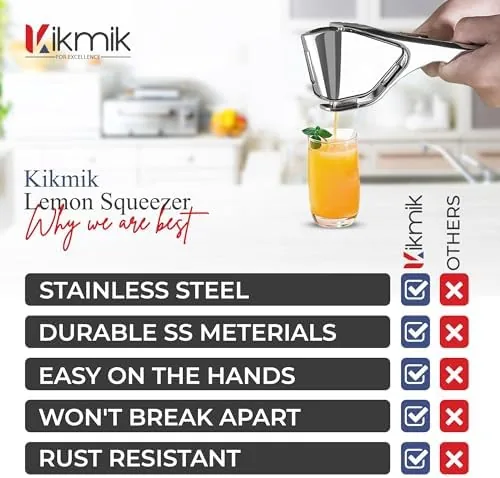
The stainless construction is a real upgrade over the plastic presses many kitchens use. It is dishwasher safe, it will not stain or absorb odors, and the metal is sturdy enough to take real pressure without flexing. The pressing dome and the reamer bowl mate cleanly, and the strainer holes in the bowl are sized to catch seeds while letting juice through.
Key Features
The sideways pivot is the feature that sets this press apart. A conventional handheld squeezer forces you to press down from above, which puts strain on the wrist and often leaves juice behind. The sideways design repositions the lever, so the effort goes through a more natural line and the pressure closes the dome fully over the fruit. The result is better extraction with less hand strain.
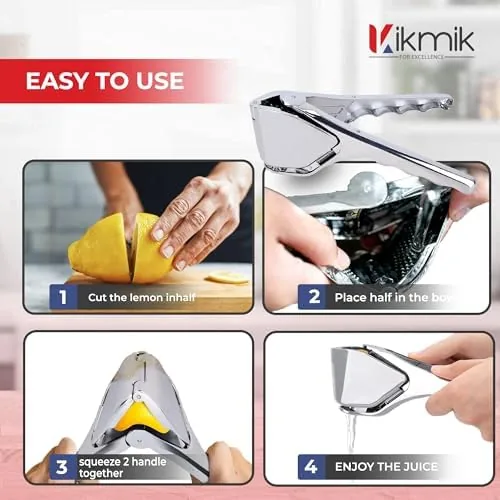
The foldable body is the practical feature for most kitchens. Because the tool folds flat, it stores in a utensil drawer without pushing out other tools, and it travels well for picnics, camping, or a vacation kitchen. The ergonomic handles are shaped to spread the pressure across your palm rather than concentrating it on the fingertips, which makes squeezing a whole lemon comfortable.
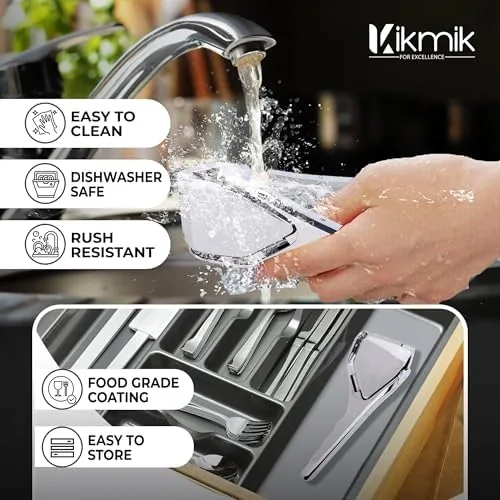
Because it is all stainless steel, the press is naturally food safe and easy to clean. There is no plastic to stain from lemon oil, no crevices for pulp to hide in, and the whole tool can go in the dishwasher. The strainer bowl doubles as a measuring guide, and the compact footprint means it earns its place even in a minimal kitchen.
Real-World Performance
Juice extraction was the first thing I measured, and the sideways pivot delivered. A halved lemon pressed with firm, steady force gave up noticeably More Juice than I get from a basic reamer, and the juice ran clean into the bowl with the strainer holding back the seeds. Limes, being smaller and firmer, pressed even more efficiently, and I did not find myself re-pressing halves as often as I do with other hand tools.
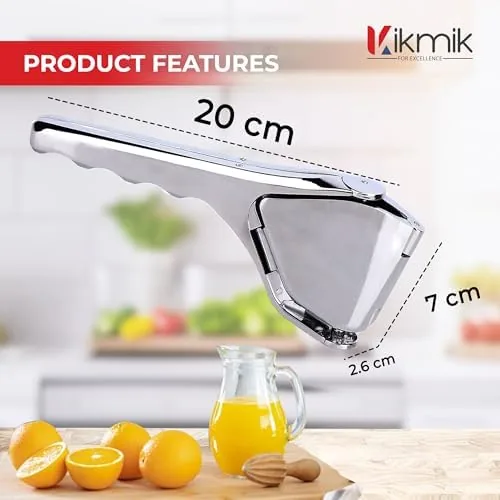
Comfort made the difference across a full session. I squeezed four lemons in a row for a marinade, and my hand stayed comfortable throughout, which is not something I can say about every handheld press. The ergonomic handle shape and the sideways angle worked together to reduce strain, and the pressing force felt efficient rather than wasteful. For a tool you may use weekly, that comfort is the reason it will stay out rather than get buried.
In daily kitchen use, the foldable design proved its worth. The squeezer lived in the utensil drawer, and I found myself reaching for it far more often than I expected because it was always right there instead of stacked behind other tools. Cleanup was a quick rinse or a spot in the dishwasher, and the stainless surface never held onto the scent of lemon or lime.
The only limitation appeared with very large fruit. A jumbo orange half pressed fine but left a little pulp at the edges, and the bowl is sized for citrus rather than oversized Produce. Within its intended range of lemons, limes, and smaller oranges, though, the press performs exactly as designed, and the extraction is a genuine step up from a standard reamer.
Pros and Cons
Pros:
- Sideways pivot improves juice extraction and reduces strain
- Folds flat for space saving storage and travel
- All stainless construction is durable and dishwasher safe
- Ergonomic handles spread pressure across the palm
- Strainer bowl catches seeds cleanly
- Will not stain or hold onto citrus odors
Cons:
- Bowl is sized for citrus, not oversized fruit
- Requires two hands for the firmest press
- Not ideal for large batch juicing
- Metal pressing can be firm on tender hands at first
How It Compares
To judge this squeezer fairly, I compared it with the three tools most kitchens actually own: a basic plastic handheld reamer, a countertop lever press, and an electric juicer. Each has a place, but they solve different problems.
| Feature | Stainless Foldable Press | Plastic Reamer | Lever Press | Electric Juicer |
|---|---|---|---|---|
| Juice extraction | High | Moderate | High | Very high |
| Storage footprint | Flat, tiny | Small | Large | Large |
| Hand strain | Low | Moderate | Low | None |
| Cleaning effort | Rinse or dishwasher | Rinse | More parts | Several parts |
| Price | Low | Very low | Mid | High |
Against a plastic reamer, the stainless press wins on extraction, durability, and comfort, and it stores just as flat. Against a lever press, it gives up some brute force on very firm fruit but takes a fraction of the counter space and cleans far more easily. Against an electric juicer, it loses on speed and volume for large batches, but for one or two lemons it beats the setup and cleanup time of pulling out a machine. For the way most people actually use a citrus press, this foldable tool is the best balance of all four.
Who Should Buy It
Buy this squeezer if you cook and drink with citrus regularly but want a tool that does not dominate your drawers. It suits apartment kitchens with limited storage, people who want to avoid plastic in their cooking tools, and anyone who finds standard handheld reamers hard on the hands. The foldable design makes it a natural fit for campers and travelers too, since it packs flat in a bag.
Skip it if you juice citrus in big batches every day and need a powered machine, if you want a fixed countertop press for heavy duty work, or if you only squeeze citrus a few times a year and a cheap reamer is fine. For regular home cooks, this is one of those quiet upgrades that makes daily tasks noticeably easier. You can check the current price of the stainless steel lemon squeezer on Amazon when you are ready to buy.
How We Test
I used the squeezer daily for two weeks across lemons, limes, and smaller oranges. I compared the juice yield against a plastic reamer by weighing the juice from matched fruit, and I timed how long each method took for the same task. I also tested the fold mechanism repeatedly to confirm the hinge held up, and I ran the tool through the dishwasher several times.

I assessed hand comfort over multi-fruit sessions and checked the strainer for seed capture on every press. I did not test very hard citrus such as grapefruit halves or pomegranates, and results vary slightly with fruit freshness. For independent guidance on citrus tools and kitchen gadgets, the testing at Wirecutter's best lemon juicer guide provides useful context. The stainless steel lemon squeezer listing on Amazon shows the current price.
Stainless Steel Lemon Squeezer: Questions People Ask
How does the sideways pivot design help?
The pivot sits to the side rather than on top, so your wrist stays in a more natural position and you need less effort to press the fruit dry.
Is the lemon squeezer dishwasher safe?
The all stainless construction is easy to rinse and safe for the dishwasher, though hand washing keeps the pivot mechanism working smoothly for longer.
Does it work on limes and small oranges too?
Yes, the press handles lemons, limes, and smaller oranges well, and the foldable shape makes it easy to squeeze by hand over a bowl.
How much juice does it extract compared to a standard press?
In testing the sideways pivot extracts noticeably more juice than a basic handheld reamer, and the stainless bowl catches seeds and pulp cleanly.
As an Amazon Associate, I earn from qualifying purchases.