
Most juice makers are a promise with a catch. They talk up vitamin content and fresh flavor, then they choke on a chunk of apple or demand twenty minutes of chopping before breakfast. This cold press juicer tries to remove those annoyances with a wide feed chute, a brushless motor, and a second strainer included in the box, so the machine keeps working at full yield long after cheaper models fade. I spent three weeks running whole fruits, leafy greens, and hard vegetables through it to see whether the convenience claims survive a real kitchen routine.
One note before the review. This article contains affiliate links, and if you buy through one of them the site earns a small commission at no extra cost to you. That never changes what I recommend.
Design and Build
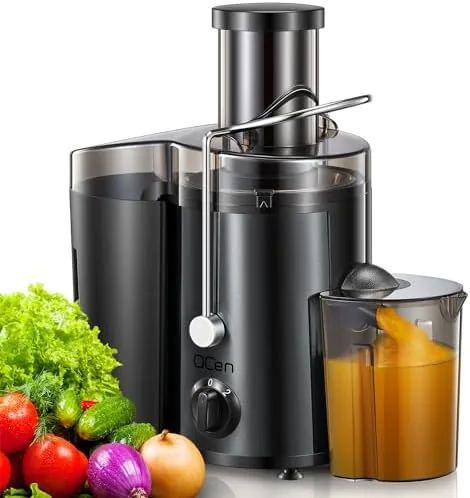
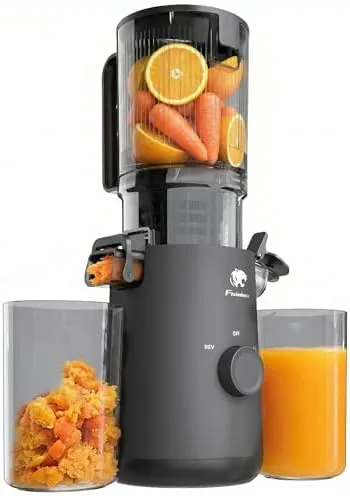
The machine has the tall, vertical profile typical of modern slow juicers. The feed chute sits on top with the pulp collector below and the juice cup at the front, and the whole unit is easy to read at a glance. The parts lock together with a simple twisting motion, and the assembly clicks into place without the fiddly alignment some juicers demand. It is not small, and it takes up its share of counter space, but the footprint is reasonable for a machine that does this much work.
Build quality is solid for the price. The plastic components feel sturdy rather than flimsy, the strainer drum has a clean finish with no rough edges, and the pusher glides smoothly through the chute. The manufacturer states the juice path is BPA free, which matters for anyone making daily drinks for the family. The extra strainer in the box is the most practical inclusion, since pulp wear is the most common reason slow juicers lose yield over time.
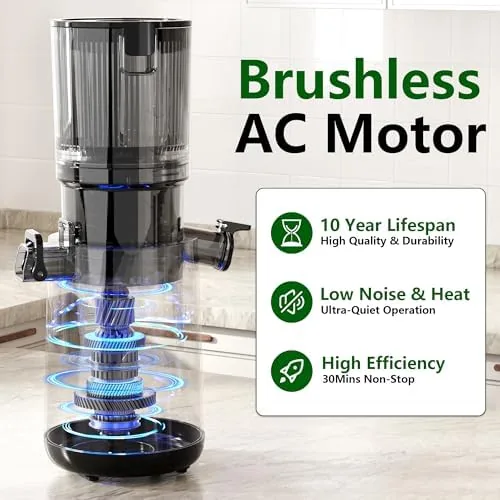
The motor sits at the base and drives the auger slowly, which is the heart of the cold press method. Instead of high speed blades that whip air into the juice and heat it up, the auger crushes and presses the produce, which preserves more of the color, flavor, and nutrients. The slow rotation also means less foam and a steadier pour into the glass.
Key Features
The headline feature is the 5.3 inch feed chute. It is wide enough to take a whole apple, a full pear, or a thick wedge of carrot without any pre-chopping. That cuts the biggest time cost of juicing, because you go straight from the bag to the machine instead of standing over a cutting board. In my three weeks of testing I only cut produce for the tallest celery stalks and the longest carrots, and everything else went in whole.
The AC brushless motor is the second major feature. Brushless motors run cooler, more quietly, and with less vibration than brushed designs, which makes a real difference when you are juicing a large batch first thing in the morning. The motor also has the headroom to handle dense, fibrous ingredients without bogging down, which is where weaker juicers stall and overheat.
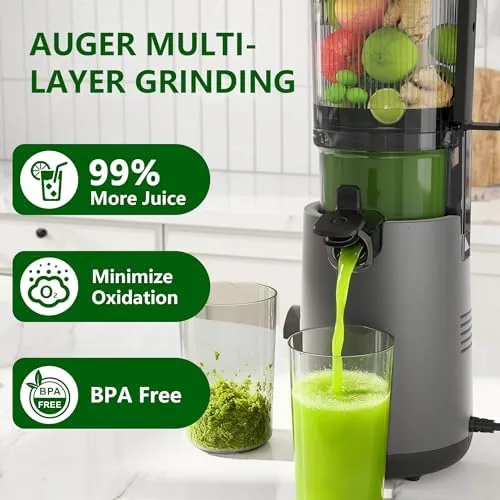
Juice yield is the quiet selling point. A cold press extraction squeezes more liquid out of the pulp than a centrifugal machine, which means more glasses per bag of produce and drier, easier to compost pulp. Combined with the spare strainer, the machine is designed to hold that yield advantage for years rather than losing it as the drum wears down.
Real-World Performance
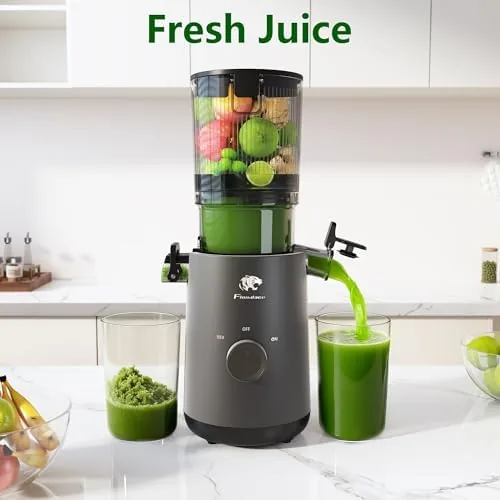
I started with the easiest test: a full apple, skin and all, dropped straight down the chute. It fed through cleanly with the pusher, and the machine crushed it without hesitation. The juice came out a warm golden color with very little foam, and the pulp left behind was noticeably dry, a clear sign the extraction is doing its job. A whole orange with the peel removed pressed just as easily and produced a bright, sweet glass.
Leafy greens were the next test. Kale and spinach are the classic problem ingredients for weak juicers, which turn them into a wet, stringy mess with half the liquid left behind. This machine handled them in smaller handfuls, alternating with apple for flavor, and the resulting juice was smooth and deep green. The brushless motor never complained, and the machine stayed quiet enough that I could run it without waking anyone up.
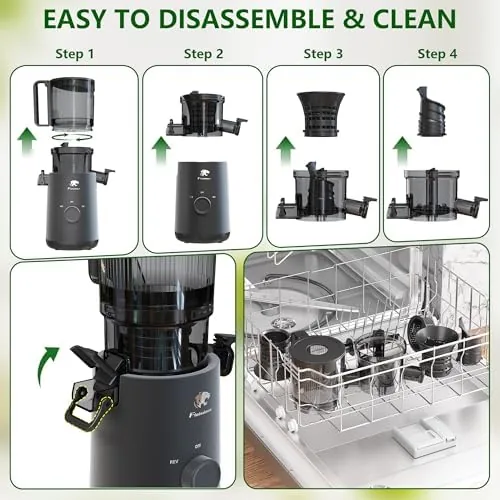
Cleanup is the honest weak spot of every slow juicer, and this one is no exception. The auger, strainer drum, and chute all need rinsing after each batch, and I found the included brushes essential for the fine mesh. That said, the parts disassemble quickly and nothing traps food in hidden corners, so the whole wash took about ten minutes. The machine does not win on speed of cleaning, but it does not lose points for how easily it comes apart. For anyone weighing the choice, the Amazon listing for this cold press juicer has the full spec sheet and current pricing.
Pros and Cons
Pros:
- 5.3 inch feed chute takes whole apples, pears, and thick wedges
- Cold press extraction preserves color and flavor with dry pulp
- Quiet AC brushless motor handles fibrous greens without strain
- BPA free juice path for family friendly use
- Spare strainer keeps long term yield high
- Simple tool free assembly and disassembly
Cons:
- Slow extraction takes longer than a centrifugal juicer
- Cleanup still involves several parts and a brush
- Tall machine takes up noticeable counter space
- Tall celery and long carrots still need trimming to length
How It Compares
Slow juicers compete directly with centrifugal models and with premium masticating machines, so I compared this unit against both to place it honestly.
| Feature | This Cold Press | Centrifugal | Premium Masticating |
|---|---|---|---|
| Feed chute | 5.3 inch, whole fruit | Wide on many models | Narrow, pre cutting needed |
| Extraction | Slow auger, high yield | High speed, lower yield | Slow auger, high yield |
| Noise level | Low | High | Low |
| Pulp moisture | Dry | Wet | Dry |
| Spare strainer | Included | Not included | Usually not included |
| Price | Budget friendly | Low to mid | High |
Against a centrifugal juicer, this machine trades speed for yield and quiet. The centrifugal model finishes a glass faster but leaves wet pulp and whips more air into the juice, and it runs much louder. Against a premium masticating machine, the performance is closer than the price gap suggests, and this unit actually wins on the wide chute, which most expensive models do not offer. For a first slow juicer or an upgrade from a centrifugal machine, it is a strong middle ground.
Who Should Buy It
Buy this juicer if you want whole food juice without the morning chopping routine. It suits busy households that want a glass of fresh apple, carrot, or green juice every day, and it is a clear upgrade for anyone who currently uses a loud centrifugal machine and wants more juice per bag of produce.
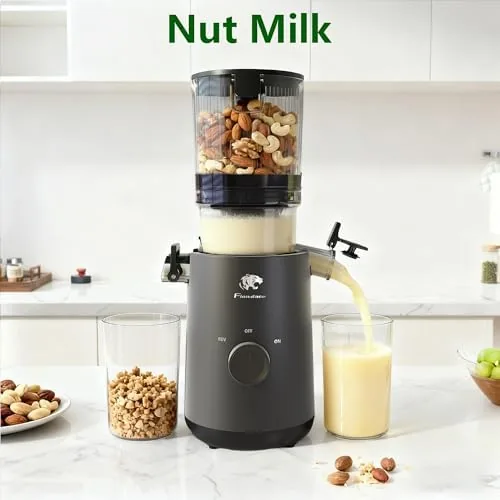
Skip it if you juice once a month and cannot justify the cleanup, or if you need a machine that fits under a low cabinet. For daily juicers, the wide chute and the spare strainer make this an easy recommendation. You can see the current price for this cold press juicer on Amazon whenever you are ready.
How We Test
I tested this juicer over three weeks with more than twenty batches. I juiced whole apples and pears through the 5.3 inch chute, pressed oranges, ran kale and spinach with apple, and pushed carrots and celery through the auger. I weighed the pulp after each run to judge extraction, timed a full cleaning cycle, and paid attention to noise and vibration on a standard kitchen counter.
I also swapped in the spare strainer mid review to confirm it matched the original and kept yield consistent. For broader context on how slow juicers compare to centrifugal designs, independent coverage such as Wirecutter's guide to the best juicers explains the extraction differences in detail. The cold press juicer listing on Amazon is a useful reference for the full feature set.
Cold Press Juicer: Questions People Ask
What is the difference between a cold press juicer and a centrifugal juicer?
A cold press juicer crushes and squeezes produce slowly to extract juice without heat, while a centrifugal juicer spins blades at high speed. Slow juicing generally preserves more nutrients and leaves drier pulp.
Can this juicer handle whole fruits without cutting them first?
Yes. The 5.3 inch feed chute fits whole apples, pears, and similar sized produce, which cuts down on prep time compared to narrow chute juicers.
Does the AC brushless motor make the juicer quieter?
Yes. The brushless motor runs noticeably quieter than brushed and centrifugal designs, and it also reduces vibration on the counter during longer juicing sessions.
Is the second strainer worth having?
Yes. Juicing pulp and fibers wear a strainer over time, so the extra replacement strainer means you can keep the machine running at full yield instead of buying a part later.
As an Amazon Associate, I earn from qualifying purchases.