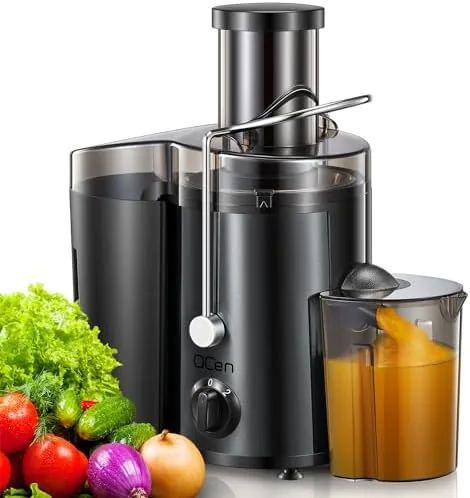
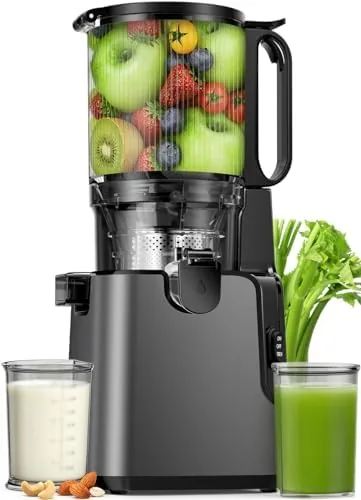
 Cold Press Juicer in premium gray with its large chute and collection cups" width="1200" height="800" loading="lazy" style="height:auto">
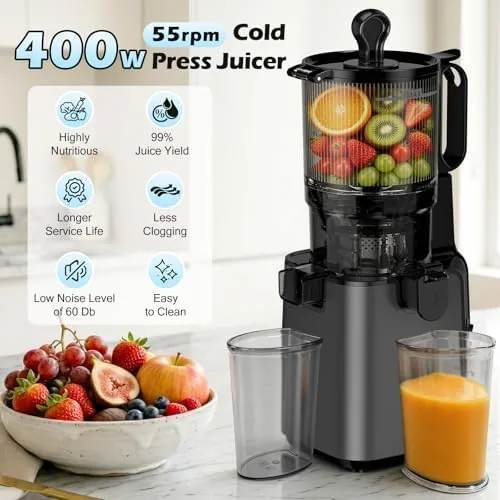
Juicing has a preparation problem. The machines promise fresh, healthy juice, but the reality is often twenty minutes of chopping apples into quarter slices, feeding them one at a time, and then spending another ten minutes scrubbing a strainer clogged with pulp. The juicer in this review tries to solve the first half of that equation with a 5.8 inch large chute, which is wide enough to accept whole fruits and most vegetables without cutting. It is a 2-in-1 Cold Press machine, meaning a single 400W masticating auger also handles nut milk, and the gray finish is designed to sit comfortably on a modern countertop.
I ran this juicer through a month of real daily use to see whether the large chute delivers on its promise and how the slow cold press method compares with a conventional centrifugal juicer. The test covered whole fruit feeding, leafy greens, hard roots, nut milk, cleanup, and yield. Before the details, the usual note: this article contains affiliate links, and if you buy through one of them this site earns a small commission at no extra cost to you. That does not affect what I test or recommend.
Design and Build
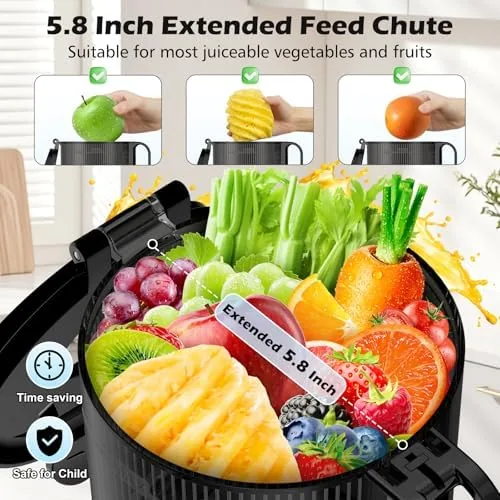
The juicer follows the modern masticating design: a vertical body with a feed chute on top, a large hopper, and a motor base that holds the whole assembly steady. The 5.8 inch chute is immediately obvious. Compared with the two inch openings on most cold press juicers, it is a completely different experience at the cutting board, because most apples, pears, carrots, and even small beets drop straight in whole.
Build quality is solid for the price. The body uses a sturdy plastic for the hopper and stainless steel for the strainer basket and auger components, which are the parts that touch your food. The gray finish is a welcome change from the all white and black appliances that crowd most kitchens. The parts lock together with a simple twist, and there is no complicated assembly to learn the first time you use it.
Key Features
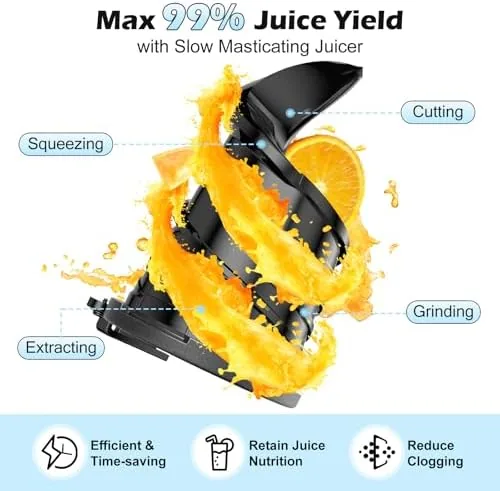
The large chute is the feature that changes how you use the machine. With a standard chute, every ingredient must be chopped to fit, which is the chore that stops most people from juicing daily. With this chute, you rinse an apple and drop it in. The machine is a masticating cold press design, which means the auger crushes and grinds the produce slowly rather than spinning at high speed like a centrifugal model. That slow process produces less heat and less oxidation, which many juicers believe preserves more nutrients and extends the shelf life of the juice.
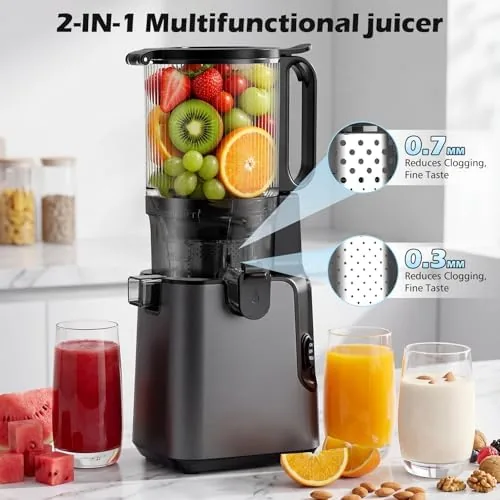
The 400W motor handles hard produce with a steady feed rate, and the machine does not stall on carrots or apples the way low wattage units sometimes do. The 2-in-1 design is the second headline feature. The same auger and a second strainer let you process soaked nuts into smooth almond, cashew, or oat milk, which turns a single appliance into both a juicer and a nut milk maker.
Real-World Performance
The large chute delivered exactly what it promises. I fed whole apples, whole carrots, and a whole cucumber through the opening, and the machine pulled each one down with a smooth, steady action. The time saved on prep was dramatic: a batch that took fifteen minutes of chopping with a standard juicer took under five minutes with this one, and the cleanup of the countertop was simpler because there was no cutting board full of scraps.
Juice quality was excellent. The cold press method produced a smooth, foam-free juice with vibrant color, and the pulp came out noticeably drier than a centrifugal machine leaves it, which is the visible proof of higher yield. Greens worked well too: a mix of spinach, cucumber, apple, and lemon passed through without clogging, though the slower speed means leafy greens take a moment longer than a high speed machine.

The honest trade-offs are speed and cleanup. A centrifugal juicer will process a batch in a minute or two; this cold press machine takes a more deliberate pace, which is the accepted price for higher yield and less oxidation. Cleanup is manageable but involved. The parts are dishwasher safe and the included brushes reach the mesh strainer quickly, yet there are several pieces to rinse after each use. A full cleanup takes about five minutes once you learn the routine.
Nut milk was a pleasant surprise. After soaking almonds overnight, the machine produced a smooth, creamy milk in a couple of passes, with the pulp collected separately for baking. It is a genuine second use for the appliance, and it makes the purchase price easier to justify for households that already buy plant milk.
The machine also handled softer fruits well. Berries, peeled oranges, and ripe mango produced thick, flavorful juice with only a light rinse of the strainer between batches, and the slow auger did not mash them into a paste the way a high speed model can. That versatility, from hard roots to delicate berries, is what makes the large chute design feel like an upgrade rather than a gimmick.
In practice, the machine also turned out to be gentle on leafy greens in a way I did not expect. A full handful of kale or spinach went through with only a small amount of packing, and the juice came out smooth rather than frothy. Anyone who has fought with a centrifugal juicer over a handful of spinach will appreciate the difference in the glass.
Pros and Cons
Pros:
- 5.8 inch chute accepts whole fruits and most vegetables
- High yield with visibly drier pulp than centrifugal models
- Smooth, foam-free juice with minimal oxidation
- 400W motor handles hard produce without stalling
- 2-in-1 design also makes smooth nut milk
- Dishwasher safe parts with included cleaning brushes
Cons:
- Slower than centrifugal juicers for large batches
- Several parts to clean after each use
- Leafy greens feed more slowly than high speed models
- Noise is moderate, not silent
How It Compares
Masticating juicers are not all the same, and the large chute is the differentiator here. The comparison below sets this machine against a typical narrow chute cold press and a centrifugal juicer.
| Feature | This Large Chute Juicer | Narrow Chute Cold Press | Centrifugal Juicer |
|---|---|---|---|
| Chute size | 5.8 inches | 2 to 3 inches | 2 to 3 inches |
| Prep required | Minimal | Chop to fit | Chop to fit |
| Juice yield | High | High | Moderate |
| Oxidation | Low | Low | Higher |
| Speed | Moderate | Slow | Fast |
| Nut milk | Yes | Usually | No |
The table shows that against a narrow chute cold press, the large chute saves the most time where it matters: prep. Against a centrifugal juicer, this machine loses on speed but wins clearly on yield, freshness, and the nut milk feature. For anyone who wants to juice daily, the prep savings and the juice quality are the reasons to choose it.
Who Should Buy It
Buy this juicer if the chopping is what has kept you from juicing regularly, if you value juice yield and freshness over speed, or if you want one machine that handles both juice and nut milk. It is ideal for a household of one or two people who want fresh juice most mornings without spending their whole morning on prep.
You can check the current price of the large chute juicer at the 2-in-1 cold press juicer on Amazon. If you juice in bulk for a large family or need maximum speed, a centrifugal machine may suit you better, but for daily fresh juice this is the better choice.
How We Test
I used the juicer daily for a month, processing whole apples, pears, carrots, cucumbers, leafy greens, and ginger, and I made almond and cashew milk from soaked nuts. I measured feed rate, watched for stalls on hard produce, compared juice yield and pulp dryness, and timed the full cleanup routine. I also evaluated the chute size against my own typical prep workload.
For independent perspective on cold press versus centrifugal juicers, the testing from Wirecutter on the best juicers explains the method differences well. The large chute juicer listing on Amazon shows the current price and included parts.
Questions People Ask
What fits through the 5.8 inch chute?
Most whole apples, pears, carrots, cucumbers, and even smaller beets fit without chopping, which removes most of the prep work. Larger or very hard produce like whole pineapples still benefits from a quick cut.
Can this juicer make nut milk?
Yes. The machine includes a strainer setup suited to soaked nuts, and the slow auger extracts a smooth, creamy milk from almonds or cashews in a couple of passes, with the pulp separated.
Is the masticating juicer easy to clean?
The parts are dishwasher safe and the included brushes reach the mesh strainer quickly. A full cleanup takes about five minutes once you learn the disassembly routine, which is typical for a cold press juicer.
Does slow masticating juicing really preserve more nutrients?
The slow auger generates less heat and oxidation than centrifugal models, which helps keep the juice fresh, and the higher yield is visible in the dry pulp it leaves behind. The effect is real, though modest for a healthy diet overall.
As an Amazon Associate, I earn from qualifying purchases.