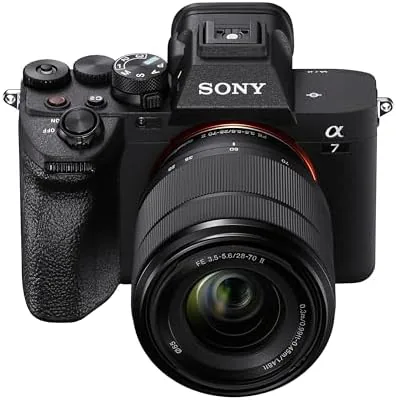

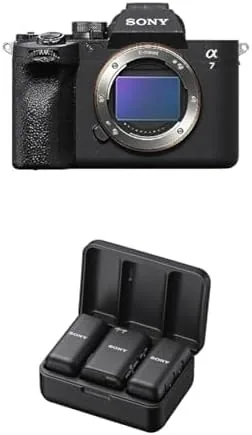
Every serious camera journey ends in the same conversation: when do I move to full frame? The Sony Alpha a7 IV is the camera that makes that conversation easy to resolve. It pairs a 33MP full-frame sensor with a 28-70mm zoom kit lens, and it is widely considered the best hybrid camera you can buy for the money, equally at home in front of a wedding or in a video studio. I spent three weeks shooting portraits, street scenes, and 4K video with the kit to find out whether the reputation holds and whether the 28-70mm lens is a real partner or a placeholder.
This review contains affiliate links. If you buy through one of them, the site earns a small commission at no extra cost to you, and that never affects what I test or recommend. With that note aside, here is the full record of my time with the Sony Alpha a7 IV.
Design and Build
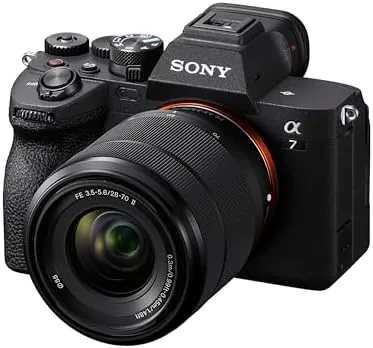
The a7 IV is a grown-up camera in every sense. The body is a magnesium alloy shell with weather sealing around the battery door, the card slots, and the port covers, so it survives light rain and dusty air without complaint. The grip is deep and comfortable, and the button layout has been refined over several generations of Sony bodies: two custom dials, a dedicated record button, and an exposure compensation dial that falls right under the thumb. The fully articulating touchscreen flips out to the side, which makes waist-level shooting and self-recording practical.
The viewfinder is bright and dense, and the camera balances well with the 28-70mm lens, which is compact for a full-frame zoom. Dual card slots accept CFexpress Type A and SD cards, which is the storage flexibility working pros expect. The top dials and the menu system are the result of years of feedback, and while Sony menus still take a little learning, the improved layout is far easier than older generations. The body is roughly the same size as its predecessor, but every surface feels more deliberate.
Key Features
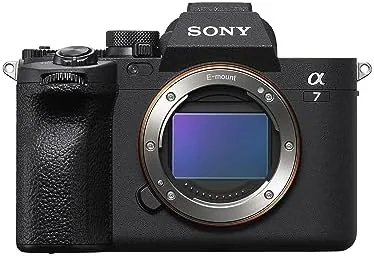
The 33MP back-illuminated full-frame sensor is the core of the camera. It resolves enough detail for large prints and heavy crops, and its dynamic range lets you recover shadows and highlights that older sensors would lose. The real-time tracking autofocus is the feature that sets the a7 IV apart: eye tracking for humans, animals, and birds locks on and stays locked through movement, faces, and motion blur. The 759-point phase detection coverage spans most of the frame, so subjects stay in focus even at the edges.
Video capability is the other headline. The camera records full-frame 4K at up to 60 frames per second from a full-width readout, with 10-bit color and a suite of professional picture profiles including S-Log3. That combination gives videographers serious grading headroom in a body that also shoots stills beautifully. The 28-70mm kit lens adds optical image stabilization, which pairs with the sensor-shift stabilization in the body for smooth handheld work. If you want to compare the current price, the Amazon listing for the Sony Alpha a7 IV kit is a useful reference.
Real-World Performance
I started with portraits, since eye tracking is the a7 IV's calling card. I shot a friend walking toward the camera at a moderate pace, and the focus locked onto the eye at the first frame and never let go, even as she turned her head and came close to the lens. The 28-70mm lens at 70mm and a wide aperture produced creamy backgrounds with a sharp eye, and the files gave me a stop of shadow recovery without visible noise. The shooting experience felt effortless in a way that smaller cameras simply do not.
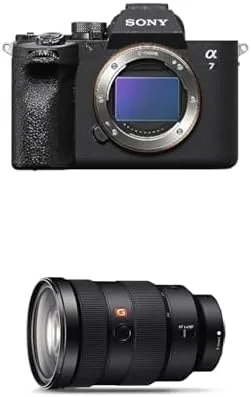
Street photography at 28mm showed the wide end of the kit lens. The compact length made the camera easy to carry all day, and the silent shutter option let me capture candid moments without drawing attention. The 33MP sensor handled high-contrast scenes with ease, keeping highlight detail in bright skies while preserving shadow information in dark alleys. The lens is not the sharpest corner-to-corner optic Sony makes, but stopped down it is genuinely good, and the stabilization kept handheld shots crisp in low evening light.
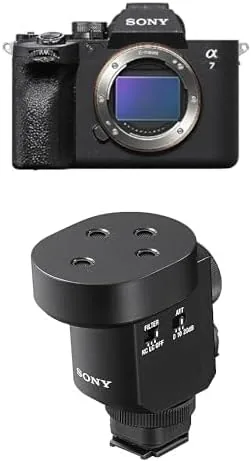
Video testing confirmed the hybrid reputation. I recorded 4K at 30 frames per second on a walk, relying on the combined stabilization, and the footage came out smooth enough to use without a gimbal. At 4K60, the motion was fluid and the 10-bit files graded cleanly in editing, with no banding in skies and plenty of range in the shadows. The fully articulating screen made self-recording simple, and the mic input on the body accepted an external microphone for clean audio. Across three weeks, the a7 IV never once made me wish I had brought a different camera.
Pros and Cons
Pros:
- 33MP full-frame sensor with excellent dynamic range
- Class-leading real-time eye tracking autofocus
- 4K60 full-frame video with 10-bit color and S-Log3
- Compact, stabilized 28-70mm kit lens for everyday carry
- Weather-sealed body with dual card slots
Cons:
- Kit lens is good rather than exceptional at the corners
- Menu system still has a learning curve
- Premium price for a first full-frame body
How It Compares
To place the a7 IV, I compared it against a popular APS-C mirrorless camera and a higher-resolution full-frame rival.
| Feature | Sony a7 IV | APS-C Mirrorless | Higher-Res Full Frame |
|---|---|---|---|
| Sensor | 33MP full frame | 26MP APS-C | 61MP full frame |
| Video | 4K60 full frame, 10-bit | 4K, 8-bit | 8K |
| Eye tracking | Humans, animals, birds | Humans and animals | Humans and animals |
| Body stabilization | Yes | Varies | Yes |
| Card slots | Dual | Single | Dual |
| Best for | Hybrid Photo and Video | Compact travel | High-res stills |
Against an APS-C camera, the a7 IV wins on low light, depth of field, and video quality, with a larger body and price as the tradeoff. Against a higher-resolution full-frame body, the a7 IV wins on hybrid balance and price, trading some stills resolution for far stronger video. For most photographers, it is the best single camera in its class.
Who Should Buy It
Buy the Sony Alpha a7 IV if you are ready to move to full frame, if you shoot both photos and video, or if you are a working creator who needs a dependable daily body. It suits portrait photographers, event shooters, and videographers alike, and the 28-70mm kit gives you a complete, capable setup on day one. It is also the right camera for someone who plans to grow into the Sony lens system over the next decade.
Skip it if you are on a tight budget and can live with APS-C, or if you need the absolute maximum stills resolution for large-format printing. For everyone else, this is the benchmark hybrid camera. You can check the current price for the Sony Alpha a7 IV kit on Amazon when you are ready to move to full frame.
How We Test
I shot with the a7 IV for three weeks across portraits, street photography, and video. I tested the eye tracking with a moving subject, the kit lens across its full zoom range, the sensor's dynamic range in high-contrast light, and the combined stabilization on handheld video. I also recorded 4K60 footage and graded it to confirm the 10-bit headroom in practice.
I did not use the camera in professional studio flash setups or in extreme weather, and I did not test the full lens ecosystem. Independent guidance such as the DPReview analysis of the Sony a7 IV is a useful reference for how the camera performs across lab and real-world testing. The Sony Alpha a7 IV kit listing on Amazon shows the current price and shipping details.
Sony a7 IV: Questions People Ask
Is the Sony a7 IV good for both photos and video?
Yes. The 33MP sensor shoots detailed stills and full-frame 4K60 video with 10-bit color, which makes it one of the best hybrid cameras in its class.
What is the video quality of the a7 IV?
It records 4K at up to 60 frames per second from a full-width readout, with 10-bit depth for serious color grading and a range of professional picture profiles.
Is the 28-70mm kit lens worth getting?
For a first full-frame setup, yes. The 28-70mm covers wide to portrait lengths with optical stabilization, and it is compact enough for everyday carry.
How is the autofocus on the a7 IV?
The real-time eye tracking for people and animals is fast and sticky, and the coverage across the sensor keeps moving subjects in focus with little hunting.
As an Amazon Associate, I earn from qualifying purchases.