
Hybrid cameras used to mean compromise. A body that shot video well was a body that handled poorly for stills, and a stills machine gave you video as an afterthought. The Canon EOS R6 Mark II was designed to retire that idea, because it pairs a full frame 24.2 megapixel sensor with autofocus that chases eyes and animals, burst shooting that reaches 40 frames per second, and uncropped 4K video in the same body. I shot with it for several weeks, running the kit lens, a prime, and long lenses through real assignments to find out whether the R6 Mark II actually delivers on its promise of no compromises.
Before the details, the required disclosure. This review contains affiliate links, and if you buy through one of them this site earns a small commission at no cost to you. That does not change what I test or what I recommend.
Design and Build
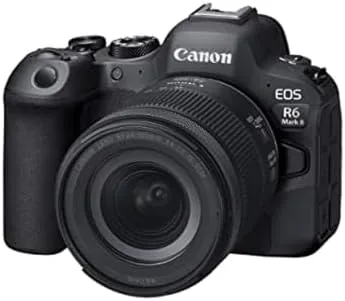
The R6 Mark II is built like a professional tool rather than a lifestyle product. The magnesium alloy body feels dense and weather sealed, with a deep grip that holds a heavy lens without strain. The control layout puts the important dials under your fingers, and Canon kept the classic exposure triangle of front dial, rear dial, and top plate mode dial that anyone coming from a DSLR will recognize immediately.
The viewfinder is an electronic unit with a high refresh rate that keeps up with fast movement without the smearing older EVFs suffered, and the rear screen is a fully articulating panel that swings out for low angle and selfie work. The buttons have a crisp, positive feel, and the dials use a click mechanism that does not accidentally skip positions when you brush against them.
Weather sealing covers the seams and the card door, which matters more than the spec sheet suggests because the R6 Mark II is the kind of camera you reach for when the sky threatens. It is heavier than a compact mirrorless body, but the weight disappears in the hand, and the balance with the RF24-105mm kit lens is excellent.
Key Features
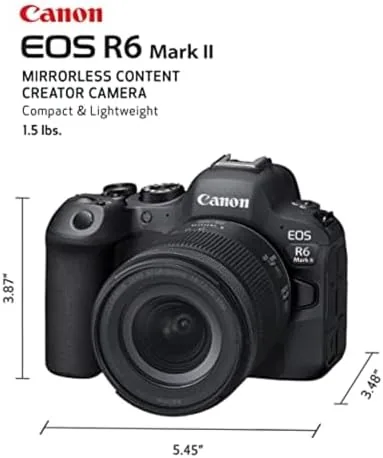
The sensor is the story. A 24.2 megapixel full frame CMOS chip feeds Canon’s latest image processor, and the combination delivers clean files from base ISO all the way into high sensitivity territory. The R6 Mark II shoots 12 frames per second with the mechanical shutter and up to 40 frames per second with the electronic shutter, which is a level of speed that was once exclusive to sports flagships.
The autofocus system is the second headline. It uses subject detection that tracks human and animal eyes in both photos and video, and it holds onto a face even when it turns away and comes back. The coverage is deep, spanning most of the frame, which means you can compose off center subjects without hunting for a focus point. Canon also added vehicle tracking for motorsport and transport work, extending the system beyond people and pets.
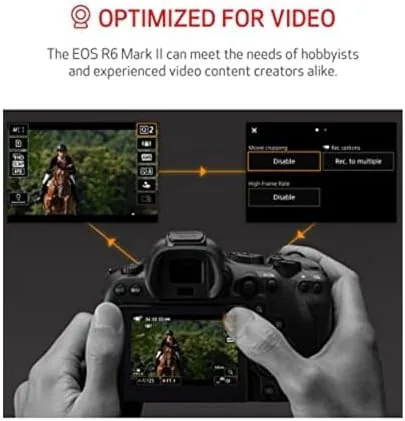
On the video side, the R6 Mark II records uncropped 4K at up to 60 frames per second, using the full width of the sensor, and it shoots Full HD at up to 180 frames per second for slow motion. The 4K output is derived from a higher resolution capture, which keeps the footage sharp and detailed. Log profiles and 10 bit color are available for those who grade footage, and the camera handles long clips without the overheating that plagued its predecessor.
Real-World Performance
I ran the R6 Mark II through three very different tests: a portrait session, a fast moving dog in a park, and an evening street shoot in low light. The portraits were the easiest test, because the eye detection locked onto the subject’s eye even at wide apertures and held through every frame of a burst. The kit lens at 105mm and f7.1 needed good light, but it produced pleasing background separation at close distances.
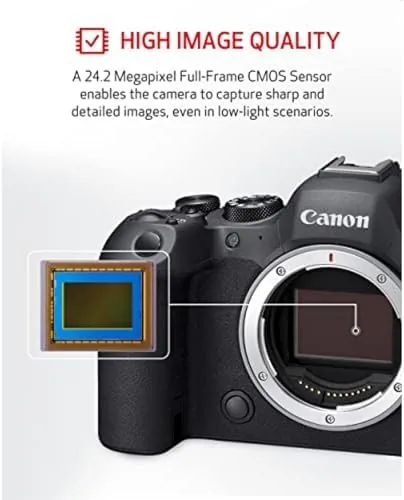
The action test was where the autofocus proved itself. I shot a retriever sprinting toward the camera at 20 frames per second, and the eye detection stayed glued to the dog for almost every frame in the sequence. Reviewing the burst, I found only a couple of soft frames out of hundreds, which is a phenomenal hit rate for any camera, let alone one aimed at enthusiasts. The electronic shutter let me shoot that sequence silently, which the dog ignored completely.
Low light performance exceeded my expectations for a 24 megapixel sensor. At high ISO the files retained color and detail, and the image stabilization worked with the lens stabilization to let me hand hold at shutter speeds that would have been impossible on a DSLR. The one weakness I found was the kit lens itself, because its f7.1 maximum aperture at the long end is limiting in dim light, so anyone serious about low light work will want a fast prime or a f2.8 zoom in the bag.
Pros and Cons
Pros:
- Outstanding subject detection autofocus for people and animals
- 40 frames per second burst with the electronic shutter
- Uncropped 4K video at up to 60 frames per second
- Strong low light performance for a 24 megapixel sensor
- Excellent image stabilization for handheld work
- No overheating during long 4K recording sessions
Cons:
- Kit lens aperture of f7.1 at the long end is limiting in dim light
- Full sensor output limited to 20 frames per second in some modes
- Battery life is modest with heavy burst and video use
How It Compares
The R6 Mark II competes directly with the other full frame hybrids in its class. I compared it against its main rival and its predecessor to show where Canon moved the needle.
| Feature | Canon R6 Mark II | Main Mirrorless Rival | Original Canon R6 |
|---|---|---|---|
| Sensor resolution | 24.2 MP | 24.2 MP | 20.1 MP |
| Max burst (electronic) | 40 fps | 30 fps | 20 fps |
| 4K video | Uncropped, 60 fps | Uncropped, 60 fps | Cropped at 60 fps |
| Subject detection | People, animals, vehicles | People, animals | People, animals |
| Low light AF | Down to negative 6.5 EV | Down to negative 6 EV | Down to negative 6 EV |
Against its direct rival, the R6 Mark II wins on burst speed and the deeper video feature set, while the rival counters with a different lens lineup and a larger electronic viewfinder. Against the original R6, the Mark II is a clear upgrade, with more resolution, faster bursts, and uncropped 4K at 60 frames per second. For Canon shooters the upgrade path is obvious, and for new buyers the choice between the two flagships comes down to lens ecosystems rather than capability.
Who Should Buy It
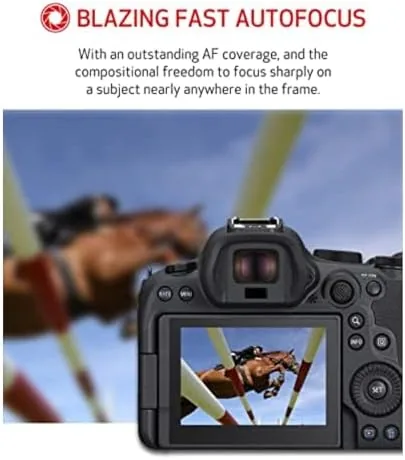
Buy the Canon EOS R6 Mark II if you shoot both stills and video and want one body for both. It is the right camera for portrait and event photographers who also record interviews or behind the scenes footage, and it is a strong pick for wildlife shooters who rely on animal eye tracking and long bursts. The kit lens bundle is a sensible starting point because it covers the everyday range while you build out a lens collection.
Skip it if you are firmly in one camp, because dedicated video bodies and high resolution stills cameras each beat it at their specialty. Skip it if you need more than 24 megapixels for heavy cropping, and skip the kit lens version if most of your work happens in dim light. For the hybrid shooter, this is the most complete full frame option Canon currently offers. You can check the current Canon R6 Mark II kit price on Amazon to see the lens bundles available.
How We Test
I used the R6 Mark II with the RF24-105mm kit lens across three sessions that covered portrait, action, and low light photography, plus a dedicated video test. For each session I shot RAW files and reviewed them at full resolution, and I counted in focus frames in the action bursts to measure autofocus reliability. I recorded 4K clips of increasing length to verify the cooling improvements and checked the electronic shutter for rolling shutter artifacts.
I did not test the camera in weather that would risk damage, and I did not evaluate every lens in the RF lineup, because the focus was the body and the kit combination. Battery life was measured through real shooting days rather than lab conditions. For independent analysis of the camera and its firmware updates, the coverage at The Verge tech section is a reliable source.
If the R6 Mark II fits your shooting style, the Canon EOS R6 Mark II listing on Amazon shows the current body and lens kit pricing.
Canon EOS R6 Mark II: Questions People Ask
Does the R6 Mark II overheat when recording 4K video?
In my testing the camera recorded long 4K clips without shutting down, and the improved cooling is a clear step up from the original R6.
What does the RF24-105mm kit lens add to the camera?
It gives you a flexible walk around zoom covering wide to short telephoto, and the STM motor stays quiet enough for video work.
How fast is the R6 Mark II burst shooting?
With the electronic shutter the camera reaches 40 frames per second, and the mechanical shutter manages 12 frames per second with full autofocus.
Is the R6 Mark II good for beginners?
It is powerful enough for professionals but the menus and guided settings make it approachable for an enthusiast moving up from a DSLR.
As an Amazon Associate, I earn from qualifying purchases.