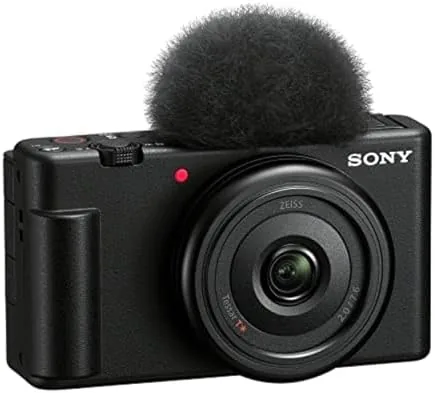

Content creation has a learning curve problem. The cameras that produce the best footage assume you know what aperture, white balance, and zebra patterns are, while the cameras that are easy to use produce footage that looks like a phone. The Sony ZV-1F sits in the rare middle ground. It is a compact 4K camera built specifically for vlogging, with a 1 inch sensor, a fixed 20mm f/2.0 lens, a flip out touchscreen, and a set of creator focused modes designed to remove the guesswork. I shot with it for three weeks, making vlogs, product clips, and everyday footage, to find out whether it earns its place as a beginner's creator camera. This is the full record.
Before the details, the disclosure. This article contains affiliate links, and purchases made through them earn this site a small commission at no cost to you. That never changes what I test or how I review it.
Design and Build
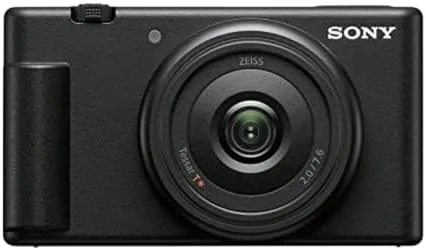
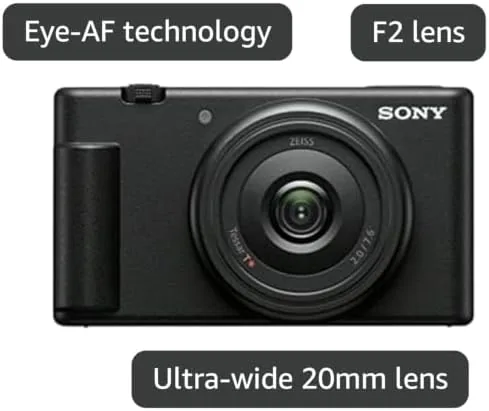
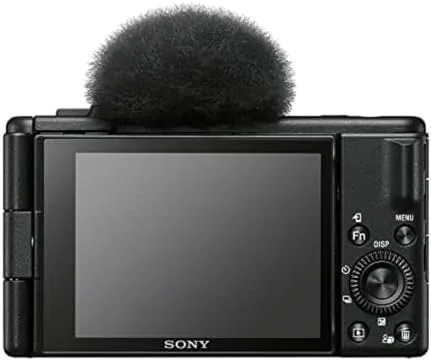
The ZV-1F is a small, light camera that is clearly designed to be held at arm's length. It weighs well under a pound, and the rectangular body fits comfortably in one hand, with a textured grip area on the right side and a large record button that sits right under your thumb. The lens is a fixed 20mm equivalent wide angle, which is a deliberate choice for selfie framing: at arm's length, your face and a reasonable amount of background fit in frame without holding the camera at full extension.
The flip screen is the defining physical feature. It rotates out to the side and faces fully forward, so you can frame yourself while recording, and it is a touchscreen, which means you tap to set focus, adjust settings, and start and stop recording. For a vlogger, the forward facing touchscreen turns the camera into something you operate by touch rather than by hunting through menus. The screen is bright enough to stay visible outdoors, which matters for a camera that lives in the field.
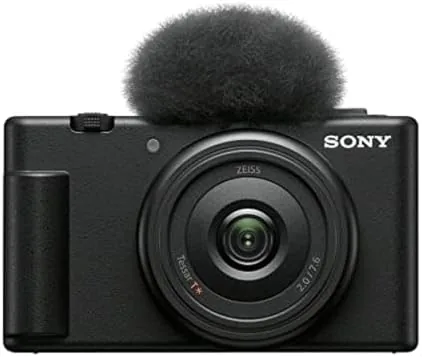
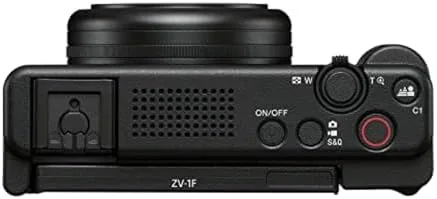
The build is solid for the compact class. The controls are minimal and well placed: a record button, a zoom rocker around the shutter, a mode button, and the touchscreen. The bundled wind screen fits over the built in microphone and snaps into place, which is a small accessory with a big effect on audio. The whole package is small enough to slip into a bag and light enough to hold for long recording sessions without your arm tiring.
Key Features
The headline feature is the beginner friendly shooting mode. The ZV-1F has a dedicated mode that locks the camera into the ideal settings for vlogging, handling exposure, focus, and color automatically. You press record and it produces footage with natural skin tones and correct exposure without touching a menu. That is the camera's whole purpose: it removes the barrier between you and good footage, and for a beginner that matters more than any spec sheet.
The background defocus button is the second signature feature. One touch sets the lens to its widest aperture, blurring the background behind you for that shallow depth of field look that separates camera footage from phone footage. Press it again and the scene snaps back to sharp focus, ideal for showing off your surroundings. It is a creative tool made into a single button, and it is the kind of feature that makes footage look far more expensive than the camera is.
Product showcase mode is the third creator feature, and it is clever. When you hold a product up to the lens, the camera instantly switches focus from your face to the object, then back to your face when you lower it. This mode removes the classic vlogging problem of the camera hunting for focus when you present something. The built in three capsule microphone records clear audio, and the wind screen cuts down outdoor noise. To see the current price and the full accessory list, check the Sony ZV-1F listing on Amazon.
Real-World Performance
I shot vlogs around the city, indoors and out, and the camera performed exactly as advertised. The footage was sharp, the skin tones looked natural straight out of camera, and the exposure stayed correct even when I moved between bright sunlight and shade. The beginner mode handled the exposure transitions better than I expected, producing watchable footage without me touching a single setting. For a camera aimed at new creators, that is the most important result of the whole test.
Video quality was the biggest surprise in a good way. The 4K footage was clean and detailed, with color that looked pleasant without grading, and the 1 inch sensor gave the image a dimensionality that phone footage lacks. The fixed 20mm lens proved to be a strength for handheld selfie shooting: my face stayed in frame naturally, and the wide angle kept my arm's length selfie videos looking natural rather than cramped. The lack of zoom is the trade off, and it means the ZV-1F is a fixed wide angle tool rather than a general purpose camera.
The creator modes worked as designed. Background defocus produced a convincing shallow depth of field effect that made my vlogs look like they came from a much larger camera, and product showcase mode switched focus smoothly when I presented objects. The built in microphone, with the wind screen fitted, delivered clear audio for talking head work, though it is still a camera microphone, so a dedicated mic remains better for windy outdoor shoots. The flip screen stayed visible in direct sun, and the touchscreen made changing modes quick and natural.
Pros and Cons
Pros:
- Beginner mode produces clean footage with no settings knowledge
- One touch background defocus gives a pro look
- Product showcase mode handles presentations smoothly
- Flip screen with touch controls is simple to use
- Built in microphone records clear audio with the wind screen
- Light and compact for long handheld recording
Cons:
- Fixed wide angle lens offers no zoom
- No optical image stabilization, only digital
- Camera microphone is still no match for a dedicated mic
- Still photography is limited by the fixed 20mm lens
How It Compares
The ZV-1F competes against three main options: the larger Sony ZV-1 with its zoom lens, a flagship phone, and a point and shoot camera. I compared them to show where the ZV-1F fits.
| Feature | Sony ZV-1F | Sony ZV-1 | Flagship Phone |
|---|---|---|---|
| Sensor | 1 inch | 1 inch | Smaller |
| Lens | Fixed 20mm | 24 to 70mm zoom | Multiple lenses |
| 4K video | Yes | Yes | Yes |
| Background defocus button | Yes | Yes | No |
| Product showcase mode | Yes | Yes | No |
| Flip screen | Yes | Yes | Yes |
| Price | Budget friendly | Higher | Varies |
Against the larger ZV-1, the ZV-1F wins on price and simplicity, giving up the zoom lens that the ZV-1 offers. If you need to zoom or shoot subjects at a distance, the ZV-1 justifies its higher price, but for arm's length vlogging the ZV-1F delivers most of the same result for less. Against a flagship phone, the ZV-1F wins on the dedicated creator features and the larger sensor's image quality, but the phone wins on zoom, convenience, and the fact that you already own it. The ZV-1F is for people who want a real camera feel without the learning curve.
Who Should Buy It
Buy the ZV-1F if you are starting a YouTube channel, a vlog, or any regular video content and want footage that looks professional without learning manual controls. It is ideal for beginners, for creators who do mostly talking head and product content, and for anyone who wants a compact second camera that stays in a bag for spontaneous shooting. The beginner mode alone makes it worth considering for anyone intimidated by interchangeable lens cameras.
Skip it if you need zoom for wildlife or distant subjects, if you plan to shoot everything on a phone you already own, or if you want a Camera for serious still photography, where the fixed wide angle lens will frustrate you. For everyone else, the ZV-1F is the easiest path to genuinely good video. You can check the current price for the Sony ZV-1F on Amazon to see if it fits your budget.
How We Test
I shot with the ZV-1F for three weeks, producing city vlogs, indoor talking head footage, product clips using the showcase mode, and evening shots around the city. I recorded in 4K and 1080p, tested the beginner mode against manual mode, and used background defocus across every type of shot. I also tested the flip screen in direct sunlight and the built in microphone with and without the wind screen.
I did not perform instrumented resolution or stabilization measurements, so the video quality observations are experiential rather than lab results. I also did not test the camera's livestreaming output in a full broadcast setup. For independent technical testing of the ZV-1F, DPReview's first impressions of the Sony ZV-1F provide measurement backed analysis alongside this hands on review.
Sony ZV-1F: Questions People Ask
Is the Sony ZV-1F good for beginners?
Yes, the dedicated beginner mode, the flip touchscreen, and the one touch background defocus and product showcase buttons make it one of the easiest cameras to produce good footage with.
Can I use the ZV-1F as a webcam?
Yes, the camera connects over USB and works as a webcam for calls and livestreams, which extends its use beyond recording into live content and meetings.
Does the camera have image stabilization?
It uses digital stabilization in movie mode rather than optical stabilization, and the wide lens makes handheld footage steadier than expected, but there is no physical stabilization hardware.
Is the ZV-1F good for still photography?
It takes solid photos with natural color, but the fixed 20mm wide angle lens means it is really a video and vlogging camera, not a general purpose photography camera.
As an Amazon Associate, I earn from qualifying purchases.