
In competitive gaming, every gram counts. A lighter mouse moves faster, flicks more precisely, and causes less fatigue over a long session, which is why the race to shed weight has defined the esports peripheral market. The Razer Viper V4 Pro takes that race to its logical extreme with a 49 gram body, a 50K DPI optical sensor, 8K polling, and Gen-4 optical switches, all in a wireless package that promises up to 180 hours of battery life. I spent three weeks using it for ranked play, aim training, and everyday work, and this is the full account of that experience.
Before the details, the standard note. This article contains affiliate links, and if you buy through one of them the site earns a small commission at no extra cost to you. That commission never affects what I test or what I recommend.
Design and Build
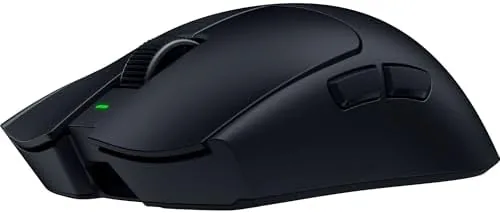
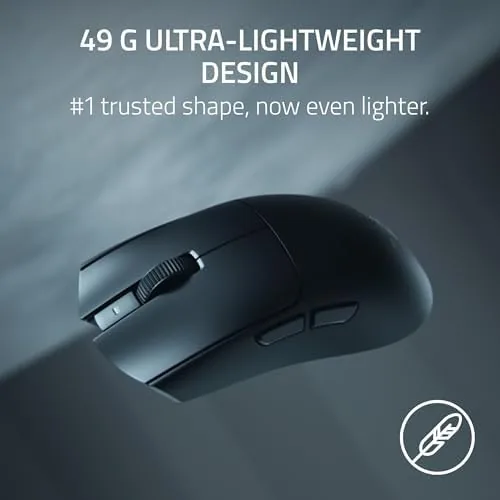
The first thing you notice about the Viper V4 Pro is how little there is to notice. At 49 grams, it is almost startlingly light, and the first pickup takes a moment to register because the mouse seems to weigh nothing at all. That is the point. The shell uses an aggressively skeletonized honeycomb design that removes material everywhere it is not needed, and the result is a mouse that disappears into your hand during play.
Despite the weight savings, the build quality is excellent. The shell has no flex or creak, the coating provides a grippy matte texture that holds up even with sweaty hands, and the overall shape is a symmetrical ambidextrous design that suits both claw and fingertip grips. The mouse feels planted and stable on the pad, with skates that glide smoothly across most surfaces.

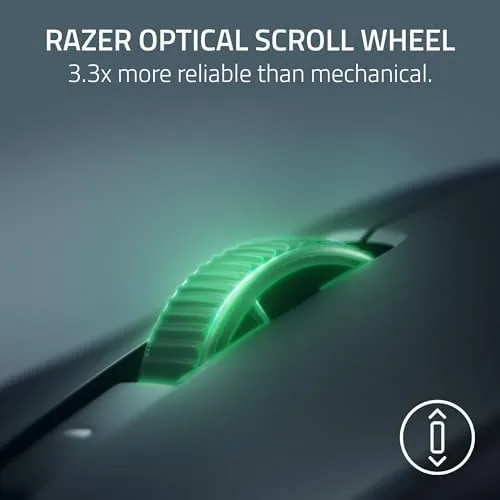
The side buttons are positioned to avoid accidental presses, the scroll wheel is notched and responsive, and the underside houses the optical sensor, the power switch, and a small receiver storage slot. The wireless dongle tucks away neatly for travel, and the USB-C charging port sits at the front for quick top ups. Every detail is designed around a tournament player's priorities.
Key Features
The 50K DPI optical sensor is the centerpiece of the spec sheet. In real terms, that resolution means tracking precision that far exceeds what any human can physically exceed, but the benefit is not the raw number. It is the sensor's consistency, its low power draw, and its ability to track with zero acceleration or smoothing, all of which translate into predictable, trustworthy aim.
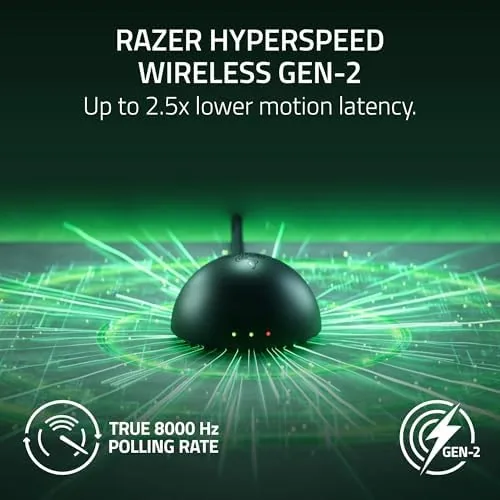
The 8K polling rate is the other headline feature. By reporting position to the PC up to 8000 times per second, the mouse cuts the interval between physical movement and on screen response to fractions of a millisecond. On a high refresh rate display, that difference is tangible, and it is exactly what competitive players are looking for.

Gen-4 optical switches complete the feature set. Unlike traditional mechanical switches, optical switches register clicks using light, which means near zero latency and a rated lifespan far beyond mechanical alternatives. The result is a click that feels crisp and immediate, with no double click issues over time. If you want to check the current price and specifications, the Amazon listing for the Razer Viper V4 Pro is the best reference.
Real-World Performance
In competitive play, the Viper V4 Pro is exceptional. The low weight makes flick shots and tracking feel effortless, and my aim became noticeably steadier in aim training after a few days of adjustment. The sensor tracked flawlessly across a variety of mouse pads, with no spinouts, no acceleration, and no jitter even at high sensitivity settings.
The 8K polling rate delivers a real difference in feel. On a high refresh rate monitor, the cursor and crosshair respond with an immediacy that is hard to quantify but easy to feel. Rapid direction changes and micro corrections both feel tighter, and in fast paced games where a single frame matters, that responsiveness is a genuine edge.
Battery life met the promise. Rated at up to 180 hours, the mouse lasted the entire three week test without needing a charge at standard polling rates, and even with 8K polling enabled, a full charge covered many days of heavy use. The USB-C charging port means a quick top up is easy, and the receiver storage slot removes any worry about losing the dongle in transit.
The mouse also works as a daily driver. For office work, browsing, and creative tasks, the light weight is never a drawback, and the optical switches are quiet enough to avoid bothering others. The Razer software offers full control over DPI, polling rate, button mapping, and lighting, and it works on both Windows and macOS without friction.
One detail that impressed me through the whole test was how consistent the wireless connection remained. I used the mouse across a desk setup with multiple receivers nearby, at range, and even with the dongle on the far side of a laptop, and I never experienced a dropped input or a stutter during gameplay. That reliability is easy to take for granted, but it is the difference between a confident flickshot and a frustrating whiff at a critical moment.
Pros and Cons
Pros:
- Ultra light 49 gram build reduces fatigue and speeds up flicks
- 50K DPI sensor tracks flawlessly with no smoothing
- 8K polling rate delivers an immediate, responsive feel
- Up to 180 hour battery with USB-C charging
- Gen-4 optical switches are crisp and long lasting
- Works across PC and Mac with full software control
Cons:
- Skeletonized shell collects dust in the honeycomb vents
- Light weight takes a short adjustment period
- Ambidextrous shape suits some grips better than others
- 8K polling uses more battery than lower rates
How It Compares
The Viper V4 Pro sits at the top of a crowded field of lightweight wireless gaming mice. I compared it against two leading alternatives to see where it stands. The table below summarizes the key differences.
| Feature | Viper V4 Pro | Leading Lightweight Rival | Budget Wireless Mouse |
|---|---|---|---|
| Weight | 49 grams | 54 grams | 85 grams |
| Sensor | 50K DPI | 30K DPI | 12K DPI |
| Polling rate | 8K | 4K | 1K |
| Battery life | 180 hours | 90 hours | 70 hours |
| Switches | Gen-4 optical | Mechanical | Mechanical |
| Price | Premium | Premium | Budget |
Against a leading lightweight rival, the Viper V4 Pro wins on weight, polling rate, battery life, and switch durability, though the rival offers a more traditional shape and coating. Against a budget wireless mouse, the Viper is in a different class entirely, with a sensor, latency, and build that justify the premium for Competitive Players. The budget mouse is the sensible choice for casual use, but for anyone serious about fast, precise aim, the Viper V4 Pro is worth the investment.
Who Should Buy It
The Viper V4 Pro is for competitive gamers, esports players, and anyone who spends hours in aim training or ranked play and wants every possible advantage. It is also a great fit for players who have been considering A Lightweight Mouse but were waiting for one with flagship sensors and battery life.
Skip it if you prefer a heavier, more substantial mouse, if you use a palm grip that this symmetrical shape does not suit, or if you are happy with a budget mouse for casual gaming. For serious players, the Viper V4 Pro is one of the best competitive mice money can buy. You can see the current price for the Razer Viper V4 Pro on Amazon when you are ready to upgrade.
How We Test
I used the Viper V4 Pro for three weeks of ranked play, aim training, and everyday work. I played across several competitive titles, ran aim training routines to measure tracking and flick consistency, and tested the mouse on multiple mouse pads and at multiple DPI and polling configurations. I also tracked battery life at both standard and 8K polling rates.
I compared the mouse directly against a leading lightweight rival and a budget wireless option, and I used both Windows and macOS to verify software and compatibility. I did not measure latency with laboratory instruments, so my observations on responsiveness are based on direct comparison and feel. For deeper context on sensor technology and mouse specifications, Tom's Guide's coverage of the Razer Viper V4 Pro provides useful technical background.
Razer Viper V4 Pro: Questions People Ask
How heavy is the Razer Viper V4 Pro?
It weighs only 49 grams, making it one of the lightest wireless esports mice on the market and a major advantage for fast flicks and long sessions.
What is the battery life of the Razer Viper V4 Pro?
Razer rates the battery at up to 180 hours, and in testing the mouse easily lasted weeks of daily gaming and office work between charges.
What does an 8K polling rate do for gaming?
An 8K polling rate reports mouse position to the PC up to 8000 times per second, which reduces input latency and makes movement feel more immediate on high refresh rate displays.
Does the Viper V4 Pro work with Mac and PC?
Yes, the mouse is compatible with both Windows and macOS, and the key features are configurable through Razer software on either platform.
As an Amazon Associate, I earn from qualifying purchases.