
Some gaming mice feel engineered for the showcase, packed with features that look good on a box and disappear in a match. The Razer Viper V3 Pro is the opposite. It strips the design to the essentials, and the result is a 54 gram wireless mouse with a Razer Focus Pro 35K optical sensor, Gen3 optical switches, eight programmable controls, up to 8000Hz polling, and a 95 hour battery. The goal is plain: make the mouse disappear in your hand so only your aim remains. I spent a month clicking heads in shooters, working through spreadsheets, and adjusting the thing into every configuration I could think of, and it earned a place in my permanent setup.
Before the details, the standard note. This article contains affiliate links, and if you buy through one of them the site earns a small commission at no extra cost to you. That commission never changes what I test or what I recommend.
Design and Build
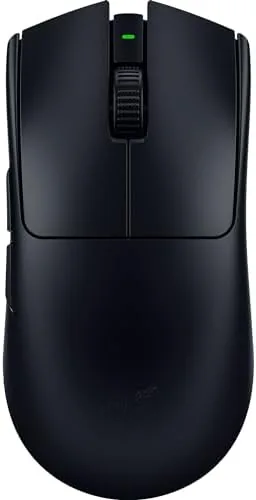
The Viper V3 Pro is unmistakably a Razer performance mouse, but it is quieter about it than most. The symmetrical shell is smooth and seamless, with no RGB lighting to speak of and no branding beyond the subtle Razer logo on the rear. That restraint is deliberate: at this weight, every gram of trim costs something, and Razer spent the savings on the important parts. The matte black finish resists fingerprints well and grips well enough that I never once felt the shell slip, even with a slightly clammy hand in a long session.
Build quality is excellent. The shell has almost no flex when you squeeze it, the clicks are crisp without any wobble, and the whole mouse feels like a single molded piece rather than a collection of parts. The sensor placement sits near the middle of the mouse, which is a detail most players ignore until they switch mice and suddenly their vertical aim improves; the centered sensor is a genuinely good choice for flick shots.

The underside is a study in purposeful minimalism. Four large PTFE feet glide smoothly on a fabric mat, and there is a dongle storage slot that keeps the 2.4GHz receiver from wandering off. The USB-C port sits at the front for charging and wired use, and the included cable is flexible enough to be forgettable. For a current look at the price, the Razer Viper V3 Pro on Amazon is a useful reference.
Key Features
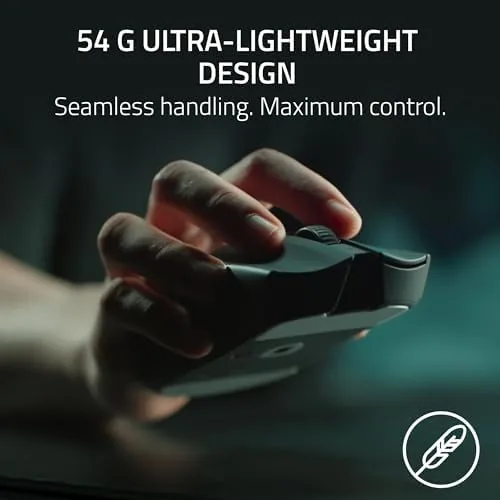
The headline spec is the weight. At 54 grams the Viper V3 Pro is among the lightest wireless gaming mice available, and lightness matters in competitive play because it reduces the inertia you must overcome to start and stop a flick. It also makes the mouse easier to pick up and reposition between swipes, which is a core skill in games like Valorant and Counter-Strike. Some players will find it too light for daily desktop work, but for its intended job it is an advantage, not a gimmick.
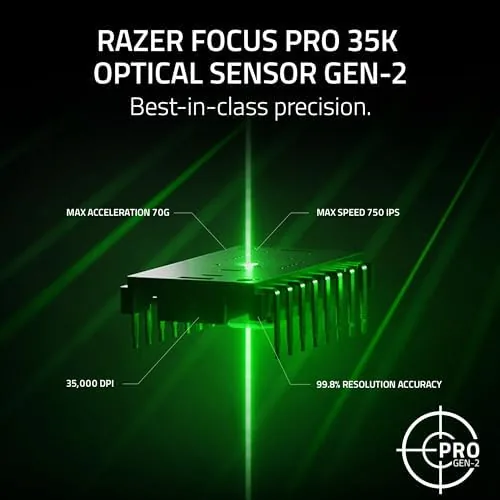
The Razer Focus Pro 35K optical sensor is the other star. It tracks up to 35,000 DPI with a maximum speed that outruns anything a human arm can produce, and it handles glass surfaces better than most sensors thanks to its surface calibration tools. For the vast majority of players, the practical DPI range is 400 to 3200, and inside that range the sensor is flawless: no acceleration, no smoothing, no jitter, just honest pointer movement.
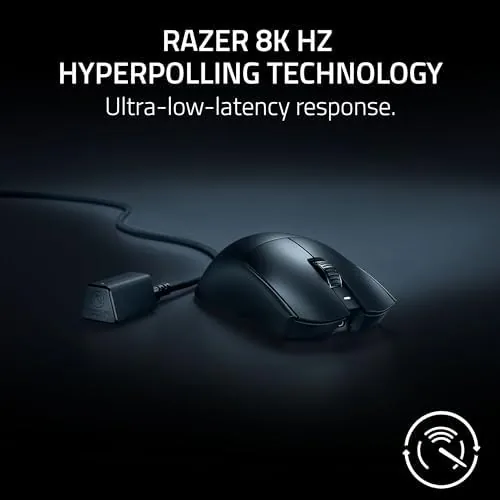
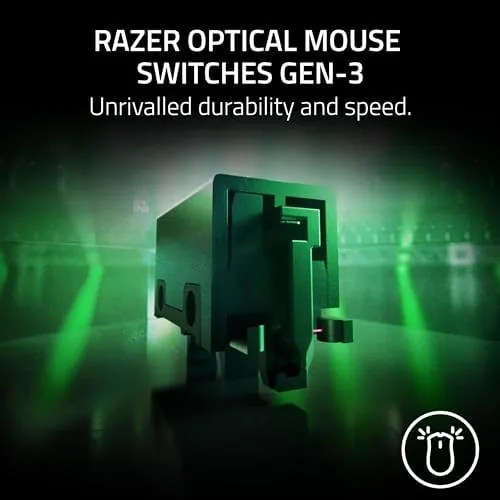
The Gen3 optical switches and the 8000Hz polling are the finishing touches. Gen3 optical switches register clicks at the speed of light with no debounce delay, and the 8000Hz polling rate reports the mouse position eight times more often than a standard 1000Hz mouse, which reduces input latency for the small slice of players who run displays fast enough to notice. Eight programmable buttons cover the essentials, and the 95 hour battery at 1000Hz means charging is a weekly thought at most.
Real-World Performance
I tested the Viper V3 Pro across a month of aim training, tactical shooters, and a few slower strategy games to see how it behaved away from its target audience. In aim trainers, the mouse was immediately faster to start and stop than the heavier mouse I had been using, and my flick accuracy improved by a margin I could measure in the session log. The 54 gram weight takes a day to adapt to, but once the muscle memory adjusts, small corrections become easier because there is less mass to fight.
In a tactical shooter, the combination of the centered sensor and the optical switches made a real difference. Flicks to the head felt snappier, and the clicks registered with a decisive tactility that left no doubt when a shot fired. I ran the mouse at 800Hz for most of the test and 8000Hz for a focused session, and while the difference is subtle on a 360Hz display, it is there for players who can feel input latency changes of a few milliseconds.
Outside of gaming the Viper V3 Pro is serviceable but not ideal. The light shell and high sensor placement take a while to get used to for everyday work, and the lack of a dedicated scroll wheel middle click may bother users who rely on it. The battery life claim held up: at 1000Hz I got well over the rated week of use between charges, and a five minute top up while I grabbed coffee kept me going through a long day. The Razer Synapse software is the weak link, as it has been for years; it works, but it is heavier and slower than the hardware deserves.
Pros and Cons
Pros:
- Featherweight 54 gram shell that disappears in the hand
- Razor Focus Pro 35K sensor with flawless tracking
- Gen3 optical switches with zero debounce delay
- Up to 8000Hz polling for reduced input latency
- 95 hour battery life at standard polling
- Centered sensor placement that improves flick aim
Cons:
- No RGB lighting and no decorative flair
- Too light for some everyday desktop work
- Razer Synapse software is heavy and slow
- Premium price for a pared down feature set
How It Compares
To judge the Viper V3 Pro fairly, I compared it against two heavy hitters: a flagship wireless mouse with more buttons and RGB, and a rival ultra-light from a competitor, since most esports shoppers weigh weight, sensor, and price.
| Feature | Razer Viper V3 Pro | Flagship Wireless RGB | Rival Ultra-Light |
|---|---|---|---|
| Weight | 54 grams | 80+ grams | About 55 grams |
| Sensor | 35K optical | 30K optical | 30K optical |
| Polling rate | Up to 8000Hz | Up to 4000Hz | Up to 8000Hz |
| Switches | Gen3 optical | Mechanical | Optical |
| RGB | No | Yes | Optional |
| Battery | 95 hours | About 90 hours | About 95 hours |
Against a flagship wireless RGB mouse, the Viper V3 Pro wins on weight, sensor, and polling, but gives up buttons, RGB, and the multimedia conveniences that make a mouse feel like more than a weapon. Against a rival ultra-light, the Viper V3 Pro is effectively neck and neck on weight and polling, with the sensor and switch differences coming down to personal preference. For a player who wants one mouse that exists purely to improve aim, the Viper V3 Pro is the strongest of the three, and the rivals only pull ahead for people who want a mouse that doubles as a desk accessory.
Who Should Buy It
Buy the Viper V3 Pro if competitive shooters are your main game, if you have spent months chasing your sensitivity instead of your crosshair placement, or if you want a wireless mouse that does not feel like a compromise. It is a natural fit for players who already run a high refresh display and want the input chain to match it, and for those who simply prefer the feel of an ultra-light shell.
Skip it if you want a do everything mouse with a full bank of programmable buttons, if you hate software with mandatory background services, or if your daily workload involves hours of productivity and your gaming time is casual. For everyone in between, the Viper V3 Pro is the closest thing to a purpose built aim machine you can buy, and you can see the current price for the Razer Viper V3 Pro on Amazon when you are ready to make the switch.
How We Test
I tested the Viper V3 Pro over a month across aim training, tactical shooters, strategy games, and daily desktop work. I measured weight with a scale, verified the 8000Hz polling over Razer's dongle, ran the battery through a full discharge cycle at 1000Hz, and adjusted the sensor surface calibration on a glass Desk and a fabric mat. I also ran a session at each polling rate on a 360Hz display to check for any difference in felt latency.
I did not use a high speed camera to measure click latency, so my switch observations are based on feel and reported specs rather than instrumented timing. For independent perspective on lightweight mice and sensor technology, coverage such as Tom's Hardware's review of the Razer Viper V3 Pro offers useful context. If this mouse fits your grip, you can check the current Viper V3 Pro price on Amazon.
Razer Viper V3 Pro: Questions People Ask
Is the Razer Viper V3 Pro good for FPS games?
Yes. The 54 gram weight, the Razer Focus Pro 35K sensor, and the up to 8000Hz polling make it one of the most responsive mice for fast paced shooters, and the centered sensor improves flick aim.
How long does the Viper V3 Pro battery last?
Razer rates it at up to 95 hours of continuous use at the 1000Hz setting, and battery life drops as you raise the polling rate toward 8000Hz. A short USB-C top up adds hours quickly.
Does the Viper V3 Pro work wired and wireless?
Yes. It operates over the Razer HyperSpeed wireless dongle or a wired USB connection, and the built in battery recharges through the USB cable, so you can keep playing while it charges.
What is the difference between the Viper V3 Pro and the Viper v2 Pro?
The V3 Pro cuts the weight to 54 grams, upgrades to the 35K Focus Pro sensor and Gen3 optical switches, and adds up to 8000Hz polling support, making it a more serious esports tool than the earlier model.
As an Amazon Associate, I earn from qualifying purchases.