
The PlayStation 5 launch lineup shipped with a controller that was impossible to ignore, and the white DualSense quickly became one of the most recognizable gamepads ever made. A few years later, Sony started releasing color variants, and the Midnight Black edition became the quiet favorite of that first wave. It offers the exact same controller with a darker, more subtle shell, and for many players that is all the persuasion they need. I have spent several weeks with the Midnight Black DualSense in my home theater setup, where it now lives permanently, and this review covers the design, the features, the real-world performance, and the honest question of whether a color change is worth your money.
A quick note before the details. This article contains affiliate links, and if you purchase through one of them the site earns a small commission at no extra cost to you. The commission does not influence my verdict, which comes from real testing. You can check the current Midnight Black DualSense price on Amazon if you want to compare before buying.
Design and Build
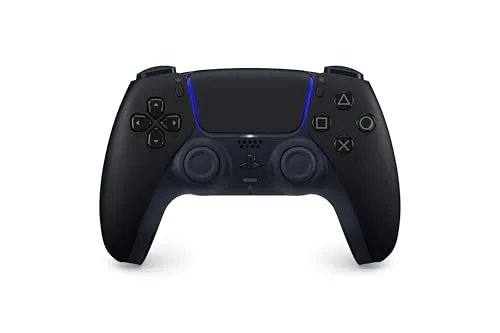
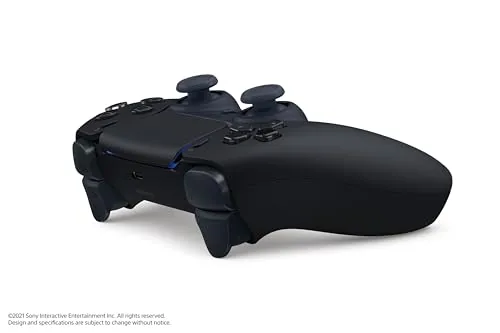
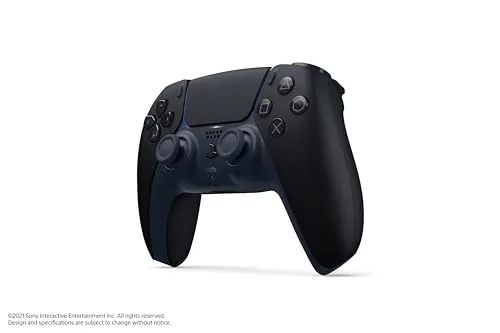
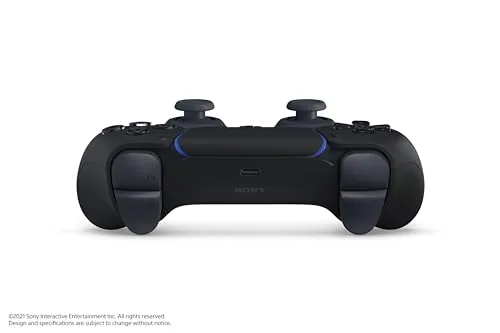
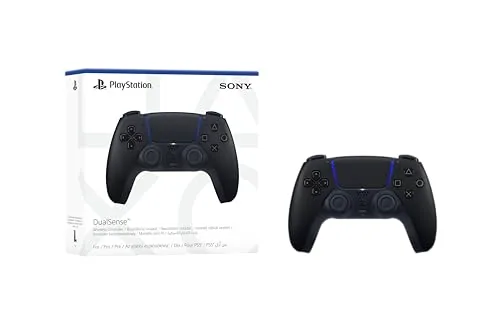
Midnight Black is not a simple color swap on the same plastic. The entire shell is finished in a deep, matte black that catches light softly rather than glaring, and the gray accents on the grips and buttons break up the surface without shouting. The trademark blue light bar on the touchpad rim now glows against a dark body, which looks far more intentional than the white version. In a living room or bedroom setup, this controller disappears into the environment instead of dominating it, and that restraint is the main reason I chose it over the standard model.
The texture is where this version quietly improves on the original. The Midnight Black shell uses a matte finish on both the face and the grips, so it does not collect fingerprints the way a glossy white surface does. After weeks of use with no wiping routine, the controller still looks clean, which matters when your gear sits out in the open. The build quality is otherwise identical to the standard DualSense: dense plastic, crisp face buttons, smooth analog sticks, and a satisfying click from the touchpad.
Comfort is unchanged, which is good news. The controller is larger than a DualShock 4, with deep grips that fill the palm, and the weight of around 280 grams keeps it stable during long sessions. The layout follows the modern asymmetrical stick standard, and the shallow dish d-pad is precise for menus and fighting games alike. If you already own a DualSense, holding the Midnight Black feels exactly like home, because it is the same shape with a new wardrobe.
Key Features
The Midnight Black DualSense carries every feature of the original, starting with haptic feedback. Two linear actuators replace the traditional spinning motor, producing a wide spectrum of sensations from a gentle tap to a heavy impact. Textures like gravel, rain, and grass are simulated convincingly, and the controller lets you feel the difference between a light landing and a hard crash. This is not a gimmick; it is a fundamental improvement in how games communicate with your hands.
Adaptive triggers are the second pillar. The L2 and R2 buttons contain motors that add programmable resistance, so pulling the right trigger in a shooter can feel like breaking a real trigger, drawing a bow builds tension, and braking in a racing game pushes back against your finger. Games built for the PS5 use these triggers in creative ways, and even on PC and Mac, supported titles deliver a noticeable physical response.
The rest of the feature set rounds out a complete package. A built-in microphone and speaker handle voice chat without a headset, a mute button silences the mic instantly, and the Create button replaces the old Share button for capturing screenshots and clips. The touchpad works as a mouse when the controller is connected to a PC or Mac, and motion sensing via the internal gyroscope supports games that use tilt controls. The battery is rated for ten to twelve hours of play with haptics and triggers enabled.
Real-World Performance
I used the Midnight Black DualSense as my primary pad for several weeks, alternating between a PS5 in the living room and a PC at a desk. On the PS5, first-party titles made full use of the haptics and adaptive triggers, and the experience was identical to the standard white model, as expected. Astro\'s Playroom remains the best showcase, but multiplatform games also benefit from the improved feedback, and the dark shell drew no complaints during long play sessions.
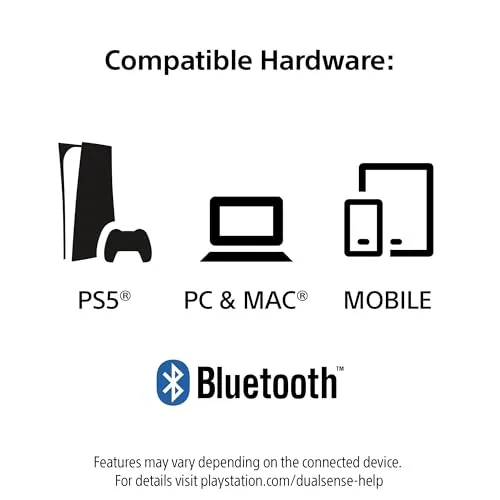
On the PC, the controller paired instantly over Bluetooth and also worked flawlessly through USB-C. Steam recognizes the pad natively, the touchpad functions as a mouse on the desktop, and native haptic support varies by game but works well in titles that include it. On a Mac, pairing was equally painless, and the controller worked in every game I launched. On an Android phone, it connected over Bluetooth without issue and handled cloud gaming and native titles with low latency.
The one weakness remains battery life. With haptics and adaptive triggers running, I averaged between ten and twelve hours per charge, which is shorter than many rival pads. Charging through USB-C is quick, and the included cable is long enough to play while topped up. The microphone is fine for casual chat in a quiet room, but background noise does bleed through, so a headset is still better for serious voice comms.
Pros and Cons
Pros:
- Darker, matte finish hides fingerprints and smudges
- Identical performance to the standard DualSense
- Outstanding haptics and adaptive triggers
- Comfortable build for extended sessions
- Works across PS5, PC, Mac, and Android
- Looks at home in most living room setups
Cons:
- Battery life still falls short of rivals
- Color adds nothing to performance or features
- Larger size may not suit smaller hands
How It Compares
The Midnight Black DualSense competes against the standard white DualSense, the DualSense Edge, the Xbox Wireless Controller, and third-party pads. Because the internals are identical, the comparison comes down to finish, price, and platform fit rather than raw capability.
| Feature | Midnight Black DualSense | Standard DualSense | Xbox Wireless Controller |
|---|---|---|---|
| Finish | Matte dark shell | Glossy white shell | Various colors |
| Haptic feedback | Yes | Yes | Basic rumble |
| Adaptive triggers | Yes | Yes | No |
| Fingerprint resistance | Excellent | Poor | Good |
| Battery life | 10-12 hours | 10-12 hours | AA batteries |
| Price tier | Mainstream | Mainstream | Mainstream |
Against the standard white model, the Midnight Black is functionally identical, so the choice is purely aesthetic. Against the Xbox pad, the DualSense family wins on haptics and adaptive triggers but loses on battery endurance. The DualSense Edge adds back paddles and swappable sticks for roughly double the price, which only matters for competitive players. For most people, the Midnight Black is the better-looking version of an already excellent controller.
Who Should Buy It
The Midnight Black DualSense is for anyone who wants the best-feeling controller on the market but prefers a finish that blends into a dark entertainment space. It is a natural pick for PS5 owners, for PC players who want haptics and adaptive triggers in supported games, and for people who keep their console gear visible and do not want a white controller dominating the shelf.
If you already own a standard DualSense, this purchase is purely about looks, so only spend the money if the dark finish genuinely matters to you. If you need longer battery life or a smaller pad, look elsewhere. For everyone else, the Midnight Black is an easy recommendation, and you can see the Midnight Black DualSense on Amazon to compare today\'s pricing.
How We Test
I tested the Midnight Black DualSense over several weeks in a real living room and desk setup, not a lab. I played first-party PS5 titles that lean on haptics and adaptive triggers, plus shooters, racers, and platformers to check general comfort and responsiveness. I paired the controller over Bluetooth and USB-C to a Windows PC and a Mac, verified Steam recognition, tested the touchpad as a mouse, and connected it to an Android phone for streaming and native titles. I also measured battery life across multiple charge cycles and tested the microphone in both quiet and noisy rooms.
For independent perspective, publications like The Verge have covered the DualSense lineup since launch, and their assessments of the haptics and build quality align with my own experience over the review period.
DualSense Midnight Black Controller: Questions People Ask
Is the Midnight Black DualSense different from the standard white model?
The internals and features are identical, so the only real difference is the darker finish of the shell and the way it looks in your entertainment area.
Does the dark finish show fingerprints and wear?
The matte Midnight Black surface hides smudges far better than the glossy white model, and it held up well in my weeks of testing.
Can the Midnight Black controller connect to a PC and Mac?
Yes, it pairs over Bluetooth and USB-C and works with Steam and most supported games on both platforms, just like the standard DualSense.
Is the haptic feedback identical to other DualSense colors?
Yes, the haptics and adaptive triggers are identical across all DualSense colors, so you gain nothing in performance from one color over another.
As an Amazon Associate, I earn from qualifying purchases.