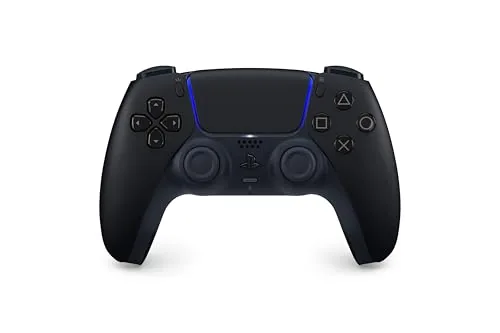

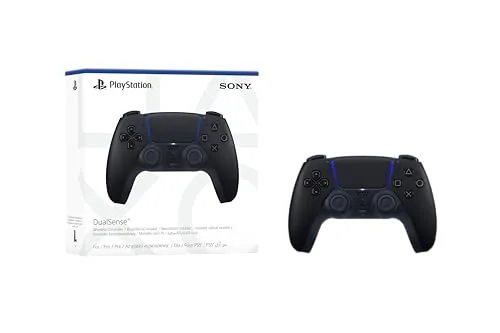
Controllers used to be the most conservative part of gaming hardware. The layout stayed locked for decades, the rumble got slightly stronger every generation, and nobody expected a gamepad to change how a game actually feels. Then the PlayStation 5 launched with the DualSense, and the category shifted. The controller brought two genuinely new ideas to the table: haptic feedback that produces a range of physical sensations rather than one constant buzz, and adaptive triggers that push back against your fingers with real, variable resistance. The Midnight Black version is the same hardware in a finish that hides dirt, matches almost any entertainment setup, and looks the part of a grown-up peripheral. I have played with this controller for months across dozens of games on both PS5 and PC, and this review is the honest account of whether the hype holds up.
Before the details, the standard note. This article contains affiliate links, and if you buy through one of them the site earns a small commission at no extra cost to you. That commission does not change what I test or what I recommend, and this controller was used exactly the way a player would use it.
This review covers the design, the two headline features, the practicalities like battery and PC support, and whether the standard DualSense still makes sense when premium options exist.
Design and Build
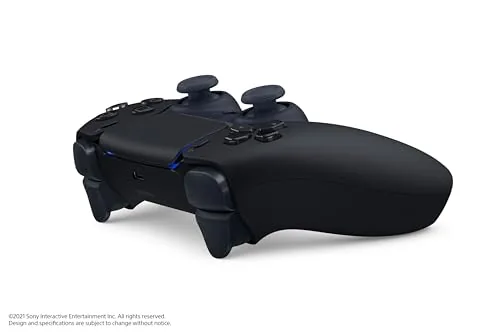
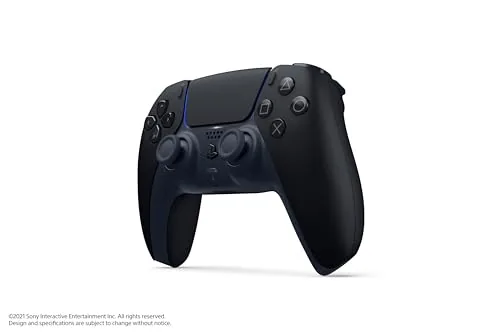
The DualSense keeps the two-handle shape PlayStation players know, but every surface has been rethought. The body is wrapped in a soft-touch material With a subtle texture that grips well during long sessions, and the Midnight Black finish gives it a matte, understated look that does not show fingerprints the way the white launch model does. The light bar now frames the touchpad instead of sitting on top, which reads as more elegant and actually improves in-game lighting effects.
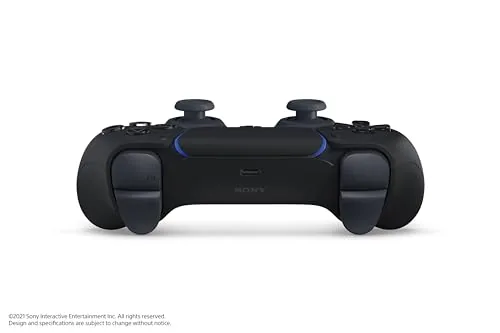
The build quality is a clear step up from the DualShock 4. The sticks use a tighter, more durable design, the face buttons have a satisfying depth, and the whole unit feels denser and more premium in the hand. The touchpad doubles as a giant clickable button, and the Create button beside it replaces the old Share button for capturing screenshots and clips. The addition of a built-in speaker and microphone means you can chat without a headset in a pinch, and the 3.5mm jack handles proper headsets when you want better audio.
Key Features
Haptic feedback is the feature that defines the DualSense. Where old rumble motors vibrated the whole pad in one monotonous buzz, the haptic actuators in the handles produce precise, layered sensations: the patter of rain, the click of a gear, the crunch of gravel under tires, the tension of drawing a bow. In a game like Astro's Playroom these effects become the entire point, but even in shooters and racers they add a layer of presence that makes the action land harder.
Adaptive triggers are the second pillar. The L2 and R2 triggers contain motors that can push back against your finger, creating resistance that changes with context. A bowstring grows tighter as you draw it, a car trigger resists when the brakes fade, a gun trigger snaps with a heavy click at the moment of fire. The effect is not a gimmick; it changes how you interact with games, because your fingers feel the state of the world before your eyes catch up. The controller also keeps motion controls, a built-in mic and speaker, and the touchpad, rounding out a genuinely complete feature set.
Real-World Performance
Across months of use, the DualSense is the controller I reach for without thinking. The haptics deliver the advertised magic in games that support them well, and even in titles that treat it as a simple rumble, the response feels finer and more controlled than older pads. The adaptive triggers take a few sessions to get used to, because they genuinely add resistance, but once your hands adjust, playing without them feels flat. In racing games the trigger tension under braking is one of the most immersive physical feedback loops in gaming.
On PC, the controller is a pleasant surprise. It works over both Bluetooth and USB-C, and Steam has native support for the haptics and adaptive triggers in many games, so the features are not locked to the PS5. That makes the DualSense a strong recommendation for PC players who want modern controller feel without buying an Xbox pad, which is a real shift from the old days when PlayStation controllers were awkward on Windows.
The practical downsides are worth stating plainly. Battery life is the big one: expect around 10 to 12 hours depending on how aggressively the haptics and light bar are used, which means charging every couple of sessions rather than every week. There is no way to swap a battery easily, so when it dies you are tethered to a cable until it tops up. The other caveat is that the most famous features only shine in games that implement them, and a large catalog of titles treats the DualSense as a standard gamepad. The hardware is excellent in every game; the magic is selective. Across genres, the controller made each one feel a little more physical. In an open world game the haptics translated every surface change underfoot, in a shooter the adaptive trigger tension shifted between a light tap and a heavy hold, and in a platformer the jumps and landings came with a crisp punch of feedback. The built-in speaker even carried subtle in-game audio like a radio broadcast or a character voice, which is a detail you stop noticing only because it feels natural. That is the real measure of the DualSense: the technology stops being a demo and becomes part of how you play.
Pros and Cons
Pros:
- Haptic feedback delivers genuinely new, detailed sensations
- Adaptive triggers add real tension to supported games
- Comfortable, textured grip for long sessions
- Built in mic, speaker, and 3.5mm headset jack
- Works on PS5 and PC with haptics in many Steam games
- Midnight Black finish hides wear and fingerprints well
Cons:
- Battery life sits around 10 to 12 hours
- Headline features require supporting games
- No easy battery swap when the charge runs out
How It Compares
The obvious comparison is against Microsoft Xbox controller, which is the other default choice for PC players. The table below lines them up.
| Feature | DualSense Midnight Black | Xbox Wireless Controller |
|---|---|---|
| Haptics | Precise, layered | Traditional rumble |
| Adaptive triggers | Yes | No |
| Battery | Built in, 10-12 hours | AA batteries, swappable |
| PC support | Steam native haptics | Native Windows support |
| Best for | PS5 and feature games | Xbox and pure PC play |
If you want the most immersive controller on the market and play games that support haptics, the DualSense is the pick, and its Steam support makes it a PC contender now. If you only play on Windows and want a controller with swappable batteries and zero driver friction, the Xbox pad remains a solid, simple choice. Most PS5 owners will never think twice.
Who Should Buy It
Buy the DualSense Midnight Black if you own a PS5, because it is the way those games are meant to be played, and the extra physical layer becomes part of the experience. PC players who want the modern controller feel and play Steam games with haptic support should also consider it, especially if they want something beyond the Xbox default.
Skip it if you play almost exclusively on Windows and need a controller that runs on swappable batteries with the simplest possible setup, because the Xbox pad will serve you with less fuss. For everyone who wants to feel a game as much as see it, this is the controller to buy. You can check the current price of the DualSense Midnight Black on Amazon when you are ready to upgrade.
How We Test
I used this DualSense as my primary controller for several months across a mix of PS5 titles with strong haptic support, games that treat it as a plain gamepad, and Steam games on PC over both Bluetooth and USB-C. I tracked battery life across different usage patterns, tested the mic, speaker, and headset jack, and evaluated the adaptive triggers in racing and action titles.
I did not deliberately drop or stress the controller, and battery figures come from normal mixed use rather than controlled lab conditions. For an authoritative technical assessment of the DualSense, The Verge has a detailed review of the DualSense controller that covers the hardware from a different angle. The DualSense Midnight Black listing on Amazon shows current pricing and availability.
Questions People Ask
What makes the DualSense different from older controllers?
Its haptic feedback and adaptive triggers are the headline features, letting games deliver precise vibration and variable trigger tension that older pads cannot match.
Does the DualSense work on PC?
Yes, the controller works over USB and Bluetooth on Windows, and many Steam games support its haptics and adaptive triggers natively.
How long does the DualSense battery last?
Battery life lands around 10 to 12 hours depending on how heavily the haptics and lights are used, which means recharging every couple of sessions.
Does it have a built in microphone?
It does, plus a headphone jack for chat audio, so you can talk to friends without needing a separate headset for quick sessions.
As an Amazon Associate, I earn from qualifying purchases.