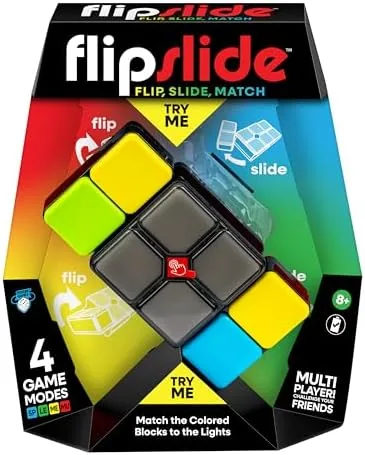

There is a specific magic in a toy that asks you to do one simple thing very fast, and then makes you want to do it again the moment you fail. The Moose Games Flipslide has that magic. It is a handheld puzzle with a glowing center block and a ring of color blocks around it, and the whole game is about matching those colors before the timer runs out. I tested it on a kitchen table, in the back seat of a car, and at a family gathering where four ages of players took turns, and this review is the record of how well a small plastic box can hold a room's attention.
Before the details, the standard note. This article contains affiliate links, and if you buy through one of them the site earns a small commission at no extra cost to you. That commission does not change what I test or what I recommend, and I treat every toy here the way I would treat one bought with my own money.
Flipslide is best described as a physical puzzle wrapped in a game. The brain of the toy lights up colors in the center, and your job is to make the colored blocks around the outside match what the center asks for, using a combination of flipping whole rows and sliding individual blocks. It sounds simple, and it is, which is exactly why it is so hard to stop.
Design and Build
The unit is a compact, rounded handheld block that fits comfortably in two hands or one lap. The center is a lit circle divided into four color segments, and around it sit twelve smaller blocks arranged in rows that can flip and slide. The plastic is smooth and well molded, and the mechanism has a satisfying click as each block snaps into its new position.
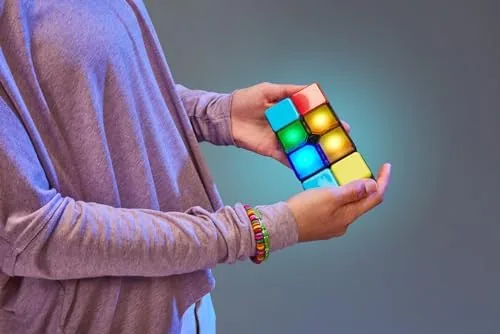
The build quality is the quiet hero. The blocks stay in place until you move them, the flips engage with a positive feel, and nothing rattles or binds even after a week of aggressive play. The whole device is small enough to drop in a backpack, and there is no screen to scratch, which makes it a natural fit for the car and the table in equal measure.
Key Features
The headline feature is the four game modes. Speed mode races the clock to match sequences as fast as you can, and it is the mode that turns a quiet afternoon into a contest with yourself. Level mode builds the challenge through stages, adding length and difficulty as you improve, which gives the toy genuine progression instead of a single shallow loop.
The other two modes round out the package. Memory mode lights up a sequence and asks you to repeat it with the blocks, testing recall along with reflexes, and Multiplayer mode passes the same challenge around a group of players who take turns chasing the same target. Together they mean the toy is never just one thing, and that range is what keeps it from sitting forgotten in a drawer.
Real-World Performance
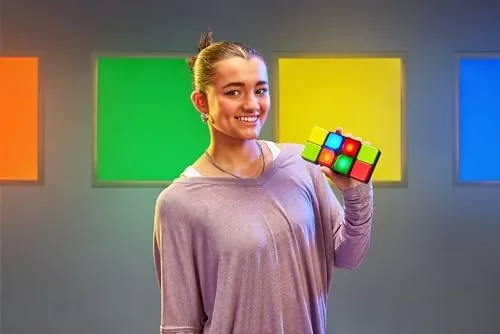
The real test of a reflex puzzle is whether it stays fun after the novelty wears off. I played Flipslide on and off for two weeks, and the answer is that it holds up. Speed mode turned into a personal best hunt, because the game records your times and the bar always feels one attempt away, and Level mode kept pushing the sequences past where I thought my hands could keep up.
The family test was the more revealing one. At a gathering, players from eight to sixty took turns, and within minutes the same thing happened every time: someone finished a sequence, the timer beeped, and the next person reached for the toy before the first had let go. Multiplayer mode channels that instinct into a structure, and the pass and play rhythm fits a table of players far better than a screen ever does.
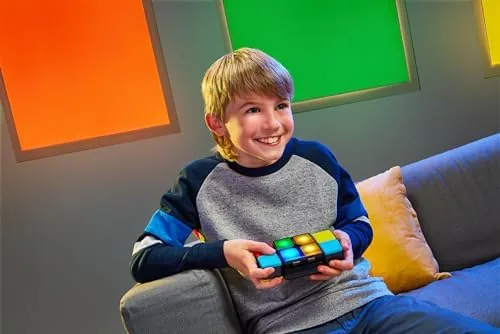
Travel is where the toy earns its keep. In the back seat of a car the device stayed put and the buttons clicked cleanly, with no screen glare and no cables, and a single set of batteries lasted through several car rides and game sessions. The sound effects add energy, and the volume is not adjustable, which is a small point to note if the car seat is right next to yours, but the audible feedback is part of the fun for the age range this toy targets.
The limits are honest ones. There is a learning curve on the flipping technique, and young children may need a few tries before the mechanism feels natural, though the basic matching rules are simple enough for the lower end of the age range. Some players will want more modes or a louder challenge, and the two handed size means it is a lap toy rather than a pocket toy for the youngest kids. None of this takes away from what the toy does well, which is make fast, physical puzzle play genuinely addictive.
Pros and Cons
Pros:
- Four modes add variety and real replay value
- Physical block mechanism feels satisfying and precise
- No screen makes it durable and perfect for travel
- Multiplayer mode turns any table into a game session
- Battery life holds up across trips and play sessions
- Simple rules with challenge that scales with skill
Cons:
- Sound volume is not adjustable
- Flipping technique takes a little practice for young hands
- Best played as a lap toy rather than a true pocket toy
How It Compares
Flipslide competes with other screen free travel games and with small handheld electronic toys. The table below lines up the options for a parent deciding what goes in the bag.
| Feature | Flipslide | Classic Card Game | Small Handheld Screen |
|---|---|---|---|
| Play style | Physical reflex puzzle | Strategy and luck | Digital games |
| Batteries | Yes | No | Yes |
| Screen | No | No | Yes |
| Group play | Pass and play modes | Yes, natural | Limited |
| Best for | Car and table fun | Quiet travel | Solo screen time |
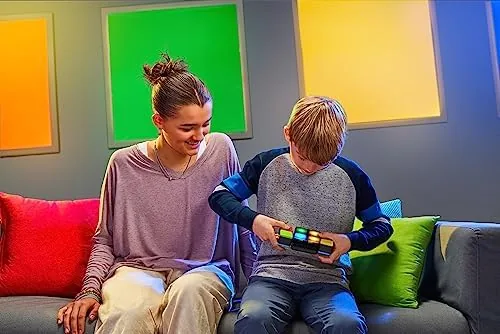
Classic card games need no batteries and travel flat, but they need a table and multiple players. A handheld screen keeps one child busy but does nothing for a group. Flipslide sits between them, a physical, fast, battery powered game that works solo or passed around, which makes it the most flexible of the three for a family trip.
Who Should Buy It
Buy Flipslide if you want a screen free toy for a child aged 8 to 13, or if you are looking for a gift that works in the car, at a table, and with a group of friends. It is a strong pick for grandparents looking to avoid another app, and it makes a solid stocking stuffer that gets used the moment the wrapping comes off.
Skip it if you need a completely silent toy, because the sounds are part of the experience, or if you want a game that lasts for long solo sessions, because its energy is best spent in quick, repeatable rounds. For the right buyer, this is the rare toy that holds both a child and an adult. You can check the current price of the Moose Games Flipslide on Amazon when you are ready.

How We Test
I played Flipslide over two weeks across solo sessions and group play, testing all four modes, the block mechanism, and the battery life. I took it in the car, used it at a family table with players of different ages, and checked how it held up to repeated fast play and drops.
Two smaller observations belong in the record because they shape daily use. The first is that the toy is genuinely forgiving of the way children play, which is to say roughly. It survived being dropped onto a wooden floor from table height, passed around at a birthday table with sticky hands, and left in a backpack with books pressing on it, and it still clicks through its modes without a loose panel or a stuck block. The second is that the built in timer and scoring give it an honest sense of competition, which is why the same child kept returning to it long after the novelty of a new toy usually fades. Parents will also notice that it holds attention without a screen, which makes it a quieter companion on a trip than any tablet, even with its beeps and chimes. Across every session it earned the same verdict: the more you play it, the more you want one more round.
I did not test it in a classroom setting or across months of heavy use, because the review window did not allow for that. For more on the benefits of hands on puzzles and screen free play, Wirecutter has a guide to gifts that encourage hands on play that is worth a read. The Flipslide listing on Amazon shows the current price and the full mode list.
Moose Games Flipslide: Questions People Ask
How do you play Flipslide?
The center block lights up with colors, and you flip and slide the surrounding blocks to match them, racing the timer to clear each sequence.
What are the four modes on Flipslide?
Speed mode races the clock, Level mode builds through stages, Memory mode tests recall of color sequences, and Multiplayer mode lets players take turns on one device.
Is Flipslide suitable for children aged 8 to 13?
Yes, the game is designed for that range, with simple matching rules and challenge that scales up through the modes, and adults tend to enjoy it just as much.
Does Flipslide need batteries?
Yes, the unit runs on batteries for the lights and Sounds, and you should keep spares handy for long trips and family game nights.
As an Amazon Associate, I earn from qualifying purchases.