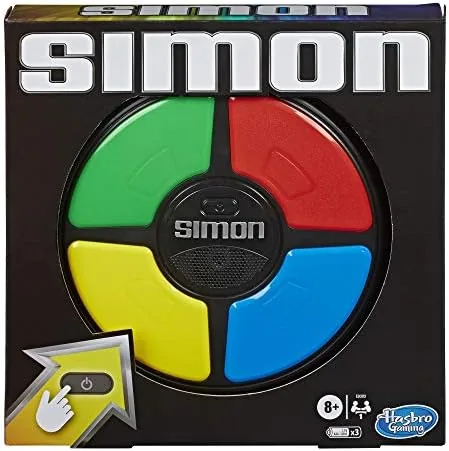

There are few toys that bridge generations the way Simon does. The original machine arrived in the late seventies, and the premise is so simple that a child can grasp it in seconds: a disc of colored panels lights up in a sequence, plays a tone for each color, and challenges you to repeat the pattern from memory. Hasbro keeps that formula alive with the Simon Handheld Electronic Memory Game, and I spent a week with one at a table full of kids, grandparents, and the occasional sibling who was convinced they could beat the machine. This review covers how it plays, how it feels, and whether it still earns a place in a modern toy box.
Before the details, the standard note. This article contains affiliate links, and if you buy through one of them the site earns a small commission at no extra cost to you. That commission never changes what I test or what I recommend, and the game reviewed here was played the way any family would play it.
Simon is a game of escalating pressure wrapped in a friendly shell. The machine never rushes you into a wrong press, but it does expect you to keep up, and the difficulty curve is where the real fun lives. The rest of this review walks through the design, the features, the performance in a real living room, and the comparisons that help you decide if it is the right memory game for your household.
Design and Build
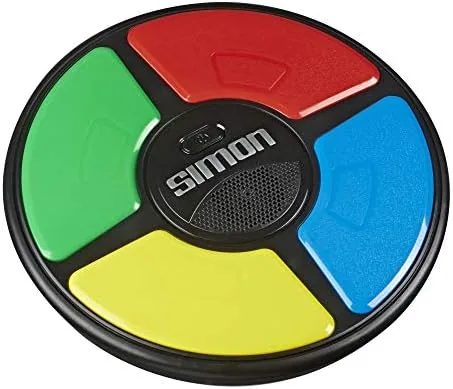
The current Simon keeps the unmistakable round silhouette, four large colored panels arranged in a circle with a central speaker grille. The panels are firm and responsive, and each press produces a satisfying click that gives you physical confirmation the input registered. The body feels solid in the hand, with a weight that suggests it can survive a drop onto carpet or a scuffle between siblings, and the curved edges sit comfortably when you grip it for a long session.
Hasbro scaled the unit down to handheld size, which changes how you play. The earlier tabletop versions demanded a steady surface, while this one works in a lap, on a tray, or on the back seat of a car. The button layout is unchanged from the original, and the familiar arrangement means anyone who played Simon decades ago will feel at home immediately. The finish is smooth plastic with a slight sheen, and the four pads are color coded in the classic green, red, yellow, and blue that the original popularized.
Key Features
The core feature is the memory sequence itself. Simon starts with a single light and tone, waits for you to press the matching panel, then adds one step to the sequence each round. Your job is to reproduce the entire chain in order, and the machine tracks your progress as the pattern grows longer and faster. It is a pure test of working memory, and the feedback loop is immediate: the game hums when you press correctly and makes it obvious when you press wrong.
There are four play modes worth knowing. The first is the classic solo game against the machine, which is where most people start. The second lets two players compete by passing the unit back and forth, each trying to repeat a longer sequence than the last player. The third is a memory challenge with fewer hints, and the fourth lets you experiment with the sounds and light patterns. Each mode keeps the same core loop, but they stretch the game in different directions, which matters when one player has already mastered the standard mode.
Real-World Performance
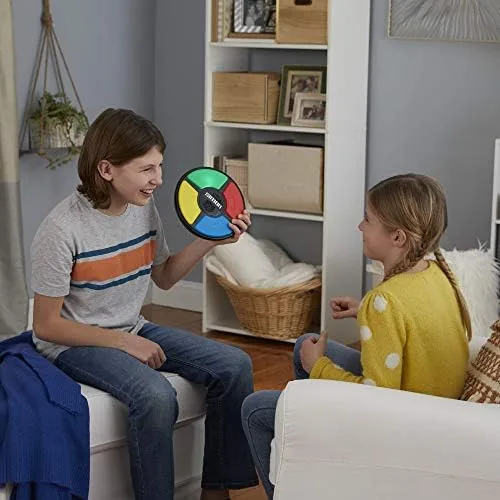
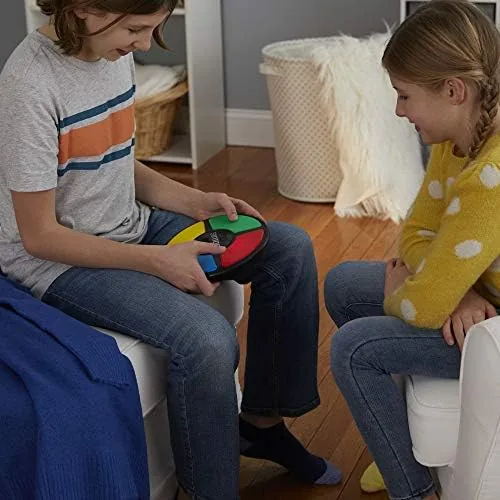
The real test of Simon is whether it holds attention past the first ten minutes, and it passed that test easily. Kids aged eight and up picked up the rules instantly, and within a few rounds they were talking through strategies, pointing at the panels, and building the sequence together before pressing anything. The tones are clear and distinct, and the lights are bright enough to read in daylight, which matters because the visual cue and the audio cue together are what make the sequence learnable.
I played the game against a steady stream of challengers, and the difficulty ramp is where the design shines. The early rounds are easy enough to build confidence, but by round ten the sequence demands genuine focus, and by round fifteen even the most confident player in the room was leaning forward and muttering the colors under their breath. That is the magic of the design: a game that looks trivial but quietly asks you to be fully present.
Two player mode produced the loudest reactions. Passing the unit between turns turns the game into a contest of nerves, because the loser is the one who breaks the chain first. In a family setting that translated into rounds of dramatic groans and cheerful rematches, which is exactly the energy a party game should generate. The Handheld form factor helped here, because the unit could be passed across a table without anyone standing up or rearranging furniture.
The limits are honest ones. The game runs on batteries, and the internal speaker is decent for a toy but not room filling, so a loud household may want to play in a quieter corner. The plastic panels are glossy and pick up fingerprints quickly, and while the build is durable it does not feel like a premium gadget. Simon is also fundamentally a solo or small group game, so it will not replace a board game night for eight people, but that is not the job it sets out to do.
One detail earned respect over the week. The sequence logic never cheats. When the game increments, the added step is always fair, and the unit never misreads a clean press. That reliability is the quiet feature that keeps frustration away, because the only thing that ends a round is your own memory, not a faulty sensor.
Pros and Cons
Pros:
- Classic gameplay that works for a wide range of ages
- Handheld size makes it easy to play anywhere
- Multiple modes add variety beyond the standard game
- Responsive panels with clear audio and visual feedback
- Durable build that survives casual drops
- Simple enough for eight year olds, deep enough for adults
Cons:
- Runs on batteries rather than a rechargeable cell
- Speaker volume is moderate for noisy rooms
- Glossy panels collect fingerprints quickly
- Limited to small groups of players at once
How It Compares
The modern market offers several memory games, and the main alternatives are the original Simon, the compact Simon Micro series, and app based clones. The table below lines up the options.
| Feature | Hasbro Simon | Simon Micro | Phone App Clones |
|---|---|---|---|
| Form factor | Handheld disc | Pocket keychain size | On your phone screen |
| Physical feedback | Clicking panels | Smaller buttons | Screen only |
| Play modes | Four built in modes | Simplified rounds | Depends on the app |
| Age range | 8 and up | 8 and up | All ages |
| Durability | Hard plastic body | Compact and rugged | Dependent on your phone |
| Offline play | Yes | Yes | Mostly yes |
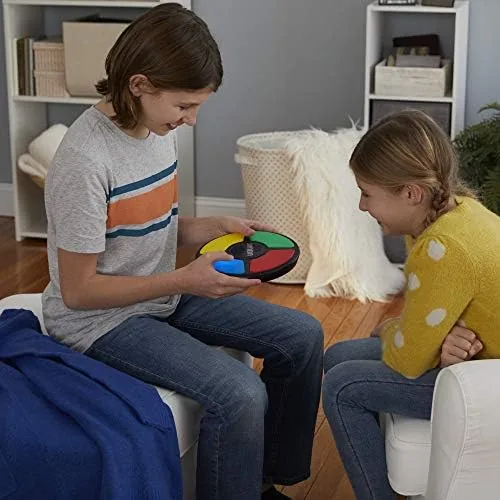
For families, the full size Simon wins because the larger panels and the physical click are easier for small hands than a phone screen. The Micro version is the right call if you want a game that disappears into a pocket, while apps are free but rarely match the tactile satisfaction of pressing a real panel. For the classic experience with room to grow, the full size Simon is the strongest all around choice.
Who Should Buy It
Buy the Hasbro Simon if you want a family activity that works without screens, if you have kids in the eight and up range, or if you remember the original fondly and want a reliable version of it for the next generation. It is also a strong pick for road trips, where the compact size and self contained gameplay fill the gaps between stops, and for anyone who wants a quick brain warm up at a desk.
Skip it if you need a deep strategy game, because Simon is a reflex and memory challenge rather than a long form board game. If the appeal of a tactile memory game sounds right, you can check the current price of the Hasbro Simon game on Amazon and see the exact color options available.
How We Test
I tested the Simon game over one week with a group that ranged from an eight year old first timer to adults who remembered the original console version. I ran the standard mode repeatedly to track the difficulty curve, played two player rounds to judge how the game handles passing, and left the unit switched on over several sessions to confirm the tone and light reliability held up.
I did not drop the unit on hard flooring on purpose, and I did not test every possible sequence length to the machine limit. For a deeper look at how memory games support child development, Understood explains working memory and how games train it. The Hasbro Simon listing on Amazon shows the current price and the box contents in detail.
Hasbro Simon Memory Game: Questions People Ask
How does the Simon game work?
Simon lights up a sequence of colored buttons with matching tones, and you repeat that sequence in order. Each round adds another step, and the game ends when you press the wrong button.
What ages is the Simon Handheld Game for?
Hasbro recommends the game for kids ages 8 and up, but the adjustable difficulty means younger players can join a slow paced game while adults push the fast rounds.
Does the Simon game need batteries?
Yes, the handheld unit runs on batteries, so check the battery requirement on the product page before you begin a long session away from home.
Is Simon a good game for travel?
The compact handheld size and self contained lights and sounds make it an easy pick for road trips, waiting rooms, and family gatherings.
As an Amazon Associate, I earn from qualifying purchases.