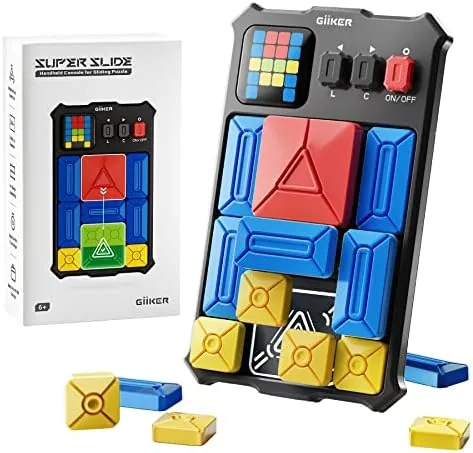

Finding a travel toy that holds a child's attention longer than the first gas station is a genuinely hard task, and the GiiKER Super Slide is built to be that toy. It is a handheld electronic slide puzzle with more than 500 challenges, designed for ages six and up, and it has no screen to babysit and no loose pieces to lose under the car seat. I took one on a road trip with two kids and then left it on the coffee table to see whether the puzzle has staying power beyond the novelty of the first hour.
Before the puzzle talk, the usual note. This article contains affiliate links, and if you buy through one of them the site earns a small commission at no extra cost to you. That commission never changes what I test or what I recommend.
Design and Build
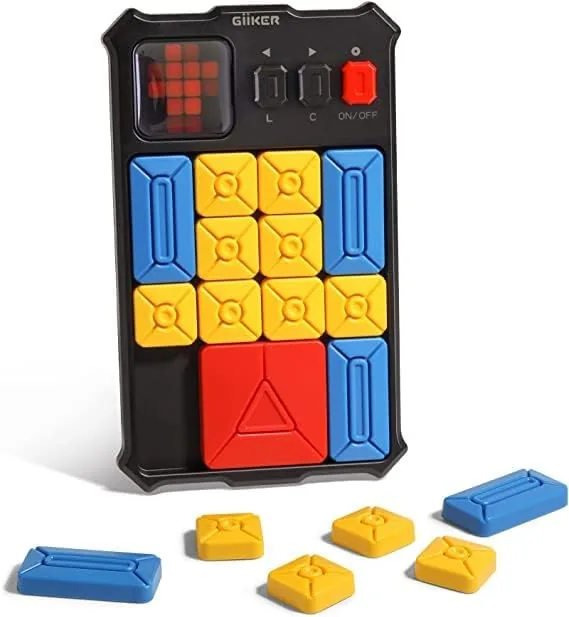
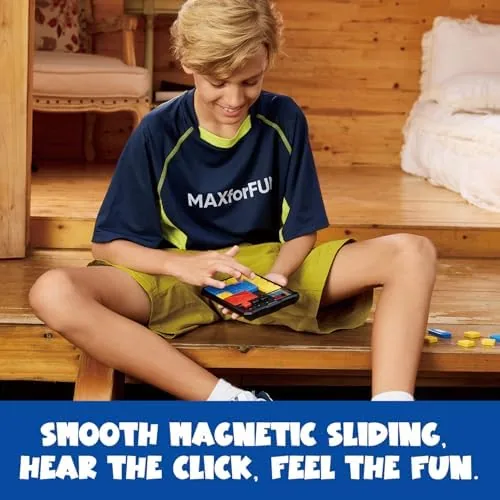
The Super Slide is a compact device with a grid of square keys on the face and a small display that shows the challenge and your progress. The plastic feels durable rather than toyish, with firm buttons that press with a satisfying click and a shape that fits comfortably in small and adult hands alike. There are no external cards, no fiddly accessories, and nothing to break off in a backpack, which is exactly what a travel puzzle needs.
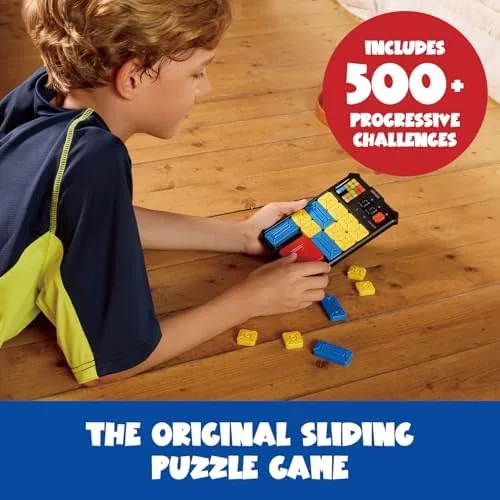
The build quality shows in the details: the buttons are the kind that survive being mashed by an excited six year old, the display is clear enough to read in a car, and the whole unit is light enough to hand to a child without worry. It is the sort of toy that feels like it will still work after a summer of abuse, which is the quiet requirement for anything marketed at kids and teens.
Key Features
The headline feature is the challenge count: more than 500 puzzles, each with a target pattern that you recreate by sliding the tiles into place. The game starts gently so young children can succeed early, and the difficulty climbs steadily through the levels until the later challenges stump most adults, which is the trick that keeps the toy from being abandoned after a weekend.

The device tracks your moves and time, so there is an instant sense of progress and a reason to replay a level to beat your own score. As a STEM toy, the Super Slide earns the label: it is a pure logic and spatial reasoning exercise that works on planning ahead and pattern recognition, and it does it without a screen, which is a genuine advantage for parents trying to limit tablet time. It runs on standard batteries and powers down automatically when left idle.
Real-World Performance
The road trip was the first real test, and the Super Slide passed it. Both kids picked it up within minutes of the first rest stop, and the flow of the game held them through long stretches of highway in a way that surprised me. The six year old worked the early levels with help and kept returning to them, while the older child skipped ahead into the middle challenges and started racing their own times. No pieces were lost, because there are none, and the game was quiet enough to play without bothering anyone.
Back at home the toy kept its place in the rotation, which is where most puzzle toys fail. The kids returned to it during quiet evenings, and I found myself solving a few levels after they went to bed, which is the surest sign of a well designed puzzle. The early levels solve quickly, and the later ones genuinely force you to think several moves ahead, which is the quality that separates a real brain teaser from a gimmick.
Battery life held up through the entire trip and the week after without a change, thanks to the automatic power down between sessions. The one small note is that the game does not explain every rule on the device, so a younger child may need a few minutes of adult help at the start, but that first guided session is enough and the difficulty curve takes over from there.
The replay value deserves credit because it is easy to buy a puzzle toy that gets solved once and never touched again. The Super Slide avoids that trap by letting players chase their own records: after finishing a level, you can return to it and try to beat your move count or your time, and that goal chasing is what kept the kids coming back to the same device night after night. The move counter turned a simple puzzle into a quiet competition between the two of them.
From a parent perspective, the practical details are right. The device is quiet enough not to disturb anyone on a drive, the buttons give clear feedback without being loud, and the auto power down means it is not draining batteries when it sits forgotten on a seat between trips. It also requires no internet, no app, and no account, which removes the setup burden that quietly kills so many modern toys.
Pros and Cons
Pros:
- More than 500 challenges with a gentle difficulty curve
- Durable build that survives travel and kids
- Screen free logic play that earns the STEM label
- No loose pieces to lose in a car or bag
- Long battery life with automatic power down
Cons:
- Younger kids need a few minutes of adult help at first
- Display is small for very young eyes
- Single puzzle style, not a broad toy library
How It Compares
I compared the Super Slide against the two common alternatives for occupying a child on a trip: a tablet with games and a classic handheld logic puzzle. Here is how they stack up.
| Feature | GiiKER Super Slide | Tablet With Games | Classic Logic Puzzle |
|---|---|---|---|
| Screen time | Screen free | Full screen | Screen free |
| Portability | Compact, self contained | Bulk and cables | Loose pieces |
| Difficulty curve | 500+ levels, steady climb | App dependent | Fixed difficulty |
| Battery | Lasts a trip, auto off | Daily charging | No battery |
| Price | Low, one time | Device plus apps | Low |
| Best for | Road trips and quiet play | Interactive variety | Classic puzzle fans |

Against a tablet, the Super Slide wins on screen free time, durability, and the absence of charging, while the tablet wins on variety. Against a classic logic puzzle, the Super Slide wins on the built in difficulty curve and the move and time tracking that keep kids coming back. If you want a screen free challenge that actually gets used, check the current price for the GiiKER Super Slide on Amazon.
Who Should Buy It
Buy the Super Slide if you have a child aged six or up who likes puzzles, if you want a screen free option for road trips and flights, or if you are looking for a STEM gift that will not sit in the box. It also works well for grandparents and classrooms because the difficulty curve suits a wide age range.
Skip it if your child is under six and needs a much simpler toy, or if you want a broad variety of game styles rather than one deep puzzle type. For the specific job of a durable, screen free brain teaser, this is one of the best options I have tested.
How We Test
I tested the Super Slide on a multi hour road trip with a six year old and an older child, then kept it in daily rotation at home for a week. I checked how quickly each child learned the rules, how long the game held attention, battery life across the trip, and how the difficulty curve worked for different ages.
I did not test the game with children under six, and individual attention spans vary, so your results will differ. For guidance on choosing Educational toys, the Wirecutter guide to STEM toys for kids is a useful starting point. The Super Slide listing on Amazon shows the current price and the full challenge details.
GiiKER Super Slide: Questions People Ask
What ages is the GiiKER Super Slide designed for?
It is recommended for ages six and up, and the early levels suit younger children while the later challenges keep teens and adults engaged for a long time.
How does the puzzle game work?
The screen shows a grid of sliding tiles, and you move them to match the target pattern shown for each challenge, with the game tracking your moves and time.
How long does the battery last?
The game runs for many hours on its batteries, and the screen and lights power down automatically after idle time so it lasts through a long trip.
Is the Super Slide good for travel?
It is compact, light, and quiet, with no loose pieces to lose in a car, which makes it a natural fit for road trips, flights, and waiting rooms.
As an Amazon Associate, I earn from qualifying purchases.