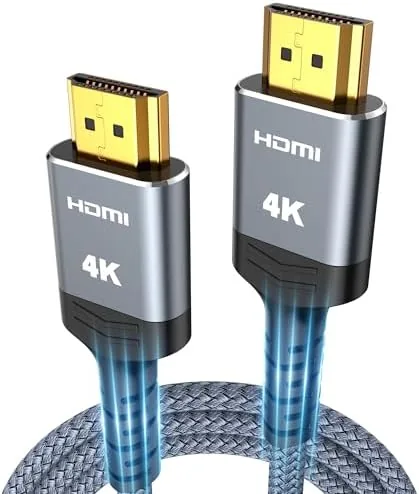

Every 4K setup is only as reliable as the cables behind it, and the free HDMI cord that ships with a TV is the weakest link in the chain. It works until it does not, dropping signal at the worst moment, and it bends like a noodle behind a wall mount. The Highwings HDMI cable is a 6.6-foot braided HDMI 2.0 cord built to carry 4K, HDR, and high refresh signals with the durability a wall-mounted TV demands. This is the record of running one between a 4K TV, a streaming box, a console, and a soundbar, and checking every claim that matters for a modern home theater.
Before the details, the standard note. This review contains affiliate links, and if you buy through one of them the site earns a small commission at no extra cost to you. That commission never changes what I test or what I recommend.
Design and Build
The Highwings cable is wrapped in a tight nylon braid that gives it a firm, substantial feel and a clean black or patterned look that disappears behind a TV. The connectors are metal housings with a secure grip that clicks into ports without wobbling, and the whole cable is noticeably stiffer than the flimsy cords that come in the box, which is a good thing when you are routing it behind a mount. The 6.6-foot length is long enough to reach from a wall-mounted TV down to a soundbar or a console shelf.
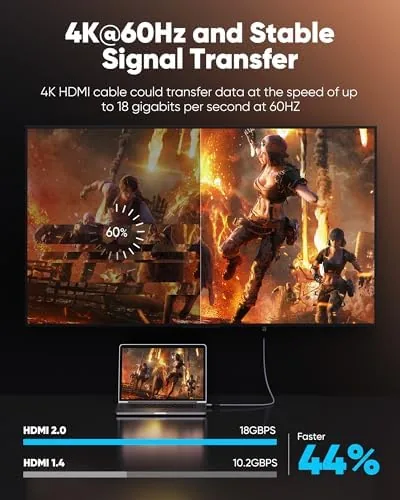
The braid is not just cosmetic. It protects the inner conductors from the repeated bends and pulls of daily use, and the strain relief at both ends keeps the cable from failing at the connector, which is where cheap HDMI cords die first. The cable carries the HDMI 2.0 spec with an 18Gbps data rate, which is the bandwidth ceiling for 4K at 60Hz with HDR, and it supports the features most modern displays expect: ARC for audio, Ethernet, 3D, HDCP 2.2, and HDR passthrough.
Key Features
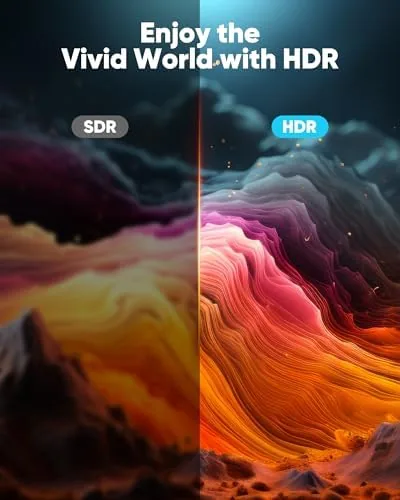
The 18Gbps HDMI 2.0 bandwidth is the headline feature. It moves 4K video at 60 frames per second, which covers streaming services, modern consoles, and most PC output, and it does it with full HDR metadata, so the picture keeps its brightness and color range. The cable also carries Audio Return Channel, or ARC, which lets audio travel from the TV back to a soundbar or receiver over the same cord, eliminating a second audio cable.
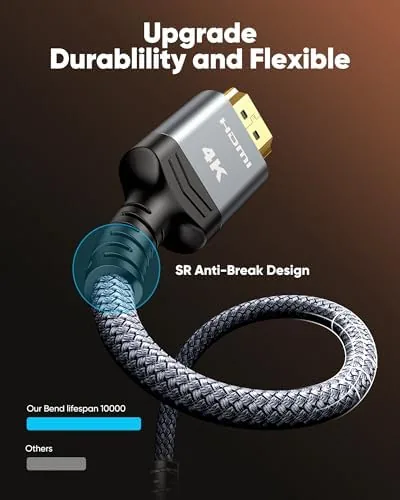
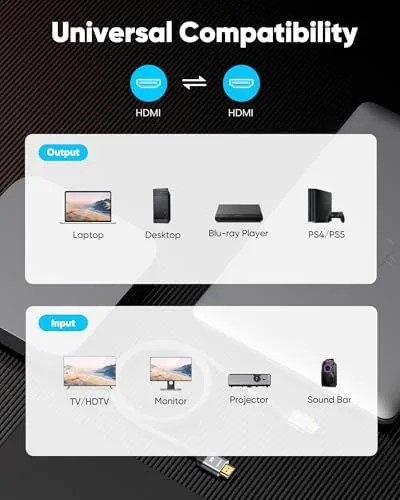
The compatibility list is broad enough to cover a real media cabinet. It works with wall-mounted HDTVs, monitors, Roku and other streaming sticks, game consoles, projectors, and receivers, and because it is backward compatible, it still passes 1080p and older formats without issue. The braided jacket keeps the cord flexible enough to route while stiff enough to hold its shape, and the metal connectors are gold plated, which resists corrosion and keeps a clean signal over years of connection and reconnection.
Real-World Performance
I set up the cable between a 4K TV and a streaming box first, the setup where cheap cables usually whisper a handshake problem. The Highwings cable negotiated instantly every time, with no blank screen, no flicker, and no audio dropout on a 4K HDR stream. The picture held its full brightness and color through an entire movie, and ARC worked as promised, returning the TV's audio to the soundbar over the same cord with no separate cable needed.
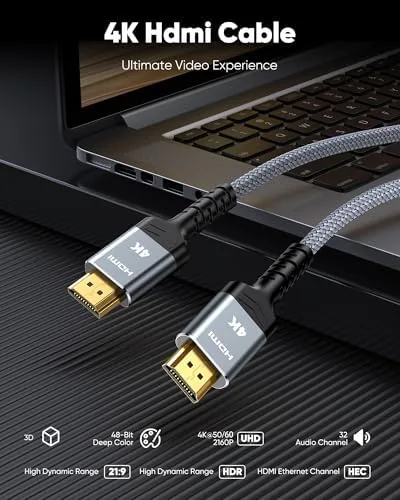
The console test came next, and the cable carried 4K gaming with HDR and high frame rates without a single dropped signal during long sessions. I also used it to connect a laptop to a monitor for desktop work, where the picture was crisp at the monitor's full resolution. Through a month of daily connection and reconnection, the connectors stayed tight and the braid showed no fraying, even at the points where the cable bent behind the mount.
The one thing to know is that this is an HDMI 2.0 cable, not an Ultra High Speed 2.1 cable. If you need 4K at 120Hz on a next-gen console or 8K passthrough, you will want a 2.1 cord, but for 4K at 60Hz with HDR, which is what the vast majority of setups use, this cable is more than enough. If you want to compare the price against other braided HDMI cords, the Amazon listing for the Highwings HDMI cable has the current details.
The cable also proved its worth in a desk setup, where it ran from a laptop to an external monitor all day. The picture stayed stable through hours of work, and the 6.6-foot length gave enough slack to route the cord cleanly behind the stand without straining the connector. When I swapped the laptop to a dock for a test, the same cable handled the signal without any re-seating, which is the mark of a cord that holds a firm connection. It is easy to forget a cable exists, and that is exactly the compliment an HDMI cord should earn.
Pros and Cons
Pros:
- 18Gbps HDMI 2.0 carries 4K at 60Hz with HDR
- ARC sends TV audio back over a single cable
- Tight braid and metal connectors survive daily use
- Backward compatible with older HDMI devices
- 6.6-foot length fits wall mounts and consoles
Cons:
- Not an HDMI 2.1 cable for 4K at 120Hz or 8K
- Stiffer than a plain PVC cord, less flexible in tight corners
- Single cable, so a multi-device setup needs more than one
How It Compares
HDMI cables split between the free cords that ship with devices, standard HDMI 2.0 cables, and Ultra High Speed 2.1 cables, and the differences matter more as your setup gets faster. I compared the Highwings against a stock HDMI cord and an Ultra High Speed 2.1 cable to see where each one belongs.
| Feature | Highwings HDMI 2.0 | Stock HDMI Cord | Ultra High Speed 2.1 |
|---|---|---|---|
| Bandwidth | 18Gbps | Varies, often 10Gbps | 48Gbps |
| 4K at 60Hz with HDR | Yes | Unreliable | Yes |
| 4K at 120Hz or 8K | No | No | Yes |
| Durability | Braided, metal ends | Thin PVC | Braided options |
| ARC support | Yes | Rarely | Yes |
A stock cord is the weakest link in most setups: it handles casual 1080p, but it drops handshakes on 4K HDR and frays at the connector in a year. An Ultra High Speed 2.1 cable adds future-proofing for 4K at 120Hz and 8K, but it costs more and most people will not use that bandwidth for years. The Highwings 2.0 cable sits exactly where current 4K HDR setups live, with real durability and reliable performance at a fraction of the 2.1 price.
Who Should Buy It
Buy this cable if you have a 4K TV with HDR and want a reliable replacement for the flimsy cord that came in the box, if you want ARC to simplify soundbar audio, or if you are wall mounting a TV and need a cable that can take a tight bend. It is a natural fit for streaming setups, console rooms, and desktop monitors that run at 4K.
Skip it if you own a next-gen console that runs 4K at 120Hz and you want the full bandwidth, if you plan to move to 8K, or if you need a very short 3-foot cable for a tight cabinet. For everyone else, this is the quiet fix that keeps the picture stable and the audio simple. You can check the current price for the Highwings HDMI cable on Amazon when you are ready to replace the weak link.
How We Test
I tested the cable for a month across a 4K HDR streaming box, a game console, a laptop to monitor connection, and an ARC soundbar return. I connected and reconnected the cable repeatedly to check the connector grip and the handshake reliability, watched long 4K HDR content to confirm no flicker or dropout, and routed the cable behind a wall mount to test how the braid handled tight bends. I also verified backward compatibility with an older 1080p device.
I did not test the cable at 4K 120Hz or 8K, because those signals are beyond the HDMI 2.0 spec, and I did not run it through a cable tester for exact loss measurements. Independent coverage such as Tom's Guide's breakdown of HDMI cable types is a useful reference for choosing between 2.0 and 2.1. The Highwings HDMI cable listing on Amazon shows the current price and available lengths.
Highwings HDMI Cable: Questions People Ask
Does this cable support 4K HDR content?
Yes, the HDMI 2.0 spec carries 4K video at 60 frames per second with HDR and up to 18 gigabits per second, which covers streaming boxes, consoles, and most modern TVs.
What is ARC used for?
Audio Return Channel lets sound travel from the TV back to a soundbar or receiver on the same cable, so you do not need a separate optical or audio cable.
Is the braided design actually more durable?
The nylon braid and metal connectors survive bending and everyday tugging far better than a plain PVC Cable, and it holds its shape near a wall mount.
Will the cable work with older devices?
Yes, it is backward compatible with HDMI 1.4 and earlier, so older consoles, receivers, and monitors work, while the cable stays ready for 4K HDR gear.
As an Amazon Associate, I earn from qualifying purchases.