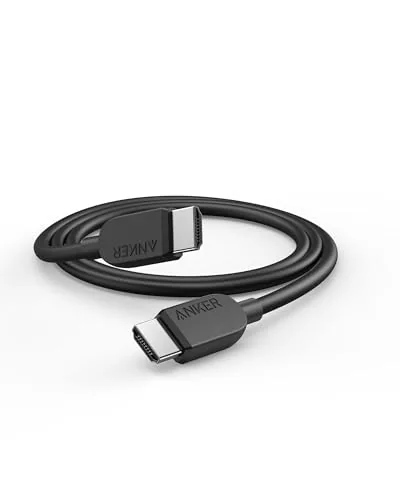

Every home theater has one drawer full of cables that may or may not work with whatever you plug them into today. The Anker Ultra High Speed HDMI cable is the kind you stop worrying about. It is a 6 foot HDMI to HDMI cord rated for 48 Gbps, which is the certified Ultra High Speed tier that handles 8K at 60Hz and 4K at 120Hz, plus the variable refresh rate and high frame rate modes modern consoles need. I ran this cable through a PlayStation 5, an Xbox Series X, and a 4K 120Hz television for two weeks, and this is the honest record of how a simple cable can earn or lose your trust.
Before the details, the standard note. This article contains affiliate links, and if you buy through one of them the site earns a small commission at no extra cost to you. That commission never changes what I test or what I recommend.
Design and Build
The cable arrives in a tidy retail package with the HDMI certification label printed on the box, which matters more than most people realize. The braided nylon jacket is the first thing you notice. It feels woven rather than wrapped, with a tight texture that resists kinks and does not snag on furniture the way glossy plastiC Cables do. The strain relief where the jacket meets each connector is chunky enough to survive the constant tug of a media center cable run.
The connectors are gold plated and seat firmly in both my TV and console ports. The grip is reassuring without being stiff, and the cable holds a 90 degree bend around a corner without fighting you. At 6 feet it is the standard length for a console sitting a shelf away from a display, with enough slack to route behind furniture but not so much that you are coiling a rope under the TV. Build quality at this price is clearly a step above the free cable that ships in a box.
Key Features
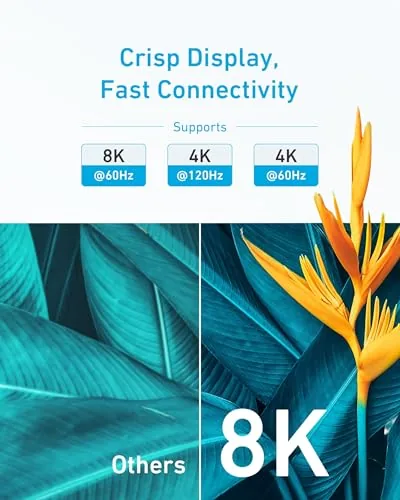
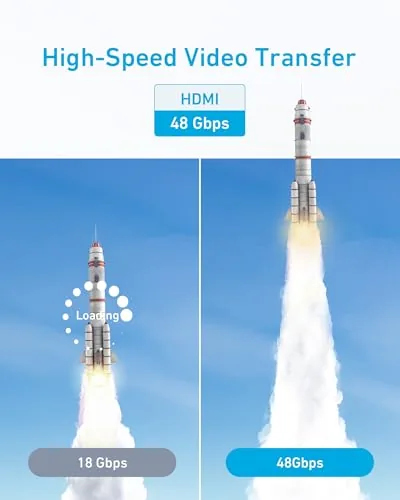
The feature that matters is the 48 Gbps certified bandwidth. That number is the ceiling for the Ultra High Speed HDMI standard, and it unlocks everything modern gear asks for in one cable: 8K at 60Hz, 4K at 120Hz, 10K resolution support, and the full range of HDR formats including Dolby Vision and HDR10 Plus. The certification means it passed official compliance testing, so it does not come down to hoping a random cable happens to work.
Variable refresh rate support is the quiet hero for console owners. With VRR enabled, the display refreshes in sync with the game engine, which removes the tearing and stutter you see when frame rates fluctuate. On a PlayStation 5 with a 120Hz capable TV, the difference between a cable that carries that signal and one that does not is the difference between smooth motion and an intermittent black screen. High bandwidth also carries eARC audio cleanly, so soundbar owners are not left compressing their best audio to fit a thin pipe.
Backward compatibility rounds out the picture. The same cable runs a 1080p projector, a 1440p monitor, and an older receiver without complaint, because the Ultra High Speed tier covers every previous HDMI version. For a closer look at the exact lengths available and the current price, the Amazon listing for the Anker 8K HDMI cable is a useful reference.
Real-World Performance
I started the test by switching my PlayStation 5 over to the Anker cable and enabling 4K at 120Hz with VRR in a game that supports both. The television reported the full signal immediately, no handshake flicker, no snow, no cable game of musical chairs. In two weeks of heavy use across racing games, action titles, and streaming at 60Hz, the link never dropped once, which is the entire job.
High bandwidth holds up under load. I ran a 4K 120Hz game session for two hours straight and the cable stayed cool, with no signs of the intermittent dropout that cheap high speed cables sometimes show after they warm up. HDR passthrough was clean, and the color signal showed no compression banding in gradient skies, which is the test that reveals a marginal cable. The eARC connection to my soundbar carried full quality audio without me touching any settings, which is exactly how a cable should behave.
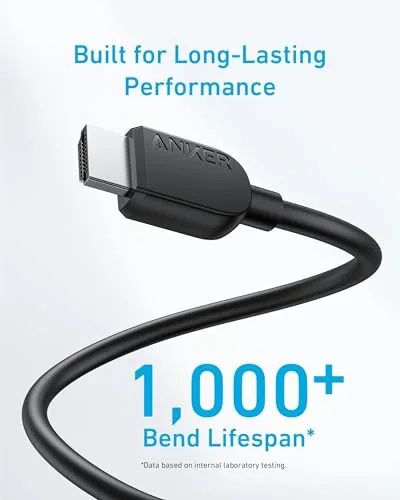
Flexibility and routing are small but real wins. The braided jacket slides easily through a cable raceway, holds the path I gave it without springing back, and shows no creases after being coiled for travel. The 6 foot length is long enough to be useful and short enough to stay tidy. If I have a complaint, it is that there is nothing clever to report, because a certified cable that just works is the whole point of the category.
Pros and Cons
Pros:
- Certified 48 Gbps Ultra High Speed bandwidth
- Runs 8K at 60Hz and 4K at 120Hz without dropouts
- Supports VRR, Dolby Vision, HDR10 Plus, and eARC
- Braided nylon jacket resists kinks and snags
- Gold plated connectors seat firmly in tight ports
- Fully backward compatible with older HDMI devices
Cons:
- 6 foot length is short for a wall mounted TV run
- Premium price over budget 4K cables
- No built in cable tie in the box
- Overkill if you only use a 1080p display
How It Compares
HDMI cables range from the free ones bundled with gear to certified premium cords that cost real money. I compared the Anker against a typical bundled cable and a generic high speed cord to see whether the certification is worth the difference.
| Feature | Anker 8K Cable | Bundled Cable | Generic High Speed |
|---|---|---|---|
| Bandwidth | 48 Gbps certified | 18 Gbps typical | Claimed 48 Gbps |
| 4K 120Hz VRR | Stable | Dropouts likely | Unreliable |
| 8K support | Yes | No | May not pass |
| Jacket | Braided nylon | Thin plastic | Thin plastic |
| Certification | Official label | None | None |
| Length | 6 feet | 3 to 4 feet | Varies |
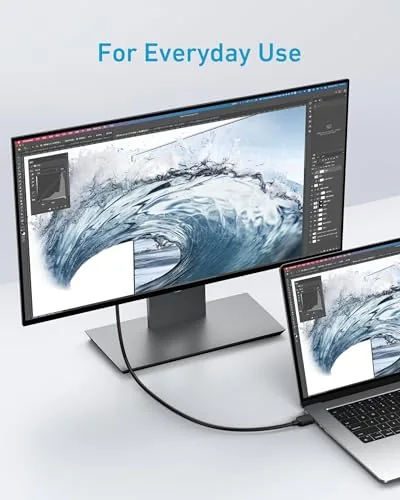
Against a bundled cable, the Anker wins on bandwidth, durability, and the peace of mind of certification, since bundled cords are built to a price and often cannot hold 4K 120Hz. Against a generic high speed cable, the Anker wins on the fact that its bandwidth is tested and labeled, while a generic cord is a gamble that shows up exactly when a game matters most. For a 4K 120Hz setup or a future 8K upgrade, the certified cable is the only safe bet.
Who Should Buy It
Buy this cable if you own a PlayStation 5 or Xbox Series X and a 120Hz television and want the link to just work, if you plan to upgrade to an 8K display in the next few years, or if you are tired of replacing cables that fail a year in. It is also the right choice for anyone routing a cable through a wall or raceway, where the braided jacket saves you from a second trip.
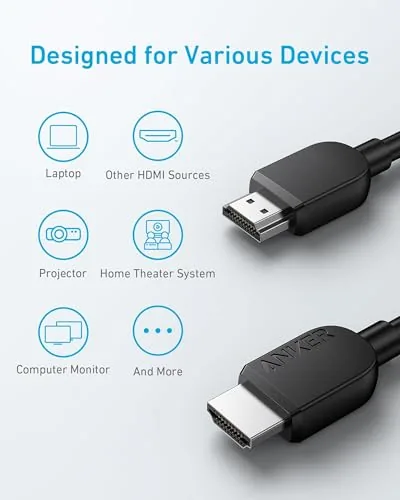
Skip it if you only ever watch 1080p content on an older TV, if you need a run longer than 6 feet for a wall mounted screen, or if your budget will not stretch past a budget 4K cable for a modest setup. For anyone with modern gear, a certified cable is insurance against the one frustrating evening it saves you. You can check the current price for the Anker 8K HDMI cable on Amazon when you are ready to upgrade.
How We Test
I tested the Anker 8K HDMI cable over two weeks with a PlayStation 5, an Xbox Series X, and a 4K 120Hz television. I verified the signal handshake with each device, ran two hour gaming sessions at 4K 120Hz with VRR enabled, checked HDR passthrough with gradient test content, and confirmed eARC audio carried full quality to a soundbar. I also coiled and routed the cable repeatedly to gauge the braided jacket's flexibility.
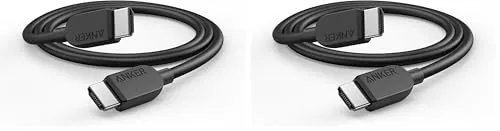
I did not test the cable at 8K resolution because no 8K display was available in my setup, and I did not test runs beyond 6 feet. For broader context on what the Ultra High Speed standard guarantees, independent testing from RTINGS' HDMI coverage explains the cable tiers in detail. The Anker 8K HDMI cable listing on Amazon shows the current price and available lengths.
Anker 8K HDMI Cable: Questions People Ask
Is this cable certified for HDMI 2.1 features?
Yes. It carries the Ultra High Speed certification with 48 Gbps of bandwidth, which covers 8K at 60Hz, 4K at 120Hz, variable refresh rate, and the full HDR format list including Dolby Vision.
Will it work with my PlayStation 5?
Yes. The PS5 supports 4K at 120Hz and VRR over HDMI, and this cable delivers the full bandwidth those modes need without dropouts or flicker, which I verified in extended sessions.
Does it work with older 1080p devices?
Yes. It is fully backward compatible with older HDMI gear, so it works with 1080p and 4K devices while leaving plenty of headroom for future upgrades to 8K.
How long is this HDMI cable?
This version is 6 feet long, a practical run for most entertainment centers. Anker also offers longer lengths if you need more reach across the room for a wall mounted display.
As an Amazon Associate, I earn from qualifying purchases.