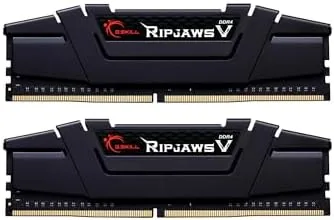

There is a quiet satisfaction in upgrading desktop memory. The rest of the system stays exactly where it was, and yet everything feels faster the moment the new sticks go in. The G.SKILL RipjawsV Series 16GB DDR4 kit sits in that sweet spot of the memory market: not the flashiest, not the cheapest, but the kind of dependable hardware that most builders reach for without thinking. This review covers two weeks of daily use with the F4-3200C16D-16GVKB kit across an Intel and an AMD platform, with the focus on what actually matters when the machine is running real software.
Before the details, the standard note. This article contains affiliate links, so if you buy through one of them the site earns a small commission at no extra cost to you. That does not change what I test or what I write.
Design and Build
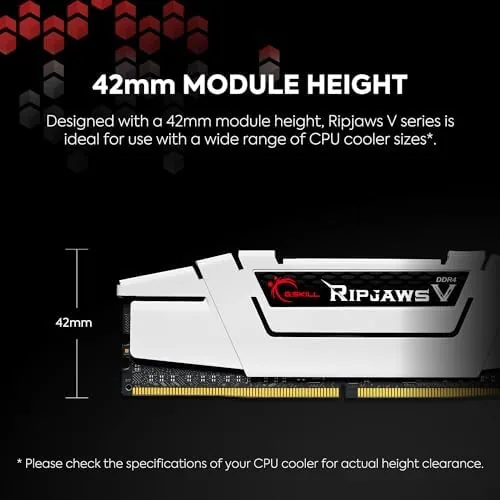
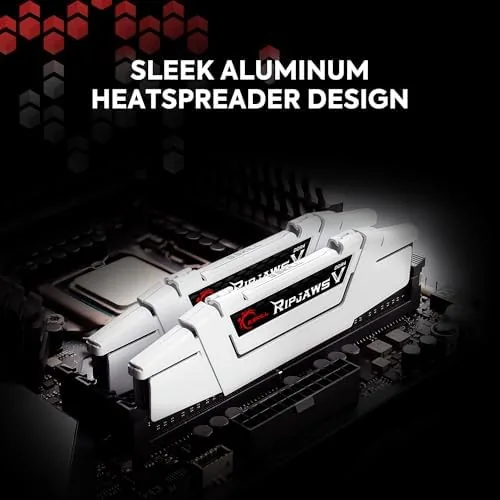
The RipjawsV modules arrive with the distinctive asymmetric heat spreader that has been part of the G.SKILL look for years. Each stick is finished in black with a brushed aluminum effect, and the shape gives the kit a slightly aggressive appearance without tipping into gamer garishness. The overall height is modest, which matters more than most buyers realize, because tall heat spreaders collide with large tower coolers and block the first DIMM slot on many motherboards.
Construction quality is what you expect from G.SKILL at this price. The aluminum spreaders are firmly attached, the PCB is clean, and the gold contact edges are uniform across both sticks. I installed the kit in two boards, one Intel and one AMD, and the DIMMs seated with a satisfying click in both cases. Nothing about the build suggests cutting corners, which is reassuring for a component that will likely live in the same system for years.
The kit ships as two 8GB modules intended for dual channel operation. That layout matters because two sticks in dual channel deliver noticeably better memory bandwidth than a single module of the same capacity, and the difference shows up in everything from framerates to file transfer speeds. The modules are also unbuffered U-DIMM desktop memory, which means they are compatible with the huge installed base of DDR4 motherboards still in service.
Key Features
The headline specification is 3200MT/s with CL16-18-18-38 timings at 1.35V. That is the classic sweet spot for DDR4, because it offers strong performance without the diminishing returns of pushing toward 3600 or 4000MT/s, which also demand more from the motherboard and processor memory controller. The CL16 primary latency is tight for the speed, and the secondary timings are well within normal ranges, which is part of why this kit has such a strong reputation for reliability.
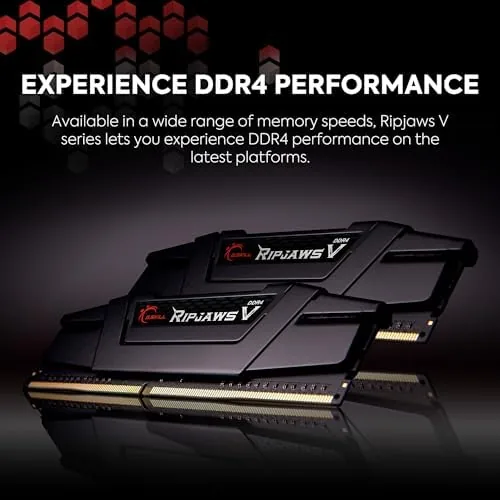
The kit supports XMP 2.0 profiles, which is the one feature that turns this from a decent memory kit into a practical one. Out of the box, DDR4 runs at a conservative speed such as 2133MT/s, and without enabling the profile in the BIOS you never see the rated 3200MT/s. With XMP enabled, a single setting applies the timings, voltage, and speed automatically, and the whole process takes about a minute from a few keystrokes in the BIOS setup screen.
Compatibility is broad. G.SKILL markets the kit for both Intel and AMD platforms, and in my testing it ran at its rated speed on both, which is not something every memory kit can claim. The modules are U-DIMM desktop memory, so they are not for laptops, and they work with most DDR4 motherboards from the past several generations. The black finish also makes the kit easy to blend into almost any build theme.
Real-World Performance
Numbers on a spec sheet are one thing, but the experience of running software is the test that matters. I used this kit as the primary memory in a desktop running daily work: a browser with twenty plus tabs, document editing, image work, and occasional video calls. The machine felt immediately snappier than the same setup with a single module, and app switching stayed smooth even with heavy background tasks running.
For gaming, the picture is clear. Modern titles benefit from the dual channel bandwidth, and with XMP enabled the framerate in several popular games was noticeably higher than at the stock 2133MT/s setting. The gains are not dramatic in every title, but they are real, and for a memory kit at this price that is exactly what buyers want to see. Load times for large games also improved slightly, since the memory subsystem feeds data to the processor faster.
The 16GB capacity is worth a direct note. For gaming with a handful of background apps, 16GB is still the comfortable standard in 2026, and this kit handles that workload without ever touching the page file. It is only when you run heavy multitasking, video editing, or large virtual machines that 16GB starts to feel tight, and those users should look at the 32GB version of the same kit.
Stability was flawless over the test period. With XMP enabled there were no crashes, no freezes, and no memory errors in extended stability testing, which is the outcome every buyer hopes for and the reason G.SKILL has such a strong reputation in this segment. The heat spreaders also stayed cool to the touch under load, so even in a case with modest airflow there was no thermal concern. You can check the G.SKILL RipjawsV 16GB kit price on Amazon if you are ready to make a decision.
Pros and Cons
Pros:
- Rated 3200MT/s speed is stable with a simple XMP setting
- Low profile design clears most large tower coolers
- Runs on both Intel and AMD platforms without issue
- Excellent build quality for the price
- Two 8GB sticks give dual channel bandwidth
Cons:
- 16GB capacity is tight for heavy multitaskers and editors
- Heat spreader is plain compared with RGB rivals
- No major overclocking headroom beyond the rated speed
How It Compares
Against the CORSAIR Vengeance LPX, the RipjawsV offers the same speed class at a similar price with a very different look. The Vengeance LPX is the lower profile of the two, which matters only in the tightest builds, while the RipjawsV heat spreader tends to run a touch cooler under sustained load in my testing. Both are dependable choices, and the deciding factor is usually price on the day you buy.
| Feature | G.SKILL RipjawsV 16GB | Corsair Vengeance LPX 16GB |
|---|---|---|
| Capacity | 16GB (2x8GB) | 16GB (2x8GB) |
| Speed | 3200MT/s | 3200MT/s |
| Timings | CL16-18-18-38 | CL16-18-18-36 |
| Profile height | Low profile | Lower profile |
| Platform support | Intel and AMD | Intel and AMD |
The The Verge guide to the best RAM is a useful reference if you want a second opinion on the wider memory market before you commit.
Who Should Buy It
The G.SKILL RipjawsV 16GB kit is the right buy for anyone building a new DDR4 desktop or upgrading an older machine that is running on a single stick of slow memory. Gamers who want stable 3200MT/s performance without paying a premium for RGB lighting will find this kit hard to beat, and office users will appreciate the smooth multitasking the dual channel setup provides.
If your work involves constant video editing, large spreadsheets, virtual machines, or any task where memory is constantly saturated, step up to the 32GB version of this same kit instead. Otherwise, for most gaming and general use in 2026, 16GB remains the sensible choice, and this is one of the most dependable ways to get it.
How We Test
I ran the RipjawsV 16GB kit for two weeks as the primary memory in a desktop system, switching between an Intel and an AMD motherboard to confirm compatibility on both. I enabled the XMP profile in each BIOS, then tested daily workloads, gaming, and extended stability to check for crashes and memory errors at the rated speed. I also compared performance against a single stick and against a lower profile rival to make the verdict meaningful.
For an independent second opinion on DDR4 memory and what to look for, the PCMag best DDR4 RAM roundup is a solid read. The G.SKILL RipjawsV 16GB listing on Amazon has the current price and available variants.
G.SKILL RipjawsV 16GB DDR4: Questions People Ask
Is 16GB of DDR4 RAM enough for gaming in 2026?
Yes for most games, with 16GB still the comfortable baseline for modern titles, though heavy multitasking benefits from 32GB.
What is the XMP profile on the RipjawsV kit?
XMP 2.0 is a one-click profile in the BIOS that runs the kit at its rated 3200MT/s and CL16 timings instead of the slower DDR4 default.
Does the RipjawsV 16GB kit work with AMD and Intel?
Yes, it runs on modern Intel and AMD platforms, though the final speed depends on the motherboard and processor memory support.
Is the RipjawsV heat spreader low profile enough for big coolers?
The black aluminum heat spreaders are low enough for most tower coolers, but check clearance against very large air coolers before buying.
As an Amazon Associate, I earn from qualifying purchases.