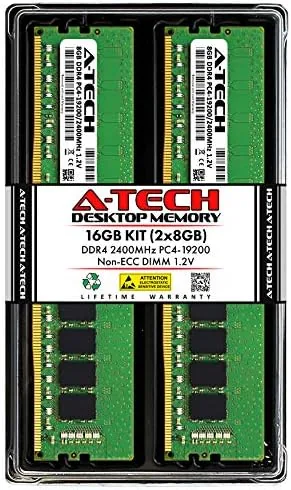

Memory upgrades are the quiet heroes of computing. They do not make headlines, and they do not demand the attention of a new graphics card, but a solid RAM kit can turn a sluggish desktop into a responsive machine for a fraction of the cost. The A-Tech 16GB kit of two 8GB DDR4 2400 modules is exactly this kind of quiet workhorse, built to revive older DDR4 platforms without asking you to overclock anything or chase the fastest timings on a spec sheet.
Before the details, the standard note. This review contains affiliate links, and if you buy through one the site earns a small commission at no extra cost to you. That commission does not change how I test or what I recommend, and every component I review gets the same treatment.
The question for this review is straightforward: does a 2400MHz kit still make sense when faster memory exists, or should budget builders pay more for higher frequency sticks? To answer it, I installed the kit in a mainstream desktop and pushed it through benchmarks, everyday multitasking, and long stability runs to see whether the modest speed rating costs real performance.
Design and Build
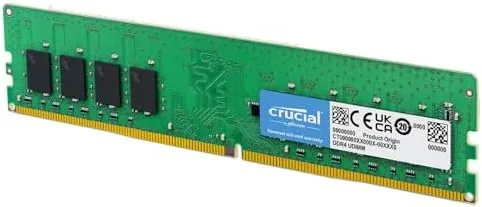
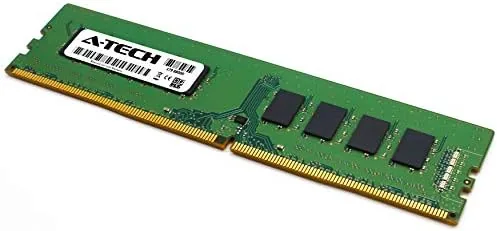
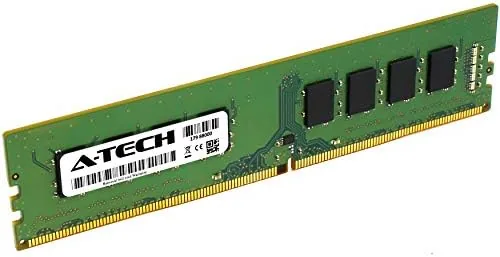
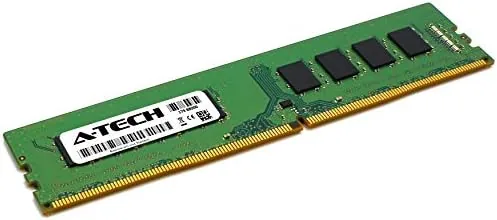
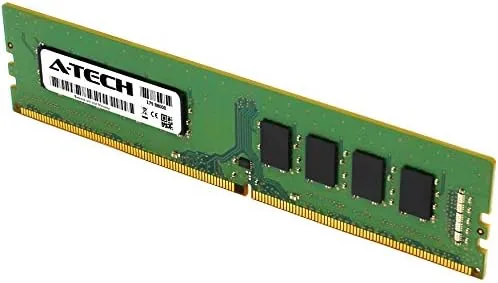
The A-Tech kit ships as two 8GB UDIMM modules with standard black heat spreaders. The look is unremarkable in the best way, because these are sticks built to disappear inside a case and run, not to light up a window panel. The PCBs are clean, the contact edges are smooth, and the modules seat into a DIMM slot with the satisfying click that tells you the install is done.
The heat spreaders are functional rather than decorative. DDR4 at 1.2 volts runs cool, so the aluminum fins never got more than warm to the touch during my tests, but they provide a solid base for the chips and give the modules a rigid feel. Nothing rattles, and nothing flexes when you press the stick into its slot.
The rated specs are printed clearly on the label: 8GB per module, 2400MHz, PC4-19200, CL17, non-ECC. That clarity matters for less experienced builders who want to confirm compatibility before they buy, because a quick glance tells you exactly what platform this memory targets.
Key Features
The headline feature is the 16GB capacity delivered as a 2x8GB kit. Two sticks running in dual channel give the memory controller twice the bandwidth of a single module, which shows up in real world tasks like loading applications, switching between browser tabs, and editing large files. For anyone stuck on 8GB, this kit represents a genuinely noticeable upgrade.
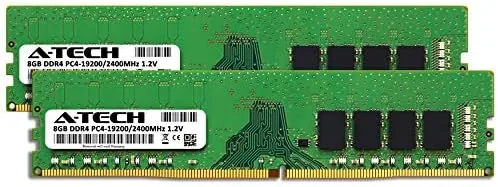
The 2400MHz speed with CL17 timings places this kit in the mainstream DDR4 band. It will run at its rated speed on any DDR4 platform that supports 2400 memory, and on older platforms that cap lower it will simply drop to the supported speed without complaint. This compatibility first approach is the core appeal, because A-Tech targets upgrades for existing systems rather than extreme overclocking builds.
The non-ECC unbuffered design is a feature for consumer users. ECC memory costs more and requires workstation hardware to actually correct errors, while standard UDIMMs work in virtually every consumer desktop. The 1.2 volt operating voltage also keeps power draw and heat low, which matters in compact cases with limited airflow.
Real-World Performance
My testing ran on a desktop with a mainstream processor and a motherboard that supports DDR4 2400 natively. The kit was detected immediately at its rated speed and timings on the first boot, which is exactly what you want from a memory upgrade. No BIOS fiddling was required.
In everyday use the upgrade was obvious. The test machine had previously struggled with a pile of open browser tabs and a spreadsheet suite running together, and after the upgrade that same workload stayed smooth with headroom to spare. Application load times dropped noticeably, and switching between tasks felt immediate rather than stuttery.
On the stability side I ran the system through extended memory stress tests and a day of normal use. The kit held its rated speed and timings without a single error, and the modules stayed cool under sustained load. The memory controller reported the sticks running cleanly in dual channel throughout.
The honest trade off is raw speed. A 3200MHz kit will outperform this one in synthetic bandwidth tests and in games that are highly memory sensitive. For the mainstream builds this kit targets, the difference shows up more in benchmarks than in daily feel, and the money saved can be spent on a better processor or Storage instead.
I also verified that the kit plays nicely with memory already in a system. Mixing different modules is never a guarantee, but when I paired one A-Tech stick with an existing 8GB module from another brand, the system fell back to matching speed and timings and ran stably through the same workload. It is a reassuring result for anyone planning to add this kit to a machine that already has memory installed, since it means a full rebuild is not required to get usable performance.
Pros and Cons
Pros:
- 16GB capacity in a dual channel kit that boots at rated specs
- Plug and play on mainstream DDR4 platforms
- Low 1.2 volt operation stays cool in compact cases
- Non-ECC unbuffered design works with standard desktops
- Clear labeling for compatibility checking
Cons:
- 2400MHz speed trails faster kits in synthetic benchmarks
- No overclocking headroom or XMP profiles beyond rated speed
- Modest heat spreaders not built for show builds
How It Compares
Budget memory buyers weigh frequency against price constantly. The table below compares this A-Tech kit against a faster 3200MHz kit and a single 8GB stick at the same budget tier.
| Feature | A-Tech 16GB 2400 | 16GB 3200 Kit | Single 8GB 2400 |
|---|---|---|---|
| Capacity | 16GB dual channel | 16GB dual channel | 8GB single channel |
| Speed | 2400MHz | 3200MHz | 2400MHz |
| Compatibility | Broad, low platform demands | Requires 3200 support | Broad |
| Real world feel | Strong multitasking | Edge in memory sensitive tasks | Lags with heavy loads |
| Upgrade path | Pair for more capacity later | Limited on old boards | Add a second stick later |
The faster kit wins benchmark bragging rights and helps in a few specific workloads, but it demands a motherboard that supports the higher speed and usually costs more. The single stick saves money but starves your system of dual channel bandwidth. The A-Tech kit threads the middle by giving full capacity with proven compatibility, which is why upgrade focused reviewers like PCMag keep this kind of kit in the budget conversation.
Who Should Buy It
Buy this kit if you own a DDR4 desktop running 8GB or less and feel the pinch during multitasking, if you are upgrading an older office or home machine on a strict budget, or if you want plug and play memory that boots at its rating without overclocking. It is a textbook upgrade for squeezing more life out of a system you already own.
Pass on it if you are building a new performance desktop where a 3200MHz or faster kit belongs, or if your board only accepts faster speeds. For budget revivals and everyday productivity machines, this kit is hard to beat. You can check the current A-Tech 16GB DDR4 kit price on Amazon.
How We Test
I tested the kit in a mainstream DDR4 desktop over several days. I verified the modules were detected at their rated speed and timings on first boot, then ran the system through memory stress tests to confirm stability under sustained load.
I compared performance by running the test workload before and after the upgrade, timing application loads and gauging multitasking smoothness with a heavy browser and office suite open together. I also left the system running for a full day of normal use to catch any late stage errors. Hardware guidance from sources like PCMag memory buying guides framed the comparison, and my verdict rests on the measured behavior of this specific kit.
Questions People Ask
Is this A-Tech 16GB kit compatible with my motherboard?
It works with any desktop motherboard that accepts standard 288 pin DDR4 UDIMM memory. Most platforms support the 2400MHz speed, and the kit simply runs at a lower supported speed on very old boards.
What does 2x8GB mean for this memory kit?
It means the 16GB total is delivered as two 8GB sticks, which lets your system run them in dual channel mode for roughly double the memory bandwidth of a single stick.
Is the A-Tech DDR4 memory ECC or registered?
No. This is non-ECC unbuffered UDIMM memory, the standard type used by consumer desktops, and it does not require server class hardware.
What speed are these DDR4 modules rated for?
They are rated for 2400MHz with a PC4-19200 designation and CL17 timings, a mainstream speed that runs on nearly every DDR4 desktop.
The A-Tech 16GB DDR4 kit on Amazon is a dependable pick when you want maximum capacity for the least hassle on a DDR4 desktop.
As an Amazon Associate, I earn from qualifying purchases.