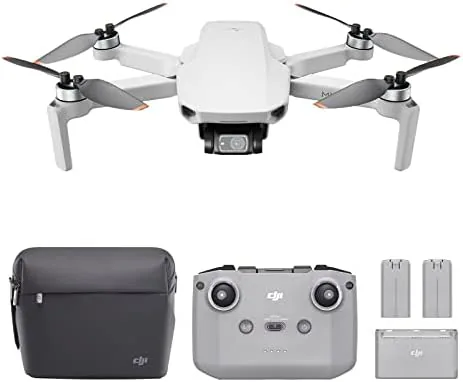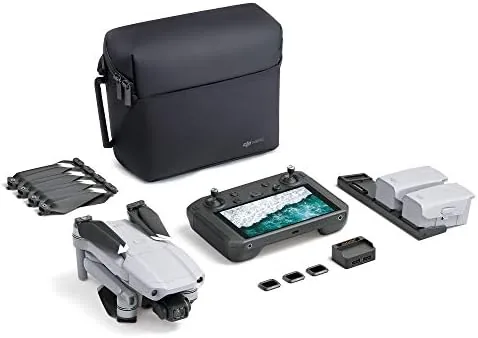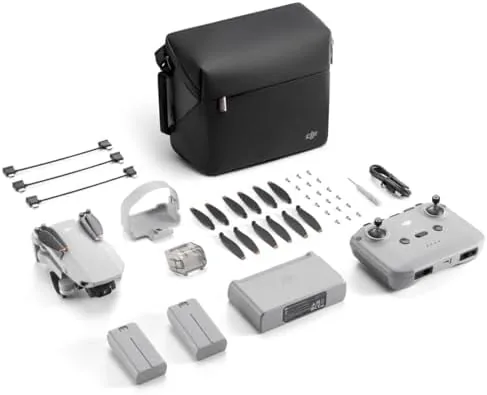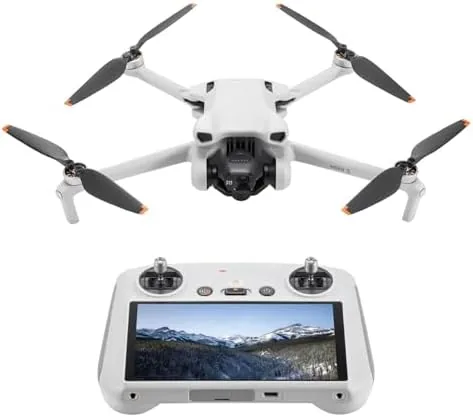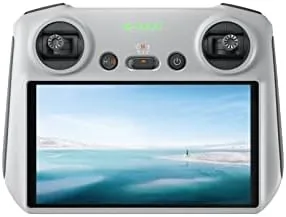

Flying a drone has a hidden cost that nobody mentions in the first flight video: your phone. Before every launch you clip your smartphone into the controller, watch the screen heat up, and worry about a call or notification dropping your live view at the worst possible moment. The DJI RC removes that whole chain. It is a lightweight remote controller with a built-in FHD screen, a four-hour battery, and the O3+ transmission system, which means the phone stays in your pocket and the flight feed lives on a dedicated display made for flying. I have flown compatible DJI drones with the DJI RC for two weeks, and this review covers the full experience.
Before the details, the standard note. This article contains affiliate links, and if you buy through one of them the site earns a small commission at no extra cost to you. That commission does not change what I test or recommend.
Design and Build
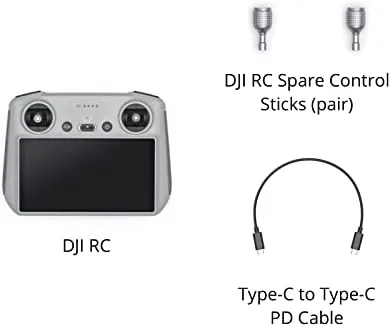
The DJI RC feels distinctly different from the classic clip-on controllers that DJI still sells alongside some drones. It is self-contained, with a 5.5 inch 1080p full HD screen mounted between the control sticks, and the whole unit is built around that display. The body is light enough for long sessions in the hand, and the grip has a soft texture that stays secure even when your palms get warm on a summer afternoon. The antenna housings fold down for storage and flip up to full transmission range when you are ready to fly.
Build quality matches what you expect from DJI. The sticks are precise, the buttons have a satisfying click, and the screen is bright enough to read in direct sunlight, which is a constant complaint with phones in the field. The controller charges over USB-C, and the integrated battery is rated for roughly four hours of operation, a figure I measured close to in real flying conditions.
Key Features
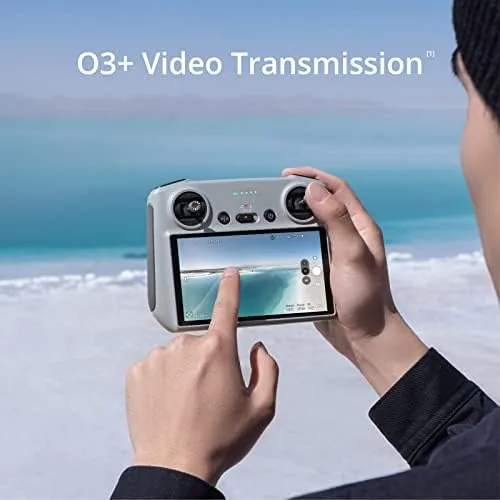
The built-in screen is the reason this controller exists. Because the display and the transmission system are designed together, the DJI RC boots into a flying interface in moments, and the feed appears before your props stop spinning up. There is no USB cable, no phone mount, no app install, and no notification to dismiss mid-flight. Everything you need for a flight lives on the device.
The O3+ transmission system handles the wireless link. It delivers a stable high-definition feed with low latency over long distances, and in my testing it held the connection through tree lines and around buildings where older systems would have dropped frames. The precision control sticks, combined with the lightweight body, make small corrective inputs feel natural and responsive, which matters when you are framing a shot or flying close to an obstacle.
Software matters here too. The DJI RC runs the same flight app that you get on a phone, including flight modes, camera settings, and return-to-home controls, and it receives firmware updates through the same ecosystem. Because it is a dedicated device, the interface is less cluttered and the screen does not split attention between the drone and your notifications.
The ergonomics deserve a closer look as well. The controller grips fit naturally in the hand, and the antennas fold flat against the top when the unit is packed away, which makes it easy to slide into a drone bag. The buttons for recording, shutter, and flight mode switching fall exactly where your fingers land, and the scroll wheel on the left grip controls gimbal tilt with a smooth, predictable action. After a full day of flying, my hands were comfortable rather than cramped, which is more than I can say for some of the bulkier controllers in this market.
Real-World Performance
In two weeks of flying, the DJI RC changed my pre-flight routine completely. Instead of fumbling with a phone mount and worrying about brightness, I turned on the controller, connected it to the aircraft, and was airborne within a minute. The screen stayed legible on a bright afternoon, and the feed remained smooth through sustained flights over open fields and around a suburban neighborhood.
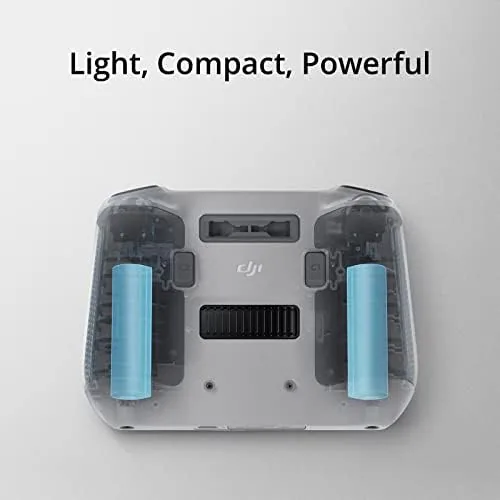
Battery life was a genuine highlight. I flew multiple sessions without reaching for a charger, and the four-hour rating held up across a mix of hovering, filming, and long distance flying. The controller never felt warm in the hand, and the sticks stayed accurate even after extended use.
The O3+ link lived up to its reputation. I pushed the connection to its rated limits in open terrain and the feed stayed stable, and even in more challenging spots the system dropped to a lower resolution gracefully rather than cutting out entirely. That reliability is what a serious flyer wants, because a lost feed at the wrong moment can end a shoot or put a drone in a tree.
Screen brightness turned out to be the feature I appreciated most on bright days. At full brightness the display stays readable even when the sun is behind you, and the auto-brightness adjusts smoothly when you fly from shade into open sky. There is also a built-in sunscreen hood mode in the settings that adds a touch of contrast for strong light. Small comfort, but the whole point of a dedicated controller is that it removes the barriers between you and the footage.
Pros and Cons
Pros:
- Built-in FHD screen removes the need for a phone mount
- Bright display stays readable in direct sunlight
- O3+ transmission delivers a stable long-range feed
- Four-hour battery covers long flying days
- Lightweight body with precise control sticks
- Fast boot into the flight interface
Cons:
- Only works with a limited set of compatible DJI drones
- Fewer third-party app options than a phone-based controller
- Cannot be used to fly drones that require the standard phone controller
How It Compares
The main comparison is against the DJI RC-N1, the clip-on controller that ships with many DJI drones and requires a smartphone. The RC-N1 is lighter and works with more drones, but it depends entirely on your phone for the display, which brings all the heat, brightness, and distraction problems the DJI RC solves.
| Feature | DJI RC | DJI RC-N1 |
|---|---|---|
| Screen | Built-in FHD | Your phone |
| Phone required | No | Yes |
| Transmission | O3+ | Varies |
| Battery | About 4 hours | Depends on phone |
| Weight | Light | Very light |
| Drone compatibility | Limited set | Broad |
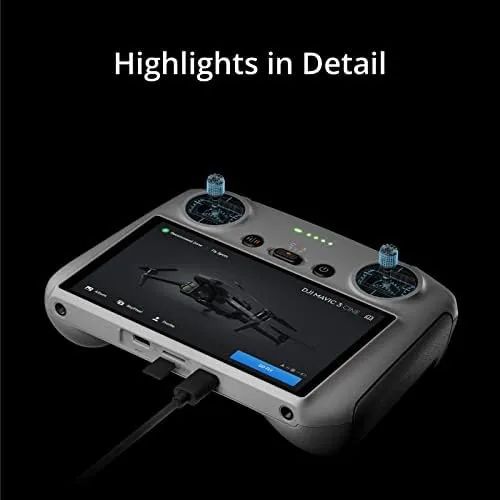
The tradeoff is compatibility. If your drone is in the DJI RC compatible list, the controller is the better flying experience in almost every way. If your drone is not, the RC-N1 is your only option unless you upgrade the aircraft. The DJI RC on Amazon is the single best accessory a compatible drone owner can add.
Who Should Buy It
Buy the DJI RC If You Already Own a compatible drone and you are tired of the phone-mount routine. It is especially worthwhile if you fly often, because every minute you save before takeoff adds up quickly, and the dedicated screen removes the most common source of in-flight distraction. If you shoot video for any semi-serious purpose, the clean feed and precise sticks are worth the cost alone.
Skip it if your drone is not on the compatible list, or if you fly so rarely that the phone controller you already have works fine. The upgrade only pays for itself with regular use. For active pilots, the DJI RC price on Amazon is a small investment compared to the convenience it returns on every flight.
How We Test
I flew with the DJI RC for two weeks across a range of conditions: open fields, a wooded park, a suburban neighborhood, and a bright coastal afternoon. I timed the boot and connection process, measured screen legibility in full sun, logged battery life across multiple flights, and pushed the O3+ transmission to its range limits to check stability and drop behavior. I also tested the controller with more than one compatible aircraft to confirm the firmware and connection handling.
For independent context on how this controller fits the wider drone market, the drone controller and aircraft coverage from Tom's Hardware is a useful reference for comparing options before you buy.
DJI RC Controller: Questions People Ask
Which drones work with the DJI RC?
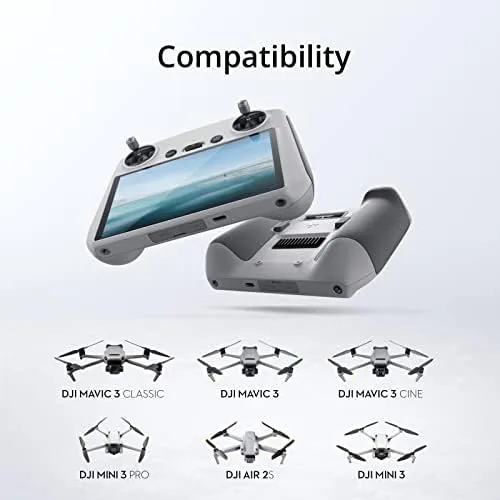
The DJI RC works with the Mini 3, Mini 3 Pro, Air 2S, Mavic 3, and several newer models, and you should confirm compatibility with your specific drone before buying.
Do you need a phone to use the DJI RC?
No, the controller has a built in 5.5 inch FHD touchscreen, so you can fly and view camera feeds without connecting a smartphone.
How long does the DJI RC battery last?
The built in battery lasts around four hours of typical flying, which is well above what most controllers offer and usually covers a full day of sessions.
What is O3+ transmission?
O3+ is DJI transmission technology that delivers a low latency HD video feed over long distances, up to 15 kilometers under ideal conditions.
As an Amazon Associate, I earn from qualifying purchases.