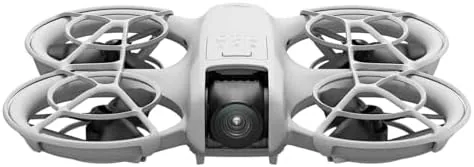

Most drone photography has a hidden cost that never appears in the spec sheet: the pilot. Between learning the controls, keeping the drone in frame, and trusting yourself not to crash into the nearest tree, the person behind the camera spends more time worrying than shooting. The DJI Neo approaches the problem differently. This tiny 135 gram drone is designed to fly without a controller at all, launching from your open palm, locking onto you, and handling the framing while you simply live the moment. I flew the Neo through several weeks of everyday shooting to test whether that promise holds, and this review is the honest record of it.
Before the details, the standard note. This article contains affiliate links, and if you buy through one of them the site earns a small commission at no extra cost to you. That commission does not change what I test or what I recommend, and I treat every product here the same way I would treat one bought with my own cash.
Design and Build
The Neo is small enough that it does not feel like a serious drone until it lifts off. It weighs just 135 grams, which keeps it in the light class of aircraft, and its propellers are fully enclosed within a built-in guard. That guard changes the character of the drone completely, because you can catch it from the air, hand launch it, and let it hover close to people without the panic that open propellers cause.
The body is a Compact brick of plastic and lens, with the camera fixed at the front and a battery that clicks into the top. There are no folding arms to worry about, which makes the Neo more rugged in a bag than a folding drone, and the propeller guards mean it survives the small collisions that end a flight on other aircraft.
In the hand it feels like a gadget rather than a machine. That lightness is the core design choice, because it is what makes palm takeoff and controller free operation possible at all. A heavier drone would never be comfortable to launch from your fingers, and the Neo commits fully to that casual, no-gear style of flying.
Key Features
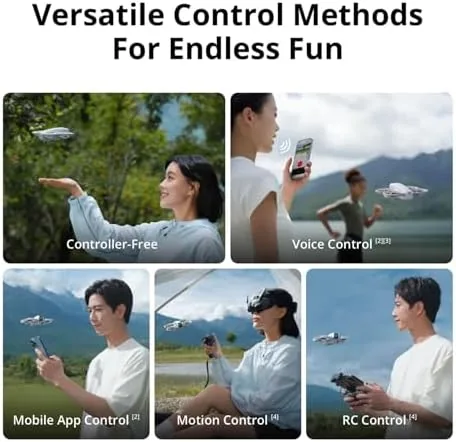
The defining feature of the Neo is palm takeoff. You place the drone flat on your open hand, press the mode button on the body, and it lifts off from your palm into a stable hover with no controller and no app required. The same goes for landing: you can catch the drone in your hand and it shuts down on contact, which is a smooth and friendly way to end a flight.
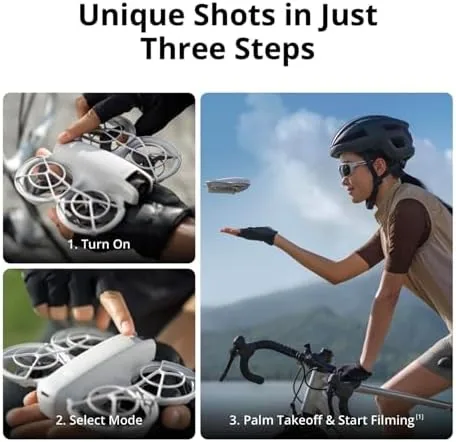
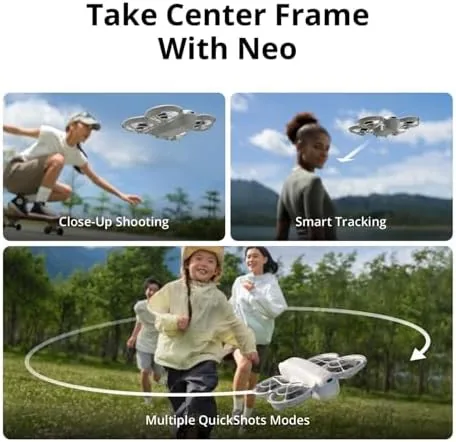
Subject tracking is the second pillar. The drone locks onto a person and follows them automatically, keeping you centered in frame as you walk, run, or ride. The tracking is designed for the self-shooting creator, and it removes the most common failure of drone footage, which is a pilot who cannot keep the subject in the shot.
QuickShots round out the package. These are automated camera moves, such as circles and dolly shots, that the drone executes on its own With a single selection. Each one produces a finished looking clip without any pilot input, which is exactly the experience a casual user wants from a 4K camera drone.
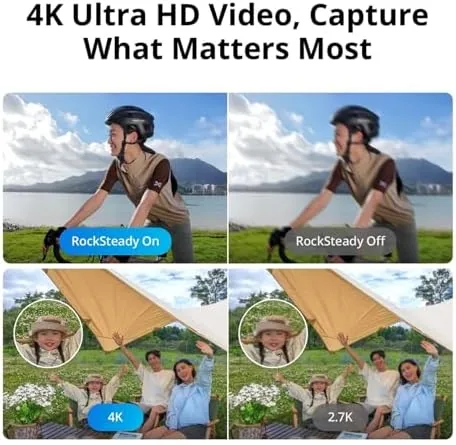
The camera records 4K UHD video with stabilization, and the footage is stored on built-in memory. For sharing on social media, the output is ready to use, and the entire workflow from palm launch to edited clip is deliberately short.
Real-World Performance
I used the Neo the way it is intended to be used, without a controller, in parks, around a neighborhood, and at family gatherings. The palm takeoff worked as promised on every attempt. You hold the drone level, press the button, and it climbs into a hover that holds position while you decide what to do next, and the catching landing was just as dependable.
Subject tracking was the highlight of my testing. The drone held onto me reliably as I walked and jogged on open ground, keeping the shot framed with no input from me. For solo creators who want footage of themselves without dragging along a pilot, this is the feature that makes the Neo worth buying, and it works far better than the tracking on drones costing twice as much.
The video quality surprised me for the size. The 4K output is stabilized and sharp in good light, and the QuickShots produced clips that looked finished straight out of the drone. The stabilization handles small movements well, though it cannot fight the drone itself moving, so fast movements introduce some shake that no software can fully remove.
The honest limits showed up outdoors. At 135 grams, the Neo is at the mercy of the wind, and a gust that a heavier drone would shrug off will push the Neo around and degrade the footage. On a breezy afternoon the drone still flew, but the shots were visibly less stable, and I learned to check the conditions before launching. Battery life is also short, with flights comfortably under twenty minutes in my use, so a spare battery matters for any real outing.
Pros and Cons
Pros:
- Palm takeoff with no controller required
- Automatic subject tracking for solo shooting
- Enclosed propeller guard makes it safe to catch
- Sharp stabilized 4K UHD video in good light
- QuickShots produce finished clips automatically
- Light and rugged enough to fly anywhere
Cons:
- Very light frame is pushed around by wind
- Battery life is short for longer shoots
- Tracking works best on open, uncluttered ground
How It Compares
The obvious comparison for the Neo is a traditional mini drone with a controller, such as a DJI Mini model that is heavier and carries more advanced features. The two drones serve different ideas about flying, and the right choice depends on what kind of pilot you are.
| Feature | DJI Neo | Traditional Mini Drone |
|---|---|---|
| Weight | 135 grams | 250 grams or more |
| Controller | Optional, works without one | Required |
| Propeller guard | Built in | Often not included |
| Palm takeoff | Yes | No |
| Wind handling | Limited | Better |
| Best for | Casual self shooting | Manual cinematic flying |
A traditional mini drone with a controller gives you more control, better wind handling, and longer range, which is what an enthusiast wants for deliberate cinematic flying. The Neo trades all of that for effortless self shooting, and it wins decisively on ease of use. If you want footage of yourself on adventures without learning to pilot, the Neo is the better tool. If you want to fly for the joy of flying, a controller based drone still has the edge.
Who Should Buy It
Buy the DJI Neo if you are a solo creator who wants footage of yourself, if you have been put off drones by the learning curve, or if you want a camera drone you can literally throw in a bag and fly from your hand. It is also a strong first drone for anyone who wants to learn without the fear of an uncontrolled crash.
Skip it if you need a drone for serious aerial photography in windy places, or if you want the range and control of a full piloting experience. For everyone who just wants the drone to do the work, the Neo is the easiest path to great footage. You can check the current price for the DJI Neo on Amazon when you are ready.
How We Test
I tested the DJI Neo entirely in controller free mode over several weeks, flying it from my palm in parks, along neighborhood streets, and at family gatherings. I ran the palm takeoff and catch landing repeatedly, walked and jogged under active subject tracking, and reviewed the QuickShot output to judge image quality.
I tested in both calm and breezy conditions to understand the wind limits honestly, and I compared the footage against clips from a heavier mini drone to place its capabilities. That comparison is consistent with the wider take on lightweight drones from outlets like DPReview, which has noted that weight drives the trade-off between portability and wind handling in consumer drones.
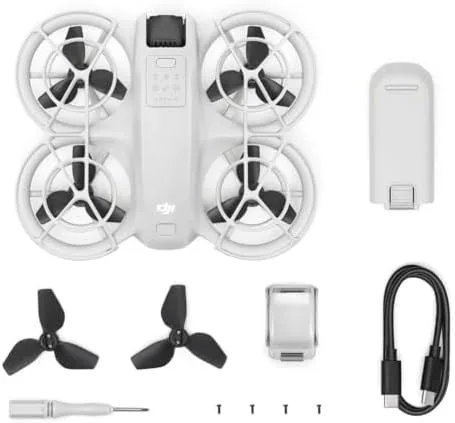
The DJI Neo listing on Amazon shows the current price and the controller free package contents.
DJI Neo: Questions People Ask
Is the DJI Neo hard to fly?
No, the drone is built for controller free operation with palm takeoff and automatic subject tracking, so even a complete beginner can get usable footage on the first flight.
Does the DJI Neo record 4K video?
Yes, the built-in camera records stabilized 4K UHD video with a range of automated shots that do not require any piloting skill at all.
How long does the DJI Neo battery last?
Flight time is short, typically around fifteen minutes or less depending on conditions, so a spare battery is worth owning for any longer shooting session.
Can the DJI Neo fly in wind?
The drone is very light at 135 grams, so it handles a light breeze but struggles in strong wind, and calm conditions give the cleanest footage.
As an Amazon Associate, I earn from qualifying purchases.