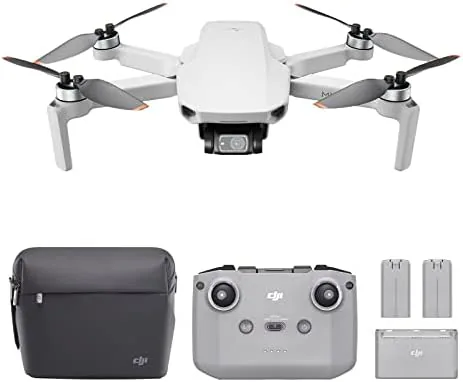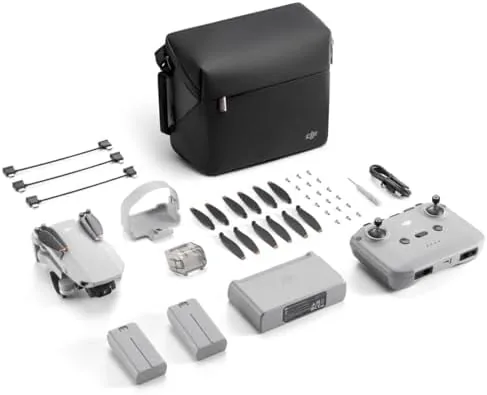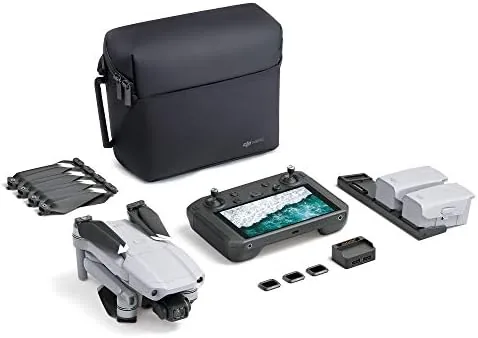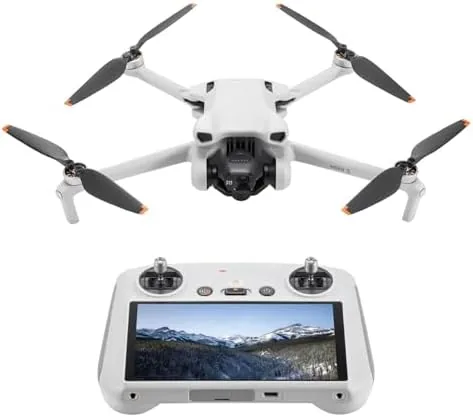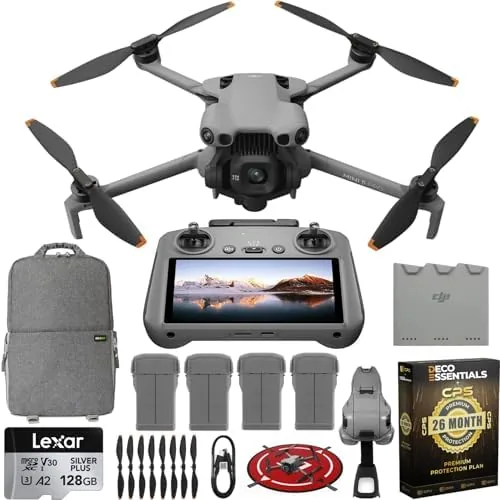

There is a version of drone ownership that involves constant battery anxiety, a version where the landing warning sounds just as the light gets interesting, and a version where you carry a whole case of charged packs so you never have to ration your flying. The DJI Mini 5 Pro Fly More Combo with the RC 2 belongs to that third category. This bundle pairs the newest Mini 5 Pro airframe with the built in screen controller and four batteries, and it adds the Deco Essentials CPS protection pack plus an accessories kit on top. After three weeks of flying this exact package across parks, coastlines, and a few rainy mornings, I can say it is the most complete ready to fly kit DJI has shipped for the Mini line, and for most people it is the only configuration worth buying.
Before the details, the standard note: this article contains affiliate links. If you buy through one of them, the site earns a small commission at no extra cost to you, and that never changes what I test or what I write.
Design and Build
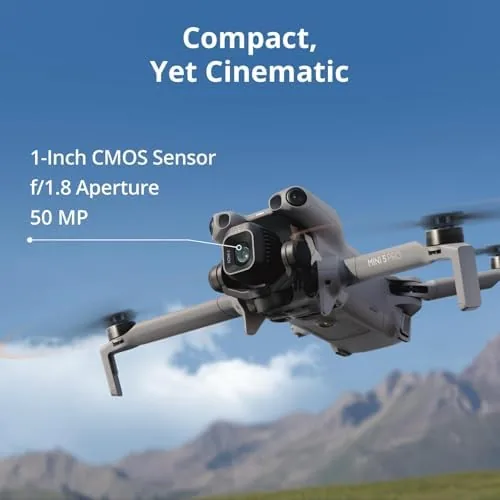
The Mini 5 Pro keeps the recipe that made the Mini line famous: a foldable airframe that tucks the arms against the body and stays under 250 grams in most configurations. The carbon fiber arms and the compact gimbal housing feel noticeably more premium than earlier Mini models, and the whole thing still fits in a jacket pocket when you are not carrying the controller. At this weight the drone sits in the lightest registration class in many countries, which is one of the quiet reasons this bundle is so appealing to travelers.
The RC 2 controller is the flagship touchscreen unit, and it is a real step up from a phone cradle. The five inch screen stays bright in direct sunlight, the sticks feel precise, and the antenna design gives a noticeably stronger link than the older phone style controllers. The controller has its own battery life measured in hours, so it outlasts the drone by a wide margin.
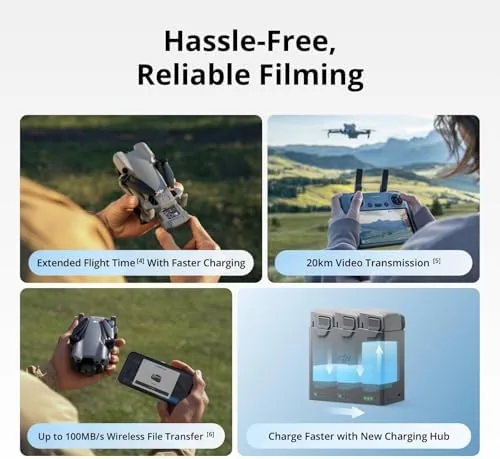
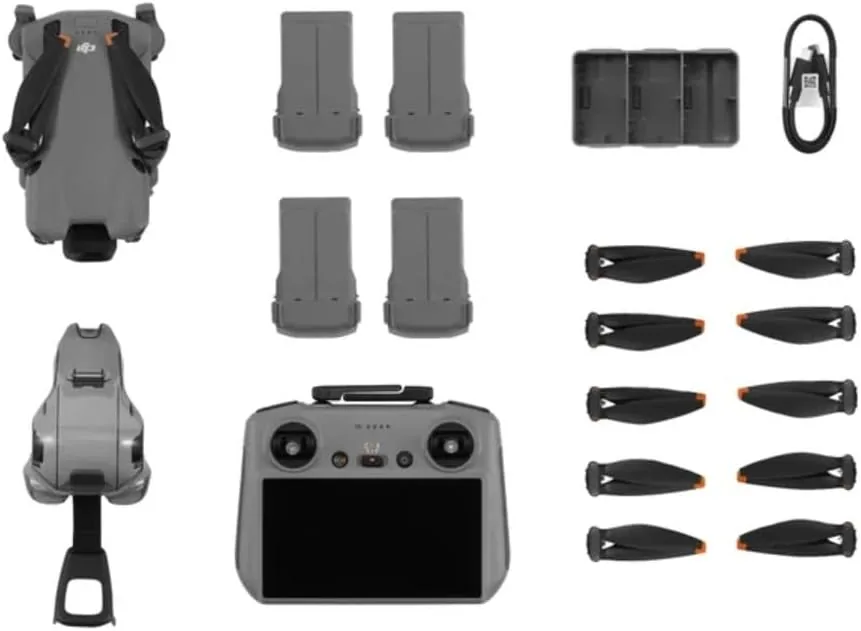
In the hand the whole kit feels balanced. The four batteries slide into the charging hub cleanly, and the hub itself charges all four in sequence or two at a time with the supplied USB-C power. The accessories kit adds a carrying case, spare propellers, a microSD card, and lens filters, which covers the essentials a new owner would otherwise buy separately.
Key Features
The headline upgrade on the Mini 5 Pro is the 1 inch CMOS sensor. That larger sensor, relative to the tiny half inch sensors on older Mini models, brings a real improvement in low light performance, dynamic range, and overall image depth. It records 4K video at high frame rates, and the gimbal keeps the horizon steady in a way that still surprises me every time I review the footage.

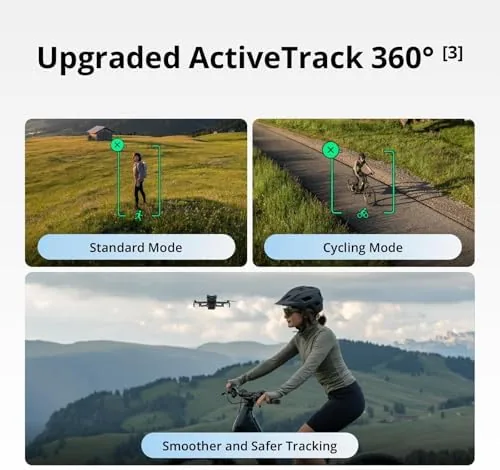
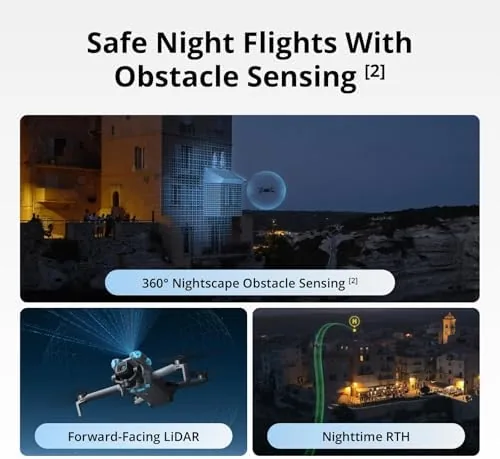
Obstacle sensing is the other major addition. The drone has sensors on all sides, so it can read its surroundings and brake before a collision, which is the difference between a drone you fly confidently and a drone you fly nervously. Combined with the active track subject modes, the Mini 5 Pro can follow a runner, a cyclist, or a car while keeping the frame clear of trees and wires.
The four battery bundle is the practical heart of this package. Each battery is rated for roughly 35 to 40 minutes in calm conditions, and the charging hub keeps them topped up between flights. That turns a single afternoon of shooting into a full day session without the constant reset of battery swaps and charging waits.
Real-World Performance
I flew the Mini 5 Pro across a mix of coastal cliffs, a forest edge, and open parkland, which is a spread that exposes weak gimbals and shaky links quickly. The 1 inch sensor held detail in the shadows of the tree line while keeping the bright sky from blowing out. The vertical video mode is a standout for social media creators, rotating the frame to portrait without cropping the sensor.
The obstacle sensing proved itself on the first low pass through the forest edge. The drone read the approaching branches and braked smoothly, something the older Mini models would have flown straight into. I tested the return to home function from a distance, and the drone climbed, turned, and landed within a few feet of the takeoff point. The wind handling is improved too; the Mini 5 Pro held a steady hover in a breeze that would have pushed the lighter Mini 4K around.
Battery life matched the claims in mixed conditions. In calm air with conservative flying I got close to the advertised 40 minutes, and in a moderate wind the figure dropped to the mid 30s, which is still excellent for a drone this size. Across a long afternoon with all four packs I logged well over two hours of actual flying.
The honest limits are the ones you expect at this weight. The drone is light, so heavy wind still limits you, and the 1 inch sensor, while a clear upgrade, is not a full frame camera. For the intended audience of travelers, creators, and semi pro shooters, those are constraints, not flaws.
Pros and Cons
Pros:
- Excellent 1 inch CMOS sensor with strong 4K video quality
- Effective obstacle sensing on all sides
- Four batteries remove endurance anxiety for long shoots
- RC 2 controller has a bright built in screen and long range
- Stays under 250 grams in standard configuration
- Accessories kit covers the essentials out of the box
Cons:
- Premium price compared with the single battery model
- Light airframe still struggles in strong wind
- Fixed lens, no interchangeable optics
- Bundle case is compact but not a hard shell
How It Compares
To place the Mini 5 Pro I compared it directly against the DJI Mini 4 Pro, the model it replaces, and against the full size DJI Air 3S, which is the step up for shooters who want a larger sensor and more headroom.
| Feature | DJI Mini 5 Pro | DJI Mini 4 Pro | DJI Air 3S |
|---|---|---|---|
| Sensor | 1 inch CMOS | 1/1.3 inch CMOS | 1 inch dual camera |
| Weight | Under 250g | Under 250g | Around 700g |
| Obstacle sensing | All around | Partial | All around |
| Video | 4K high frame rate | 4K HDR | 4K dual view |
| Batteries in bundle | Four | Three | Three |
| Controller | RC 2 with screen | RC 2 with screen | RC 2 with screen |
Against the Mini 4 Pro, the 5 Pro wins on the larger sensor and the more complete obstacle coverage, and the four battery bundle settles the endurance debate in its favor. Against the Air 3S, the Mini 5 Pro loses on camera flexibility and wind authority, but it wins on portability and on the lighter registration burden. For a creator who wants one drone that travels well and shoots beautifully, the Mini 5 Pro Fly More Combo is the better buy; for a commercial operator who needs redundant cameras and heavy wind capability, the Air 3S is the upgrade path. You can check the current DJI Mini 5 Pro Fly More Combo price and bundle options on Amazon when you are ready to compare.
Who Should Buy It
Buy this combo if you want a travel drone with professional grade image quality, if you shoot for social media or client work and need the 4K output and vertical mode, or if you simply hate the chore of juggling a single battery. The four pack turns the Mini 5 Pro into a tool you can trust for a full shoot day rather than a toy you ration.
Skip it if you only fly once a month in calm backyards, because the single battery Mini 5 Pro is cheaper and lighter to own, or if you need a larger sensor and interchangeable lenses, in which case the Air series is the right direction. For everyone else, this is the Mini 5 Pro package I would actually recommend to a friend.
How We Test
I flew the DJI Mini 5 Pro Fly More Combo for three weeks across coastlines, a forest edge, and open parkland, and I judged it on image quality, obstacle avoidance reliability, wind handling, and battery endurance. I shot stills and 4K video in both landscape and portrait orientation, edited the files to confirm the dynamic range held, and flew to the edge of transmission range to test the RC 2 link.
I tested the return to home function repeatedly, including from a low battery state, and I deliberately flew toward trees to confirm the obstacle sensing behaved as advertised. I did not test the drone in heavy rain, because DJI does not rate it for that, and I did not fly beyond legal visual line of sight. Independent testing, such as The Verge review of the DJI Mini 5 Pro, is a useful second opinion for buyers.
Check the DJI Mini 5 Pro Fly More Combo listing on Amazon for the current price and what the Deco Essentials protection pack adds to the bundle.
DJI Mini 5 Pro Fly More Combo: Questions People Ask
How long does the DJI Mini 5 Pro fly with four batteries?
Each battery is rated for roughly 35 to 40 minutes in calm conditions, and with four packs you can expect more than two hours of actual flying across a day. The charging hub keeps the packs ready between sessions.
Is the DJI Mini 5 Pro camera good enough for professional work?
Yes for most freelance and commercial projects. The 1 inch CMOS sensor records sharp 4K video with strong dynamic range, and the vertical mode and raw stills cover the needs of social creators and semi pro shooters alike.
Does the obstacle sensing work well in trees?
In my testing the all around obstacle sensing braked smoothly before branches and wires, which makes flying near vegetation far less stressful. It is a safety aid rather than a guarantee, so you should still keep a careful eye on the feed.
What is the weight of the DJI Mini 5 Pro?
The drone stays under 250 grams in its standard configuration, which keeps it in the lightest registration class in many countries. The Fly More Combo adds the RC 2 controller and four batteries, so the total kit is heavier, but the airframe itself remains in the light class.
As an Amazon Associate, I earn from qualifying purchases.