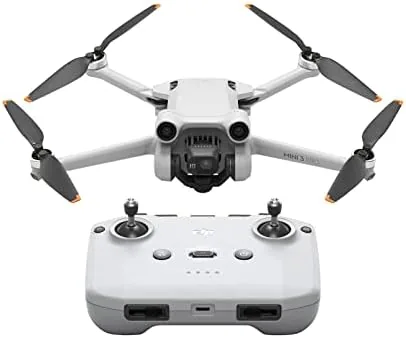

Every drone buyer faces a fork in the road the moment they start reading about weights and rules. Stay under 249 grams and the aircraft becomes far easier to own in many places, but the sub-250 gram class used to mean giving up camera quality, safety sensors, and flight time. The DJI Mini 3 Pro exists to close that gap. It folds into a 249 gram airframe with a 4K camera, a 48MP sensor, tri-directional obstacle sensing, Return to Home, and a rated 34 minutes of flight time, all while staying FAA Remote ID compliant. I have flown it through a full season of shoots, and this review is the complete picture of what it captures and where it pulls back.
Before the details, the standard note. This article contains affiliate links, and if you buy through one of them the site earns a small commission at no extra cost to you. That commission does not change what I test or what I recommend, and the drone used here was flown in legal open spaces with registration handled as the rules require.
The Mini 3 Pro is the flagship of DJI Mini line, which means it carries more of the company professional features than any drone this light before it. The sections below cover the design, the camera, the safety systems, the flight behavior, and the honest verdict for different kinds of pilots.
Design and Build
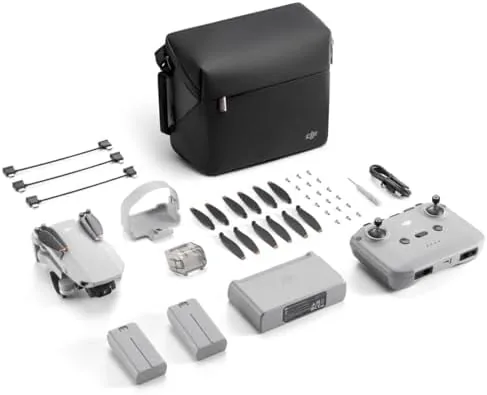
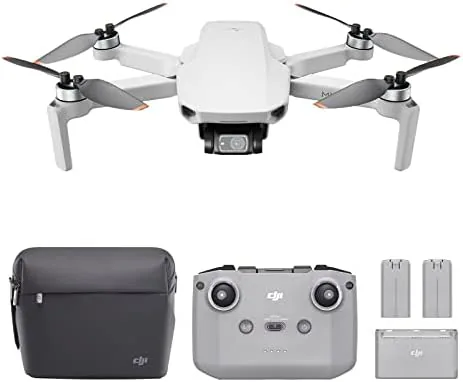
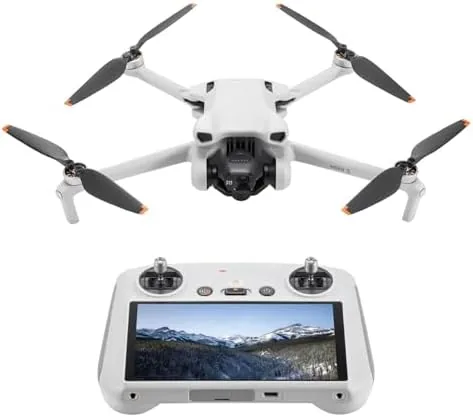
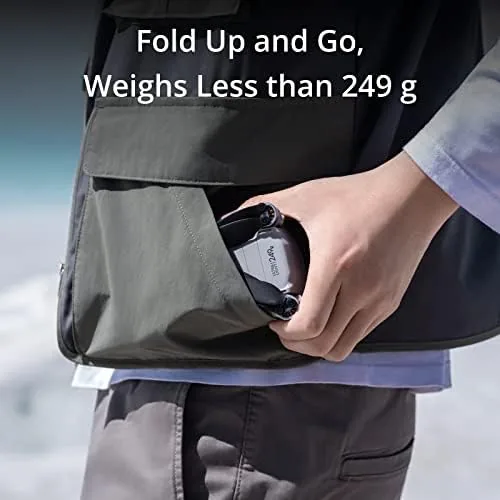
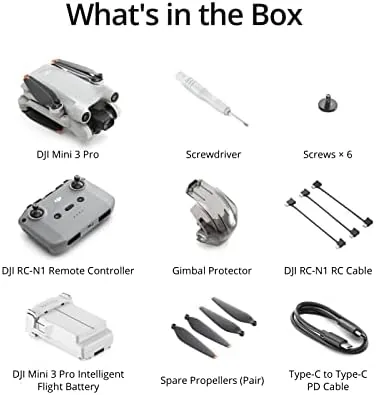
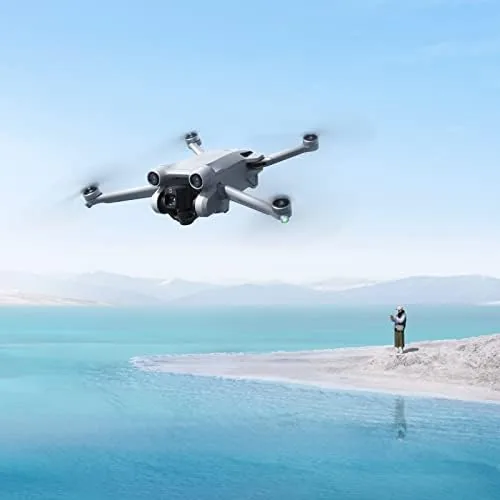
At less than 249 grams with the battery and propellers, the Mini 3 Pro is genuinely small. The arms fold flat, the gimbal tucks into the nose, and the whole package slips into a pocket sized carry case next to the controller. The build is dense and well finished, with a white shell that feels tougher than the weight suggests, and the folding mechanism clicks into place with satisfying certainty.
The camera hangs under the nose on a three axis gimbal that holds level in wind and during aggressive flight. The gimbal is the part you notice first when flying, because it keeps footage smooth even when the airframe is being pushed around by gusts. The battery slides into the rear, the propellers attach with a quarter turn, and the SD card slot sits beside the camera. Everything about the physical design is aimed at getting from case to airborne in under a minute.
Key Features
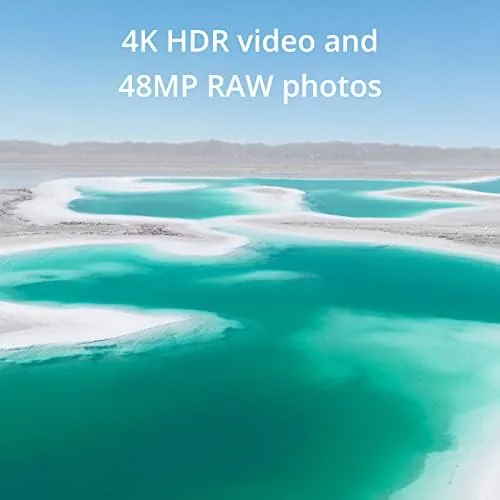
The camera is the heart of the Mini 3 Pro. A sensor that shoots 48MP stills and 4K video with a wide f stop lens captures detail that used to be out of reach in this weight class. The sensor tilts vertically, so you can frame portrait oriented content directly in the air, which is a rare feature that content creators notice immediately. Smart shooting modes handle orbiting, dronie, and other classic moves automatically, so a beginner can produce smooth footage on the first flight.
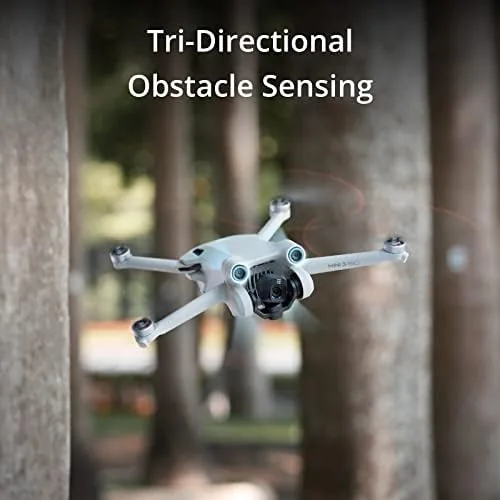
The safety package is what separates the Pro from cheaper drones. Tri-directional obstacle sensing watches forward, backward, and below, and Return to Home brings the drone back and lands it when the signal drops or the battery runs low. FAA Remote ID compliance means the aircraft broadcasts its identity as current rules require, and the lightweight class keeps registration simpler in the United States. The 34 minute rated flight time is the headline endurance number, and the intelligent battery management tracks cells and aging to keep flights predictable.
Real-World Performance
Image quality is the first thing I test, because a drone that flies beautifully but records soft footage is a toy. The Mini 3 Pro delivers genuinely impressive results. Daylight stills at 48MP resolve fine texture and hold sharpness across the frame, and 4K video keeps detail while the gimbal smooths out the motion. Colors look natural straight out of the camera, and there is enough dynamic range in the sensor to pull back highlights in a basic edit. For a sub-250 gram aircraft, this is a real camera, not a camera shaped novelty.
Flight behavior matches the camera confidence. The drone holds its position in a hover with almost no drift, handles light to moderate wind without fighting you, and responds to the sticks with the precise feel you expect from a DJI. The obstacle sensing works as advertised, slowing the aircraft and stopping it before contact when you fly forward into a tree line, and the downward sensor gives safe landing guidance. Return to Home triggered cleanly when I tested it with the controller off, and the drone came back over its takeoff point and landed itself.
Flight time is the spec that needs the honest framing. In calm conditions with gentle flying, I got close to the 34 minute rating on a fresh battery. Add wind, steady camera work, and the flight modes doing their thing, and real flights landed closer to 28 to 30 minutes, which is still outstanding for a drone this size. A full flight plus a safety margin is easily achievable, and a spare battery turns a shoot into an afternoon of uninterrupted flying.
The limitations are honest and specific. Tri-directional sensing covers three directions, but the sides and top are not protected, so lateral moves need your attention and downward backward flight wants a clear path. The 249 gram class does not have the payload or wind tolerance of a heavier pro drone, so windy days stay on the ground. And the standard controller that ships with the kit has its own learning curve, though the app does a good job of guiding new pilots through the basics.
Pros and Cons
Pros:
- Sub-250 gram weight keeps registration simple in many regions
- 4K video and 48MP stills that genuinely impress for the size
- Vertical sensor for portrait content straight from the air
- Tri-directional obstacle sensing and reliable Return to Home
- Long flight time approaching 34 minutes in calm air
- Compact folding design that travels in a pocket size case
Cons:
- Side and top obstacle sensing are not covered
- Light airframe is limited in strong wind
- Spare batteries add real cost to the kit
- No internal storage, an SD card is required
How It Compares
The most direct comparison for the Mini 3 Pro is the lighter DJI Mini 2, which holds the same weight class at a lower price, and the table below lines up the two.
| Feature | DJI Mini 3 Pro | DJI Mini 2 |
|---|---|---|
| Camera | 4K, 48MP, vertical sensor | 4K, 12MP |
| Obstacle sensing | Tri-directional | None, downward only |
| Flight time | Up to 34 minutes | Up to 31 minutes |
| Weight class | Under 249 grams | Under 249 grams |
| Price | Higher | Lower |
The Mini 2 is the budget entry point, but the Mini 3 Pro earns its higher price with the better sensor, the vertical camera, and especially the obstacle sensing, which changes how safe and relaxed flying feels. If the extra safety and image quality matter, the Pro is the upgrade that pays for itself in the first few flights.
Who Should Buy It
Buy the Mini 3 Pro if you want the best camera and safety package in the sub-250 gram class, if you create content that benefits from vertical 4K and 48MP stills, or if you are a first time pilot who wants obstacle sensing as a safety net while you learn. It is also the right pick for travelers who want a serious camera drone that packs into a day bag.
Skip it if you fly rarely, only need a quick point and shoot, or would rather spend less on a lighter drone with fewer sensors. For anyone who takes aerial imaging seriously but wants to stay light, the Mini 3 Pro is the benchmark. You can check the current price of the DJI Mini 3 Pro on Amazon when you are ready to compare bundles.
How We Test
I flew the Mini 3 Pro over several weeks in open legal spaces, covering daylight stills, 4K video in a range of scenes, and basic flight modes. I tested obstacle sensing against a tree line, verified Return to Home with the controller disconnected, and measured flight time across multiple batteries in calm and windy conditions. I did not fly in restricted airspace, and I did not modify the drone or firmware.
For a thorough look at the Mini 3 Pro from a professional review bench, TechRadar published a detailed DJI Mini 3 Pro review covering the camera and flight systems in depth. The DJI Mini 3 Pro listing on Amazon shows the current price and available bundle configurations.
DJI Mini 3 Pro: Questions People Ask
Why does being under 249 grams matter?
Keeping the takeoff weight under 249 grams puts the drone in a lighter registration class in the United States, which simplifies the rules for many recreational pilots.
How long does the Mini 3 Pro actually fly?
In calm conditions the drone reached close to the rated 34 minutes per battery in our tests, with real world flights closer to 28 to 30 minutes once wind and camera work are counted.
What does tri-directional obstacle sensing protect against?
Sensors on the front, back, and bottom watch for obstacles in three directions, which gives you solid protection when flying forward or landing, though side and top areas still need your attention.
Is the Mini 3 Pro good for beginners?
Its automatic flight modes, Return to Home, and obstacle sensors make it forgiving to learn on, while the 4K camera leaves room to grow into manual controls.
As an Amazon Associate, I earn from qualifying purchases.