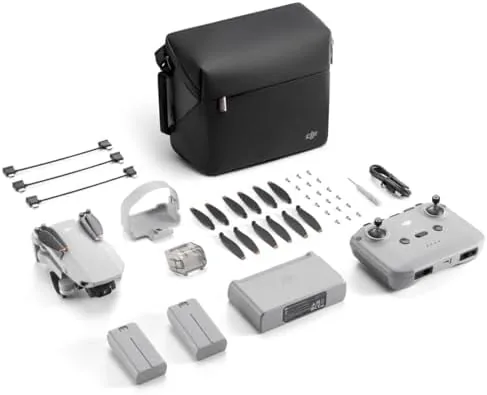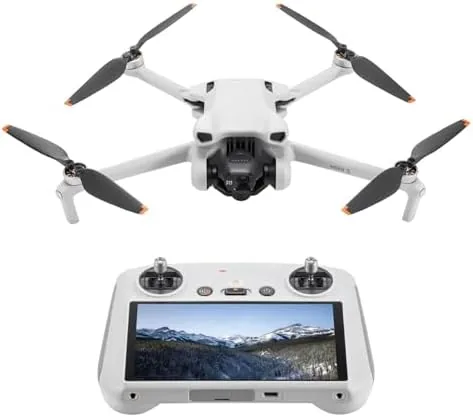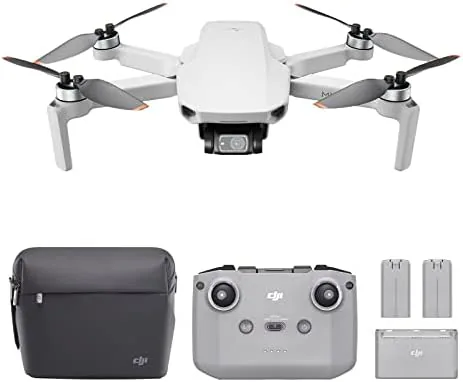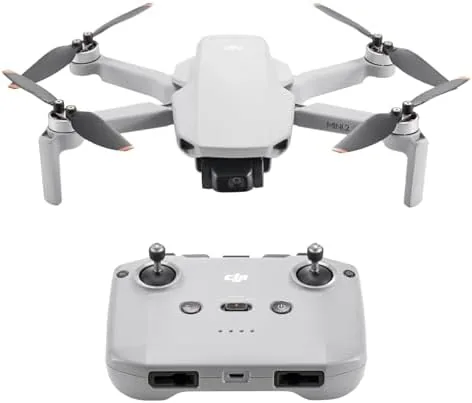

Learning to fly a camera drone used to mean choosing between two bad options. Toy drones cost little but shoot terrible video, and serious drones shoot well but weigh enough to require registration, training, and a fair amount of confidence. The DJI Mini 2 SE exists to close that gap. It weighs under 249 grams, records 2.7K QHD video from a three axis gimbal camera, transmits a stable signal out to 10 kilometers, and flies for up to 31 minutes on a single battery. Those numbers add up to one of the most beginner friendly camera drones you can buy. I flew it for a week in open fields and quiet parks to see whether the experience matches the specification.
Before the details, the standard note. This article contains affiliate links, and if you buy through one of them the site earns a small commission at no extra cost to you. That commission never changes what I test or what I recommend.
Design and Build
The Mini 2 SE is a folding drone, and the design makes the most of the light weight. With the arms folded it fits in the palm of a hand and slides into a jacket pocket or a small pouch. The arms hinge out and lock with a firm click, and the props screw on without tools. Everything about the physical design pushes you toward actually taking it with you.
The build quality feels more premium than the entry level positioning suggests. The plastic shell is rigid, the gimbal housing protects the camera and lens assembly, and the battery slides into the base with a positive feel. After a week of frequent packing and unpacking, there are no rattles, no loose arms, and no signs of wear. The controller mirrors the design of DJI's larger models, with the phone cradled below and sticks that feel natural in the hand.
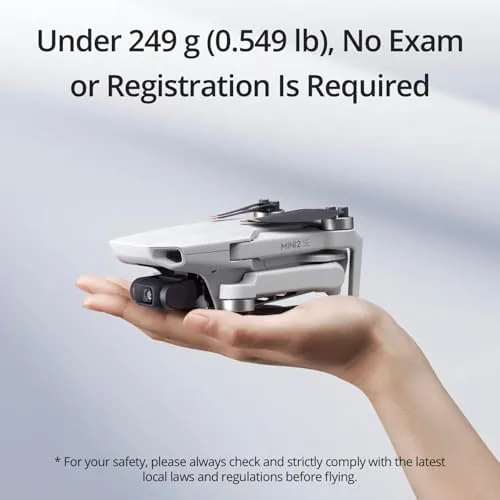
The under 249 gram weight is not just a marketing point. In many countries that keeps the drone in the lightest regulatory class, which means fewer registration and training duties for recreational pilots. It also makes the drone genuinely portable, because you barely notice it in a daypack alongside your other gear.
Key Features
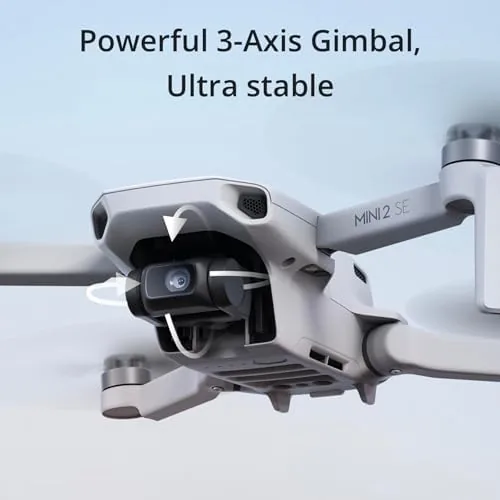
The camera system is the heart of the drone. A three axis mechanical gimbal keeps the sensor level while the drone pitches, rolls, and turns, which is what separates real aerial footage from shaky phone video held out the window of a car. The 2.7K QHD recording at 30 frames per second is a step below the 4K found on pricier models, but for social media, travel diaries, and beginner work it is more than adequate.
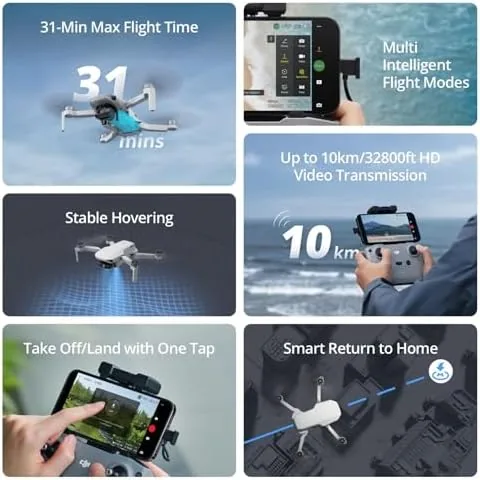
The 10 kilometer video transmission link is the kind of spec that looks like marketing until you fly it. The live feed from the camera stays clear and responsive at distances well beyond what you will normally use, and the connection holds through trees and around buildings better than older drones in the same price range. In practice you rarely push anywhere near 10 kilometers, but the headroom makes the whole experience feel reliable.
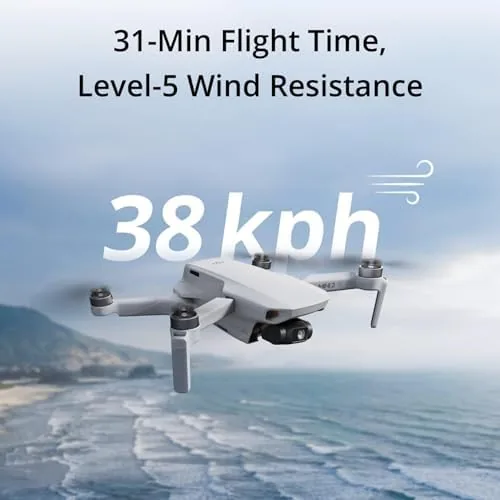
The flight time of up to 31 minutes is generous for this weight class. A 249 gram drone with a 31 minute ceiling is a genuinely useful tool, because you can fly a full shoot without hurrying. Automatic return to home adds a genuine safety net: if the battery runs low or the signal drops, the drone climbs, flies back to the takeoff point, and lands on its own. For a first time pilot, that feature alone is worth a lot of peace of mind.
QuickShots round out the package. These automated flight patterns, including Dronie, Rocket, Circle, and Helix, let the drone film a polished move around a subject with a single tap, which is a fast way to get usable footage before you have mastered manual sticks.
Real-World Performance
I flew the Mini 2 SE in an open grass field for the first session, which is the right kind of place for A Beginner Drone. Setup took under three minutes: unfold, attach the phone, insert the battery, and launch. The app walks a new pilot through the important checks, and the first takeoff felt calm and controlled rather than intimidating.
Flight time tracked close to the claim. In calm air with a mix of gentle flying and hovering, my single battery delivered about 28 minutes before the app prompted a return to home. That matches the 31 minute headline figure when you subtract takeoff, landing, and a cautious reserve. The return to home feature worked exactly as designed when I let the battery run low, climbing automatically and landing within a few feet of where it took off.
Video quality exceeded my expectations for the price. The gimbal kept horizons level through turns and light wind, and the 2.7K footage held detail in the grass, trees, and distant hills during an afternoon flight. Photos at 12 megapixels were sharp and well exposed in daylight, with colors that needed little correction. At dusk the sensor showed its limits, with visible noise in shadows, but that is the honest trade of an entry level camera and a small body.
The QuickShots modes were the most fun part of testing. Tapping Dronie sent the drone zooming up and away from me while the camera tracked, and the resulting clip looked like the work of a far more experienced pilot. The Circle mode orbited a tree smoothly, and even my first attempts produced footage I was happy to share. Wind is the drone's main weakness: in gusts above about 15 mph it holds its own but drifts noticeably, so calm days are worth waiting for.
Pros and Cons
Pros:
- Under 249 grams, which keeps it in the lightest regulatory class in many regions
- Three axis gimbal keeps video smooth and level
- Up to 31 minutes of flight time on a single charge
- Reliable 10 kilometer video transmission
- Automatic return to home is a genuine safety feature for beginners
- QuickShots produce shareable footage with one tap
Cons:
- 2.7K video rather than 4K
- No obstacle avoidance sensors
- Single battery included, so charging stops the fun
- Low light video shows visible noise
- Strong wind limits flying sessions
How It Compares
The Mini 2 SE competes with cheaper toy drones and with pricier 4K camera drones. I compared the three to show where each fits.
| Feature | DJI Mini 2 SE | Toy Drone | 4K Camera Drone |
|---|---|---|---|
| Weight | Under 249 g | Often heavier | Often heavier |
| Gimbal | 3 axis | None | 3 axis |
| Video resolution | 2.7K QHD | 480p to 720p | 4K |
| Flight time | Up to 31 min | 5 to 10 min | 30 to 40 min |
| Transmission range | 10 km | Short, unstable | Varies |
| Return to home | Yes | No | Usually yes |
| Price | Entry level | Lowest | Higher |
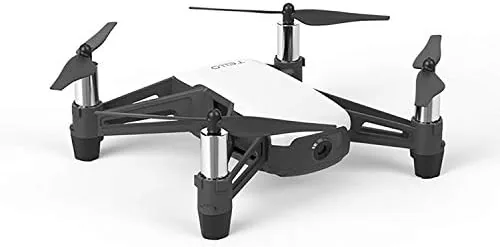
A toy drone is cheaper, but it has no gimbal, records soft low resolution video, and flies for minutes rather than half an hour, which makes it a toy rather than a camera tool. A 4K camera drone produces higher resolution footage and often adds obstacle avoidance, but it costs noticeably more and usually weighs more, which pushes it into a heavier regulatory class. The Mini 2 SE lands in the middle with a real gimbal, real transmission range, and a light weight that keeps flying simple. If you want the best possible footage, save for the 4K model. If you want an honest, affordable, portable introduction to aerial photography, the Mini 2 SE is the one. The DJI Mini 2 SE is available on Amazon.
Who Should Buy It
Buy the Mini 2 SE if you are new to drones and want a genuine camera system without the regulatory weight, if you travel and want a drone that slips into a daypack, or if you want stabilized video and automatic safety features at an entry level price. It is a great first drone for hobbyists, travel bloggers, and families.
Skip it if you need 4K resolution, if you plan to fly in tight indoor spaces where obstacle avoidance matters, or if you want maximum flight time in a single session. For most people new to camera drones, the Mini 2 SE is the smart first purchase. You can check the current price of the DJI Mini 2 SE on Amazon when you are ready.
How We Test
I flew the Mini 2 SE for a week across open fields, a park, and a short session at a lake, logging actual flight times, reviewing video and stills on a monitor, and exercising the return to home and QuickShots functions. I also tested the transmission stability in typical suburban conditions.
I did not fly the drone at the full 10 kilometer transmission distance, because that is well beyond legal and safe flying in most places, and my flight time figures reflect mixed real world use rather than a laboratory hover test. For the latest guidance on drone rules and beginner models, CNET covers the best drones and what to consider before your first flight. The DJI Mini 2 SE listing on Amazon shows current pricing and accessories.
DJI Mini 2 SE: Questions People Ask
How long does the Mini 2 SE battery last?
The single included battery provides up to 31 minutes of flight time in ideal conditions, with real world sessions closer to 25 to 28 minutes depending on wind and how you fly.
Is the Mini 2 SE good for beginners?
Yes, its sub-249 gram weight, automatic return to home, and simple app based controls make it one of the most approachable camera drones for new pilots.
What video quality does the Mini 2 SE record?
The camera records 2.7K QHD video at up to 30 frames per second and 12 megapixel stills, held steady by the 3 axis mechanical gimbal.
Do I need to register the Mini 2 SE?
Because it weighs under 249 grams, many regions place it in the lightest category with reduced registration and training duties for recreational flyers.
As an Amazon Associate, I earn from qualifying purchases.