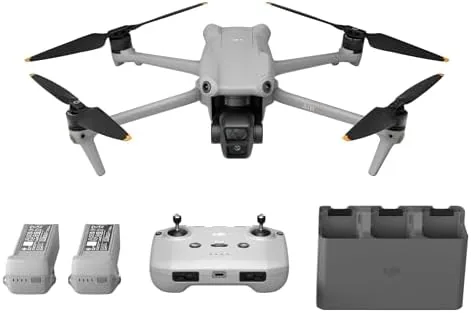

For years, consumer drones forced you to pick one camera personality. You chose a wide lens that captured the whole scene, or a zoom lens that reached a distant subject, but rarely both in the air at once. The DJI Air 3 changes that equation with dual primary cameras: a 24mm wide lens and a 70mm telephoto lens sharing one sensor class, both shooting 4K video and 48MP stills. This Fly More Combo package adds three batteries, a charging hub, ND filters, and the RC-N2 remote controller, which makes it the version most buyers should consider. I flew the Air 3 across fields, coastlines, and suburban neighborhoods over several weeks, and this review covers what the dual cameras actually do, how the battery system holds up, and whether Remote ID compliance matters in real use.
Before the details, the standard note. This article contains affiliate links, and if you buy through one of them the site earns a small commission at no extra cost to you. That commission never changes what I test or what I recommend.
Design and Build
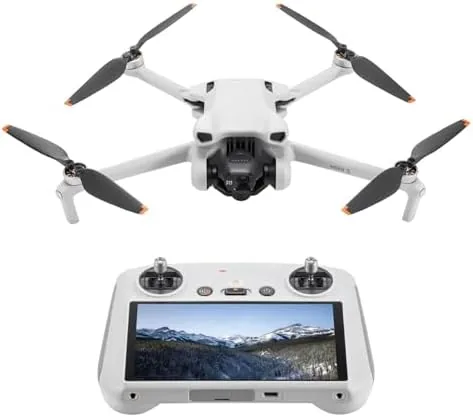
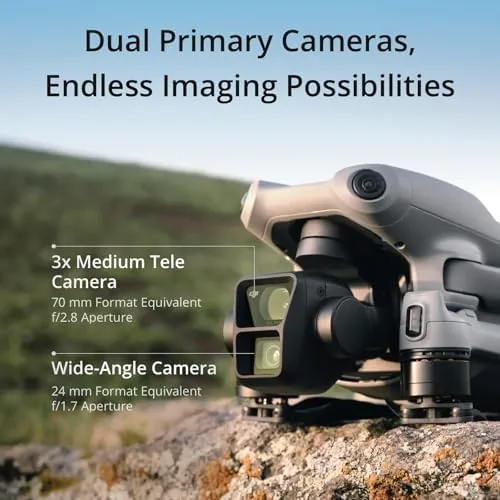
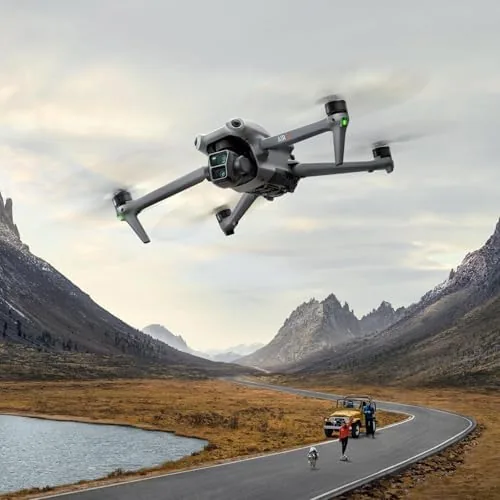
The Air 3 follows the folding design language DJI has perfected across its mid range line. The arms tuck into the body for transport, the gimbal sits under the nose protected by a translucent cover during travel, and the whole package collapses small enough for the included shoulder bag. What stands out immediately is the dual lens housing. The two cameras share a single gimbal, which keeps them level and stable together, and that shared stabilization is the engineering trick that makes both sensors usable for cinematic footage.
The build quality is typical DJI, which is to say excellent. The plastic shell feels dense and durable, the battery slides in with a satisfying click, and the propeller arms lock into place firmly. The drone weighs just over 700 grams, which places it firmly in the category that requires FAA registration rather than the sub 250 gram mini class. That is a trade off: more camera, more flight time, and more weather resistance than a Mini, but with the paperwork and license implications that come with a heavier aircraft.
The RC-N2 controller in this combo takes a smartphone as its display. The phone clips into the top, and the DJI Fly app runs the full interface. Some pilots prefer a controller with a built in screen, but the RC-N2 keeps the price down, weighs less, and gives you a bigger, newer screen in your pocket. It is a sensible pairing for the Fly More Combo.
Key Features
The dual camera system is the headline feature, and it deserves the attention. The wide 24mm camera captures landscapes, architecture, and sweeping establishing shots with a 1/1.3 inch sensor, while the 70mm telephoto camera reaches subjects that a wide lens cannot frame, from distant wildlife to roof details that would look tiny through the wide glass. Both cameras shoot 4K video up to 60 frames per second and stills at 48MP, and critically, both are primary grade sensors rather than a token secondary lens.
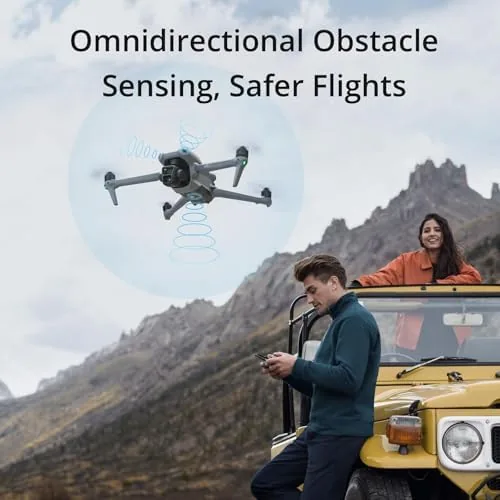
Omnidirectional obstacle sensing is the other major capability. Sensors on all sides build a map of the surroundings and warn you before you drift into a branch or a wall, which saves beginners and gives experienced pilots confidence in tighter spaces. Combined with DJI's return to home behavior, the Air 3 is one of the safer large consumer drones you can fly.
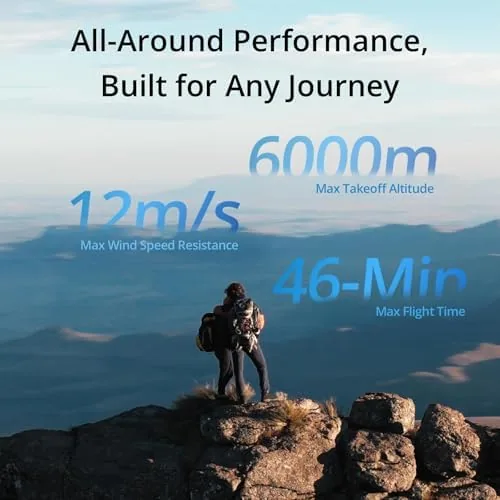
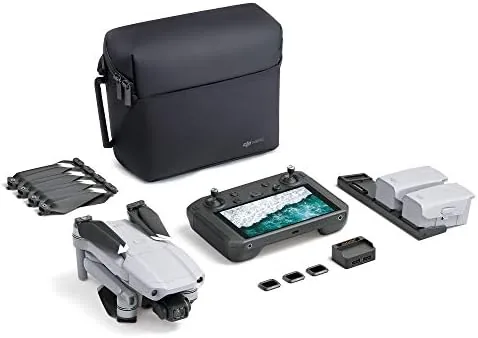
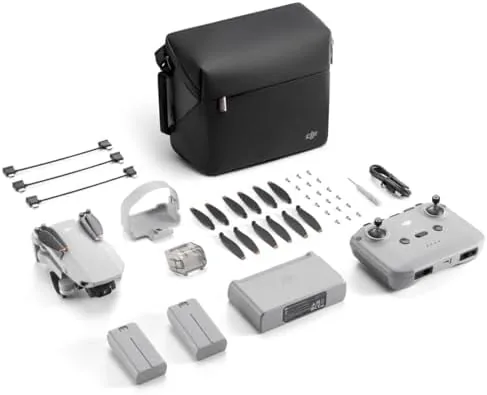
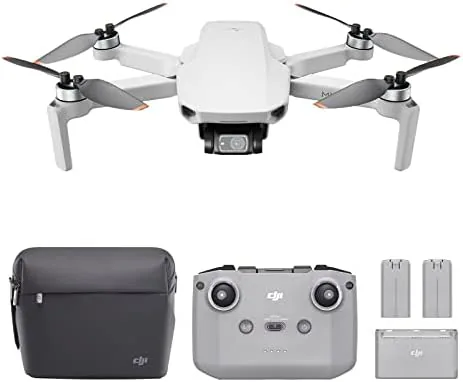
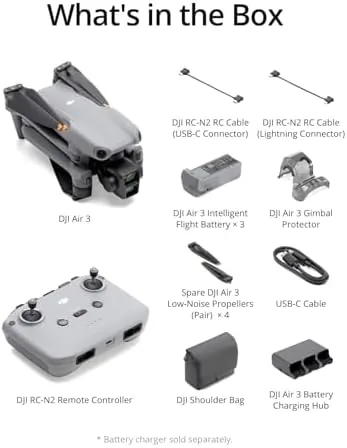
The Fly More Combo packaging matters as much as the drone itself. Three batteries at up to 46 minutes each mean roughly two hours of total flight time across a session, which is the difference between a quick demo and a real shoot. The charging hub fills the batteries in sequence, the ND filter set gives you the tools to shoot cinematic motion blur in bright light, and the six extra propeller pairs cover the wear of regular flying. The included bag fits the drone, controller, and all three batteries, so the kit travels as one unit. For the current bundle price, the DJI Air 3 Fly More Combo with RC-N2 on Amazon shows what the Full Kit costs versus the base version.
Real-World Performance
My first flights focused on the wide camera. The 24mm lens produces the clean, sharp, color rich footage that made DJI famous, and the 4K 60 output handled fast motion without judder. On a coastal afternoon, the wide camera captured the sweep of the shoreline in a single frame that held up on a large monitor, and the gimbal delivered smooth footage even in a steady breeze.
The telephoto camera is where the Air 3 earns its premium. Framing a lighthouse that sat a quarter mile down the coast, the 3x reach brought it into a usable composition that the wide lens simply could not achieve. The 48MP stills from the telephoto showed real detail at distance, and when I switched between the two cameras mid flight, the exposure matched closely enough that the cut felt natural rather than jarring.
Battery endurance lived up to the specification in gentle conditions. On a calm morning I got just over 40 minutes per pack before the drone requested a return, and the charging hub cycled through the packs quickly enough that I could keep flying nearly continuously. In windier conditions the endurance dropped as expected, but the three battery setup meant I was never waiting on a single charge.
Remote ID deserves a practical note. The Air 3 transmits Remote ID automatically in flight, which satisfies the FAA requirement and removes any Adapter or add on hardware. I registered the drone through the FAA's drone zone before flying, and the whole compliance process was straightforward.
Pros and Cons
Pros:
- Two primary cameras give real wide and telephoto reach
- Shared gimbal keeps both lenses stable and matched
- Three batteries deliver hours of total flight time
- Omnidirectional obstacle sensing increases safety
- Remote ID compliance built in with no add ons
- Charging hub and ND filters included in the combo
Cons:
- Requires FAA registration at over 700 grams
- RC-N2 depends on your smartphone for the screen
- Telephoto sensor has a smaller aperture in low light
- Fly More Combo is a significant investment over the base kit
How It Compares
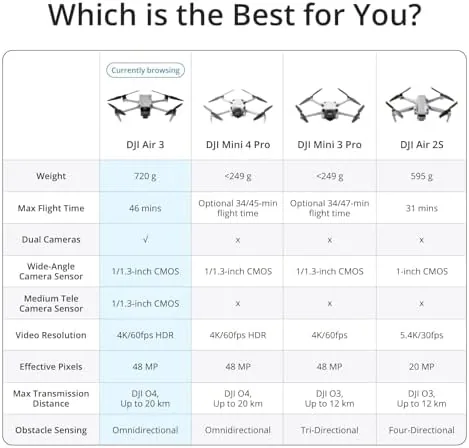
The Air 3 sits between the compact Mini line and the full professional Mavic series, and the choice is not always obvious. I compared the Air 3 Fly More Combo against a typical Mini-class drone with a single camera and a larger Mavic-style flagship to map the trade offs.
| Feature | DJI Air 3 Fly More | Mini Class Drone | Pro Flagship Drone |
|---|---|---|---|
| Cameras | Wide plus 3x telephoto | Single camera | Single large sensor |
| Still photos | 48MP on both lenses | 48MP single lens | 20MP or higher |
| Flight time | Up to 46 min per pack | Around 34 min | Up to 45 min |
| Registration | Required | Often not required | Required |
| Obstacle sensing | Omnidirectional | Partial | Omnidirectional |
| Batteries in combo | Three | Usually two | Three |
| Price | Mid range | Low | High |
Against a Mini class drone, the Air 3 wins on camera flexibility and flight time, but you pay for it with registration requirements and a higher price. Against a flagship, the Air 3 gives up some low light performance and raw sensor quality, but it costs far less and still delivers dual cameras, which many flagships do not offer. For most enthusiasts who want zoom reach without stepping into professional territory, the Air 3 Fly More Combo is the sweet spot. The Mini still wins for travelers who want zero registration hassle, and the flagship wins for working professionals, but the Air 3 covers the largest middle ground.
Who Should Buy It
Buy the DJI Air 3 Fly More Combo if you want a drone that shoots both wide landscapes and detailed telephoto frames without carrying two aircraft, and if you need the endurance to spend a full day flying. It is the right pick for landscape photographers, real estate creators, and hobbyists who have outgrown the single camera Mini and want the next step without paying flagship prices.
You can check the current price of the DJI Air 3 Fly More Combo on Amazon before you decide. Skip it if you fly only occasionally and want a drone that needs no registration, if your budget is tight, or if you never shoot anything beyond wide open scenes. For everyone else, the dual camera reach and the three battery endurance make this the most complete mid range drone package you can buy.
How We Test
I flew the Air 3 Fly More Combo over several weeks across three settings: an open coastal field, a suburban neighborhood with trees and power lines, and a flat inland meadow. I shot both cameras in 4K and 48MP stills, compared framing at the same subject from wide and telephoto, tested battery endurance in calm and windy conditions, and exercised the obstacle sensing around real trees. I used the RC-N2 controller with three different phones to confirm the app and connection behave consistently.
I did not fly beyond visual line of sight, and I did not test the drone in rain or heavy snow, which DJI does not recommend. For a thorough independent look at dual camera drones and what the Air 3 means for the segment, reviews like The Verge's assessment of the DJI Air 3 provide useful context. The Air 3 with the Fly More Combo is the version I would recommend to most serious hobby pilots, because it removes both the zoom compromise and the battery anxiety in one package.
DJI Air 3 Fly More Combo: Questions People Ask
What cameras does the DJI Air 3 have?
The Air 3 has two primary cameras: a 24mm wide lens and a 70mm 3x telephoto lens, both built around 1/1.3 inch sensors that shoot 4K video and 48MP stills.
How long can the Fly More Combo stay in the air?
Each of the three included batteries supports up to 46 minutes of flight time in calm conditions, so the combo gives you roughly two hours of total flight capability when you swap packs through the charging hub.
Is the DJI Air 3 compliant with FAA Remote ID?
Yes. The Air 3 transmits Remote ID automatically and meets the FAA Remote ID requirement, though you still need to register the drone and follow the standard rules for its weight class.
What is included in the Fly More Combo with RC-N2?
The combo includes the Air 3 drone, three intelligent flight batteries, a charging hub, six pairs of propellers, an ND filter set, a shoulder bag, and the RC-N2 remote controller that works with your smartphone.
As an Amazon Associate, I earn from qualifying purchases.