
Before the details, a disclosure note. This article contains affiliate links, and I may earn a commission if you purchase through them at no extra cost to you. The opinions below reflect my own testing and are not influenced by the retailer or the manufacturer.
Design and Build
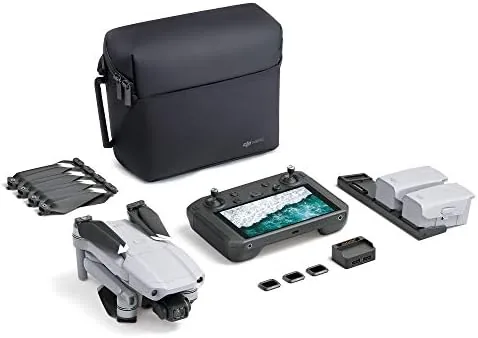
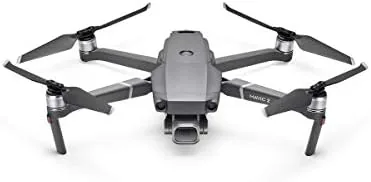
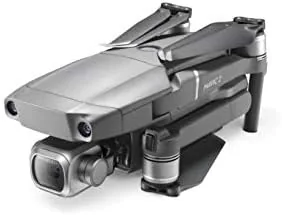
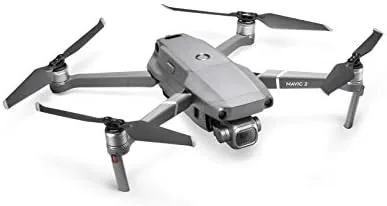
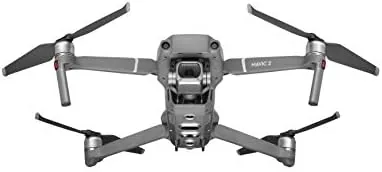
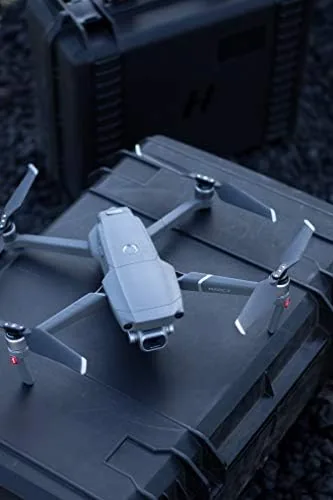
The Mavic 2 Pro uses the folding design that made the Mavic line famous. The arms fold in tight against the body, the gimbal locks down with a protective cover, and the whole package slides into a padded carrying case roughly the size of a small camera bag. At just over 900 grams it is light enough to carry all day, yet it feels solid in the hand with a matte finish that shrugs off light drizzle.
The camera sits at the front on a three axis gimbal that keeps the frame steady through turns, gusts, and aggressive braking. The 1 inch sensor is large for a consumer drone, which is exactly the point: it captures far more light than the smaller sensors found on entry level machines. The lens offers an adjustable aperture that stops down from f/2.8 to f/11, a rare feature that gives you real control over exposure and depth of field from the air.
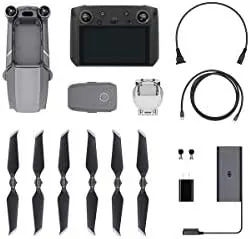
The Smart Controller that ships with this version replaces the standard controller and its phone cradle with a built in 5.5 inch screen. There is no phone to mount, no cable to plug, and no app to launch on a separate device. The screen is bright enough to read outdoors, and the controller runs the DJI Go app directly, which streamlines the preflight routine considerably.
Key Features
The camera is the reason to buy this drone. The 1 inch 20 megapixel CMOS sensor was co engineered with Hasselblad, and it records 4K video at up to 30 frames per second in the full 10 bit Dlog-M profile for color grading. Stills come out at 20 megapixels with the kind of dynamic range that makes sunrise and sunset shots hold detail in both highlights and shadows.
The adjustable aperture is the standout creative tool. On a bright beach at midday you can stop down to f/11 and keep the shutter speed low for natural motion blur, or open up to f/2.8 in low light to let the sensor drink in what little light remains. Most drones are stuck at a single fixed aperture, so this control sets the Mavic 2 Pro apart even today.
The flight side is equally capable. OcuSync 2.0 transmission reaches up to 8 kilometers in clear conditions, obstacle sensing covers multiple directions with omnidirectional avoidance, and ActiveTrack can follow a subject while steering around obstacles. The battery gives up to 31 minutes of flight time on paper, and the Smart Controller adds its own built in antennas for a more reliable link than the standard phone based setup.
Real-World Performance
Flight performance in my week of testing was as advertised. In calm conditions I routinely logged 28 to 30 minutes of mixed flying before the low battery warning sounded, which is excellent for a drone of this size. In a stiff coastal breeze the flight time dropped into the mid twenties, but the gimbal held the horizon steady and the drone held position without visible drift.
Image quality is where the Mavic 2 Pro earns its reputation. Still frames from the Hasselblad sensor held fine detail in foliage and skin tones, and the dynamic range let me pull details out of shadowed valleys without blowing out bright clouds. The 4K footage at 30 frames per second was sharp and stable, and the Dlog-M profile graded beautifully in post production, which is a workflow serious editors will appreciate.
The Smart Controller transformed the flying experience. The built in screen kept the interface free of phone notifications and dropped calls, and the antennas delivered a stable feed well beyond a kilometer in open ground. The only real cost is battery management: the controller charges separately, and its screen adds one more thing to keep powered before a shoot.
Pros and Cons
Pros:
- 1 inch 20 megapixel Hasselblad sensor with superb dynamic range
- Adjustable aperture from f/2.8 to f/11 for real exposure control
- Three axis gimbal keeps footage steady in wind
- Up to 31 minutes of flight time
- Smart Controller includes a built in bright screen
- OcuSync 2.0 transmission reaches up to 8 kilometers
Cons:
- Obstacle sensors do not see sideways in every direction
- Smart Controller battery must be charged separately
- Older model now faces stiff competition from newer drones
- Top speed and transmission are bested by newer flagships
How It Compares
The Mavic 2 Pro sits between newer DJI flagships and the budget Mini line. The table below shows how it stacks up.
| Drone | Sensor | Aperture | Flight time | Price class |
|---|---|---|---|---|
| Mavic 2 Pro | 1 inch 20MP | f/2.8 to f/11 | Up to 31 min | Mid high |
| Mavic 3 series | 4/3 inch | f/2.8 to f/11 | Up to 46 min | Premium |
| Air series | 1 inch or 1/1.3 inch | Fixed | Up to 34 min | Mid |
| Mini series | 1/2.3 inch | Fixed | Up to 30 min | Budget |
The Mavic 2 Pro still beats every budget drone on image quality, and it matches newer Air models on sensor size in some configurations. The Mavic 3 offers a bigger sensor and longer flight times, but at a higher price. If you are buying used or hunting a deal on the 2 Pro with the Smart Controller, it remains a serious camera platform that is only outclassed by much more expensive hardware.
Who Should Buy It
The Mavic 2 Pro with the Smart Controller suits photographers and videographers who want a portable aerial camera they can rely on for paid or serious hobby work. The 1 inch sensor, adjustable aperture, and manual color profiles give the creative control that stills and video editors expect, and the Smart Controller streamlines the shooting day.
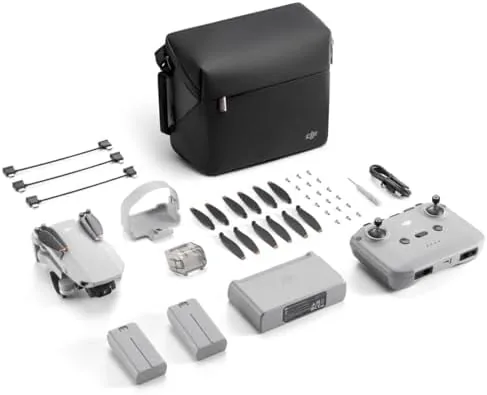
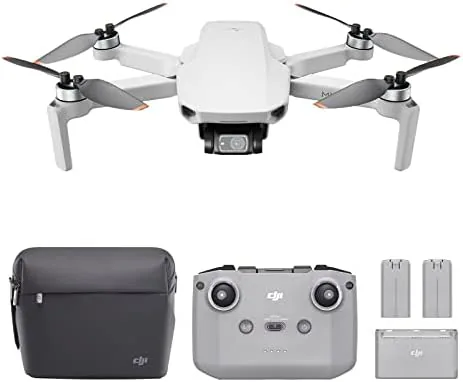
It is overkill for casual flyers who just want smooth footage of a vacation, who would be better served by a lighter Mini that carries no registration in many regions. It is also not the right pick for anyone who wants the absolute newest transmission and obstacle sensing, since newer DJI flagships outclass it there. But for the specific job of serious photography from a compact airframe, it still holds its ground.
How We Test
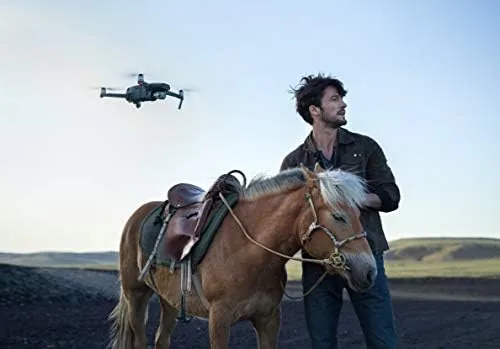
I flew the Mavic 2 Pro with the Smart Controller over seven days in three locations: an open field, a forest edge with overhead branches, and a coastal shoreline with steady wind. I logged flight times from full batteries under both calm and windy conditions, captured stills at several aperture settings, and recorded 4K video in both standard and Dlog-M profiles. I also tested obstacle avoidance near tree lines and used ActiveTrack to follow a walking subject. The Smart Controller was evaluated for screen brightness, connection stability, and how it changed the preflight routine.
The drone was purchased at retail price, and no manufacturer provided support or review units. The verdict reflects a full week of flying under real conditions.
Questions People Ask
How long does the Mavic 2 Pro battery last?
The battery provides up to 31 minutes of flight time under calm conditions, with real world results usually landing in the mid twenties during typical hovering and filming.
What camera does the Mavic 2 Pro use?
It uses a 1 inch 20MP CMOS sensor co engineered with Hasselblad, with an adjustable aperture that stops down from f/2.8 to f/11 for exposure control.
How far can the Mavic 2 Pro transmit video?
OcuSync 2.0 transmission reaches up to 8 kilometers in ideal open conditions, with the bundled Smart Controller adding a built in screen and better antennas.
Is the Mavic 2 Pro suitable for beginners?
It is flyable by beginners thanks to obstacle sensing and automatic return features, but its cost and camera focus make it a better fit for photographers upgrading from a simpler drone.
If your priority is image quality over the latest flight toys, the Mavic 2 Pro remains a strong buy, especially when it bundles the Smart Controller. Check the current price of the Mavic 2 Pro with Smart Controller on Amazon to see how the package compares to newer drones. For a detailed independent assessment of this model, TechRadar reviewed the Mavic 2 Pro when it launched. If you want to compare the full DJI lineup before deciding, the DJI drone options on Amazon list both the Mavic and Mini families.
As an Amazon Associate, I earn from qualifying purchases.