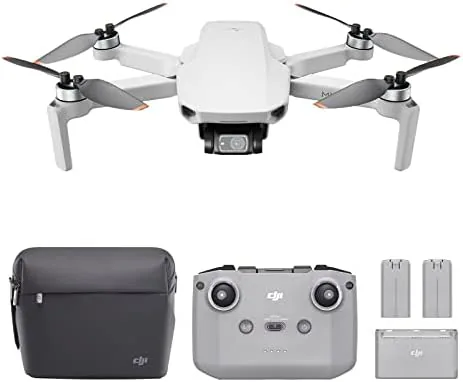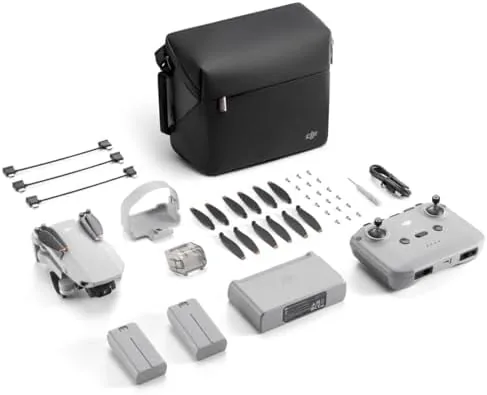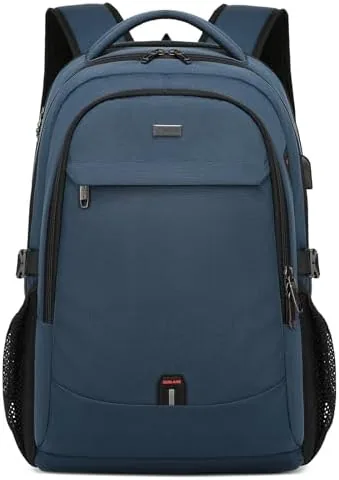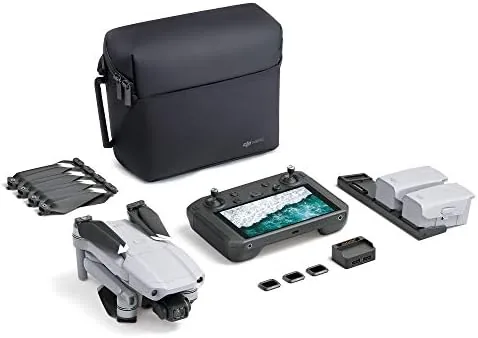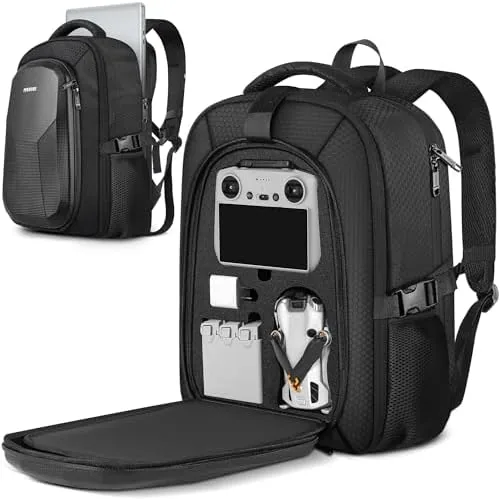

A drone is only as safe as the bag that carries it. The DJI Mini 3 and Mini 4 Pro are light and tough for their size, but propellers bend, gimbals knock out of calibration, and controllers rattle against each other inside a loose backpack. I have carried drones through airport terminals, mountain trails, and car boots for years, and the difference between a padded hard case and a soft duffel shows up the first time the bag gets thrown around. This review covers a dedicated solution: an expandable 30 liter drone backpack with a waterproof hard shell, made for the DJI Mini 3, the Mini 4 Pro, and their RC 2 and RC-N series controllers.
One note before the details. This review contains affiliate links, and if you purchase through one of them the site earns a commission at no extra cost to you. That never changes what I test or what I report.
Design and Build
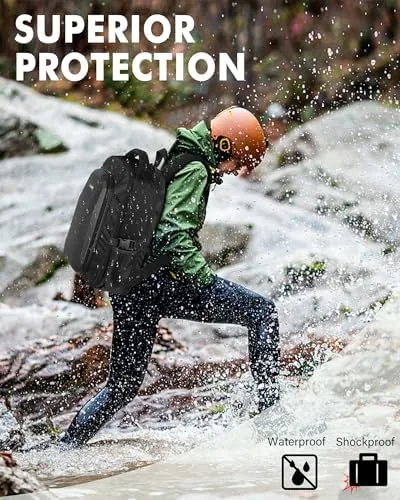
The bag is built around a hard outer shell with a padded interior, which is the correct design priority for camera gear. The shell resists knocks and impacts, while the foam dividers inside hold the drone, controller, batteries, and accessories in fixed positions so nothing shifts during transit. The exterior fabric is a water resistant material that beads off rain, and the seams and zippers sit under a storm flap to keep moisture away from the zipper track.
The harness is where a drone backpack either works or fails. This one has padded shoulder straps, a sternum strap to stop the bag sliding, and a breathable back panel that keeps you from sweating through your shirt on a long walk. The weight distribution is sensible: the drone and the batteries sit against your back rather than dangling at the bottom, which keeps the center of gravity stable when you are climbing or walking across uneven ground.
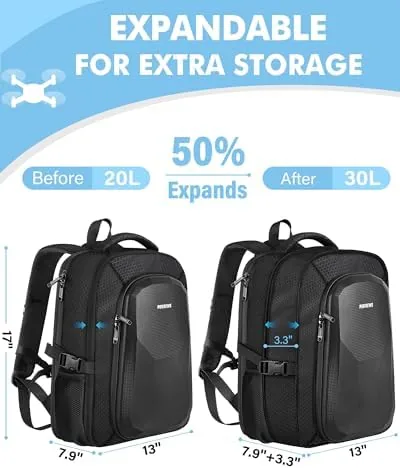
The expandable design is the defining trick of this bag. A zipper runs around the main compartment, and when you open it the capacity grows from a compact 20 liter carry to the full 30 liters. That means the bag stays slim for day trips with a single drone, and it expands when you need room for a second aircraft, a tablet, or a jacket. For the current price and the exact dimension breakdown, the Amazon listing for this DJI Mini drone backpack is worth a look.
Key Features
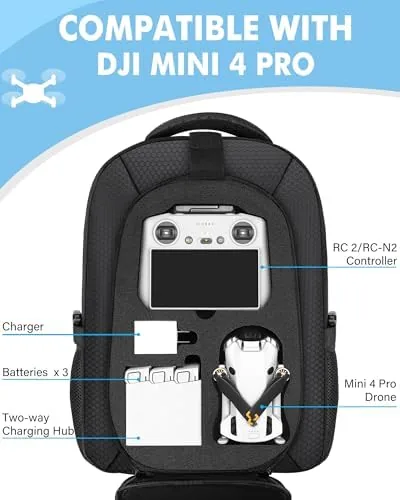
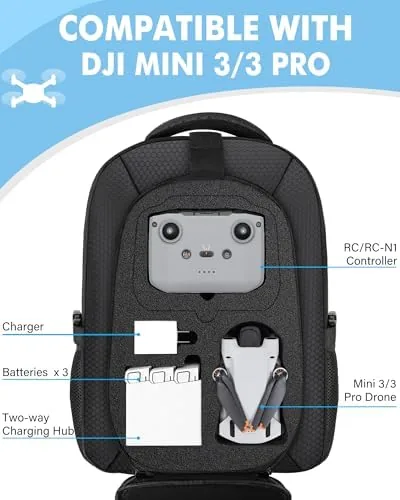
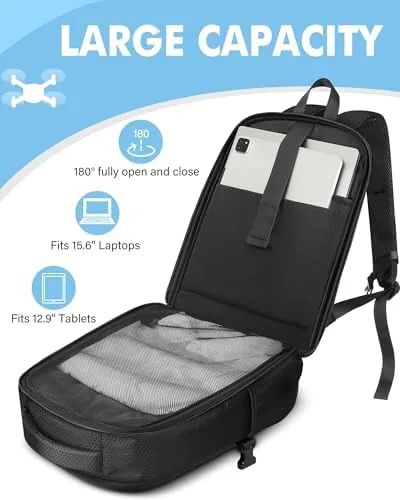
The interior is laid out around the DJI Mini ecosystem rather than generic camera foam. There is a dedicated molded pocket for the Mini 3 or Mini 4 Pro with the propellers installed, which saves you the fiddly task of removing props at the start and end of every flight. Next to it sits a pocket shaped for the RC 2 controller, and the layout also fits the RC-N3, RC-N2, and RC-N1 remotes, so the bag works across the whole Mini range regardless of which controller you own.
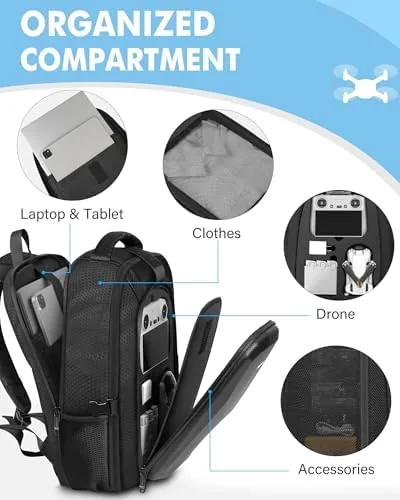
The battery storage follows drone flying best practice. Batteries live in a separate padded section with dividers between each cell, which stops them knocking together and reduces the risk of damage to the connector pins. The Fly More Combo kit, with its three batteries and charging hub, drops straight into the layout, and there is a mesh pocket for the spare propellers, cable, and ND filters that always seem to end up loose at the bottom of a bag.
The laptop sleeve is the feature that turns this from a drone bag into a travel bag. A padded rear compartment fits a 15.6 inch laptop, which means you can carry your drone and your computer in one bag for a shoot that needs both. For working flyers who edit on location, this removes the need for a second bag entirely.
Real-World Performance
I carried this bag through a week of travel that included a domestic flight, several long city walks, and two trail shoots with the Mini 4 Pro. The hard shell protected the drone through a checked baggage ride and a drop from the overhead bin, and the gimbal held its calibration the whole trip. The molded interior kept the aircraft, controller, and batteries in place with no rattling, and the Fly More kit fitted without forcing the zipper.
The expansion feature is genuinely useful in the field. Closed, the bag was compact enough to fit under an airplane seat, and expanded it swallowed a light jacket, a tablet, and a water bottle alongside the drone kit. The zipper ran smoothly through both states, and the bag held its shape rather than slumping when fully loaded.
The rain resistance held up in a genuine downpour on the second trail. Water beaded off the shell and the zipper storm flap, and the interior stayed dry. I would still keep the bag out of a heavy storm for long periods, since the material is water resistant rather than fully waterproof, but for normal flying conditions it is more than adequate. The one trade off is weight: the hard shell and padding make the bag heavier than a soft duffel, and that weight is noticeable on a long carry.
Pros and Cons
Pros:
- Hard shell and foam interior protect the drone from impacts
- Dedicated molded pocket holds the Mini with propellers on
- Expandable design grows from 20 to 30 liters on the trail
- Separate padded section keeps batteries and charger organized
- Fits a 15.6 inch laptop alongside the drone kit
- Water resistant shell and storm flap zipper cover
Cons:
- Heavier than a soft drone bag or duffel
- Not fully waterproof in extended heavy rain
- Expanded 30 liter size is bulky for tight overhead bins
How It Compares
Drone carrying options split into soft shoulder bags, hard cases without a harness, and padded backpacks like this one. Each has a real trade off, so I compared this expandable backpack against a soft drone bag and a hard case to see where it fits.
| Feature | Expandable Drone Backpack | Soft Drone Shoulder Bag | Hard Case |
|---|---|---|---|
| Impact protection | Hard shell | Padding only | Full hard shell |
| Carrying method | Backpack straps | Shoulder strap | Handle only |
| Laptop space | 15.6 inch sleeve | Usually none | None |
| Expandable capacity | 20 to 30 liters | Fixed | Fixed |
| Hands free carry | Yes | No | No |
| Air travel friendly | Compact when closed | Yes | Can be oversized |
Against a soft shoulder bag, the backpack wins on protection and on hands free carry. A soft bag lets the drone knock against its own accessories during a long walk, and the shoulder strap loads one side of your body. The hard shell and backpack harness solve both problems, at the cost of extra weight. Against a hard case, the backpack wins on carrying comfort and laptop space, since a case has no straps and forces you to Carry your computer separately. The hard case still wins if you are shipping the drone or stashing it in a car boot long term, where the extra rigidity matters. For everyday flying from a home base or on a trip, the expandable backpack is the best all rounder of the three. If you want broader perspective on protecting camera gear, Digital Trends runs a solid guide to the best camera backpacks for travel that covers the trade offs in more depth.
Who Should Buy It
Buy this backpack if you fly a DJI Mini 3, Mini 4 Pro, or any Mini series drone regularly and you want your aircraft, controller, and batteries in one protective bag that you can carry hands free. It is also the right choice for travel flyers who need the drone and a laptop together, and for anyone who upgrades between Mini models, since the interior covers the whole series.
Skip it if you fly rarely and just want the cheapest storage, or if you need a fully waterproof hard case for wet environments. For everyone else, this is a well built drone backpack that earns its place in the kit bag. You can check the current price for this DJI Mini backpack on Amazon when you are ready to carry.
How We Test
I tested this backpack over a week of real travel with a DJI Mini 4 Pro, an RC 2 controller, and a three battery Fly More kit. I loaded the bag to full expansion, carried it through an airport, on two trail hikes, and in a sustained downpour, and I checked the gimbal calibration and propeller condition after each trip. I also confirmed the laptop sleeve accepted a 15.6 inch machine and tested both the closed and expanded states of the main compartment.
I did not submerse the bag in water, since the shell is water resistant rather than fully waterproof, and I did not check it with a drone beyond the Mini 4 Pro's footprint. The interior layout matched the Mini 3 and Mini 3 Pro as well, based on their identical dimensions, but the only physical confirmation was with the Mini 4 Pro. For practical flying tips and battery care, DJI's own support pages on drone battery safety and storage are worth reading alongside this review.
DJI Mini Backpack: Questions People Ask
Will the DJI Mini 4 Pro fit in this case with the propellers on?
Yes. The molded interior accepts the Mini 3 and Mini 4 Pro with the propellers installed, so you can pack and unpack without removing the props before every flight.
Does the backpack fit the DJI RC 2 controller?
Yes. There is a dedicated shaped pocket for the RC 2, and the layout also fits the RC-N3, RC-N2, and RC-N1 controllers, so it covers the whole Mini range.
Can I carry a laptop in this drone backpack?
Yes. A padded rear compartment fits a laptop up to 15.6 inches, which makes the bag practical for shoots where you need the drone and a computer together.
Is the case waterproof?
The shell is water resistant with a storm flap over the zippers, so it handles rain and splashes well. It is not fully waterproof, and you should not submerse it in water.
As an Amazon Associate, I earn from qualifying purchases.