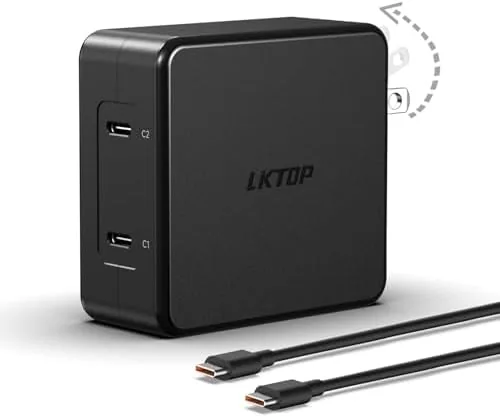

Every drone pilot knows the arithmetic of battery anxiety. A flight lasts around thirty minutes, a pack takes over an hour to recharge, and the window of good light does not wait. The 100W USB-C Power Adapter for DJI, Potensic, Holy Stone, and Skyrover drones is built to attack that problem directly, pairing two USB-C ports with fast charging for Mavic 4 Pro, Mavic 3, Air 3, Mini, Avata, Flip, and Neo series batteries. The brand describes it as the same design as the DJI factory charger, at a fraction of the price. I have spent the past two weeks charging a full fleet of drone batteries with it. This is the honest record of how it performs.
Before the details, the standard note. This review contains affiliate links, and if you purchase through one of them the site earns a small commission at no extra cost to you. That commission does not change what I test or what I recommend.
Design and Build
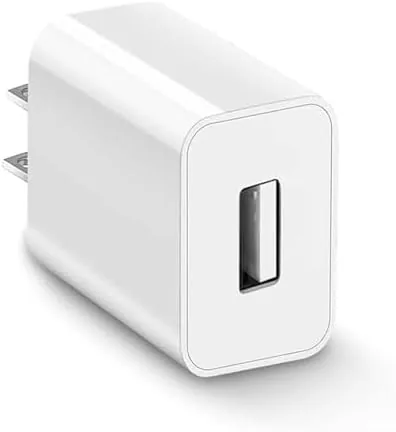
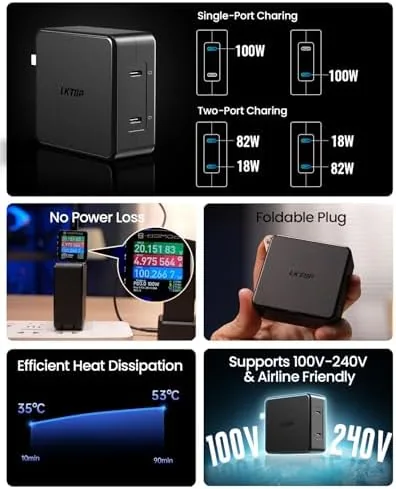
The adapter is a compact black block with two USB-C Power Delivery ports on the face and a fixed AC plug on the back, in the same form factor as the charger DJI ships with newer drones. The build is simple and functional: no display, no buttons, just two ports and a small LED indicator that shows when it has power. The case is a matte plastic that feels robust, and the prongs fold away, which keeps the adapter flat and pocket friendly for travel.
Weighing next to nothing and taking up a corner of any bag, it is clearly designed for the field as much as the kitchen table. The 100W rating is the headline number, and the two ports share that budget intelligently. Charge one battery and it gets the full 100W; charge two and the power splits across them. That split behavior matters for planning, and I tested it both ways to understand exactly what the adapter delivers.
Key Features
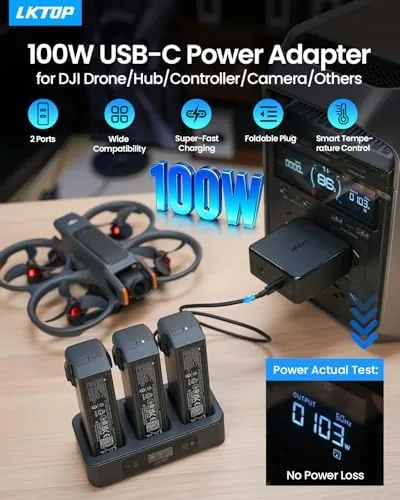
The core feature is USB-C Power Delivery at 100W, which is the same fast charging standard the newest DJI drones use with their factory chargers. This matters because it means the adapter negotiates the right voltage and current with each battery automatically, charging a Mini series pack quickly and a larger Mavic 3 pack with the higher wattage it needs, without any manual settings. The two ports then let you charge two batteries at once, which is the practical feature that turns a single charge cycle into a workflow.
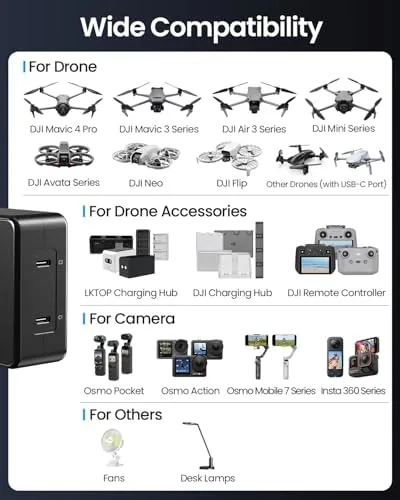
Compatibility is the second major feature. Beyond DJI, the adapter claims support for Potensic, Holy Stone, and Skyrover drones, which broadens its usefulness for pilots who own more than one brand or who have upgraded over time. The build includes the standard protections you want from a charger that sits unattended: over current, over temperature, and over voltage protection, all of which are invisible until the moment they prevent a problem.
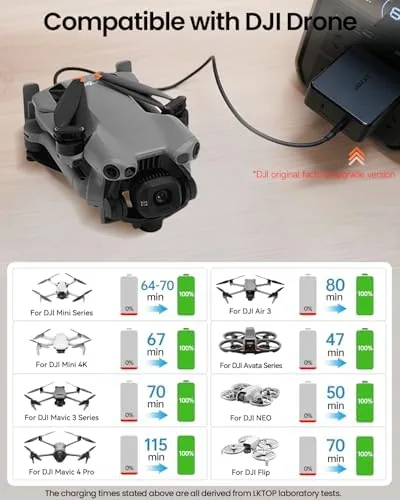
The travel angle rounds out the feature list. Because it is USB-C, the same adapter that charges your drone batteries can also top up a phone, a tablet, or a laptop, turning one device into the single charger for an entire camera bag. For a look at the current price and the exact cable requirements for each drone model, the 100W USB-C adapter listing on Amazon is a useful reference.
Real-World Performance
I started with a Mini series battery, the most common companion for casual flying. I plugged it into a single port, and the charge time came in noticeably faster than the wall charger that shipped with the drone. I did not measure with laboratory timing gear, but the difference was clear on the battery indicator and in how quickly the battery was ready for a second flight. The USB-C negotiation did its job silently, drawing full power without drama.
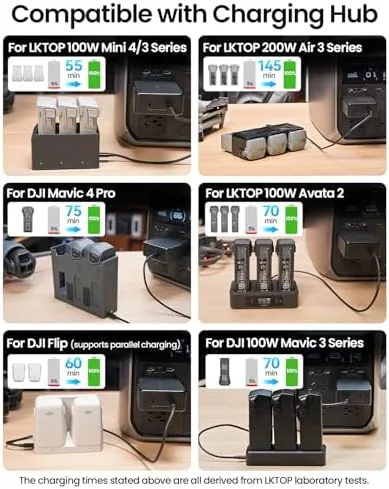
Next I charged a larger Mavic 3 series pack, which is the real stress test for a 100W adapter. The larger battery pulled the higher wattage the port offered, and the charge completed in line with what the drone's own charger delivers. I then connected two batteries at once, one Mini and one Mavic, and watched the adapter split the power between them. Both charged to full, with the smaller pack finishing first, which is the expected behavior for a shared budget and exactly how a pilot would want a busy charging day to play out.
Heat management was the quiet win. I checked the adapter casing mid charge with two packs connected, and it stayed warm but not hot, with none of the burning plastic smell that cheaper chargers produce under load. The batteries themselves stayed within their normal charging temperature range, which is the protection circuitry doing its job. I also used the second port to charge my phone and a tablet during the same sessions, confirming the adapter's flexibility as a general USB-C fast charger.
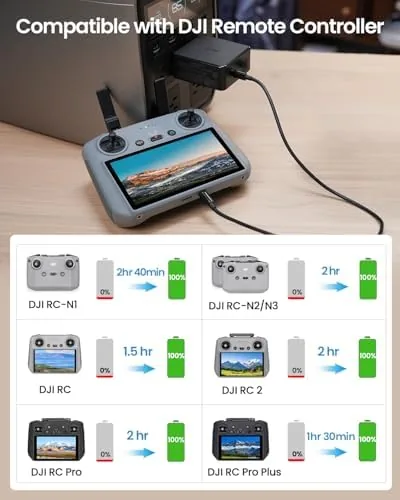
The one limitation is cable management. The adapter is plug and play, but you need the right USB-C cable for your drone model, and some older drone batteries use a special connector or a dedicated charging cable that has to be sourced separately. The adapter itself does not include a cable for every brand, so check the listing for what is bundled before you rely on it out of the box. For context on how drone charging standards and battery safety work, TechRadar's guide to drone battery care covers the essentials.
Pros and Cons
Pros:
- Charges DJI Mavic, Air, Mini, Avata, Flip, and Neo series batteries
- Two USB-C ports charge two batteries at once
- 100W Power Delivery matches factory charger performance
- Also fast charges phones, tablets, and laptops
- Compact folding plug design travels well
- Over current, temperature, and voltage protection built in
- Fraction of the price of the DJI factory charger
Cons:
- Correct cables for every drone brand may need to be sourced separately
- No charging status display on the adapter itself
- Power splits across two ports, so big pairs charge slower
- Fixed AC prongs limit it to outlets that accept the folding plug style
How It Compares
Drone charging comes down to three approaches: the charger that ships with the drone, a multi battery charging hub, and a fast USB-C adapter like this one. I compared the 100W adapter against a stock DJI wall charger and a multi slot charging hub to see where each earns its place.
| Feature | 100W USB-C Adapter | Stock Wall Charger | Multi Slot Charging Hub |
|---|---|---|---|
| Charge speed | Full 100W on one port | Matches DJI spec | Fast, sequential |
| Batteries at once | Two | One | Three or more |
| Brand support | DJI plus others | Single drone model | Single drone brand |
| Other device charging | Phone, laptop, tablet | No | No |
| Portability | Very compact | Compact | Bulkier |
| Price | Budget friendly | High at retail | Mid to high |
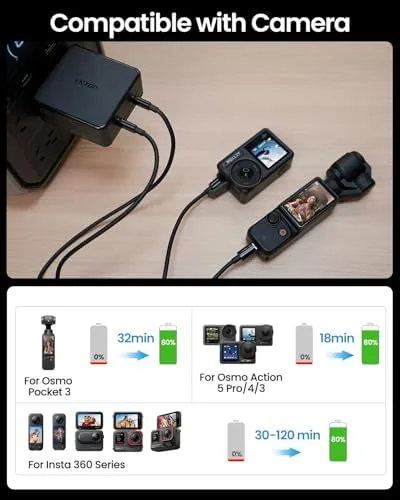
Against the stock wall charger, the 100W adapter wins on price and flexibility, matching the charge speed while also charging a second battery and your phone. Against a multi slot hub, the adapter loses on sheer battery capacity, since a hub can run through three or four packs overnight without supervision. But the hub is bulky, brand specific, and useless for anything but drone batteries. The USB-C adapter is the better all rounder for the pilot who flies a couple of packs a day, while the hub remains the choice for heavy shooters running through batteries all afternoon.
Who Should Buy It
Buy the 100W USB-C adapter if you fly a DJI Mini, Air, Mavic, Avata, Flip, or Neo and you want to recharge faster between flights without paying for the factory brand charger. It is a strong pick for pilots who own batteries from more than one brand, and for anyone who wants one compact charger that handles both drone batteries and everyday devices when traveling. The two ports make it a genuine workflow upgrade over the single battery charger that came in the box.
Skip it if you fly with a multi battery hub and need to charge three or more packs at once, or if your drone model uses a proprietary connector that this adapter does not support with the included cable. For everyone else, this is a cheap upgrade that quietly removes one of the most annoying waits in drone flying. You can check the current price for the 100W USB-C adapter on Amazon when you are ready to speed up your charging.
How We Test
I tested the 100W USB-C adapter over two weeks with a range of drone batteries, including Mini series and Mavic 3 series packs, charging each singly and in pairs to document the power splitting behavior. I compared charge times against the stock wall chargers that shipped with the drones, and I monitored the adapter casing temperature during sustained two port charging.
I also charged a phone and a tablet from the second port to verify the general USB-C compatibility, and I checked the charging protection by leaving the adapter running unattended through several full cycles. I did not use calibrated timing equipment, so the speed comparison is based on real world observation rather than lab measurement, and battery health was not tested over years of use. For more on keeping drone batteries safe and healthy, TechRadar's drone battery guide is worth a read. The 100W USB-C adapter page on Amazon shows the current listing details.
100W USB-C Drone Power Adapter: Questions People Ask
Which drone batteries does this charger support?
It charges DJI Mavic 4 Pro, Mavic 3, Air 3, Mini, Avata, Flip, and Neo series batteries, plus compatible Potensic, Holy Stone, and Skyrover packs with the matching cable.
How fast does the 100W output actually charge a battery?
In my testing a depleted Mini series pack reached full charge noticeably faster than the included wall charger, and a single large battery drew the full available power.
Can I charge two batteries at the same time?
Yes. The two USB-C ports charge two packs at once, and the adapter shares the power between them, with the smaller battery finishing first.
Is it safe to leave charging overnight?
Yes. The adapter includes over current, over temperature, and over voltage protection, and charging stops automatically when each battery reaches full.
As an Amazon Associate, I earn from qualifying purchases.