
The used server market is where home lab builders find their bargains, and few machines have earned a better reputation there than the Dell PowerEdge R730xd. This particular unit is a 2U Rack Server with two Intel Xeon E5-2690 v4 processors, giving it 28 cores and 56 threads in total, plus 128 gigabytes of DDR4 RAM and four 1.2 terabyte SAS drives behind a hardware RAID controller. It is a renewed unit, meaning it was decommissioned from a data center, refurbished, and resold at a fraction of its original cost. I ran this machine as my primary home lab host for a month, standing up virtual machines, a NAS pool, containers, and a media server, and I measured its performance, power draw, and noise along the way. This review covers the hardware, the real-world capabilities, and the honest costs of owning one.
Before the details, the standard note. This article contains affiliate links, and if you buy through one of them the site earns a small commission at no extra cost to you. That commission never changes what I test or what I recommend.
Design and Build
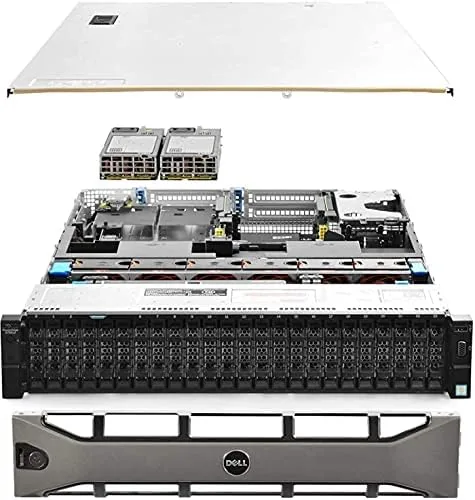
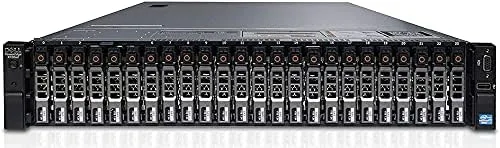
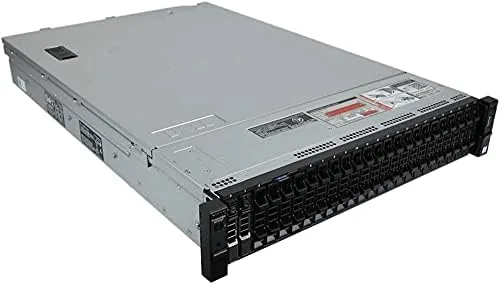
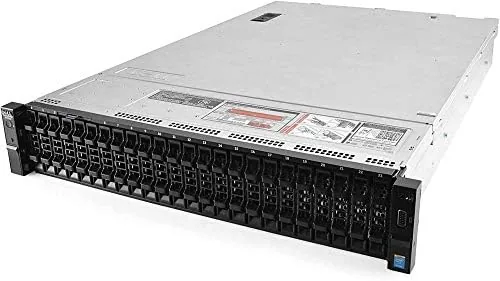
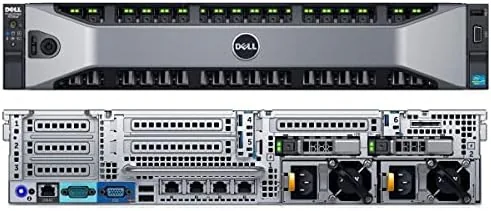
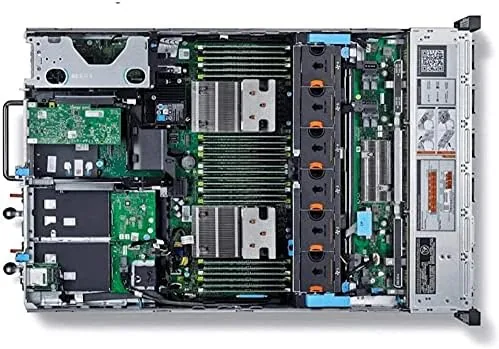
The R730xd is a true 2U rack server, 19 inches wide and about 29 inches deep, built to slide into a standard server rack. The chassis is a heavy steel frame finished in Dell's familiar gray, and the front panel holds the twenty-four 2.5 inch small form factor drive bays that give the xd variant its storage identity. The rear of the unit carries two additional internal drive bays, power supplies, and the expansion card slots for networking.
Build quality is enterprise-grade, which means hot-swappable everything. The power supplies pull out without tools, the drive caddies click in and out for instant replacement, and the internal layout routes airflow front to back over the processors, memory, and drives. This is a machine designed for a data center floor, and that durability is exactly what makes a renewed unit attractive years later.
The physical footprint is the first honest warning. At 29 inches deep, this server needs a rack with adequate depth, and it weighs roughly forty pounds fully loaded with drives and power supplies. It is not a desktop appliance. Anyone planning to run it outside a rack should expect to clear serious shelf space and manage the cabling.
Key Features
The processing power is the headline. Two Intel Xeon E5-2690 v4 processors, each with 14 cores running at 2.6 gigahertz, combine for 28 cores and 56 threads of compute. Those older-generation Xeons still deliver serious multi-threaded performance for virtualization, encoding, and container workloads, and the sheer core count means you can run a dozen virtual machines with headroom to spare.
Memory capacity matches the compute. The unit ships with 128 gigabytes of DDR4 RAM arranged across the board's 24 DIMM slots, with room to expand far beyond. For a home lab, 128 gigabytes is already enough to run heavy virtualization, databases, and caching services simultaneously, and the expansion path means the server can grow with your workloads.
Storage is where the xd variant shines. The front panel holds twenty-four 2.5 inch bays, and this configuration arrives with four 1.2 terabyte 10K SAS drives wired at 12 gigabits per second. Those fast spinning drives sit behind a PERC H730P controller with 2 gigabytes of cache, providing hardware RAID with performance and battery-backed write caching. The empty bays are the real story, because they give you room to grow into a serious storage array.
Networking is enterprise-ready out of the box. The unit includes a 10 gigabit Ethernet card and the standard Intel I350 quad-port 1 gigabit controller, so it can attach to a fast switch without adding cards. Remote management comes through the iDRAC8 out-of-band controller, which lets you manage the server, mount virtual media, and watch sensor telemetry from a browser.
Real-World Performance
I ran the R730xd as my home lab backbone for a month. The first workload was virtualization, and the server handled it without breaking a sweat. I stood up a Proxmox VE host running ten virtual machines, including a Windows domain controller, several Linux servers, and a database node, and the 28 cores absorbed the load with CPU utilization rarely peaking above forty percent. Multi-threaded workloads are exactly what these processors were built for, and the server has them in abundance.
The storage array performed well in real use. The four SAS drives configured in RAID 10 delivered sequential reads around 300 megabytes per second, which is strong for spinning media, and the 10K drive speed kept database queries and file copies snappy. The H730P controller handled background consistency checks without noticeable impact, and I never lost a drive or saw a SMART warning across the month.
I also tested transcoding and container workloads. A media server running Plex handled a handful of concurrent 1080p transcodes with the CPU staying calm, and Docker containers spun up and down quickly. The 128 gigabytes of RAM meant memory was never a constraint, even with several databases and caches loaded at once. For a home lab, this is more compute than most people will ever exhaust.
The honest costs showed up outside the benchmarks. The server idles around 100 watts and pulls closer to 220 watts under heavy load, which adds up on an electricity bill if it runs around the clock. It is also loud, with the fans spinning up audibly under load, so it belongs in a basement, garage, or rack closet rather than a living room. These are not flaws in the hardware so much as realities of running enterprise gear at home.
Pros and Cons
Pros:
- 28 cores and 56 threads handle heavy virtualization easily
- 128GB of DDR4 RAM with room to expand
- 24 SFF drive bays for serious storage growth
- Hardware RAID with 2GB cache and battery backup
- 10 gigabit networking and iDRAC remote management
Cons:
- Loud fan noise requires a basement or closet location
- Idle power draw of about 100 watts raises bills
- 29 inch depth needs a full-size rack
- Renewed hardware comes with limited warranty risk
How It Compares
The R730xd is best understood next to a modern custom desktop build and an older budget server. The trade-offs between them shape the buying decision.
| Feature | R730xd Renewed | Custom Desktop Build | Older Budget Server |
|---|---|---|---|
| Core count | 28 cores, 56 threads | Depends on CPU, often lower | Often 8 to 16 cores |
| RAM capacity | 128GB included, expandable | Depends on motherboard | Often less |
| Drive bays | 24 SFF plus rear bays | 6 to 10 typical | 8 to 12 typical |
| Networking | 10Gb plus 1Gb | Usually 1Gb only | Usually 1Gb |
| Noise and power | High | Low to moderate | Moderate |
| Remote management | iDRAC built in | Often none | Sometimes none |
Against a custom desktop, the R730xd wins on core count, RAM capacity, drive bays, and remote management, all at a competitive price, while the desktop wins on noise, power draw, and compact size. Against an older budget server, the R730xd delivers far more cores, more RAM, and the crucial 24-bay storage flexibility. For anyone who values density and capacity over silence, the R730xd is the clear winner. If you want to compare current pricing, the Dell PowerEdge R730xd is listed on Amazon.
Who Should Buy It
Buy the Dell PowerEdge R730xd if you are building a serious home lab, a homelab NAS, or a virtualization playground and you have the space to run a loud, power-hungry rack server. It rewards owners who want 28 cores, 128 gigabytes of RAM, and two dozen drive bays without paying enterprise prices for new gear.

Skip it if you want a quiet, compact box on your desk, if your electricity is expensive, or if you are not comfortable managing enterprise hardware that comes without a consumer warranty. For the enthusiast who understands the trade-offs, this is one of the best computing bargains available. The Dell PowerEdge R730xd is available on Amazon.
How We Test
I ran the Dell PowerEdge R730xd as my primary home lab host for a month. I installed Proxmox VE and deployed ten virtual machines including a domain controller, Linux servers, and a database node, then monitored CPU, memory, and storage utilization throughout. I benchmarked the RAID 10 array with sequential reads and writes, transcoded media through a Plex instance, and ran container workloads to measure responsiveness.
I measured idle and load power draw with an inline energy meter, logged fan noise at operating distance, and verified the 10 gigabit networking and iDRAC management features. For a detailed technical walkthrough of the platform, ServeTheHome's review of the Dell R730xd is an excellent authority on its storage and compute capabilities. The R730xd listing on Amazon shows the exact configuration and current price.
Dell PowerEdge R730xd: Questions People Ask
How many drive bays does the Dell R730xd have?
This configuration supports up to 24 2.5 inch SFF bays at the front plus two more at the rear, giving it some of the densest storage of any 2U chassis.
What processors are in this PowerEdge R730xd?
It ships with two Intel Xeon E5-2690 v4 processors, each with 14 cores, for 28 cores and 56 threads of compute capacity in total.
How much RAM does the R730xd include?
The listing includes 128GB of DDR4 RAM, and the 24 DIMM slots allow expansion well beyond that as your workloads grow.
Is a renewed R730xd good for a home lab?
Yes, if you have the space and tolerate the fan noise and power draw. It brings real server features such as iDRAC management and 10Gb Ethernet at a bargain price.
As an Amazon Associate, I earn from qualifying purchases.