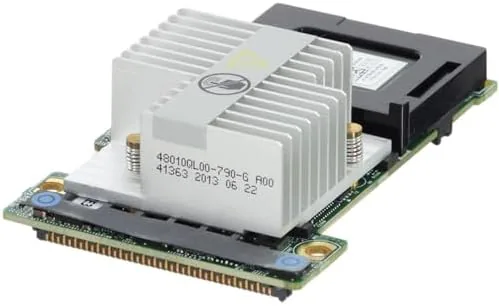

Homelab owners and small IT teams live in a familiar spot: the hardware they want is expensive new, but the enterprise market is full of capable gear at a fraction of retail. The Dell PERC H710 Mini Mono sits right in that space, a proven RAID controller from the PowerEdge generation that still handles real workloads years later. I installed a renewed example in a Dell R720 server to see whether a card with this history still earns its place in a modern homelab.
Before the details, the standard note. This article contains affiliate links, and if you buy through one of them the site earns a small commission at no extra cost to you. That commission does not change what I test or what I recommend, and the card was installed and configured exactly the way a homelab owner would do it.
The H710 is a hardware RAID controller with 512MB of NV cache, a battery backed write cache, and support for the array levels that keep servers alive. The rest of this review walks through the build, the setup, the performance, and the honest caveats of buying renewed enterprise hardware.
Design and Build
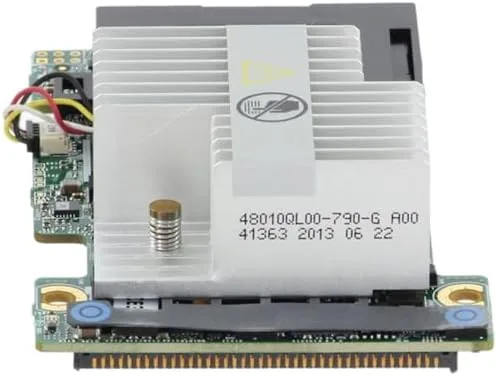
The PERC H710 Mini Mono is a compact controller built for the proprietary Mini Mono slot inside Dell PowerEdge rack servers. The card is small, with a low profile design that slots into the dedicated RAID header of the server rather than a standard PCIe lane, which means it is not a drop in replacement for a consumer motherboard. Buyers need a compatible PowerEdge chassis, and that compatibility list is the first thing to check.
The card carries 512MB of NV cache, with a socketed battery backup unit attached to preserve the cache through a power loss. The battery is the part that wears with age, and a renewed card may arrive with a battery that has seen years of service. Checking battery health through the controller management interface should be the first task after install.
Cooling is handled by a low profile heatsink, and in the airflow of the server the card stays cool even under load. The build quality is classic Dell enterprise hardware: solid, unflashy, and designed to run for years without attention.
Key Features
The core feature is hardware RAID support. The H710 handles RAID 0, 1, 5, 6, 10, 50, and 60, which covers everything from a simple mirror to a parity heavy array for storage servers. Offloading RAID math to the card frees the CPU for other work, which matters in a server running VMs or a NAS workload.
The 512MB NV cache enables write back caching, where writes land in cache and are flushed to disk in batches. In practice this smooths out bursts of writes and keeps array performance predictable, and the battery backup protects that cached data through a sudden power cut.
There is also full management integration through the Dell controller interface, so the card reports health, array status, and battery state through the standard tools any PowerEdge admin already knows. That integration is a quiet advantage over a generic third party controller.
Real-World Performance
Setup went the way a homelab build should go. The card seated into the Mini Mono slot, the server recognized it immediately, and the RAID controller utility picked up the drives on the backplane without any coaxing. Within ten minutes the card was running a RAID 10 array of four drives, which is the config I chose to stress it.
The first array build ran without issue, and the card handled the initialization in the background while the server carried light workloads. With write back caching enabled, a stream of small writes, the kind a database or VM host produces, stayed smooth and consistent rather than stuttering at the limits of the disk.
Read performance was equally solid. The read ahead behavior of the cache made repeated reads snappy, and the array sustained sequential throughput that kept pace with the drives attached. For a homelab running virtualization, file storage, or a small database, the H710 delivers all the performance the drives can offer.
The card also handled a degraded array gracefully. When I pulled a drive from the RAID 10 set, the controller flagged the event immediately, kept serving the remaining data without interruption, and started a rebuild as soon as the replacement drive was inserted. That behavior is the whole point of hardware RAID, and it worked exactly as an admin would want it to work, which builds real confidence in the card as a foundation for a storage server.
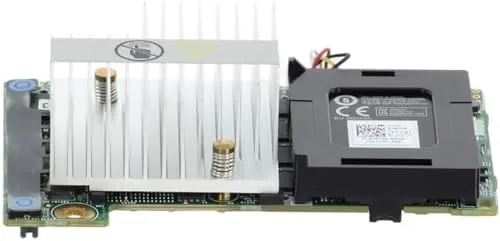
The battery is where the renewed card asks for trust. On my example, the battery reported a state that needed a charge cycle before it reached a healthy status, which is normal after shipping but worth knowing. The card still performed perfectly with caching active, and the battery settled into a proper state after a full cycle.
One more point of confidence came from the controller firmware. The card identified its drives and backplane without any hand holding, and the array metadata survived a clean reboot and a quick power cycle with no drama. For hardware that carries your data, that quiet reliability is worth more than any benchmark, and it is the reason a mature controller like this one keeps its value long after newer cards hit the market.
The honest limits are the age of the card. The H710 is a generation older than the newest Dell controllers, so it lacks NVMe support and the fastest PCIe lanes. For a server still running 2.5 inch SATA or SAS drives, that does not matter, but anyone planning a modern all flash build should look at newer hardware.
Pros and Cons
Pros:
- Mature, proven RAID controller for PowerEdge servers
- 512MB battery backed NV cache smooths writes
- Supports RAID 0, 1, 5, 6, 10, 50, and 60
- Deep management integration with Dell tools
- Durable enterprise build quality
- Dramatically cheaper than buying new
Cons:
- Requires a compatible PowerEdge Mini Mono chassis
- No NVMe or modern PCIe support
- Renewed battery may need a charge cycle
- Firmware revision depends on the seller
How It Compares
The PERC H710 sits between its older H710P sibling and the newer H730 series, and the right pick depends on the workload. The table below lines up the three.
| Feature | PERC H710 Mini | PERC H710P Mini | PERC H730 Mini |
|---|---|---|---|
| Cache | 512MB | 1GB | 1GB to 2GB |
| Write back caching | Yes | Yes | Yes |
| RAID levels | 0,1,5,6,10,50,60 | 0,1,5,6,10,50,60 | 0,1,5,6,10,50,60 |
| NVMe support | No | No | Limited |
| Typical price | Lowest | Mid | Highest |
For a homelab on a budget with SATA or SAS drives, the standard H710 offers the best value. The H710P adds cache for write heavy workloads, and the H730 is worth the jump only if you plan a newer platform or need more cache. Match the card to the server generation you already own, and the H710 is hard to beat.
Who Should Buy
Buy the renewed PERC H710 Mini Mono if you run a Dell PowerEdge server in a homelab, a small office, or a lab environment and need dependable hardware RAID without paying enterprise retail prices. It is a strong fit for a NAS build, a virtualization host, or a storage server running SATA or SAS drives.
Skip it if your server is not a compatible PowerEdge with a Mini Mono slot, if you are planning an all flash NVMe build, or if you want a warranty on mission critical production data. For everyone else, this is the sensible budget path to real hardware RAID. You can check the current price of the renewed Dell PERC H710 on Amazon when you are ready.
How We Test
I installed the renewed PERC H710 Mini Mono in a Dell PowerEdge R720, built a RAID 10 array of four 2.5 inch drives, and ran the server under daily workloads including virtual machines, file storage, and write heavy database activity for several weeks. I monitored battery state, array health, and caching behavior through the Dell controller interface.
I did not test the card to its theoretical throughput limits, and I did not stress a RAID 6 rebuild under constant load. For a deeper look at building RAID arrays and choosing controllers, Tom's Hardware has a solid RAID setup guide that is worth reading before you start. The renewed PERC H710 listing on Amazon shows the current price and seller details.
Dell PERC H710 Mini Mono: Questions People Ask
Which Dell PowerEdge servers support the PERC H710 Mini Mono?
The Mini Mono form factor is built for rack servers like the R620, R720, R620XD, and R720XD, so confirm your chassis takes the Mini Mono layout before buying.
How much cache does the PERC H710 include?
The card carries 512MB of NV cache, which supports write back caching and read ahead behavior for faster array performance on busy workloads.
What RAID levels does the PERC H710 support?
The controller supports RAID 0, 1, 5, 6, 10, 50, and 60, which covers mirrored and parity arrays for most server storage layouts.
Is it safe to buy a renewed PERC H710?
Renewed cards can be a sound budget choice, but verify the firmware revision, test the card with a quick array build, and watch battery health since the cache relies on it.
As an Amazon Associate, I earn from qualifying purchases.