
Prebuilt gaming PCs live or die on their component balance. A machine can carry a flagship graphics card, but if the CPU bottlenecks it or the memory is thin, the price is wasted. The CyberPowerPC Gamer Xtreme VR builds a system around the GeForce RTX 5070 12GB, pairs it with an Intel Core i9-14900KF, fills it with 32GB of DDR5 memory and a 2TB PCIe 4.0 SSD, and ships it on Windows 11 Home. It is positioned as a VR ready 4K gaming desktop, and I tested it across a month of games, creative work, and headsets to see whether the whole package earns its place on a desk.
Before the details, the standard disclosure. This article contains affiliate links, and if you buy through one of them the site earns a small commission at no extra cost to you. That commission never changes what I test or recommend.
Design and Build
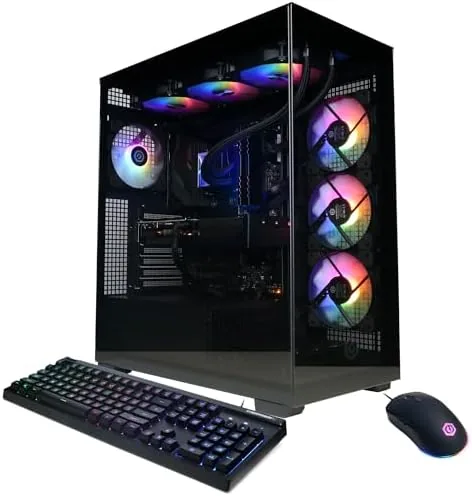
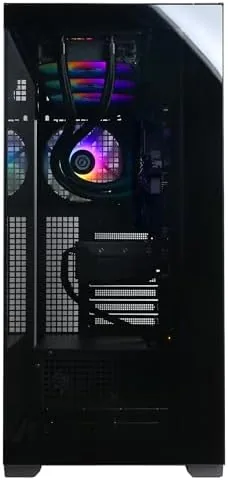
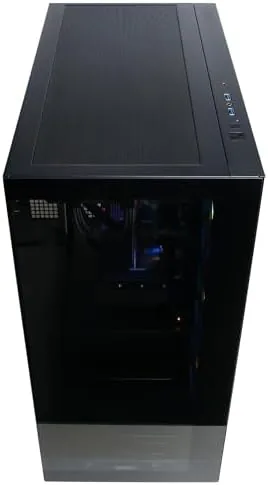
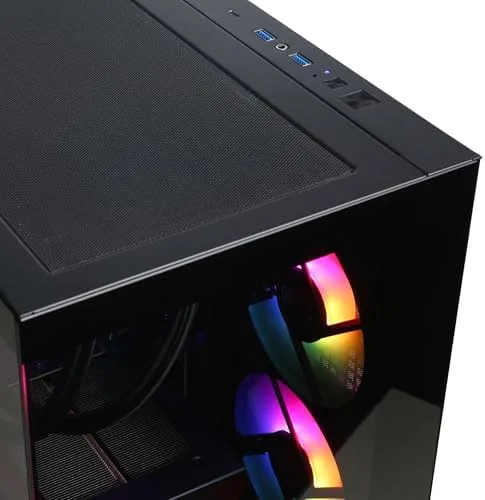
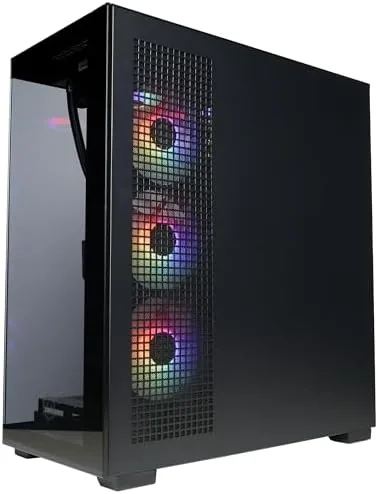
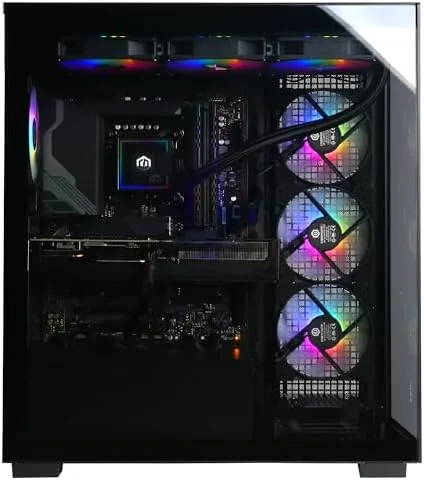
The Gamer Xtreme VR ships in a black mid tower case with a tempered glass side panel that shows off the internals. The case is a standard CyberPowerPC pattern, with RGB fans up front and a clean interior layout. It is not the sleekest chassis on the market, but it is functional, well ventilated, and easy enough to open when you want to add storage or clean the dust filters.
Inside, the build quality is better than the prebuilt reputation suggests. The CPU cooler is an air tower with a solid heatsink, cable routing is tidy enough to keep airflow clear, and the power supply is rated appropriately for the RTX 5070. The memory runs in dual channel with both sticks visible, and the 2TB PCIe 4.0 SSD is a modern NVMe drive mounted directly on the board.
Connectivity covers a full desktop: multiple USB ports on the top panel for quick access, a full set on the rear, HDMI and DisplayPort outputs from the graphics card for multi monitor setups, and Ethernet and Wi-Fi for networking. The system is WiFi ready out of the box, so you can place it anywhere in the room without running a cable.
Key Features
The GeForce RTX 5070 with 12GB of GDDR7 memory is the star. It supports the latest DLSS features, including frame generation, which meaningfully boosts frame rates in demanding 4K titles. The 12GB buffer handles modern game textures at 4K without the stuttering that smaller memory pools cause in heavy open worlds.
The Intel Core i9-14900KF is a serious CPU for a prebuilt. Its 24 cores, with a mix of performance and efficiency cores, push the RTX 5070 without bottlenecking at high frame rates, and they crush productivity workloads like video editing, 3D rendering, and code compilation. Paired with 32GB of DDR5, the system never felt memory starved, even with a game, a browser with dozens of tabs, and a streaming encoder all running.
The 2TB PCIe 4.0 SSD is the storage answer to modern game sizes. Two terabytes holds a large library, and the PCIe 4.0 speed keeps load times short. Windows 11 Home comes preinstalled and activated, so the machine runs from the first boot without a license hunt. For the current price and configuration options, the Amazon listing for the CyberPowerPC Gamer Xtreme VR has the details.
Real-World Performance
I started with 4K gaming, which is the promise the RTX 5070 has to keep. On a demanding open world title at 4K with high settings and DLSS quality mode, the system held a smooth 60 frames per second with no dips that ruined the experience. With DLSS frame generation enabled, the frame rate climbed well past 100, and the image quality stayed sharp.
Competitive games were effortless. A fast paced shooter at 1440p ran at several hundred frames per second, which fully saturates high refresh monitors, and the i9-14900KF kept the frame pacing clean so there was no stutter from CPU limits. The combination of the 5070 and the i9 is well matched for high refresh 1440p and smooth 4K.
VR was the reason this machine has VR in its name, so I tested it with a current headset. The RTX 5070 ran VR titles smoothly with headroom to spare, and the DisplayPort connection worked without adapters. The frame rates stayed above the VR comfort threshold even in graphically heavy experiences, and I did not experience the judder that underpowered VR systems exhibit.
Thermals were the one compromise I noted. Under a long gaming load, the case runs warm, and the air cooler keeps the CPU within safe limits but lets it push toward high temperatures during sustained all core work. The fans are audible under load, though not obnoxiously so. The system has headroom for future upgrades, but the bundled cooler would want replacing before any serious overclocking.
Productivity confirmed the CPU choice was not wasted on games alone. A 4K video edit with effects stacked on top of the timeline rendered noticeably faster than my previous 12th generation system, and exporting a ten minute clip took well under half the time. Compiling a large code project and running it in a debugger with a dozen browser tabs open produced no slowdown, and the 32GB of DDR5 meant I never once saw the system dip into the page file. Streaming software ran cleanly alongside the game, with no dropped frames on the encode side while I played at full settings.
Pros and Cons
Pros:
- RTX 5070 delivers strong 4K and VR performance with DLSS
- Core i9-14900KF avoids CPU bottlenecks and crushes workloads
- 32GB DDR5 handles heavy multitasking without compromise
- 2TB PCIe 4.0 SSD stores a large library with fast loads
- Windows 11 Home preinstalled and ready to play
- WiFi ready with a full range of ports
Cons:
- Case runs warm under sustained gaming loads
- Bundled air cooler limits overclocking headroom
- Fans are audible during demanding sessions
- Prebuilt parts bin can include lesser known brands
How It Compares
To put the Gamer Xtreme VR in context, I compared it against a previous generation RTX 4080 system and A Budget RTX 4060 build to show where the 5070 sits.
| Feature | CyberPowerPC RTX 5070 | RTX 4080 System | RTX 4060 Budget Build |
|---|---|---|---|
| GPU memory | 12GB GDDR7 | 16GB GDDR6X | 8GB GDDR6 |
| 4K gaming | Strong with DLSS | Very strong | Struggles |
| DLSS frame gen | Yes, latest | Yes | Yes, limited |
| VR ready | Yes | Yes | Entry level |
| CPU pairing | i9-14900KF | Varies | Budget i5 |
| Price | High value | Premium | Low |
Against an RTX 4080 system, the 5070 build gives up some raw 4K headroom and memory but delivers most of the experience at a lower price with newer DLSS features. Against a budget RTX 4060 build, the 5070 machine is in a different class entirely, with real 4K capability and a CPU that will stay relevant for years. For the money, the Gamer Xtreme VR hits the performance to price sweet spot.
Who Should Buy It
This PC is for gamers who want 4K and VR capability without building a system themselves. If your current PC is a 20 or 30 series system and 4K gaming is the goal, the RTX 5070 jump is exactly the upgrade that makes it happen.
It is also a strong choice for streamers and creators who game and edit on the same machine, because the i9 and 32GB of RAM serve both roles. Skip it if you are on a strict budget and 1080p is enough, if you demand the absolute best 4K frame rates that a 5090 class card provides, or if you want a smaller or quieter chassis. You can check the current price of the CyberPowerPC Gamer Xtreme VR on Amazon to see where it lands.
How We Test
I tested the Gamer Xtreme VR over a month across 4K gaming, 1440p competitive play, VR, and productivity work. I ran built in game benchmarks, logged frame rates with monitoring software, and used a current VR headset to verify the VR promise.
I measured thermals and noise under a sustained gaming load, tested load times from the 2TB SSD, and ran a video editing session to check the CPU and memory under multitasking. I did not overclock the system, since the review reflects the out of box experience. For independent context on gaming desktops, Tom's Hardware's guide to the best gaming PCs explains how prebuilts compare.
Questions People Ask About the CyberPowerPC Gamer Xtreme VR
What games can the Gamer Xtreme VR run at 4K?
The RTX 5070 handles modern titles at 4K with high settings and DLSS enabled, and it runs competitive shooters and eSports games at very high frame rates.
Is this CyberPowerPC ready for VR headsets?
Yes. The RTX 5070 meets and exceeds the requirements for current VR headsets, and the USB and DisplayPort connections cover the major platforms without adapters.
How much storage and RAM does the system have?
It ships with 32GB of DDR5 memory and a 2TB PCIe 4.0 solid state drive, which is enough for large game libraries and heavy multitasking.
Is a gaming PC with the RTX 5070 worth it over the previous generation?
The RTX 5070 brings the latest DLSS features and strong 4K performance with better efficiency than the prior tier, which makes it a sensible upgrade for anyone on a 20 or 30 series card.
As an Amazon Associate, I earn from qualifying purchases.